Supermassive black hole from early universe stuns scientists with rapid growth and extreme brightness
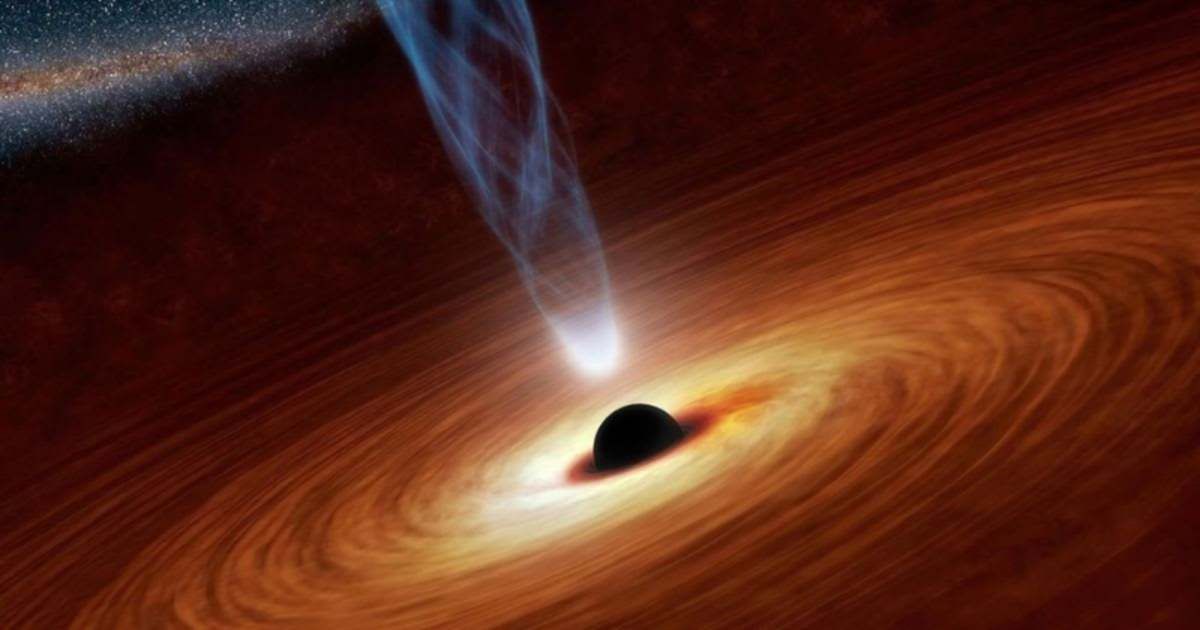
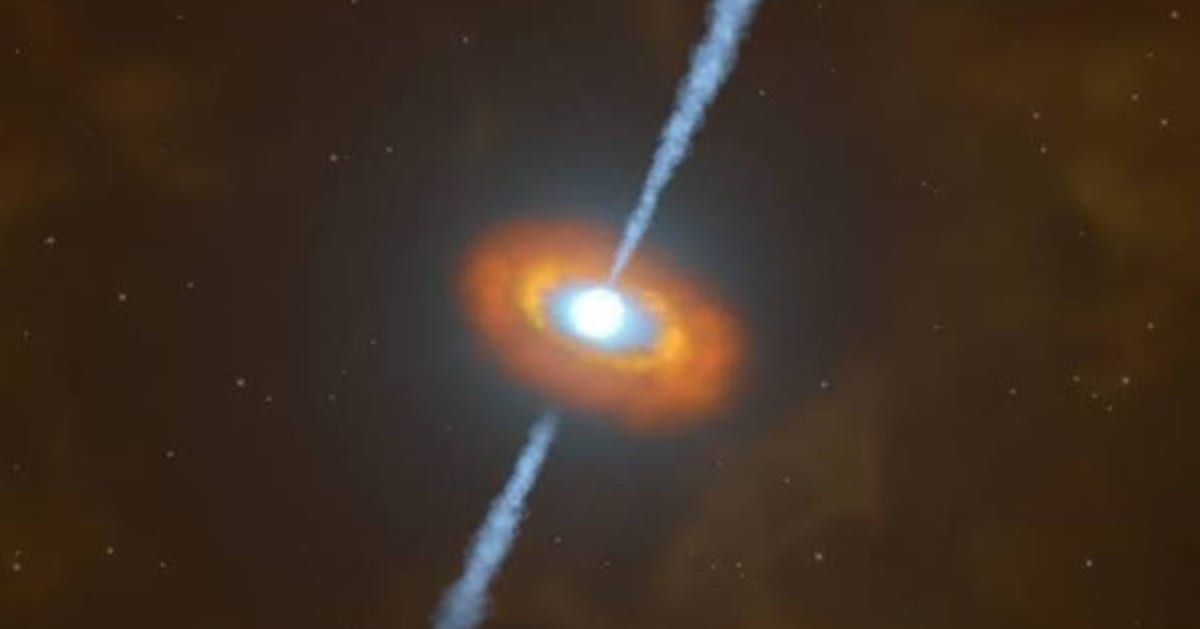
A supermassive black hole from the early universe is growing at an extremely fast rate and is defying the rules of science. This quasar, which dates back 12 billion years, was observed with the Subaru Telescope and was seen shining brightly in both X-rays and radio waves, even though it is going through a massive growth phase thanks to the enormous amounts of gas it is consuming. This is a combination that was deemed impossible, but now that it has been observed, there’s no choice but to rethink what is known about how these giants grow. As published in The Astrophysical Journal, the quasar is growing by consuming a huge amount of gas.
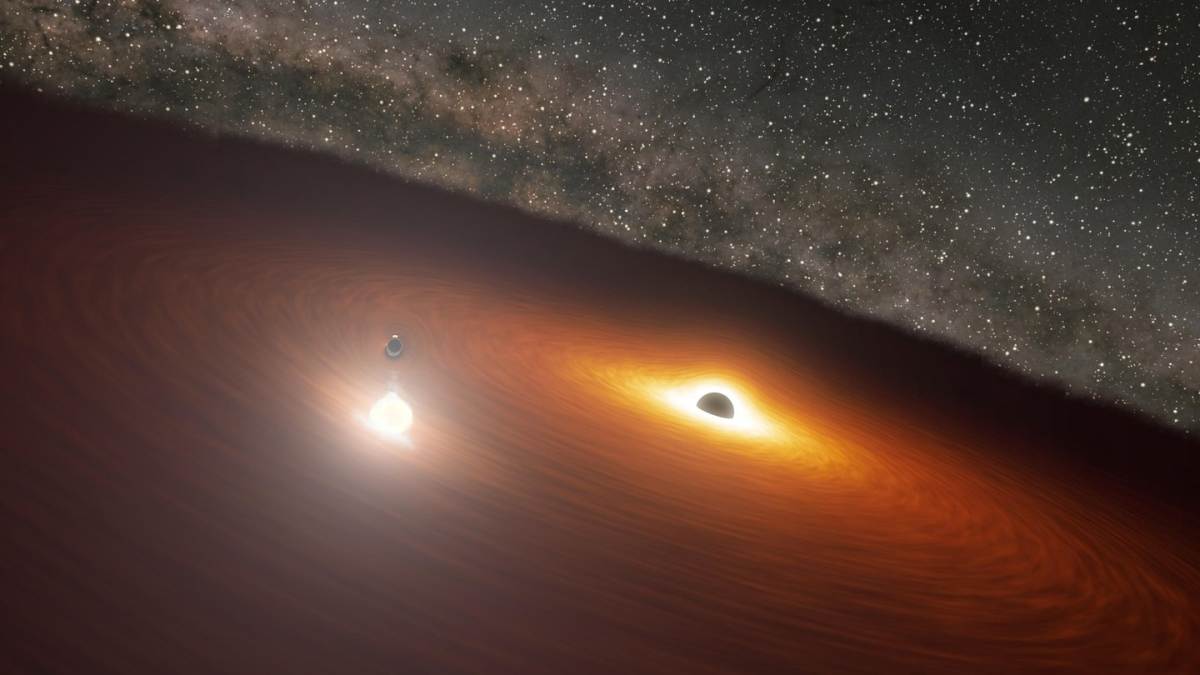
The research was done by an international research team led by scientists at Waseda University and Tohoku University. They used spectroscopic observations from the telescope's Multi-Object Near-Infrared Imaging Spectrograph (MOIRCS) in order to study the motion of gas around quasars in the early universe and precisely measure the mass of supermassive black holes. Per the Subaru Telescope press release, the mass accretion rate of the quasar is around 13 times the upper limit. This makes it the fastest-growing supermassive black hole of a similar mass observed to date.

This is accounted for by the phenomenon called “super-Eddington accretion.” That being said, it was known to involve fast cooling of gas in the higher temperature regions, thus resulting in weaker X-rays and less defined jets in radio waves. However, as already mentioned, this quasar is bright in both X-rays and radio waves despite the super-Eddington accretion. The study, published in the Astrophysical Journal, suggests that this is likely due to a change in the growth rate of the supermassive black hole, which was increased rapidly by a large amount of gas temporarily flowing in as a result of a collision with a clump of gas or a star. The accretion and emission might appear simultaneously during this fluctuation in growth.
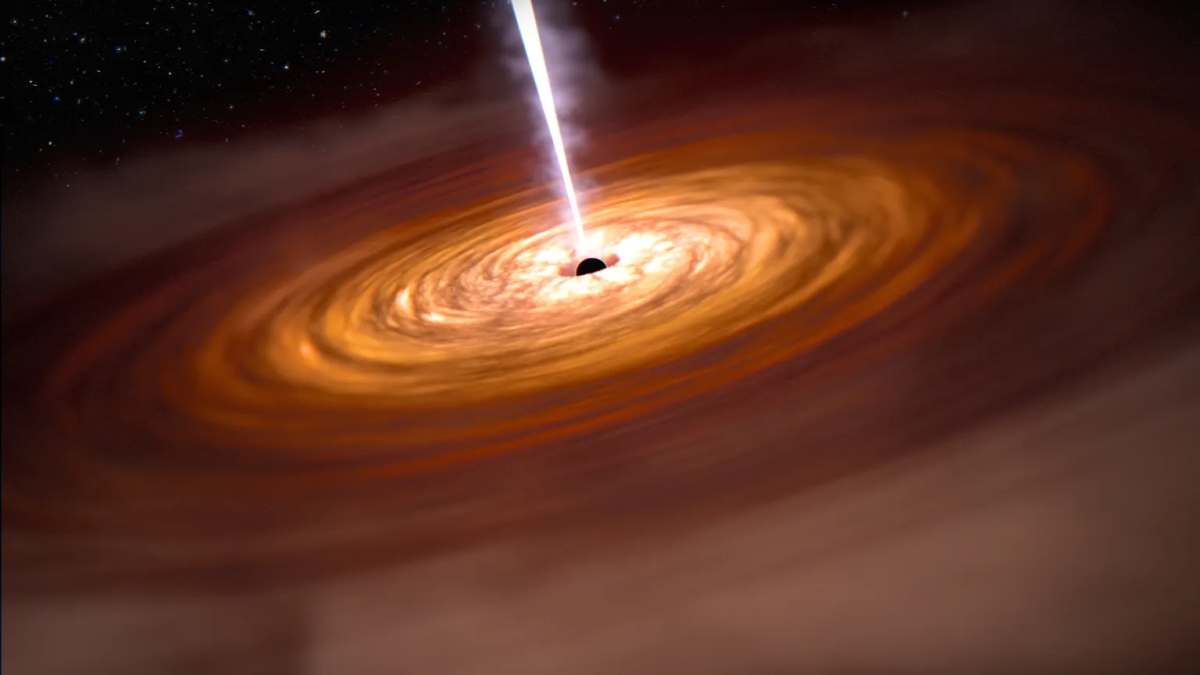
The radio brightness of the quasar suggests that it is emitting very intense jets that can suppress star formation in its host galaxy. Though the connection between "super-Eddington accretion" and jet emission is unclear, this finding could be crucial to understanding how the host galaxy and its central supermassive black hole interact to grow in the early universe. "This discovery may help elucidate the formation process of supermassive black holes in the early universe, which has been difficult to understand until now," said lead author Sakiko Obuchi. “Going forward, we hope to explore the mechanisms of X-ray and radio wave emission from this quasar and determine whether there are any similar objects yet to be discovered.”
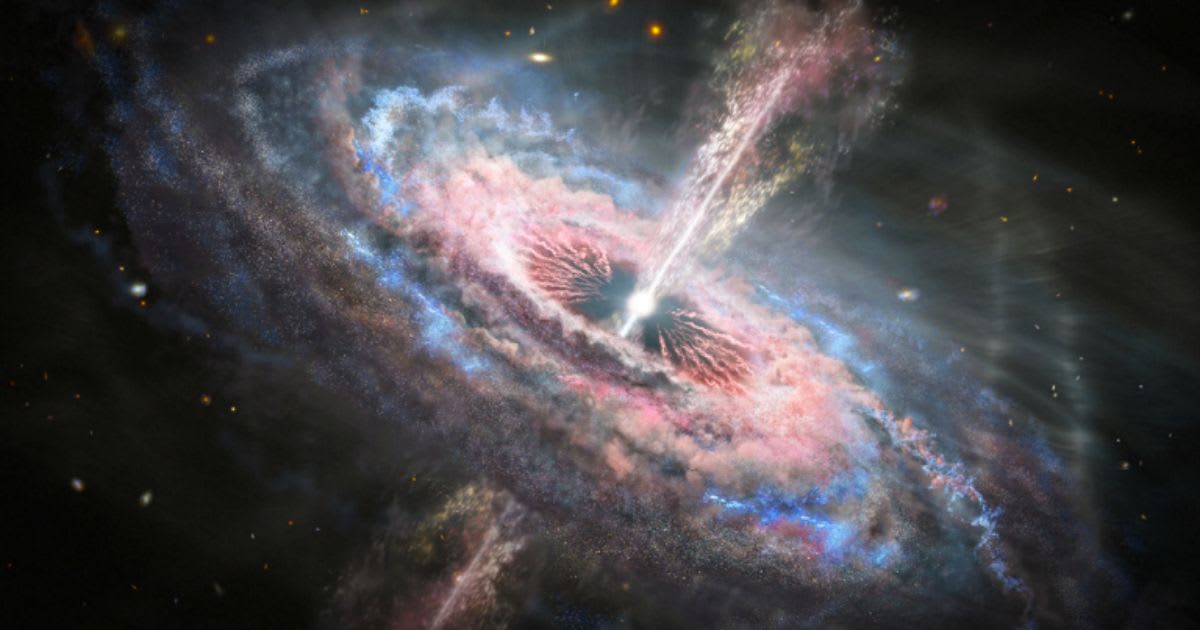
The supermassive black hole has presented the scientific community with rather intriguing features, be it the combination of growth and shine in various waves or its ability to influence its environment. This discovery could provide new insights that are capable of changing the models that exist in black hole studies. It could also help researchers piece together more information about certain processes of supermassive black holes in the early universe that remain elusive.
More on Starlust
Scientists witness supermassive black hole blasting out matter at 20 percent the speed of light