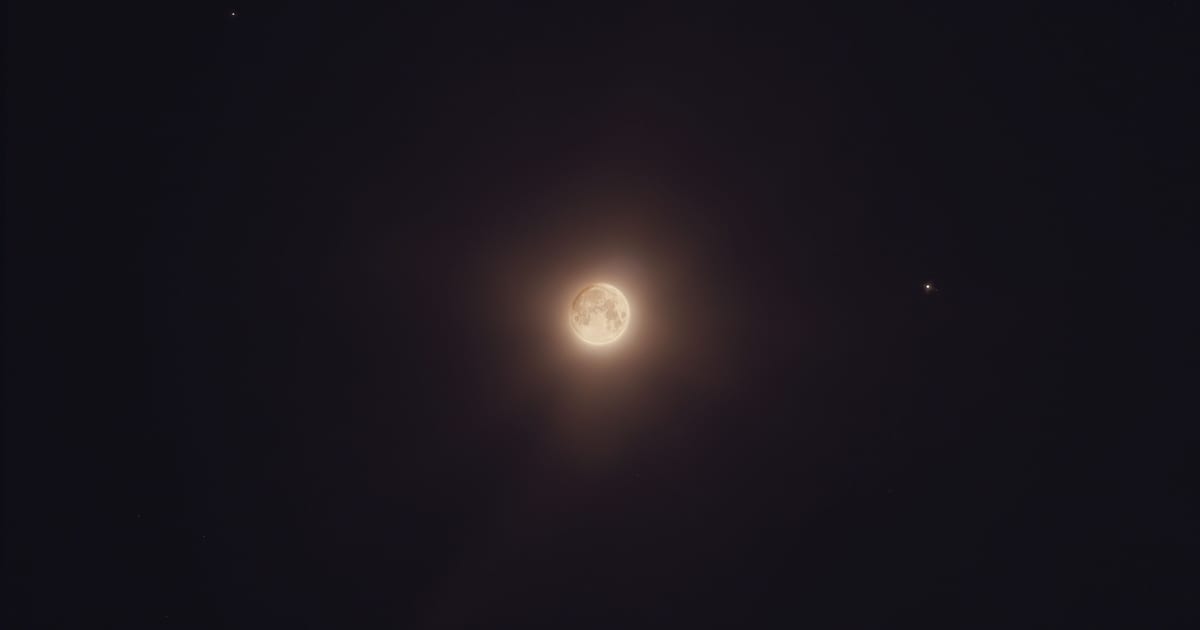
Comet 3I/ATLAS is in the Virgo constellation—here's how you can locate it
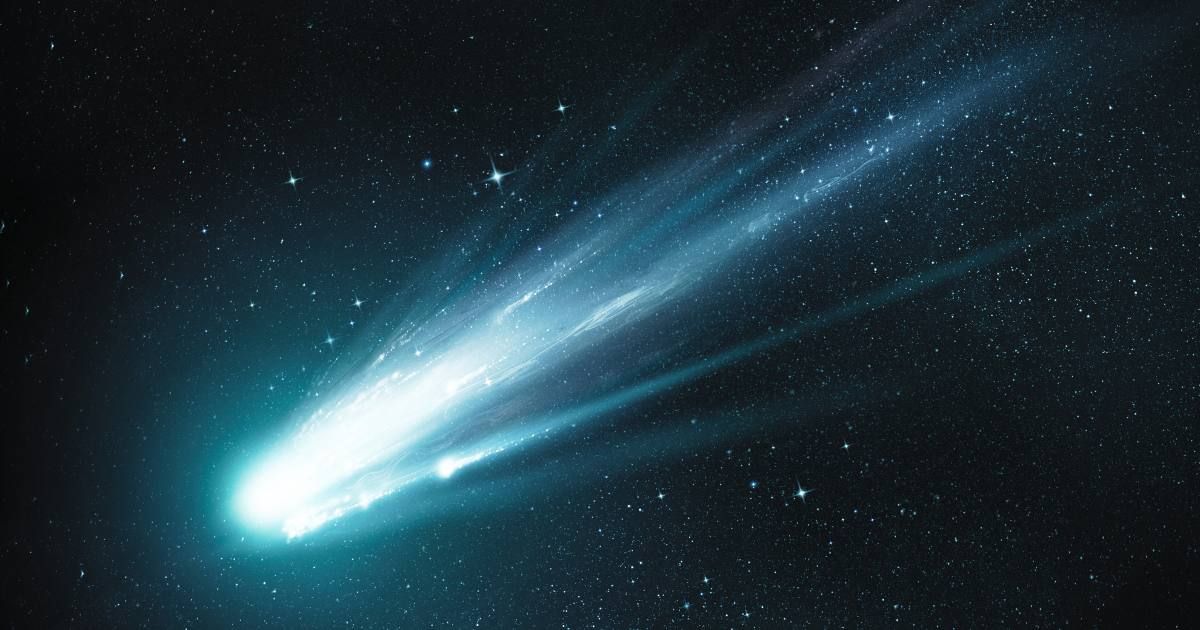
Astronomers are tracking comet 3I/ATLAS, the third confirmed interstellar visitor, currently observable within the constellation Virgo. The object is approximately 335.3 million kilometers from Earth (or 2.24 Astronomical Units, AU), meaning its light takes over 18 and a half minutes to reach our planet, as per Sky Live.
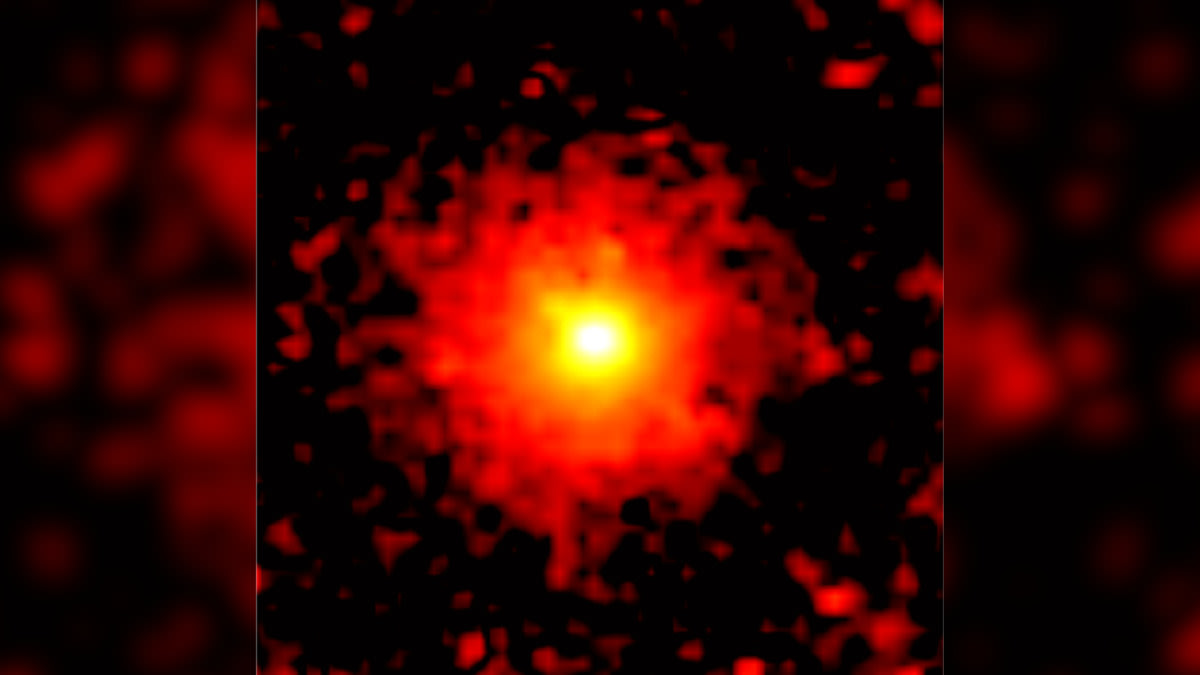
The comet's current celestial coordinates place it at a Right Ascension of 13h 17m 59s and a Declination of -06° 04’ 01”. For stargazers, the most anticipated event will occur on Friday, December 19, 2025, when 3I/ATLAS is projected to reach its closest point to Earth at 1.80 AU (about 268.9 million kilometers).
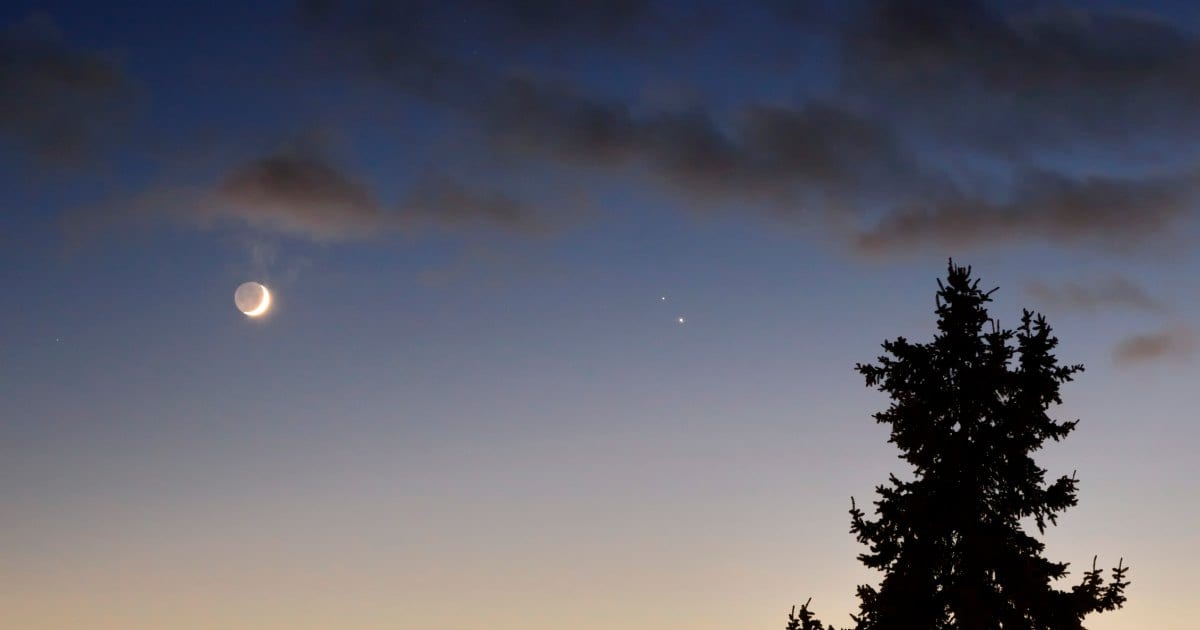
For immediate viewing prospects, experts are targeting November as the ideal window to observe the rare interstellar visitor. Dr. Franck Marchis of the SETI Institute noted that Comet 3I/ATLAS will be shining near Venus and the bright star Spica in Virgo, per IFL Science. "Around November 3, the comet will rise about two hours before sunrise. Its brightness may reach magnitude 10 — faint but visible through a telescope or good binoculars,” Dr. Marchis advised.
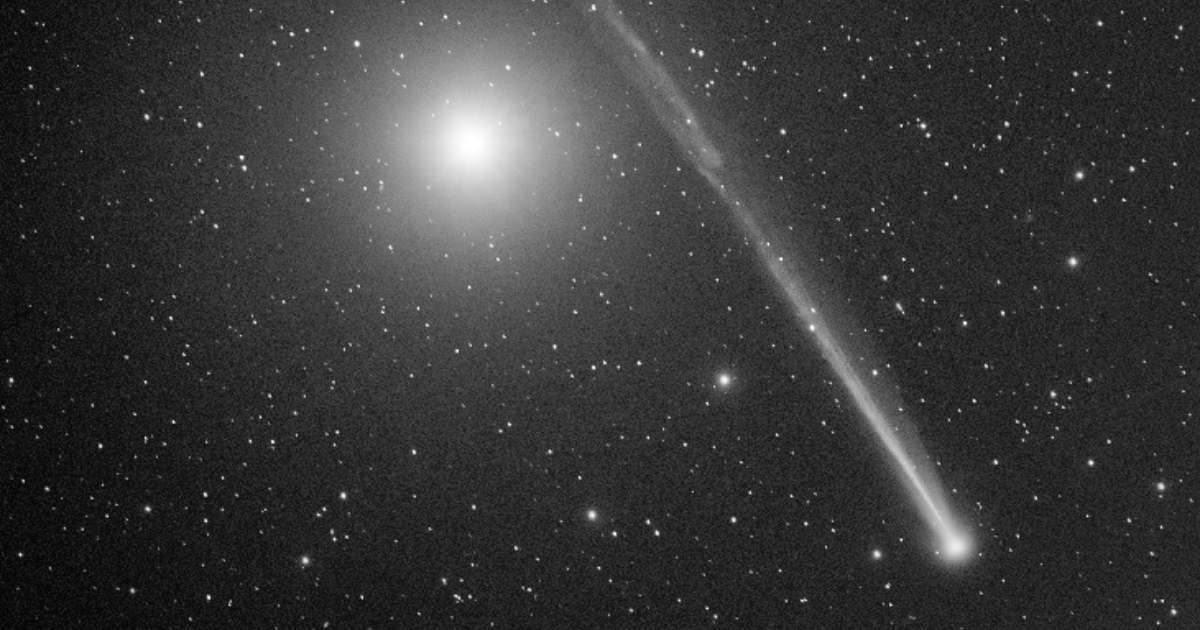
To locate the object, sky-watchers are directed to use Venus or Spica as initial guides, supplementing this with stargazing apps like SkySafari or Stellarium. Given that comets are inherently unpredictable, especially following perihelion, observers are cautioned that this November window might represent the best opportunity to catch the comet before its visibility shifts.
Discovered in July 2025 by the ATLAS survey network, 3I/ATLAS immediately drew speculation, largely due to initial comparisons with objects like ʻOumuamua. Early theories, notably supported by figures like Harvard's Dr. Avi Loeb, suggested the body might be evidence of an extraterrestrial probe. However, recent scientific analysis has strongly refuted the artificial origin hypothesis. New data now favor a purely natural explanation. Researchers posit that the approximately seven-mile-wide body is a lithified clastic fragment, essentially, a large chunk of cemented sedimentary rock ejected from a distant exoplanet, possibly one capable of supporting life.
![Hubble captured this image of the interstellar comet 3I/ATLAS on July 21, 2025, when the comet was 277 million miles from Earth. [Image Source: NASA, ESA, David Jewitt (UCLA); Image Processing: Joseph DePasquale (STScI)]](https://de40cj7fpezr7.cloudfront.net/c49eeb4e-e60a-46c0-b39f-68fbb2ee9297.jpeg)
This conclusion is underpinned by the comet's observed features, including its compact coma and spectral signature, which are now seen as aligning perfectly with models for stratified, layered rock formations. The focus has now shifted to leveraging this object's rare transit to gather unprecedented data on geology and planet formation outside our own solar system.
While the debate over its origin subsides, a new mystery has surfaced. Observations from the Atacama Large Millimeter Array (ALMA) recently indicated a non-gravitational acceleration acting upon 3I/ATLAS. ALMA data reportedly showed the object deviating by four arcseconds in Right Ascension from its expected path near perihelion. Scientists are now intensively analyzing these measurements to ascertain the cause of this significant nudge, which is too large to be fully accounted for by expected solar gravitational lensing effects. While scientific consensus solidifies around a natural origin, the race is on to capture the comet's fleeting visible light this month and unlock the secrets held within the high-resolution data bottleneck.
More on Starlust
Astronomers stunned as interstellar comet 3I/ATLAS unexpectedly turns blue and bright near the Sun
Interstellar comet 3I/ATLAS is visible again after perihelion, right on its predicted trajectory