Astronomers stunned as interstellar comet 3I/ATLAS unexpectedly turns blue and bright near the Sun
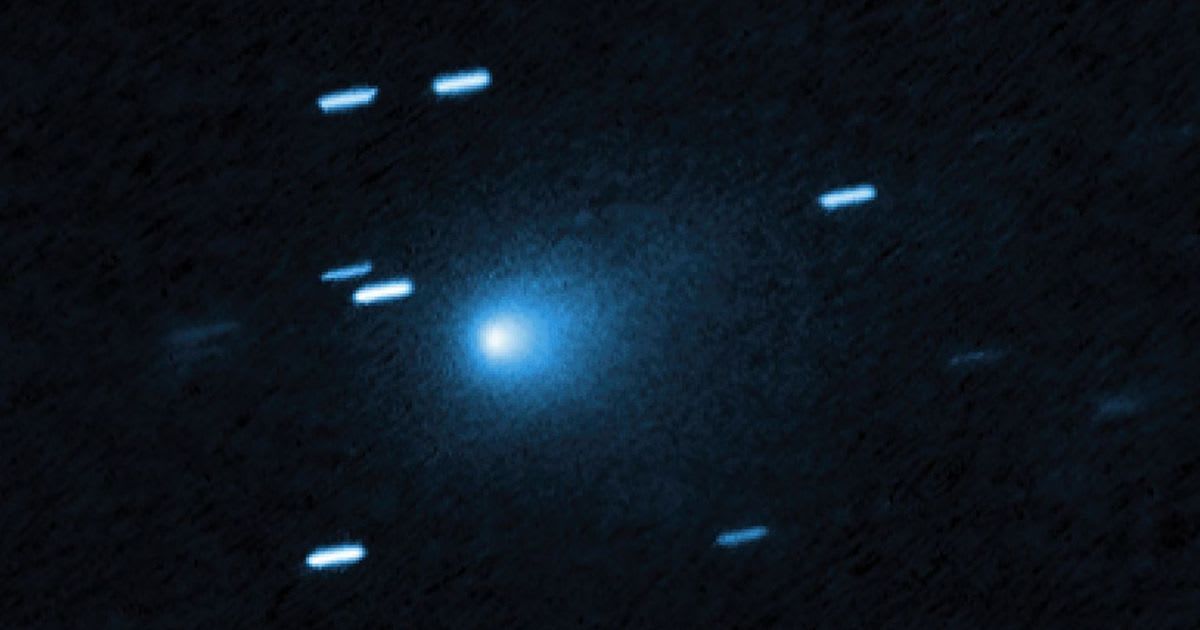
Astronomers tracking the interstellar comet 3I/ATLAS, only the third known object originating from beyond our Solar System, have observed a dramatically accelerated surge in brightness as it neared its closest approach to the Sun. A preprint of the research is available on arXiv.
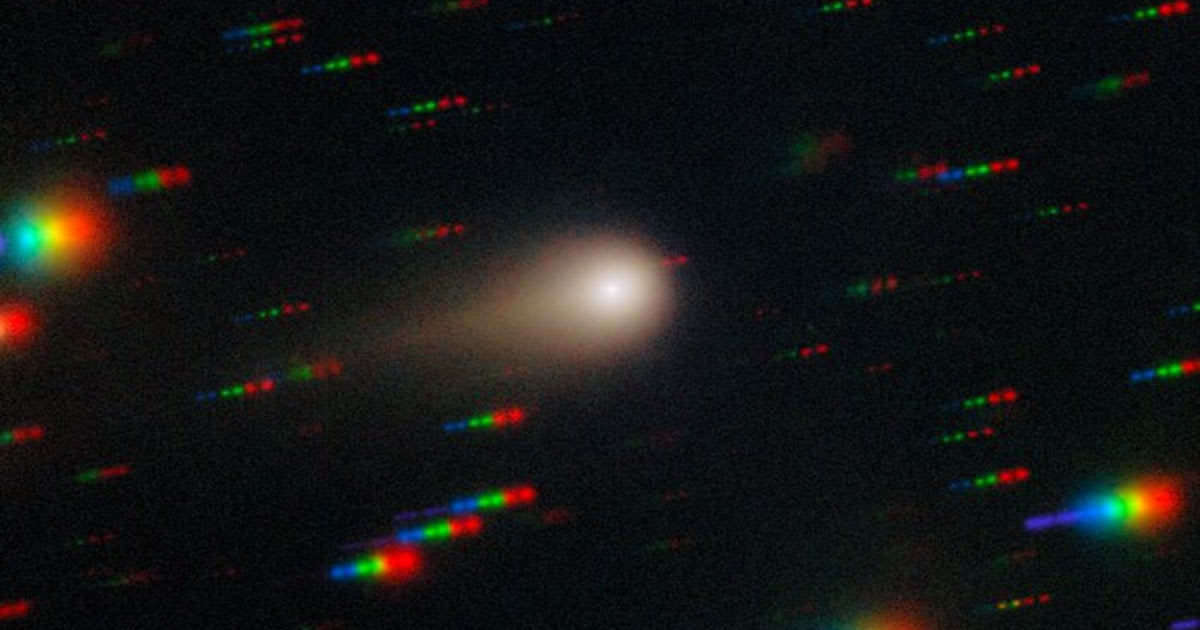
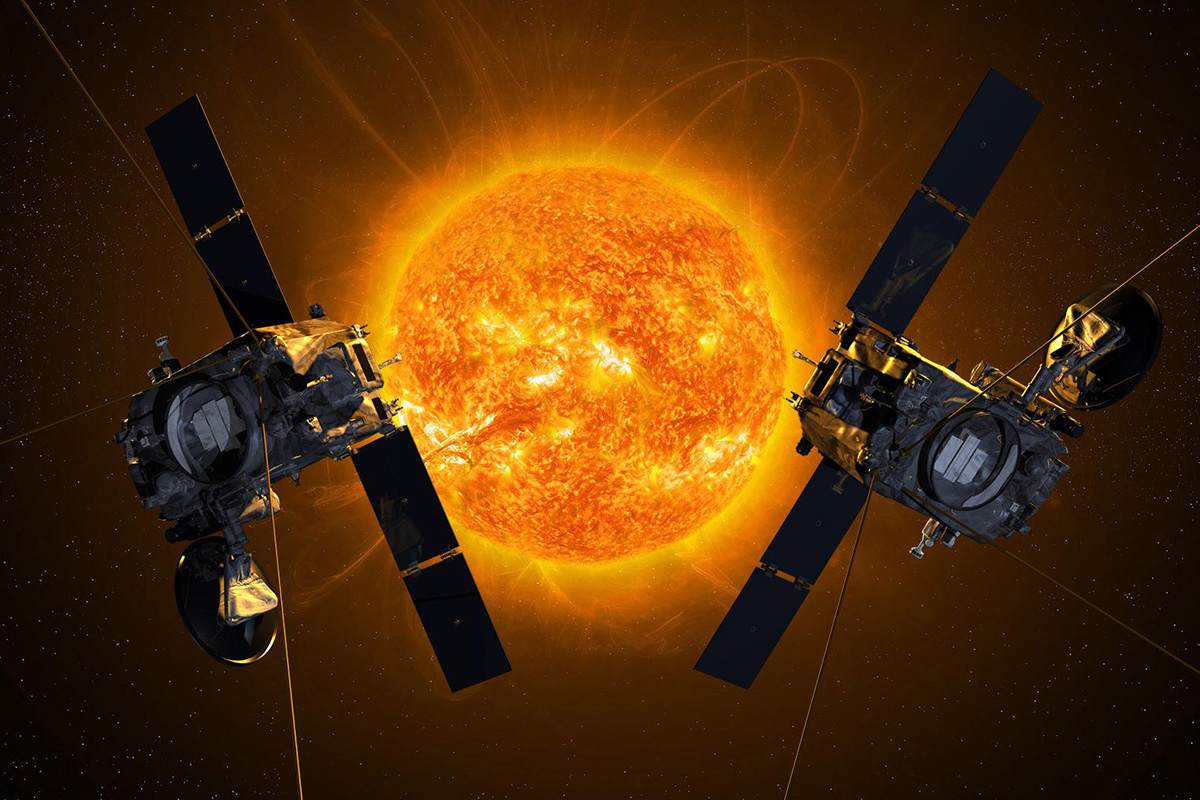
Because the comet spent a critical period almost directly behind the Sun from Earth, traditional ground-based observation was impossible, per Universe Today. Instead, researchers utilized data from solar monitoring satellites, specifically instruments on STEREO-A, SOHO, and GOES-19, to track the object's evolution near conjunction.
The observations, led by researchers at Lowell Observatory and the US Naval Research Laboratory, revealed that between mid-September and late October, as 3I/ATLAS closed in from 2 astronomical units (AU) to just 1.36 AU, its luminosity increased at a rate proportional to the inverse of the heliocentric distance to the 7.5 power. This rate is roughly twice as steep as typically seen for comets, suggesting its surface activity is highly unusual compared to native Solar System bodies, which usually brighten more gradually as ices sublimate into gas.
Significantly, the data indicated the comet is exhibiting a distinctly blue coloration, contrary to earlier findings that suggested its dust component was reddish. This shift strongly implies that gases, not just dust, are now the primary source of its visible light. Researchers hypothesize that emissions from molecules such as cyanogen and potentially ammonia are causing this vibrant blue signature. Furthermore, images captured by GOES-19's coronagraph confirmed the comet possessed a visible coma, or atmosphere, spanning approximately four arc-minutes, demonstrating that solar heating is causing the nucleus to actively shed material.

With the comet having passed perihelion on October 29 and now moving back into view in November and December, ground-based telescopes will soon have an opportunity to study the object in greater detail as it brightens to an estimated magnitude 9. The underlying cause for its hyper-efficient brightening remains under investigation, with current theories pointing toward its unique composition, high approach velocity, or modifications sustained during its long voyage through interstellar space.
The intense and unexpected activity level has left researchers searching for answers. According to Harvard astronomer Avi Loeb's Medium blog, the authors of the new study underscore the conundrum, stating, “The reason for 3I/ATLAS’s rapid brightening, which far exceeds the brightening rate of most Oort cloud comets at similar distances from the Sun, remains unclear.” The unusual blue color at perihelion is especially baffling to some scientists. Typical cometary dust and the object's cold surface should scatter sunlight in a way that makes the comet appear redder than the 5,800 Kelvin solar photosphere. The distinct blue light is so counter-intuitive that some observers are calling it a "ninth anomaly" in the growing list of strange properties exhibited by this interstellar object. This leads to the fundamental question: "Does it employ a power source that is hotter than the Sun?"
More on Starlust
Harvard astronomer Avi Loeb calls on NASA to release scientific data on interstellar comet 3I/ATLAS