Harvard astronomer says 8 key anomalies suggest comet 3I/ATLAS may have a 30% chance of being an alien technology

A prominent Harvard astronomer, Avi Loeb, has been making headlines with his viral claims about the origins of interstellar comet 3I/ATLAS. After assigning a 30 percent probability that 3I/ATLAS is not a naturally occurring cosmic body, but rather a piece of advanced alien technology, Loeb has now listed eight highly unusual characteristics of the comet on his Medium blog that he says defy conventional astronomical explanation. The anomalies were discussed during the Q&A segment that the Harvard professor conducted to clarify his claims.
![Hubble captured this image of the interstellar comet 3I/ATLAS on July 21, 2025, when the comet was 277 million miles from Earth. [Image Source: NASA, ESA, David Jewitt (UCLA); Image Processing: Joseph DePasquale (STScI)]](https://de40cj7fpezr7.cloudfront.net/c49eeb4e-e60a-46c0-b39f-68fbb2ee9297.jpeg)
The object has been designated a rank of 4 on the Loeb scale, which measures the likelihood of an object being technological, where 0 is purely natural and 10 is definitely artificial. The findings center on properties of 3I/ATLAS that present vanishingly low statistical probabilities for a natural comet. The enigmatic interstellar object 3I/ATLAS has defied conventional astronomy with a host of statistically improbable characteristics. In the first pointer, he stated that its orbital path is an immediate anomaly, showing an uncommon alignment with the solar system’s ecliptic plane (0.2% likelihood). Furthermore, in the second pointer, he stated that the object displayed an atypical, confirmed sunward jet not seen in normal comets.
For the third pointer, he explained that the nucleus is millions of times more massive than `Oumuamua and more massive and faster than Borisov, a combination with less than a 0.1% chance of being natural. Continuing the trend of improbable orbital mechanics, in the fourth pointer, he stated its arrival exhibited improbable timing (0.005% likelihood), positioning it near three planets while simultaneously ensuring it was unobservable from Earth at perihelion.

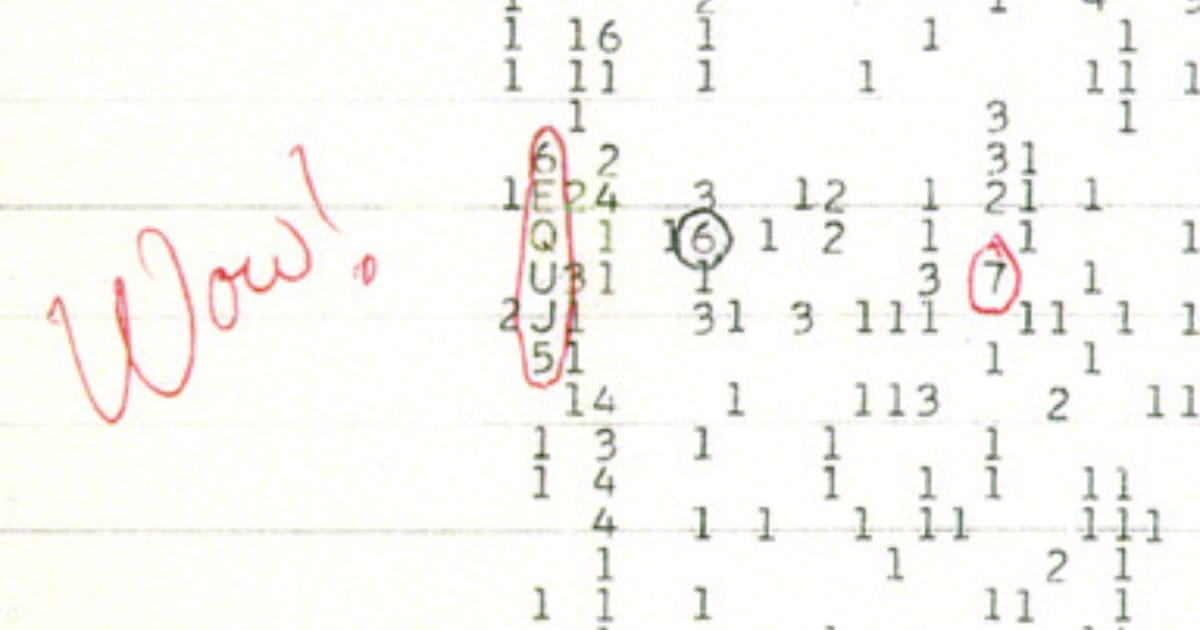
The chemical and spectral findings reinforce the mystery. In the fifth pointer, the object's chemical exhaust hinted at artificial origins; he stated that the gas plume shows an industrial chemical signature, with a nickel-to-cyanide ratio orders of magnitude higher than all known comets and an excess of nickel over iron (less than 1% likelihood). The sixth pointer stated that it also has a significant water deficiency (only 4% water by mass). 3I/ATLAS exhibits extreme negative polarization, a characteristic unprecedented for a comet (less than 1% likelihood), Avi Loeb pointed this out in his seventh pointer. Finally, in the eighth pointer, he stated that its arrival direction remarkably coincides with the 'Wow! Signal' (0.6% likelihood).
The discovery of these anomalies necessitates an intensified effort to gather data. The astronomer emphasized that the potential implications of an alien technology are monumental, demanding that this possibility be taken with utmost seriousness. If 3I/ATLAS is indeed technological, its scale alone suggests its builders possess capabilities far exceeding our own; for context, even the largest operational human rocket, Starship, is estimated to be a hundred times smaller than 3I/ATLAS, Loeb wrote in his Medium blog.

Dr. Avi Loeb and his team have not shied away from exploring the potential for an artificial origin, linking the object's unusual traits to possible extraterrestrial strategies. Loeb also specifically entertained a hypothetical scenario drawn from the "Dark Forest" hypothesis, a concept from science fiction where advanced civilizations remain hidden due to fear, suggesting the object could be part of an interstellar mission. His team pointed to the object's highly unusual, near-ecliptic retrograde orbital tilt, arguing this specific alignment "offers various benefits" for an Extra-terrestrial Intelligence (ETI) approaching Earth.
While Dr. Loeb remains committed to exploring the artificial hypothesis, assigning a 30 to 40 percent probability that the object is non-natural, a case he believes would be strengthened if its size exceeds five kilometers, most astronomers are prioritizing a different focus. The consensus in the broader scientific community is to view 3I/ATLAS as a rare and invaluable opportunity to study a potentially 10-billion-year-old fragment ejected from a distant planetary system, maximizing its scientific return regardless of its ultimate nature.
More on Starlust
3I/ATLAS reaches perihelion—here's when it will be visible from Earth again