ATLAS telescope spots an 'interstellar comet' from beyond our solar system
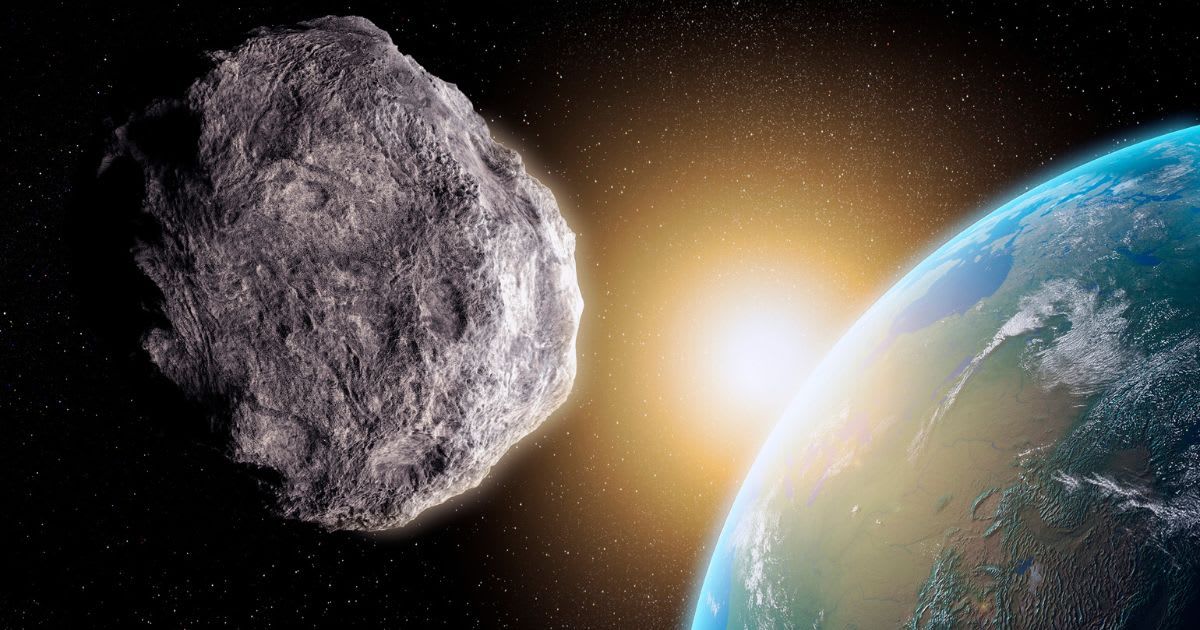
A comet originating from interstellar space has been officially identified, following initial observations by the NASA-funded ATLAS (Asteroid Terrestrial-impact Last Alert Systems) survey telescope in Rio Hurtado, Chile. The discovery, first reported on July 1, designated the celestial body 3I/ATLAS. It is presently located approximately 420 million miles (670 million kilometers) from Earth, approaching from the direction of the constellation Sagittarius, as per NASA.

Subsequent to the initial report, astronomers compiled earlier observational data, extending back to June 14, from archives of various ATLAS telescopes globally and the Zwicky Transient Facility at the Palomar Observatory in San Diego County, California. This pre-discovery information, augmented by additional observations from numerous other observatories, has facilitated a more precise understanding of the interstellar object's trajectory.
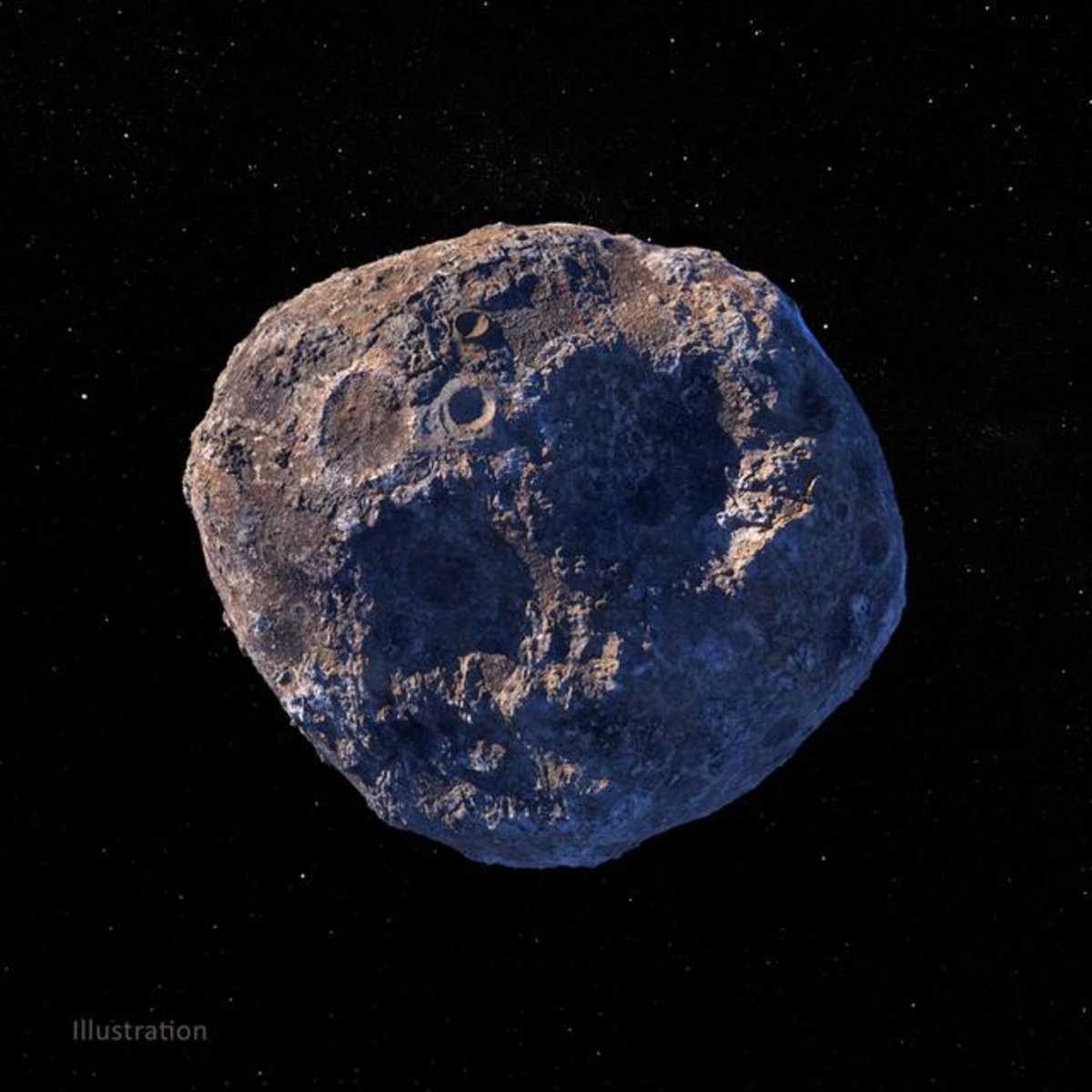
NASA has affirmed that 3I/ATLAS poses no threat to our home planet, Earth, maintaining a minimum distance of 1.6 astronomical units, aka AU (approximately 150 million miles or 240 million kilometers). The comet is currently situated 4.5 AU (about 416 million miles or 670 kilometers) from the Sun. Its closest approach to the Sun is projected to be around October 30, at a distance of 1.4 AU (approximately 130 miles or 210 million kilometers), just within Mars' orbit. The scientific community is actively engaged in investigating the comet's size and physical properties. While 3I/ATLAS is expected to remain observable by ground-based telescopes through September, its proximity to the Sun will temporarily obscure it. Re-observation is anticipated by early December as it emerges from behind the Sun.
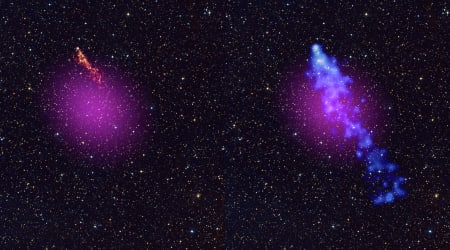
While NASA's ATLAS survey keeps an eye on interstellar comets passing through our solar system, another groundbreaking mission, the James Webb Space Telescope (JWST), is pushing the boundaries of cosmic observation. Webb has recently delivered its most intricate images of the Bullet Cluster, revealing a surprising number of faint, far-off galaxies and providing crucial new details about dark matter distribution and the mechanics of galactic collisions. This striking data has allowed scientists to create the most thorough map ever of the material within colliding galaxy clusters.
Hello darkness my old friend…
— NASA Webb Telescope (@NASAWebb) June 30, 2025
What you are (not) seeing, highlighted in blue, is dark matter. Webb was used to precisely map out the dark matter that is part of the makeup of two colliding galaxy clusters. https://t.co/Qxb3O8jOuP pic.twitter.com/tMxIYyT4lQ
These observations, captured by Webb's Near-Infrared Camera (NIRCam), have significantly refined previous estimates of the Bullet Cluster's immense mass. “With Webb’s observations, we carefully measured the mass of the Bullet Cluster with the largest lensing dataset to date, from the galaxy clusters’ cores all the way out to their outskirts,” explained Sangjun Cha, lead author of the study published in The Astrophysical Journal Letters. Earlier studies, working with less exhaustive lensing data, couldn't get such precise mass estimates for this colossal system. “Webb’s images dramatically improve what we can measure in this scene — including pinpointing the position of invisible particles known as dark matter,” added co-author Kyle Finner.
Galaxy clusters are vast collections of galaxies held together by gravity. They act like natural magnifying glasses, bending and enlarging light from galaxies behind them. This effect, known as 'gravitational lensing,' is essential for mapping the mysterious dark matter, which makes up a large part of the universe's mass but doesn't interact with light. “Gravitational lensing allows us to infer the distribution of dark matter,” clarified co-author James Jee.