November 2025 skywatching guide: This year's biggest supermoon, Leonids fireballs and more
November 2025 is prime time for skywatching, featuring the year's biggest Supermoon, the prolific Leonids meteor peak, and must-see planetary close calls.
UPDATED OCT 28, 2025
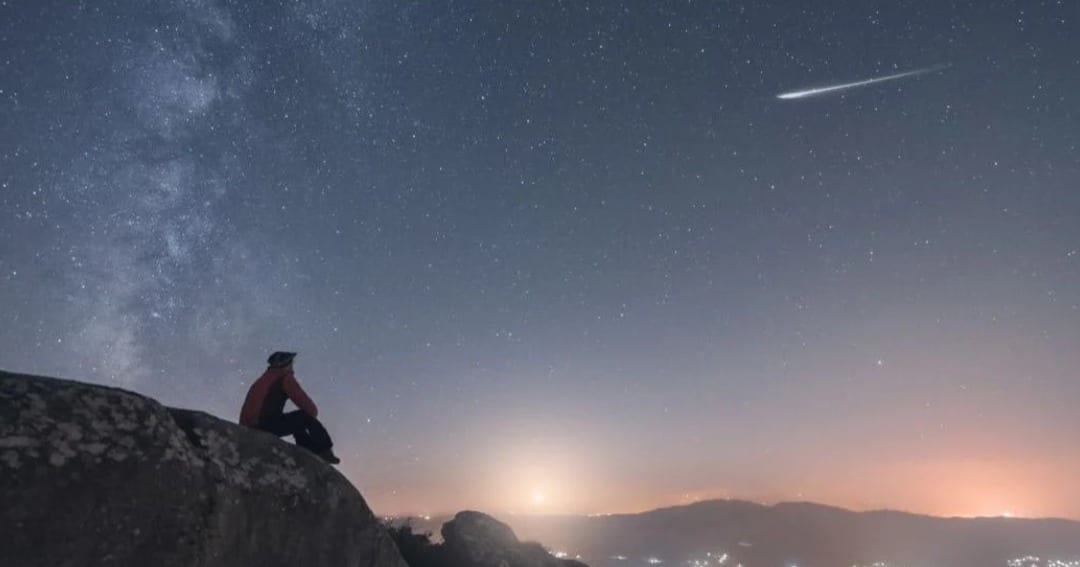
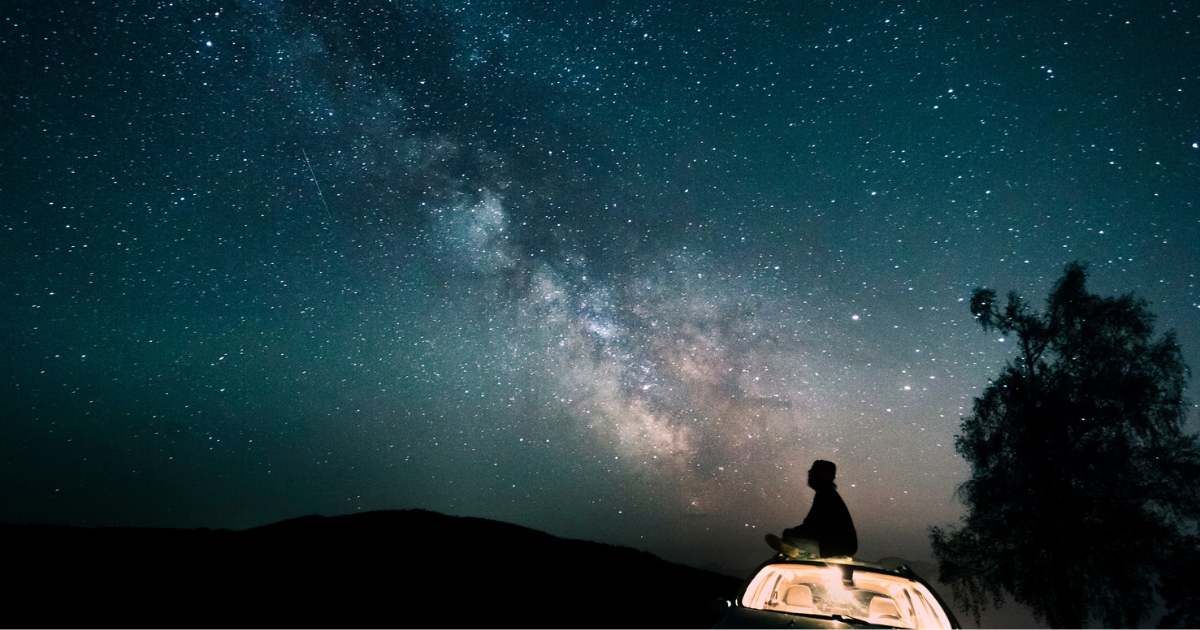
Austria, Mondsee, silhouette of man sitting on car roof under starry sky (Representative Cover Image Source: Getty | Westend61)

Stargazers, prepare your calendars. November 2025 is shaping up to be an action-packed month for celestial observation, featuring a record-breaking Supermoon, two meteor shower peaks, and a rare alignment of the outer planets. Here are the must-see astronomical highlights to look forward to. 

Teenagers watching a meteor shower (Representative Cover Image Source: Getty | harpazo_hope)
Teenagers watching a meteor shower (Representative Image Source: Getty | harpazo_hope)

November 1: Mercury's highest evening view

The swift planet Mercury reaches its maximum visible altitude in the evening sky, with a magnitude of -0.2. However, observers in northern latitudes, such as New York City, will find this a challenging, low-on-the-horizon viewing 7° at sunset), as per In-The-Sky.org.
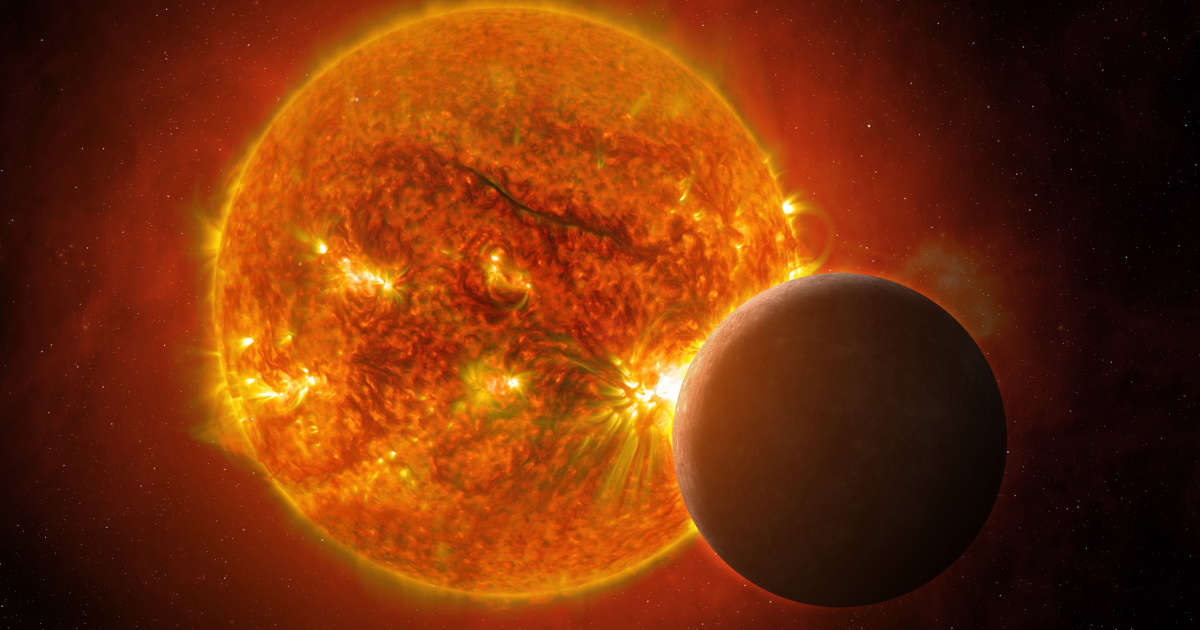
View of the planet Mercury and Sun from space (Representative Cover Image Source: Getty | buradaki)

November 2: Moon-Saturn conjunction

The Moon and ringed planet Saturn stage their first close encounter of the month, appearing just 3°13' apart. According to In-The-Sky.org, visible in the southeastern sky shortly after dusk, the pair will climb to a 45° altitude before midnight. 

Image of Saturn Moons Concept Art (Represenataive Image Source: )
Image of Saturn Moons Concept Art (Representative Image Source: NASA)

November 5: Supermoon

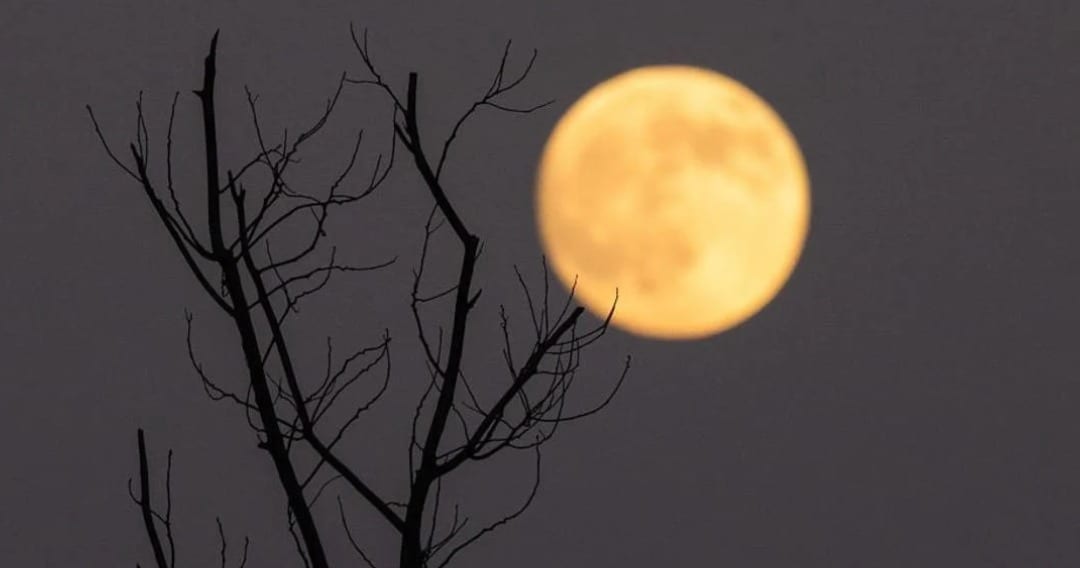
The Full Hunter's Moon officially occurs at 13:19 GMT. This is the biggest and brightest Supermoon of 2025, presenting a disk 7.9% larger and 16% brighter than a regular Full Moon. It shines from the constellation Aries, as per Starwalk.
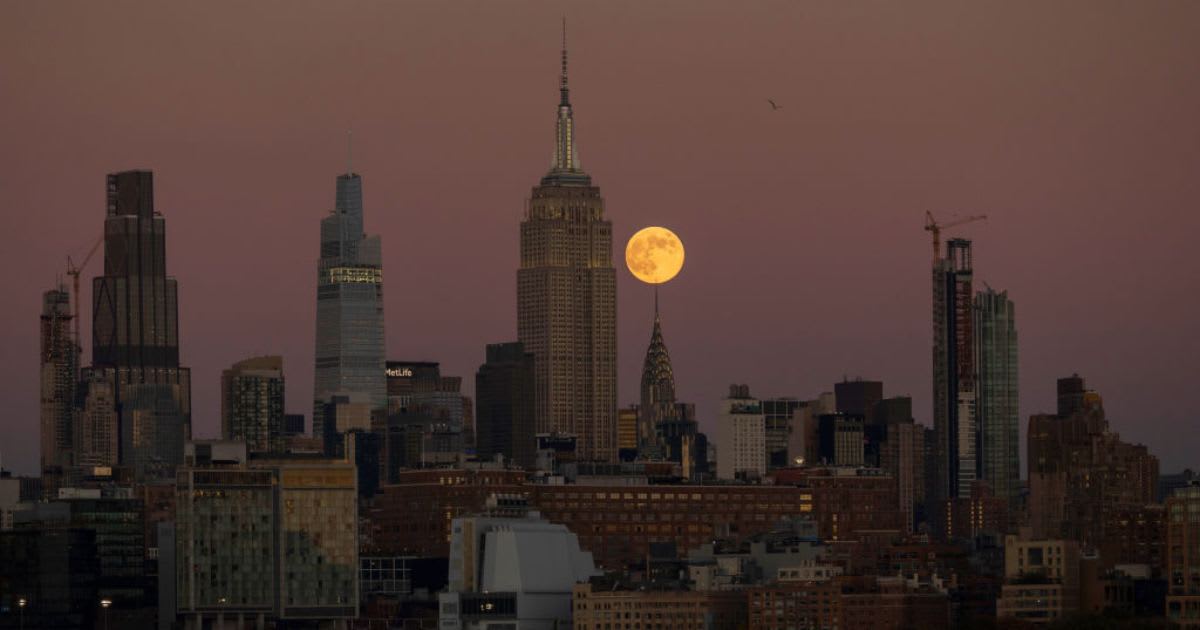
The full Beaver Supermoon rises behind the Chrysler Building and the Empire State Building in New York City as the sun sets on November 15, 2024 (Cover Image Source: Getty | Gary Hershorn)
The full Beaver Supermoon rises behind the Chrysler Building and the Empire State Building in New York City as the sun sets on November 15, 2024 (Image Source: Getty | Gary Hershorn)

November 7: Lunar occultation of Beta Tauri

The Moon passes directly in front of the bright star Beta Tauri (Elnath), according to In-The-Sky.org. This stellar eclipse will only be visible across parts of South America and Africa, though a close pairing will be observable elsewhere. 

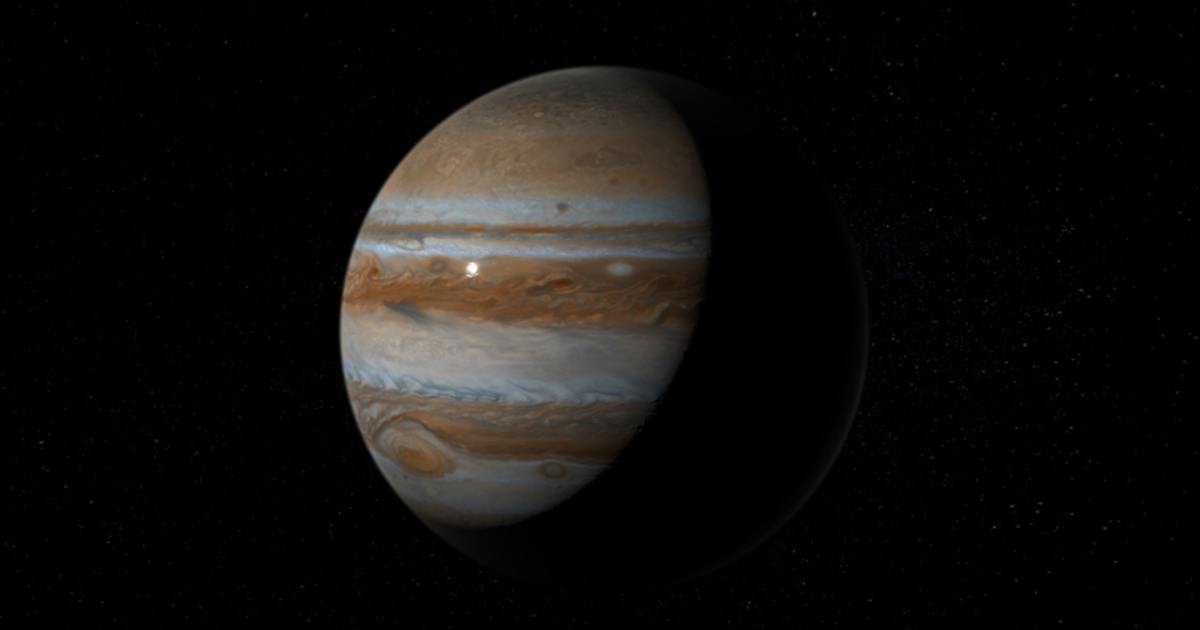
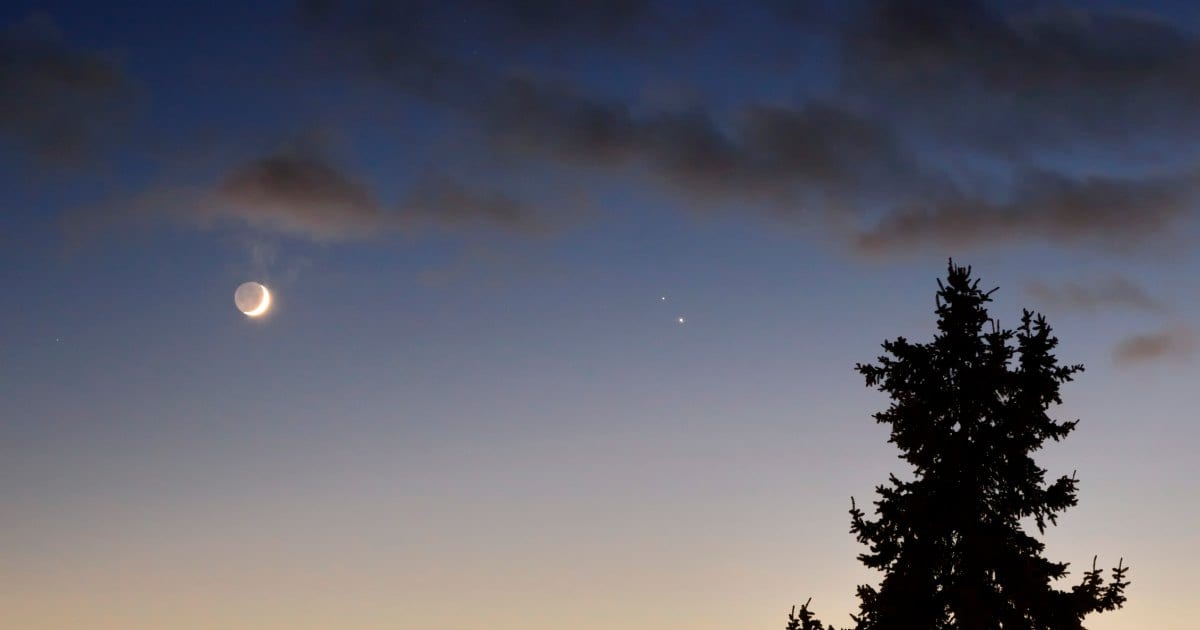
November 10: Moon-Jupiter Close Approach

The 70%-illuminated Moon moves into close proximity with the giant planet Jupiter (mag -2.4). The duo will be easily observable with the naked eye or binoculars in the constellation Gemini, with their closest separation at 3°51' occurring at 09:09 GMT, as mentioned on Starwalk

A digital illustration of Jupiter.
(Representative Image Source: Getty Images | 	Artur Debat.)
A digital illustration of Jupiter. (Representative Image Source: Getty Images | Artur Debat.)

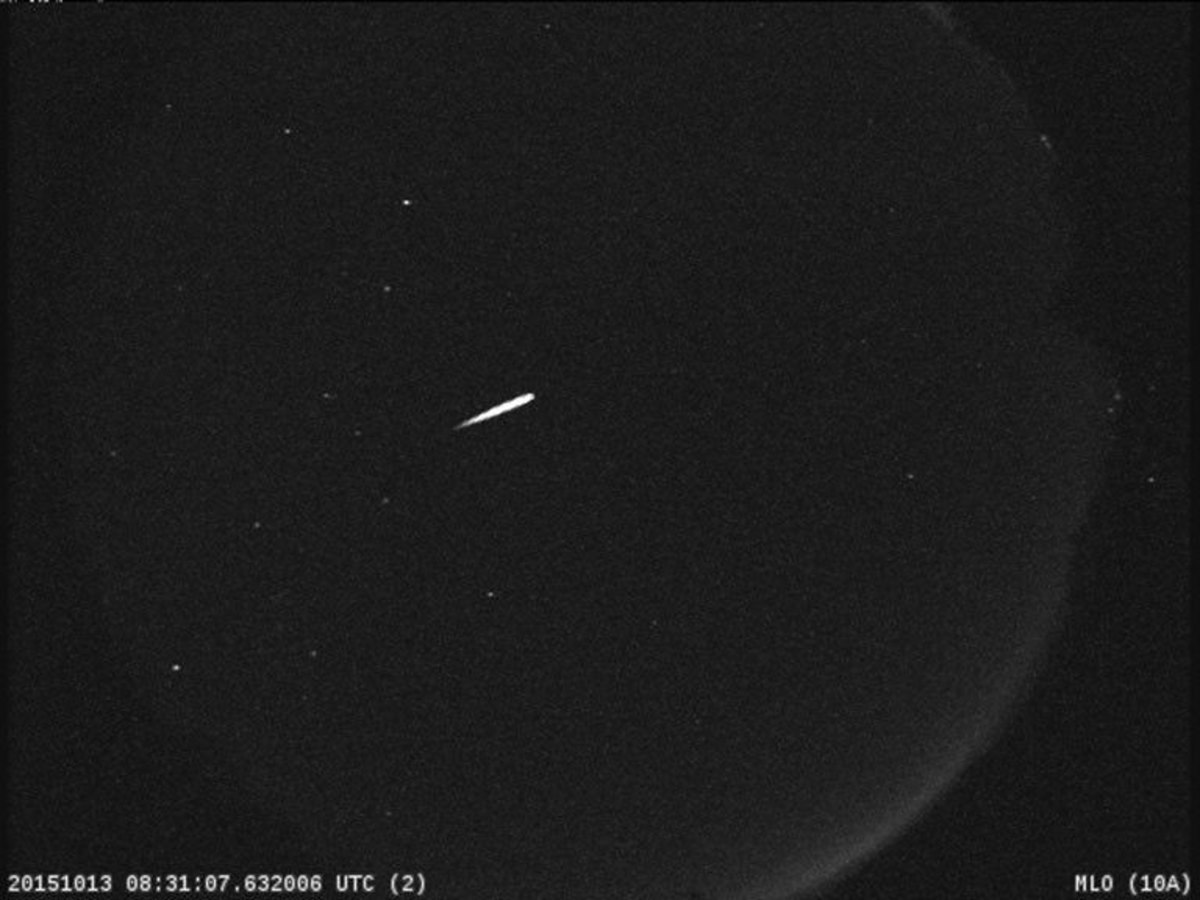
November 11-12: Northern Taurid meteor peak

The Northern Taurids, active until December 10, reach their peak, offering a modest rate of up to 5 meteors per hour. This shower is renowned for producing a high number of bright, dramatic fireballs. Note: 61% lunar illumination will interfere with dimmer sightings.
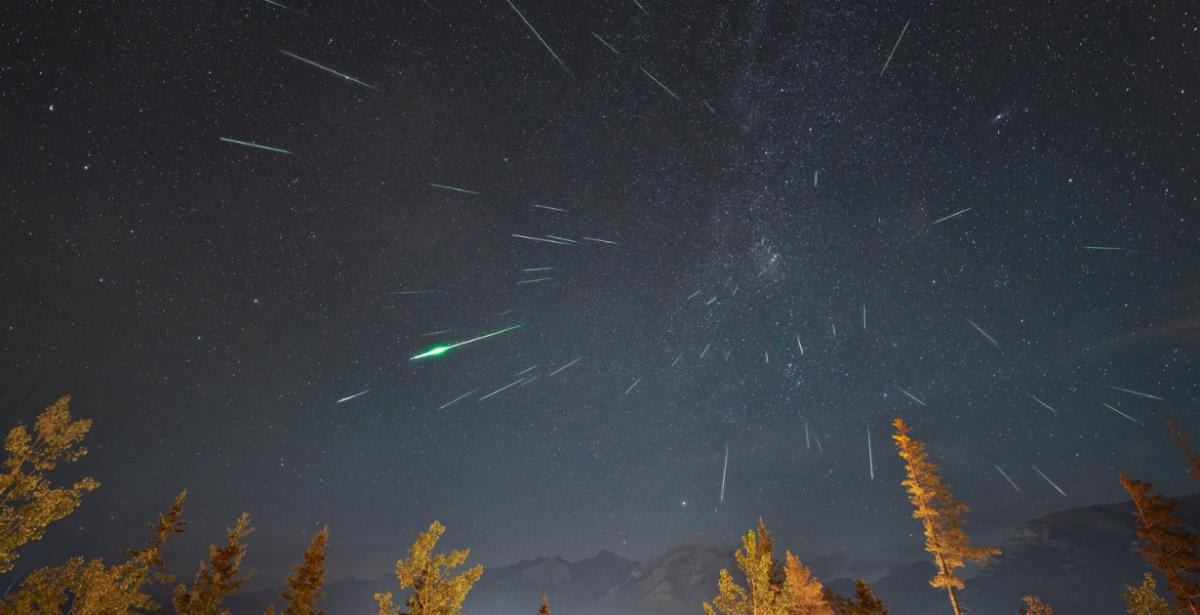
The Perseid meteor shower above Canmore in the Canadian Rockies, Alberta, Canada (Representative Image Source: Getty Images | Nick Fitzhardinge)

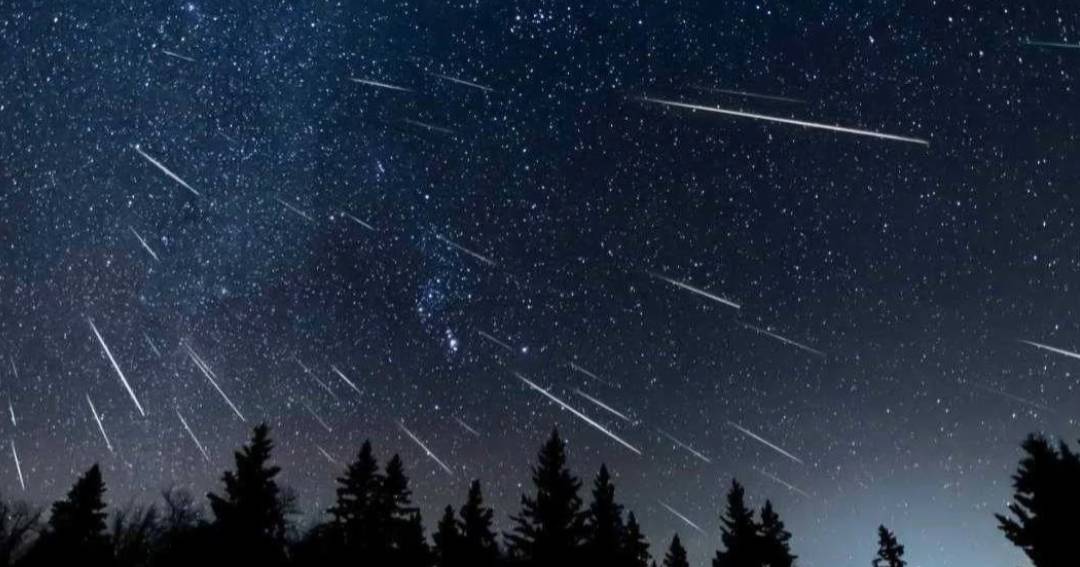
November 17-18: Leonids meteor shower peak 

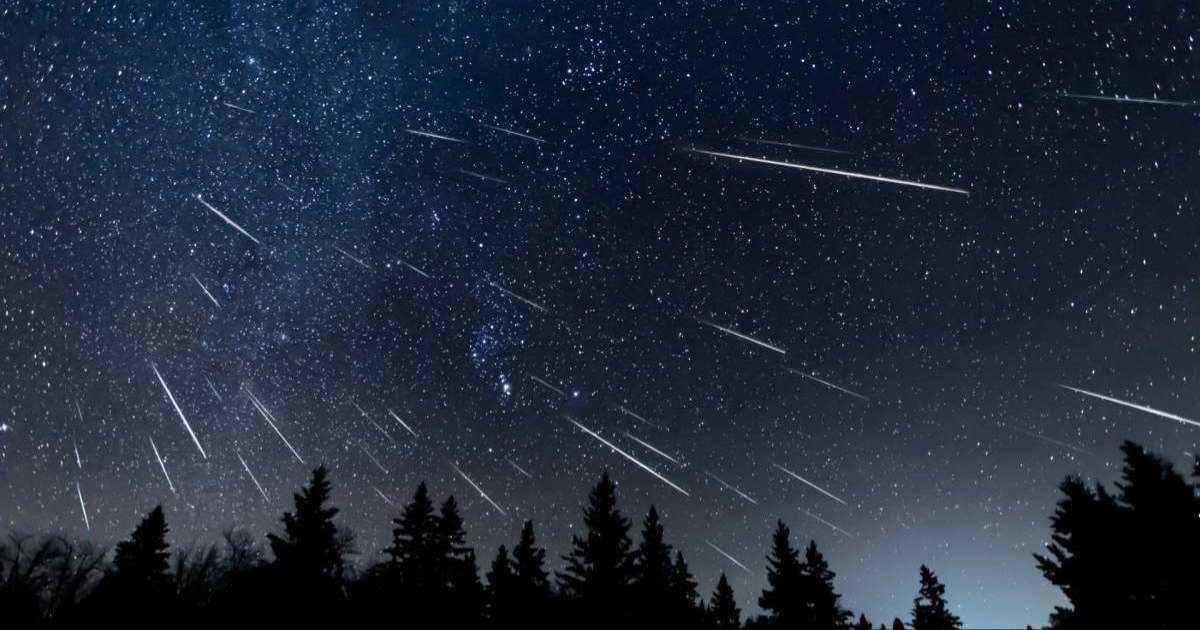
This highly anticipated shower peaks with a favorable forecast of 10-15 meteors per hour. With minimal interference from the 7%-illuminated Moon, viewing conditions are excellent. The radiant in Leo rises around midnight, reaching its zenith at dawn.
The Southern Delta Aquariids (Image Source: NASA)
The Southern Delta Aquariids (Representative Image Source: NASA)

November 21: Uranus at opposition

The ice giant Uranus (mag 5.6) reaches its closest point to Earth and is fully illuminated by the Sun (12:17 GMT). This represents the best viewing window of the year to observe the planet, though binoculars or a telescope are still required to spot it in the constellation Taurus. 

An infrared composite image of the two hemispheres of Uranus obtained with Keck Telescope adaptive optics (Image Source: NASA Image and Library | NASA)

November 22: Moon at perihelion and Comet 210P/Christensen perihelion

The Moon reaches its closest orbital point to the Sun (0.9852 AU), an event that occurs near the time of the New Moon, per In-The-Sky.org. On the same night, Comet 210P/Christensen makes its closest approach to the Sun at a distance of 0.52 AU. 
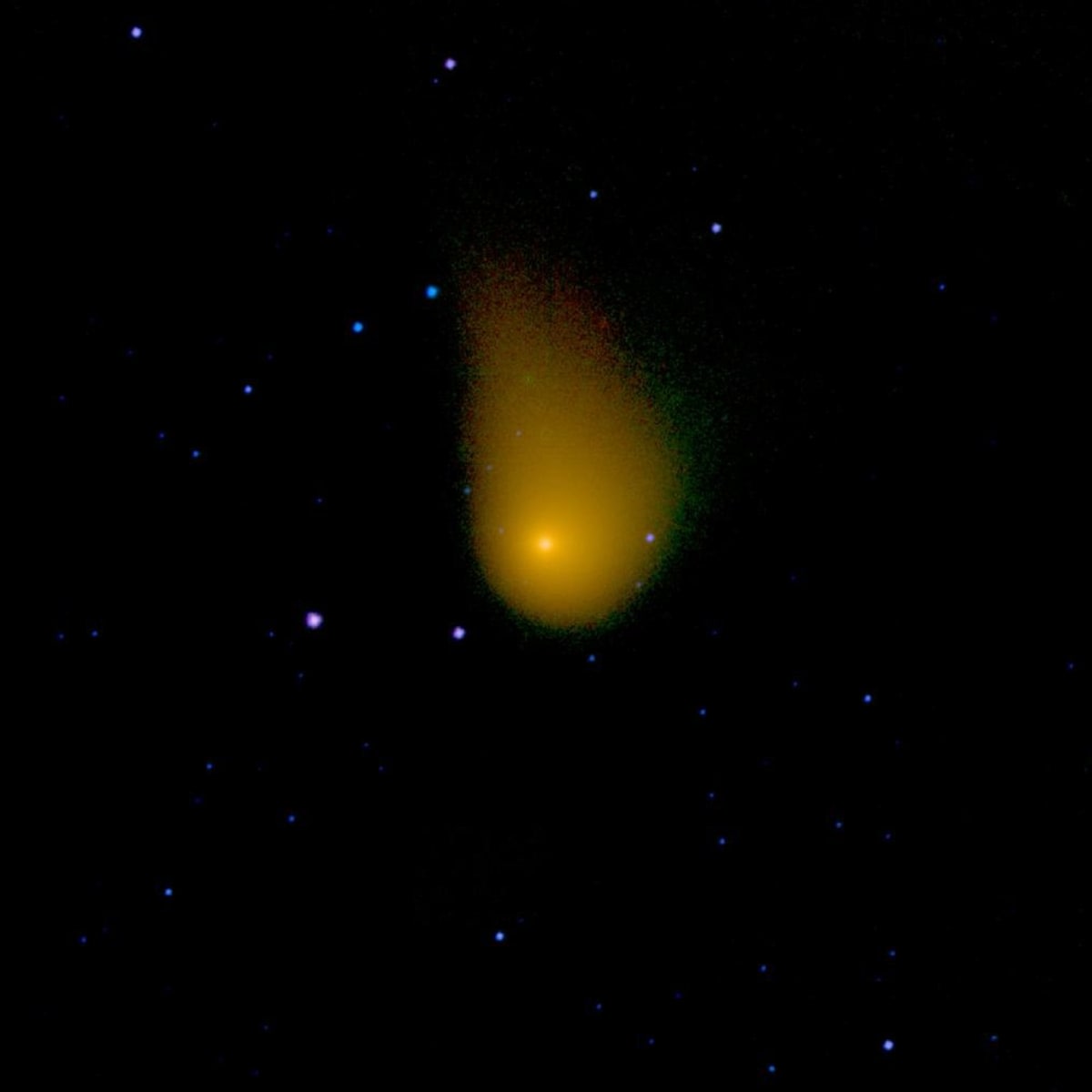
An infrared view from NASA's NEOWISE mission of the Oort cloud comet C/2006 W3 (Christensen) (Representative Image Source: NASA/JPL)

November 28: Orionid meteor Peak

The November Orionid meteor shower reaches its highest activity rate and will be active from 13 November to 6 December. Meteors will be visible when the shower's radiant in the constellation Orion is above the horizon, as per In-The-Sky.org

Orionid meteors appear every year when Earth travels through an area of space littered with debris from Halley’s Comet (Image Source: NASA/JPL)

November 29: Moon-Saturn final conjunction

The 9-day-old Moon and Saturn (mag 0.8) have their second close encounter of the month. They will be separated by 3°18', offering a picturesque pairing visible with the naked eye or binoculars between the constellations Pisces and Aquarius, per In-The-Sky.org.  

More on Starlust

Beaver Moon 2025: When and how to see the November Supermoon

Don't miss Southern Taurids meteor shower peaking around November 4—best viewing tips
MORE STORIES

The X5-class solar flare on Wednesday bombarded energetic protons toward Earth and they are penetrating the atmosphere all the way to the ground.
6 hours ago
The Moon will be approximately 221,965 miles from Earth during the final supermoon appearance of the year.
16 hours ago
The Northern Taurids meteor shower, active from late October to early December, typically generates a low maximum rate of just five meteors per hour.
1 day ago
Situated approximately 202 million miles away, interstellar comet 3I/ATLAS is currently traversing the constellation Virgo.
2 days ago
The comet currently resides in the constellation Ophiuchus (The Serpent-bearer), positioned about 147 million kilometers from our planet.
5 days ago
This significant, Supermoon-proximate lunar event offered breathtaking photographic subjects, spanning from urban skylines to major sporting events.
6 days ago
Earth faces an imminent solar impact, with a Coronal Mass Ejection (CME) predicted to arrive as soon as Thursday evening, November 6 (EST).
6 days ago
For the most dramatic visual effect, experts recommend watching for the Moon just as it ascends above the eastern horizon at sunset.
7 days ago
The closest approach of comet 3I/ATLAS to Earth will happen on Friday, 19 December 2025, at a distance of 1.797478 Astronomical Units.
7 days ago
Observers should plan to observe the spectacle throughout the evenings of Tuesday, November 4, and Wednesday, November 5, 2025.
Nov 4, 2025