Aurora forecast: Solar wind, CME to trigger northern lights in Maine and other U.S. states on November 6
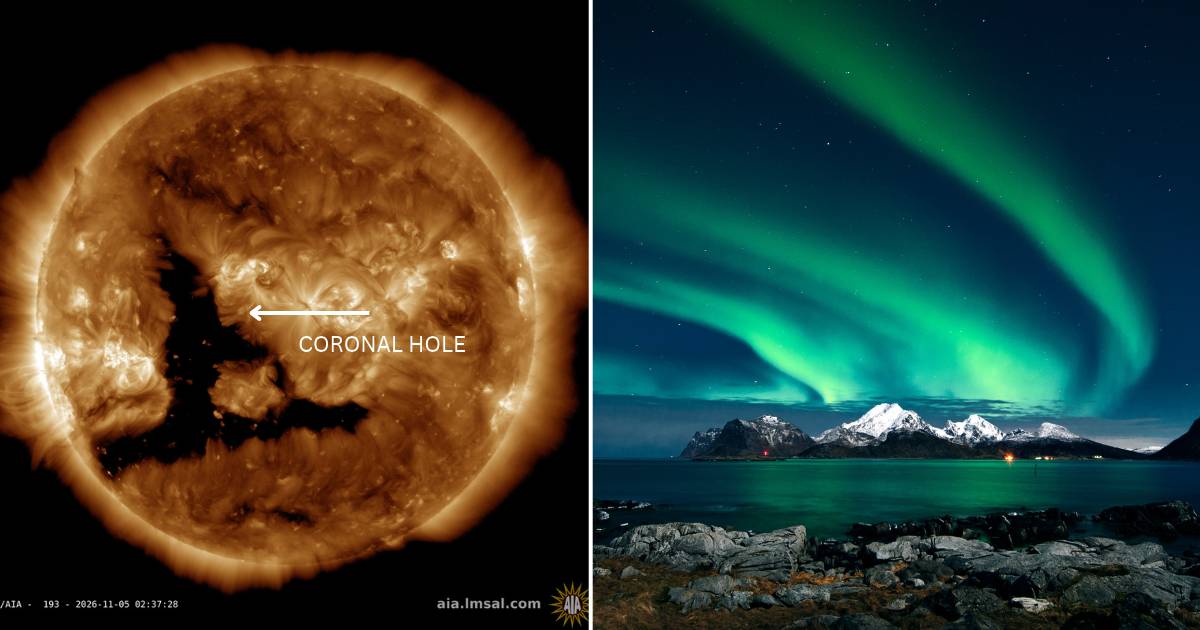
Inclement space weather is on the cards this week with a high-speed solar wind stream and a coronal mass ejection (CME) set to hit Earth. NOAA’s Space Weather Prediction Center (SWPC) has reported that aside from some adverse effects on Earth, auroras are likely to be visible in the evening hours of November 6, 2026. Images of the Sun obtained from NASA's Solar Dynamics Observatory have revealed an L-shaped coronal hole, which is understood to have been the origin of the solar wind.
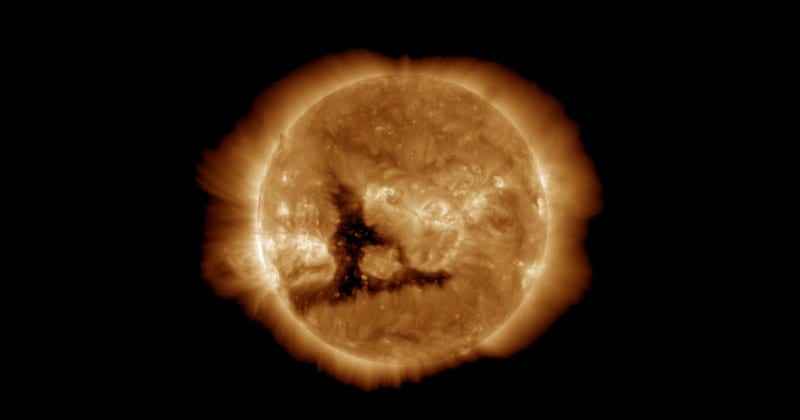
Coronal holes on the Sun are regions where open magnetic fields are present. Because the magnetic field lines in these low-density regions do not curve back down to the surface, solar winds readily escape from here. Because of their origins, jets of solar plasma emanating from these darkened regions (when observed in X-ray light) are called CH HSS (coronal hole high-speed streams). The incoming CH HSS can sometimes be driven to speeds of hundreds of miles per second, and when they strike the upper layers of our atmosphere, disturbances can be caused to the Earth's magnetic field. This is how geomagnetic storms erupt and result in the spectacular phenomenon of auroras.
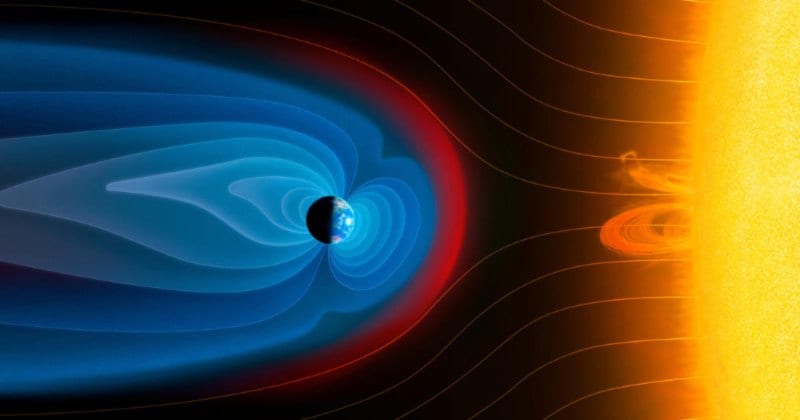
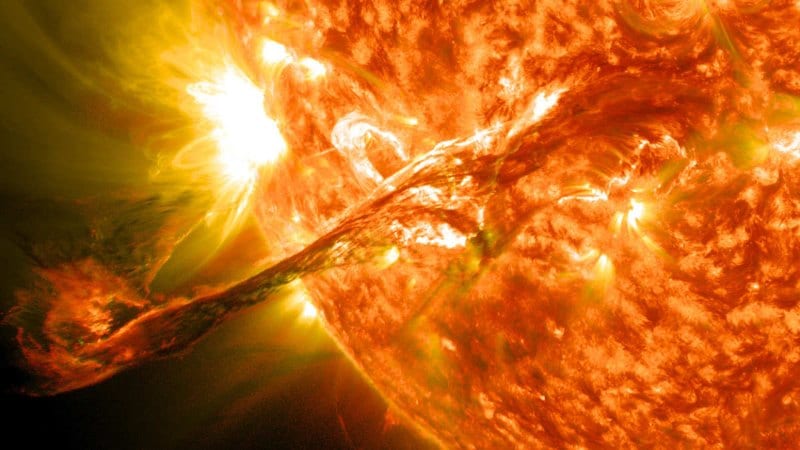
The northern lights—as they are sometimes called—usually occur due to more violent releases of energy and solar plasma from our host star. These can include the likes of solar flares and coronal mass ejections, which can send intense radiation and billions of tons of solar plasma with embedded magnetic fields in our direction. However, in this instance, the geomagnetic effects are caused by a combination of the L-shaped coronal hole rotating into view from our perspective and a glancing blow from a CME from November 1. The Sun rotates once every 27 days on average. The effects from the CH HSS are also exacerbated by how the magnetic field of the planet is aligned in relation to the incoming magnetic fields during autumn and spring. This effect is the Russell-McPherron effect, and it results in the northern lights manifesting farther south than normal.
When and where will the auroras occur?
NOAA has indicated that the presence of auroras will extend to the states along the northern tier of the United States on Friday. These include regions in northern Michigan and Maine. The prediction of auroras is best measured using the planetary K-index, which also happens to be a gauge for geomagnetic storms. This index provides a three-hour measure of the maximum fluctuation of magnetic disturbances caused in the ionosphere and magnetosphere of Earth. The peak of the geomagnetic storming will begin at 4 pm EST on November 6, before rising to a maximum between 7 pm EST and 10 pm EST. After this, the effects of the CH HSS will begin to subside, although NOAA's general advice is to observe auroras around midnight.
Tips on viewing and capturing the aurora
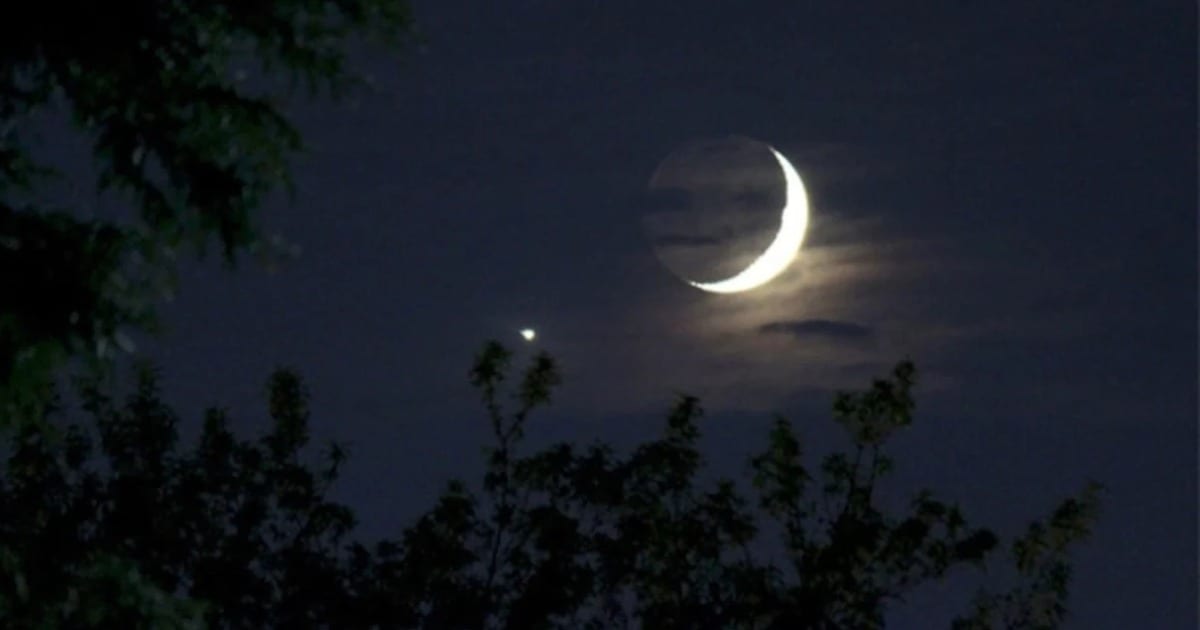
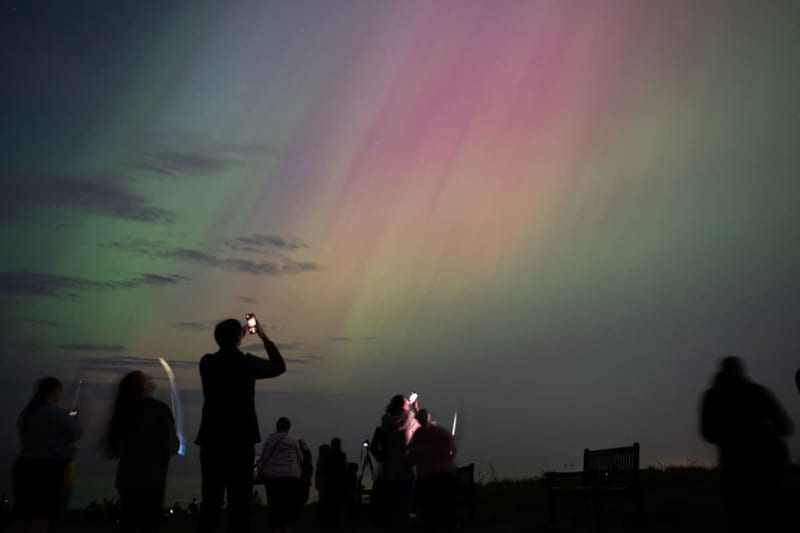
The main thing to consider when skywatching for auroras is to be mindful of one's local viewing conditions. Normally, a high-up point of observation that has no obstructions towards the northern horizon should make for an ideal place to set up camp. NOAA states that an aurora can sometimes become apparent even when it is up to 600 miles farther north. Since the Moon is in its crescent phase, light from it should not affect the visibility of the aurora too much. To photograph the aurora, a few tips must be kept in mind. One should be careful in setting up the camera or smartphone since low-light conditions are likely to necessitate long exposures. To avoid motion blur, one would be well-advised to use a tripod or simply rest the device against an object found outdoors. If one does opt for a phone camera to take the pictures, the light sensitivity, or ISO, should be kept between 800 and 1600. One should take the liberty to experiment with the settings, though it must be kept in mind that increasing the ISO can introduce noise to the image. One should also avoid zoom, as it reduces the amount of light hitting the camera's sensor.
More on Starlust
Scientists find a new way to predict space weather based on how the Sun goes to 'sleep'
NOAA’s SOLAR-1 is now operational—and it's changing how the U.S. watches space weather