December, January and February will bring 3 consecutive Supermoons: Here's all you need to know about them

Skywatchers had a chance to witness a spectacular celestial display this month as the Beaver Moon graced the sky on November 24. And now, there's more in store, as the November Full Moon was just the first in a series of four consecutive Supermoons, with the upcoming Supermoons being the Cold Moon this December, the Wolf Moon in January, and the Snow Moon in February.
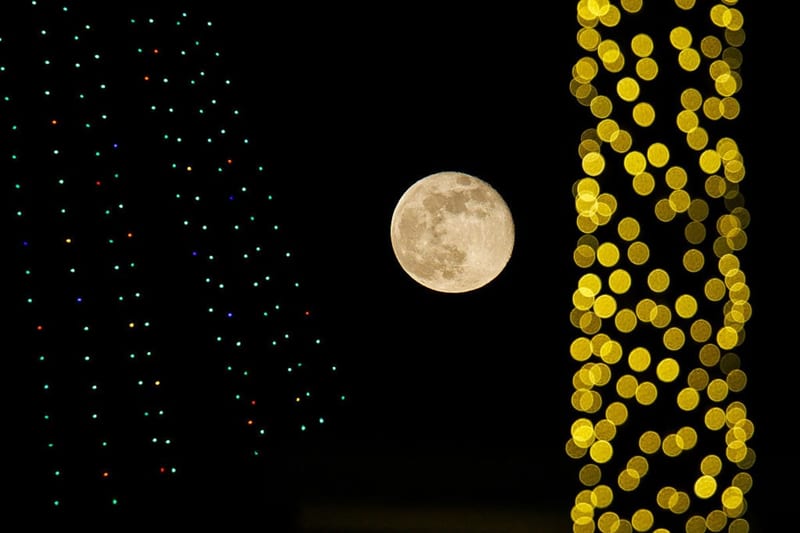
What is a Supermoon?
A Supermoon occurs when the Moon's full phase overlaps with its approximate nearest approach to Earth in its orbit, called the perigee. During the Moon's orbit around our home planet, which lasts 27 days, the Moon approaches its perigee—approximately 226,000 miles from Earth—and also its apogee, the farthest point, which is approximately 251,000 miles from Earth. The orbit of the Moon wobbles and varies based on the location of Earth and the Sun in their respective orbits, and hence, the actual distance of the perigee and apogee may change. This is the reason certain Supermoons may seem nearer or farther than others.
Peak and perigee of the Cold Moon in December 2026
The December Supermoon will be the biggest and brightest Full Moon of 2026. Moreover, at 221,667 miles, it will also be the closest Full Moon since 2018, attaining the perigee at 3:30 a.m. EST on Christmas Eve, per Fred Espenak's table. As for peak illumination, it will reach that at 8:28 p.m. EST the day before, per Farmer's Almanac. By the time Christmas Eve begins, the Full Moon will be moving high in the southern sky. The name "Cold Moon" is given to the Full Moon in December to indicate the advent of the winter season in the Northern Hemisphere.

Peak and Perigee of the Wolf Moon in January 2027
The next Supermoon will arrive on Friday, January 22, 2027, reaching peak illumination at 7:17 a.m. EST and its perigee of 222,229 miles at 4:49 p.m. the day before. Like all other Full Moons, it will appear full to the unaided eye for around two to three nights on either side of the peak day. The traditional name of "Wolf Moon" for the Full Moon in January originates from cultures that related January's winter nights to the howling of wolves.

Peak and perigee of Snow Moon in February 2027
February’s Full Snow Moon will attain its peak on Saturday, February 20, 2027, at 6:23 P.M. EST and reach its perigee of 225,747 miles at 2:30 a.m. the day before. This Supermoon in February will be special, as it will coincide with a penumbral lunar eclipse occurring on February 20–21. That said, a penumbral lunar eclipse is not as dramatic as a total lunar eclipse and occurs when the Moon moves through Earth's faint outer shadow, called the penumbra. In this case, the lunar disk won't transform into a striking red "Blood Moon," and visibility will depend on your location.
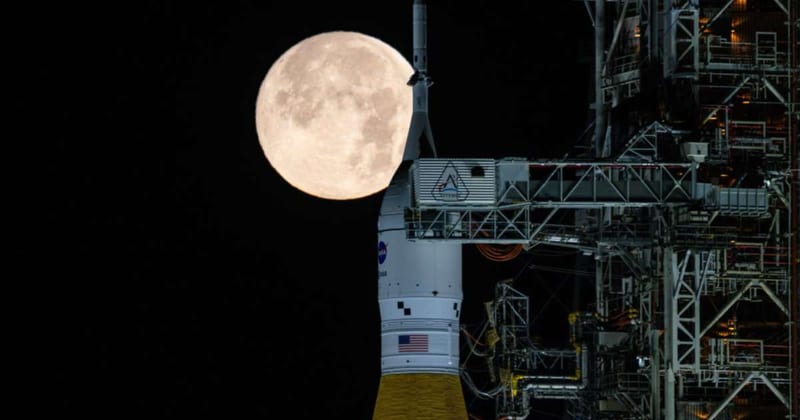
The origins of the name Snow Moon are quite evident—the name signifies the heavy snowfall occurring in February. The month of February is considered the snowiest month in the U.S., as per records from the National Weather Service. The upcoming three events will give skywatchers plenty of opportunities to observe the beauty of supermoons.
More on Starlust
Venus hits peak brightness on November 29: Here's when and how to see it before sunrise
A close encounter between the Moon and Mars awaits skywatchers on November 30