Aurora forecast: Fast solar wind from the Sun may trigger northern lights in the U.S. on Thanksgiving
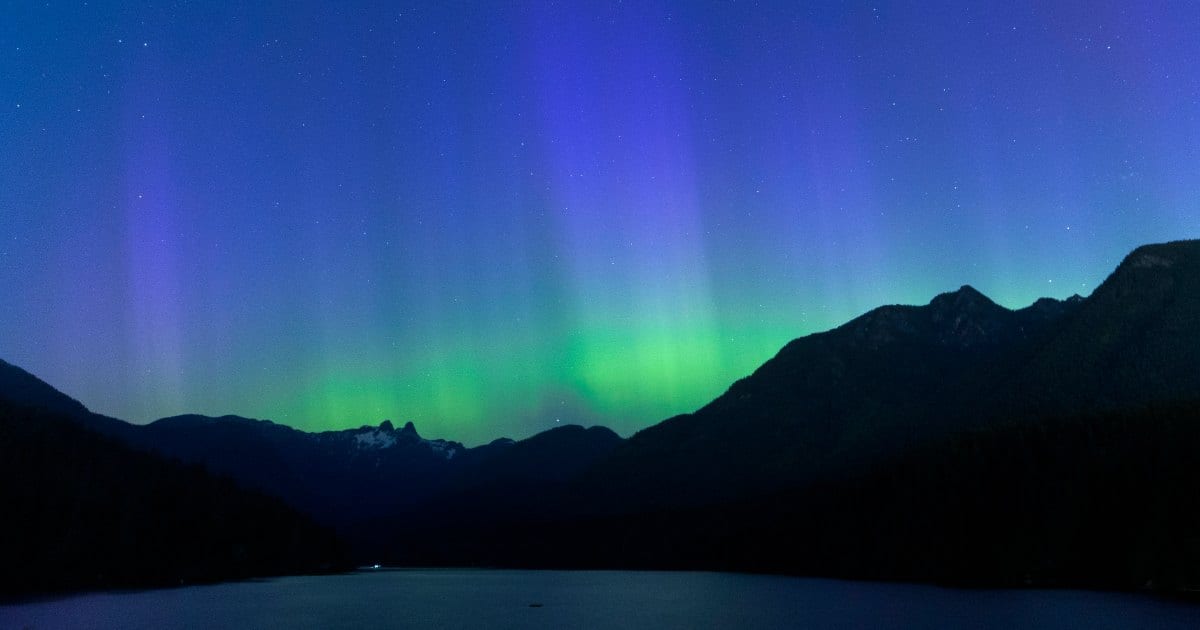
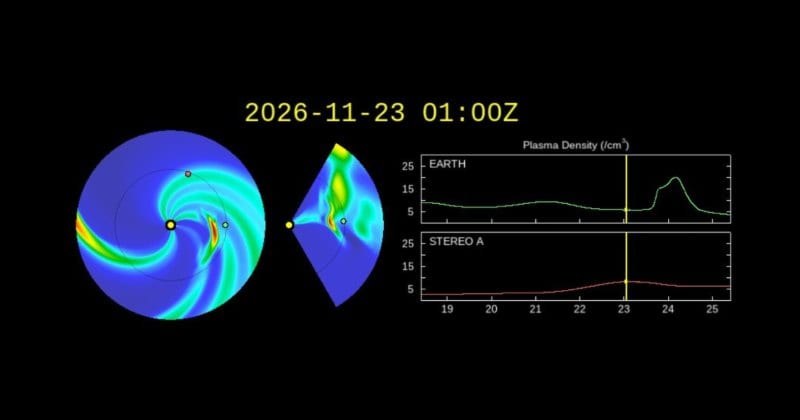
Skywatchers in northern parts of the U.S. may be in for views of the aurora later this week. This is because NOAA's Space Weather Prediction Center (SWPC) has issued a G1 (minor) geomagnetic storm alert for the late hours of Thanksgiving Day (Thursday, November 26) and the early hours of Friday, November 27. The SWPC has attributed the storm-like conditions to a coronal hole on the Sun that is spewing solar wind towards Earth.
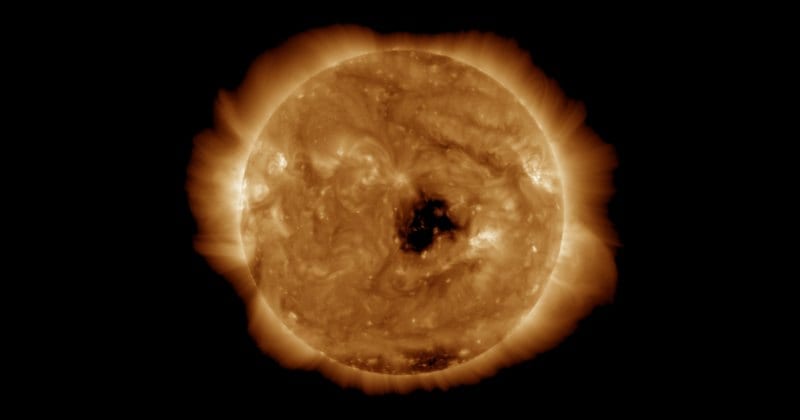
Coronal holes, which can develop at any time and location on the Sun, have lower density and are cooler than the surrounding plasma. These regions of open, unipolar magnetic fields appear as dark areas in the solar corona (outermost part of the Sun's atmosphere) in extreme ultraviolet and soft X-ray solar images (as seen in the image above) and allow solar wind to escape easily into space. These relatively fast winds are often referred to as coronal high-speed solar streams (CH HSS).
Where and when to catch the auroras
An important metric for the intensity and range of auroras is called the planetary K-index. Its value, which is measured on a scale from 0 to 9, is expected to reach its peak of 5 for November 25–27 between 10 p.m. EST on November 26 and 1 a.m. EST on November 27. The following pre-dawn hours are also projected to have the planetary K-index hover around 3 before subsiding. One must be mindful of the fact that the planetary K-index is a rough guide for the intensity of storms and is not really a great tool to predict aurora timings. The actual aurora visibility depends on local conditions, but the best time to watch is usually around midnight.
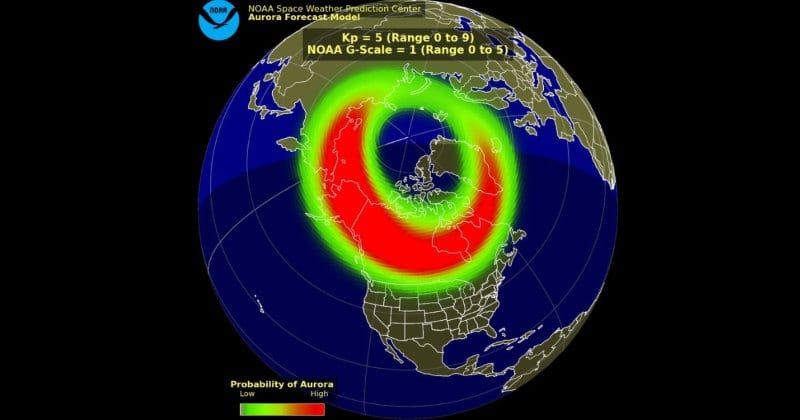
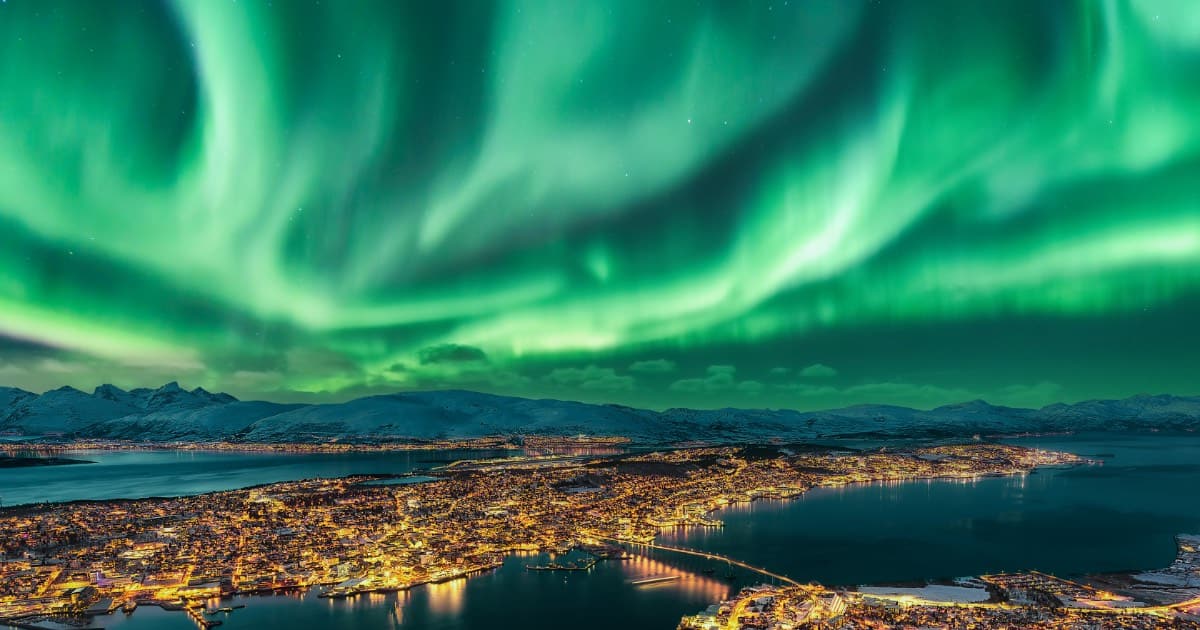
NOAA has indicated that the impact of the CH HSS will be in the poleward direction to the 60-degree geomagnetic latitude. This means that observers situated in high latitudes, such as the U.S. states lying along the northern tier, including Michigan and Maine, could have good views of the spectacle. NOAA has also warned that besides the photogenic phenomenon, adverse effects of the minor geomagnetic storms could include small power grid fluctuations and minor impacts on satellite operations.
Tips for aurora observation and photography
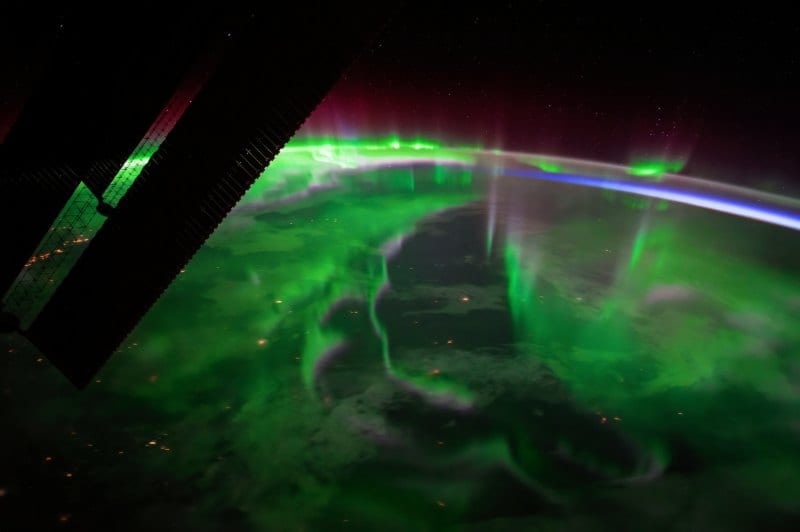
As mentioned above, auroras are usually best observed in the hours around midnight. This is why one should be in position before the 3-hour window around 12 am on Friday. The local viewing conditions as well, such as the weather and light pollution levels, must also be accounted for. A vantage point higher than its surroundings with no visual obstructions towards the northern horizon would be ideal for capturing the aurora. If you are looking to photograph the aurora, then make sure to mount your camera on a tripod and use a remote shutter release or the camera's timer to avoid shaking the device while taking the photo. The light sensitivity of the camera or phone—called ISO—should also be judiciously adjusted. This is because the higher the ISO, the noisier or grainier the resulting image is. The Moon being close to its highest illumination could also make the auroras less prominent, so one must experiment with their settings and image composition.
More on Starlust
A close encounter between the Moon and Mars awaits skywatchers on November 30