Aurora forecast: Solar storm could bring northern lights to New York and other U.S. states on October 9
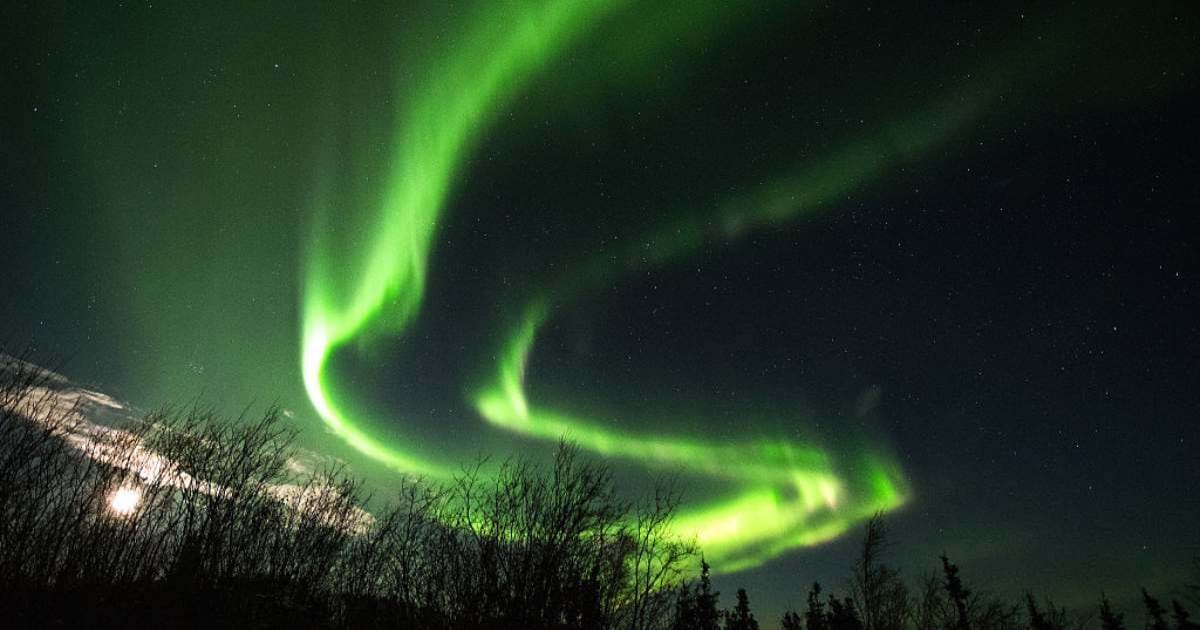
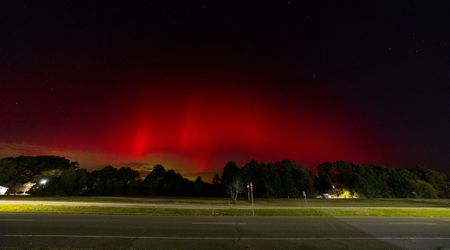
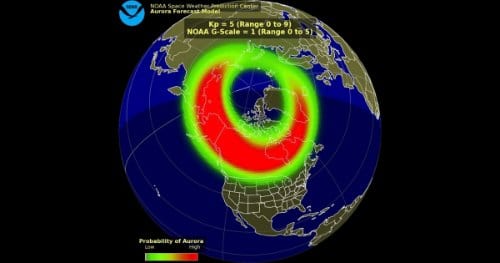
The National Oceanic and Atmospheric Administration (NOAA) has predicted the visibility of auroras in some northern U.S. states on October 9, 2026. NOAA's Space Weather Prediction Center (SWPC) has attributed this forecast to the arrival of a coronal mass ejection (CME) from the Sun. The CME is expected to cause some significant disruptions in Earth's magnetosphere, resulting in a moderate geomagnetic storm in the early hours of Friday.
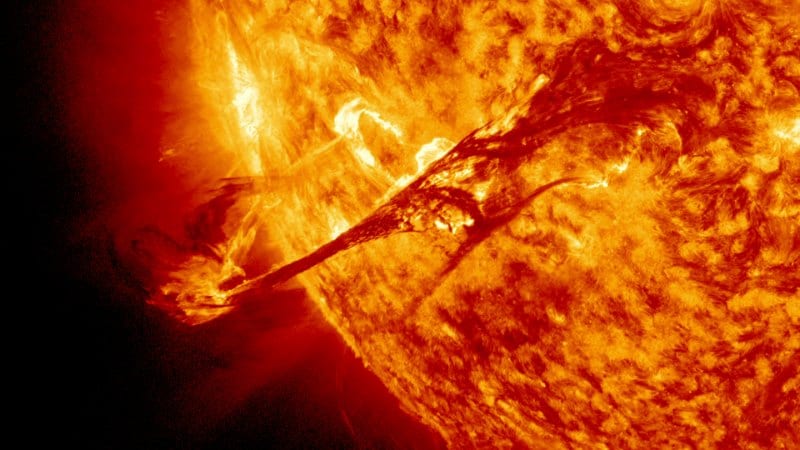
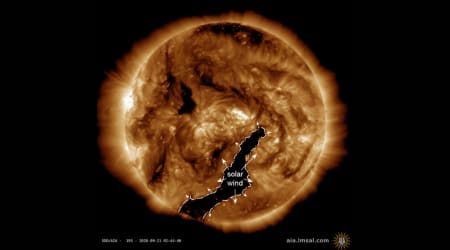
The CME, which is a large expulsion of magnetic field-laced plasma from the Sun, is the result of a solar flare. While this is often the case, not all CMEs are a consequence of a flare. In this instance, the solar flare's intensity was M1.4 and was observed to have erupted in active sunspot region 4549 on October 6, 2026. As is evident from NOAA's models of the solar wind, the CME is understood to have left the Sun on the same day. The peak of the CME's impact will happen between 4 and 7 am CDT on Friday, although minor geomagnetic storming will begin from 10 pm CDT on Thursday itself. These timings are based on the planetary K-index, which describes the intensity of geomagnetic storm-like conditions over three-hour intervals. Aurora visibility may differ from place to place depending on local conditions.
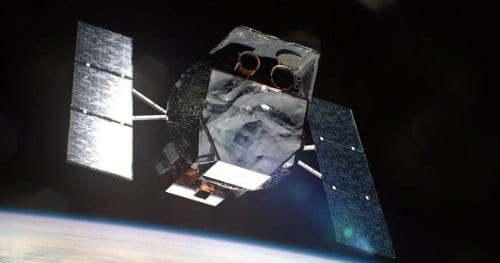
Tuesday's flare was not the most intense of flares, but the fact that the consequent CME is on course for a head-on collision with Earth means its effects could be greater than recent bouts of inclement space weather. Effects on technology include power grid fluctuations, voltage alarms in high-latitude power systems, and satellite orientation issues with possible increased atmospheric drag. High-frequency radio propagation may also fade at higher latitudes. The SWPC has also noted that region 4549 could be the site of further solar activity in the days to come.
Where to see the northern lights
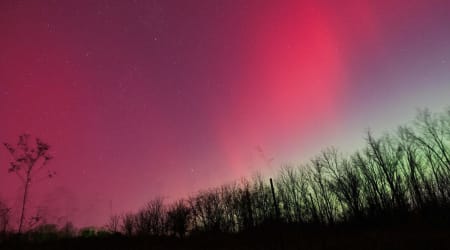
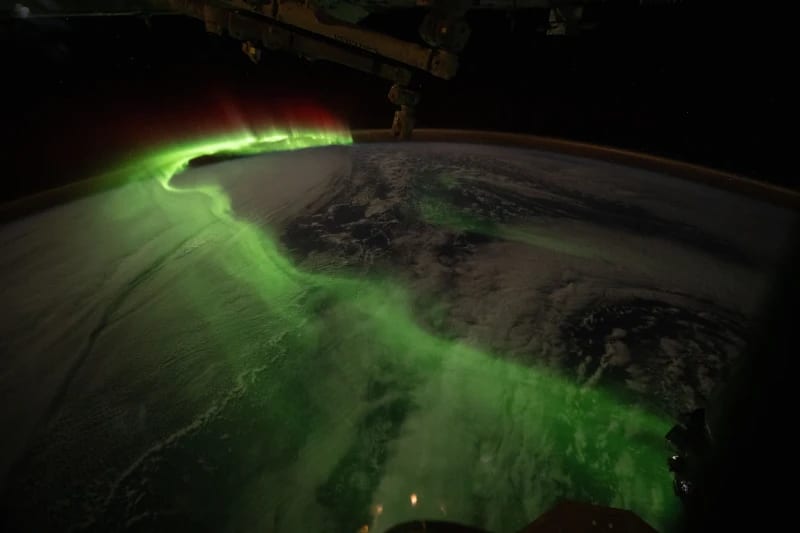
The SWPC has mentioned that most states in the mainland U.S. along the northern border with Canada could have sights of the aurora above them. Residents of some upper Midwestern states from New York to Idaho could also get a glimpse of the spectacular northern light show in the sky. In general, people in the northernmost latitudes get the best views of auroras. In times of intense geomagnetic storms, like the ones seen last week and the one forecast for Thursday and Friday, they can extend further south than usual.
Tips before observing auroras
Even though the peak space weather disturbance will happen during the dawn hours of Friday, the latter hours of Thursday through 1 am CDT could be the best for aurora viewing. This is because the planetary K-index will still be at a healthy value of 5 from 10 pm onwards. Moreover, NOAA also describes these hours as the best for aurora viewing. Another important thing to know is that a vantage point that is high up will lend itself to some good skywatching, since auroras can be seen as far away as 600 miles farther north. This may be true as long as there are dark skies with low light pollution and no obstructions.
How to photograph with a mobile phone
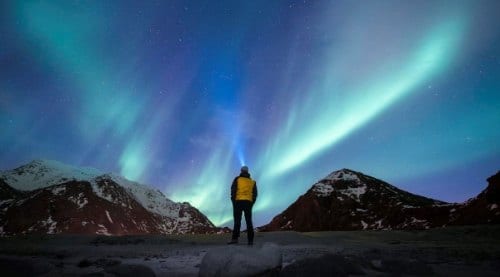
In order to capture auroras with a phone, one needs to be mindful of a few settings in the camera app. First of all, the phone should be stable, since long-exposure shots are needed to capture the lights, and shaking can affect clarity. One would be advised to use a tripod or simply rest the phone against a rock, for example. Per AccuWeather, the light sensitivity of the phone camera (ISO) should be kept between 800 and 1600. Note that increasing the ISO far too much also results in grainy images with noise. One must also avoid optical zoom because it reduces the amount of light hitting the sensor. A rule of thumb is to take numerous pictures by experimenting with different settings and compositions.
More on Starlust
SMILE is ready: Europe and China’s new spacecraft captures massive aurora storm around North Pole