With days to go before Artemis II’s launch, ground teams step up key preparations at launch site
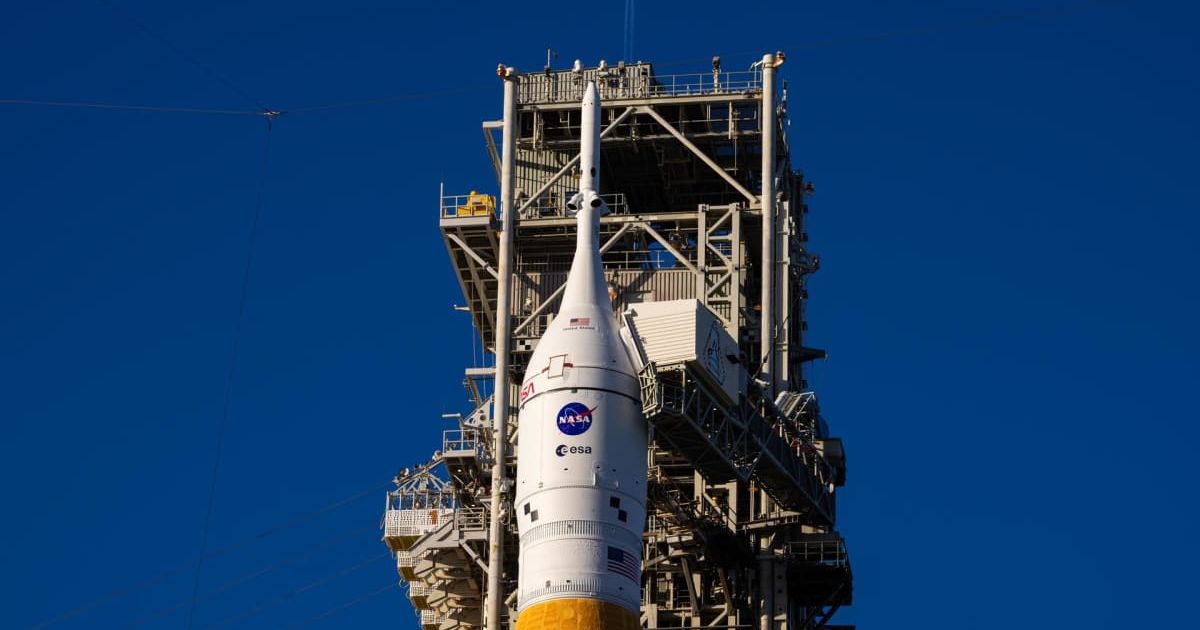
The historic Artemis II launch is just a few days away now. After the rollout of the SLS (Space Launch System) rocket and the Orion spacecraft to launch pad 39B at the Kennedy Space Center (KSC) in Florida, the ground teams are working on some vital preparatory tasks at the launch complex as of March 25, 2026. The launch is slated to take place no earlier than April 1, with NASA astronauts Reid Wiseman, Victor Glover, and Christina Koch, along with Jeremy Hansen from the CSA (Canadian Space Agency), embarking on a 10-day-long journey around the Moon. As per recent updates by NASA, the 322-foot-tall rocket has been secured with the infrastructure at the launch pad to allow it to receive power. This will also help communicate the rocket’s status with teams on the ground.
Our Artemis II crew will be going around the Moon, but they'll always find their way back home 🌎
— NASA Artemis (@NASAArtemis) March 25, 2026
During this complex journey, the four astronauts will travel ~685,000 miles on a trajectory around the Moon and back to Earth.
See their daily agenda: https://t.co/172PVtri2Z pic.twitter.com/zsK5i6pirj
The crew access arm atop the Mobile Launcher that provides access to the Orion crew capsule has also been extended, making it possible for personnel to reach the rocket via what is known as the White Room. Located at the end of the crew access arm, it is an environmentally controlled chamber where the crew can enter the spacecraft without the risk of contamination.
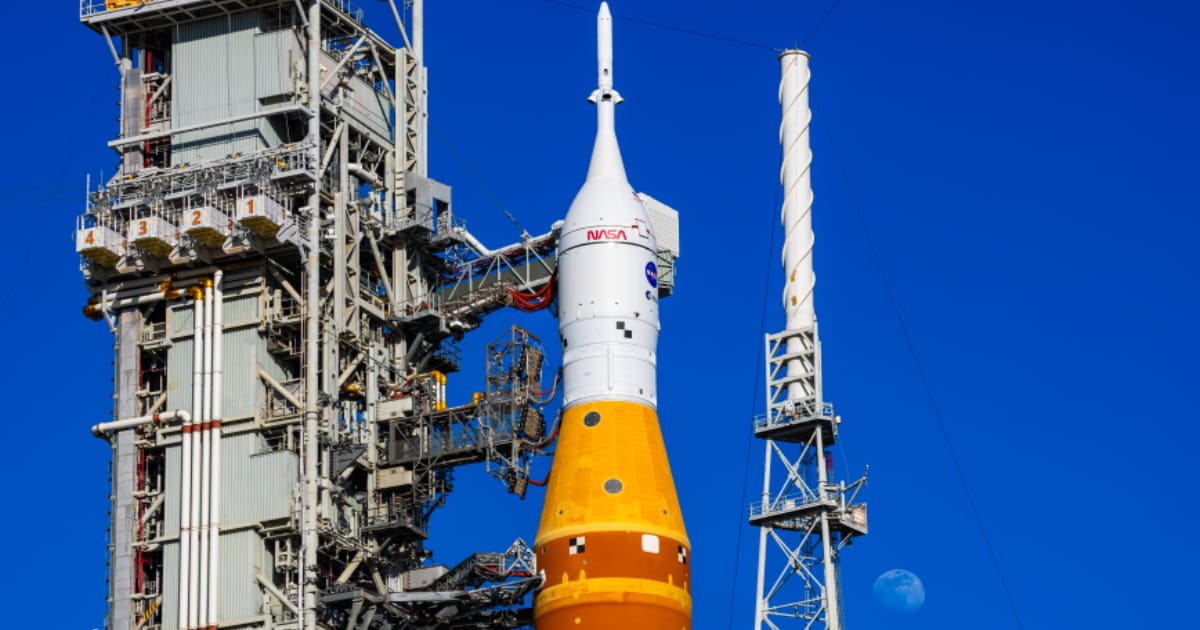
The Emergency Egress baskets were also connected to the Mobile Launcher to allow for expedited escape away from the rocket for the crew and other personnel in any event that necessitates evacuation. Looking forward, teams will conduct some engineering tests for ordnance connectivity on the flight termination system. Guidance, navigation, and control will also be tested at the pad. Another test, called a radio frequency test, is also scheduled for the core stage and the Orion capsule.

In the meantime, the crew has also been busy with tests and training at the Johnson Space Center in Houston ever since their quarantine began on March 18. Once the reviews of the procedures they are to follow during their voyage around the Moon and back are complete, they’ll arrive at Cape Canaveral on March 27. At 2:30 pm EDT, they’ll be greeted by NASA Administrator Jared Isaacman, CSA (Canadian Space Agency) President Lisa Campbell, and leaders representing other agencies. After the greetings, the officials and the astronauts will address the media, before doing the same two days later on Sunday at 9:30 am EDT, albeit virtually this time. Before lift-off, the crew will put on their Orion Crew Survival System spacesuits at the Operations and Checkout Building at KSC and depart for the launch pad using electric crew transportation vehicles. Once arrived, they’ll use elevators to the crew access arm, which connects the mobile launcher to the spacecraft and will be retracted in time for lift-off.

NASA hopes these preparations will stand the mission in good stead ahead of a launch on Wednesday. The two-hour launch window beginning at 6:24 pm EDT is also followed by other launch opportunities in April. With this mission, NASA is laying down the groundwork for the establishment of a Moon Base in the near future. This will follow a three-phase approach, the first of which began with NASA’s announcement of this plan on March 24, 2026. While Artemis I tested the SLS rocket back in 2022, by putting Orion in the vicinity of the Moon, this mission acts as a test of the humans and the habitation systems onboard Orion.
More on Starlust
Artemis II commander Reid Wiseman shares update on crew stepping up preparations before launch
All about Christina Koch, the first woman to fly around the Moon as part of Artemis II