What sets the Artemis II crew's bright orange spacesuit apart from past missions' gear

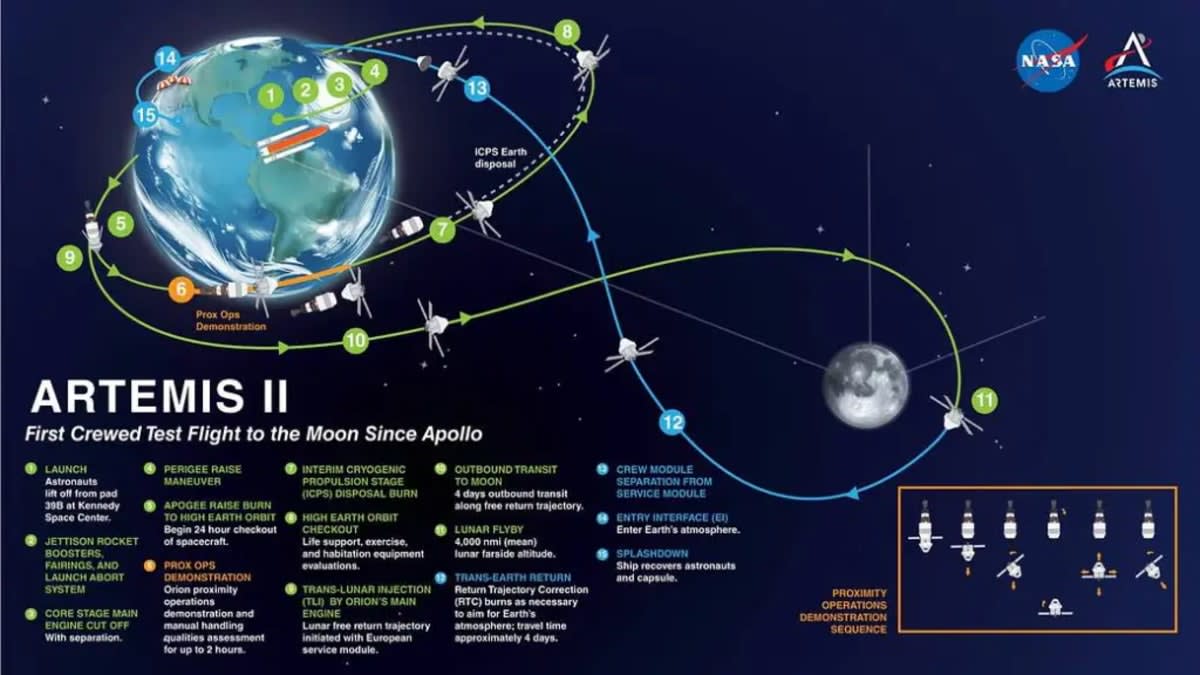
Artemis II is set to launch on April 1, 2026, taking four astronauts - NASA's Reid Wiseman, Victor Glover and Christina Koch, along with Jeremy Hansen from the CSA (Canadian Space Agency) - into deep space and past the far side of the Moon. In order for them to safely do so, the crew must remain protected from the harsh conditions of outer space at all times. While the entirety of their time will be spent inside the pressurized environment of the Orion capsule, precautions must be taken for events that could test the spacecraft. This is where Artemis II spacesuits, or Orion Crew Survival System (OCSS), become indispensable. Each OCSS suit can sustain life for up to six days in the vacuum of space. And while their orange color makes them look similar to the spacesuits worn by NASA’s Space Shuttle astronauts, that is almost where the similarities end.
How do the Artemis II astronauts dress for space?
— NASA Artemis (@NASAArtemis) March 22, 2026
The Moonbound crew will wear the Orion Crew Survival System spacesuit during the dynamic parts of their mission and during demonstrations. pic.twitter.com/Lv4TO7Q5Iw
The OCSS suits the crew will wear have been designed for protection during the relatively riskier parts of the mission, such as launch and when Orion blazes through re-entry. How Artemis II’s spacesuits are different from those of NASA missions gone by is rooted in the mission’s objective of long-duration space survival beyond low Earth orbit. It also features many upgrades, such as a lighter yet stronger helmet and improved noise isolation to make it easier for the crew to talk to each other and to mission control, and it is personalized for each astronaut’s physique.
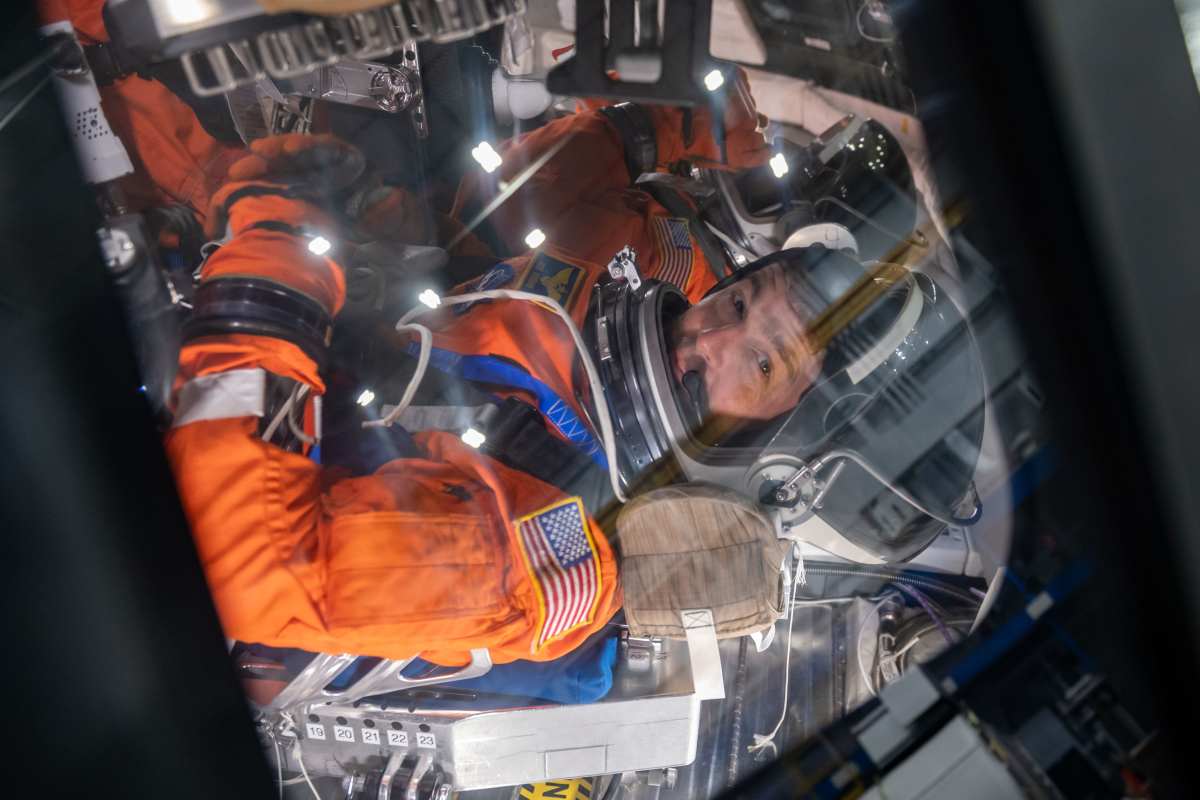
Other key improvements over the spacesuits from yesteryear, such as the Advanced Crew Escape suit used during the Shuttle program, include better zippers too. These will help the crew rapidly put on and take off the suits as needed. These OCSS spacesuits also feature a restraint layer to make astronauts feel at ease in moving around. The gloves are also compatible with touchscreens, and the boots are made for more nimble movements. Both have been engineered to be far more durable.
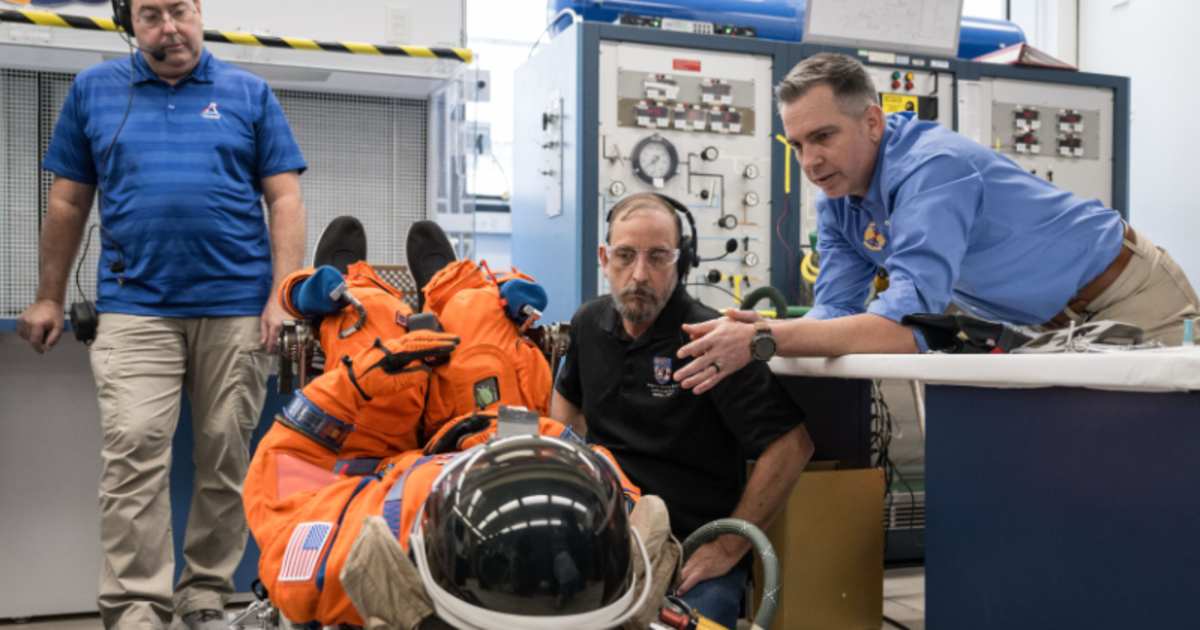
The suits were conceived in the OCSS lab at the Johnson Space Center in Houston, where the crew is also currently quarantined. Orion Crew Survival System (OCSS) Manager Dustin Gohmert at NASA led the team that not only designed the suits but also made them mission-certified by putting them through rigorous testing. “There’s several unique parameters that have to be designed in, such as how much pressure it can hold, the duration it can hold the pressure for, the amount of leakage that comes out of the suit—all of the physiological functions,” Gohmert explained. He referred to the OCSS suit as a “pressure vessel," which can provide oxygen, water, and food and can handle bodily waste disposal as well.
Attention has also been given to scenarios where rescue is delayed after Orion descends to Earth. The suit is equipped with survival gear, such as a knife and a signaling kit. Their color, officially known as ‘international orange,' is specifically designed to be seen by rescuers against the contrast of the ocean. The same purpose is also served by the reflective blue stripes across the suits, which also have a harness beneath them, making it easier for rescuers to grab the astronauts securely. “We work with the crew to say, ‘Here’s this design concept we have. How does this really work in the spaceflight environment?'" said Gohmert, who worked through the end of the Shuttle program before joining Orion. "As we evolve the design, we take the crew’s input and we adapt the suit over time to take into account not only the desire we have for safety, but the real-world impacts that it has."
More on Starlust
NASA's Artemis II mission: Why astronauts are quarantined ahead of launch