NASA’s Artemis II SLS rocket reaches launch pad ahead of potential April launch
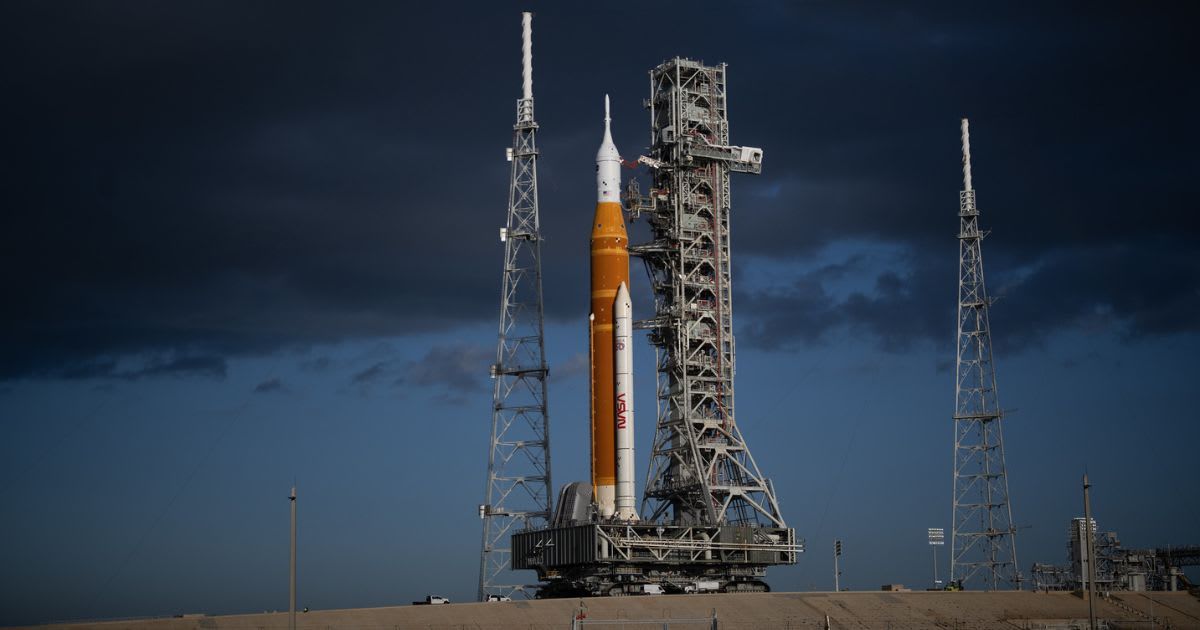
The giant Moon rocket completed its 4-mile rollout to Launch Complex-39B after an overnight journey.
Image of NASA’s SLS rocket and Orion spacecraft rolling up the incline to Launch Pad 39B at Kennedy Space Center, March 20, 2026. (Cover Image Source: NASA/Joel Kowsky)

NASA’s Space Launch System (SLS) rocket for the Artemis II mission has completed the rollout. Along with the Orion crew capsule, the rocket reached Launch Complex-39B at the Kennedy Space Center in Florida around 10 a.m. EDT (local time) on Friday, March 20. Rollout began shortly after midnight with the first motion at 12:20 a.m. EDT, clocking a nearly 10-hour journey that was livestreamed on the agency's official YouTube channel. NASA’s Crawler-Transporter 2 was tasked with moving the rocket from KSC’s Vehicle Assembly Building (VAB) to the launch pad.
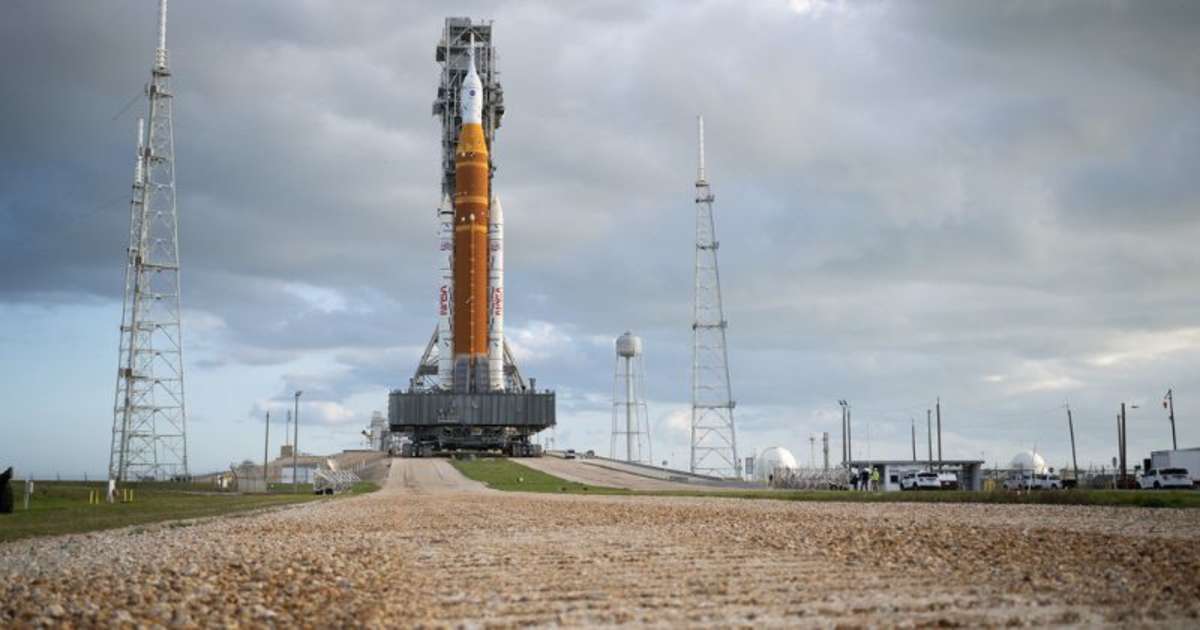
Image of NASA’s SLS rocket and Orion spacecraft rolling from the Vehicle Assembly Building to Launch Complex 39B atop crawler-transporter 2 at Kennedy Space Center, March 20, 2026. (Image Source: NASA/Aubrey Gemignani)

The Crawler-Transporter 2 carried the SLS, Orion, and the mobile launch platform (MLP) for a distance of roughly 4 miles, at speeds averaging a mile per hour. The river rock-lined roadway between the VAB and LC-39B was expectedly crushed to sand, as the crawler transported the combined load weighing over 18 million pounds. Notably, this is the second time along this same path for the Artemis II stack, having been rolled back to the VAB on February 26 due to a helium flow issue after the second wet dress rehearsal. Since then, NASA has completed repairs and does not plan any more wet dress rehearsals.


The successful overnight rollout means that NASA can begin final preparations for the Artemis II launch, expected no earlier than April 1. At LC-39B, the ground teams will now work on getting the rocket and pad systems ready for any imminent launch window. The crew has already entered quarantine in Houston and will fly to KSC a few days ahead of the launch. The 10-day mission will mark humanity's first crewed flight beyond low-Earth orbit since 1972. 

More on Starlust

What will the Artemis II crew do each day of the mission? A look inside their daily agenda

Artemis II mission availability: NASA just updated April launch windows
MORE STORIES

SpaceX’s Dragon is now on its way to the ISS with 6,300 pounds of cargo, including the final solar arrays and new research gear.
14 minutes ago
The UAE’s second interplanetary mission will travel about 3 billion miles before the lander makes its final descent.
19 hours ago
The Artemis II astronauts saw colorful hues on the sun-lit surface and this data collected during the lunar flyby could help scientists uncover the evolutionary journey of the Moon.
1 day ago
The European Space Agency's Hera spacecraft has imaged the Didymos-Dimorphos system from a distance of more than 100,000 miles. It's the same system that was deliberately hit by NASA with its DART spacecraft.
1 day ago
The probe whipped past our planet on September 28 from a distance of around 5,370 miles and was captured by a ground-based optical telescope.
2 days ago
The rocket’s first stage landed back at Vandenberg a little over seven minutes after liftoff. Watch the livestream here.
2 days ago
Maye's comments about being 'skeptical' of the Moon landings prompted NASA chief Isaacman to offer 'receipts' as proof. Read the exchange here.
4 days ago
A weather satellite launched by the Soviet Union has fragmented for the second time, raising concerns about the safety of other spacecraft near it.
4 days ago
The new MoU between NASA and DOE establishes a framework for comprehensive collaboration, covering everything from research to launch integration and operations.
4 days ago
While Flight 12 and 14's upper stages exploded, the recovery of Ship 40 gives SpaceX an opportunity to inspect a returning second stage.
4 days ago