Alien life on planet K2-18b? Scientists say otherwise after reassessing new James Webb data
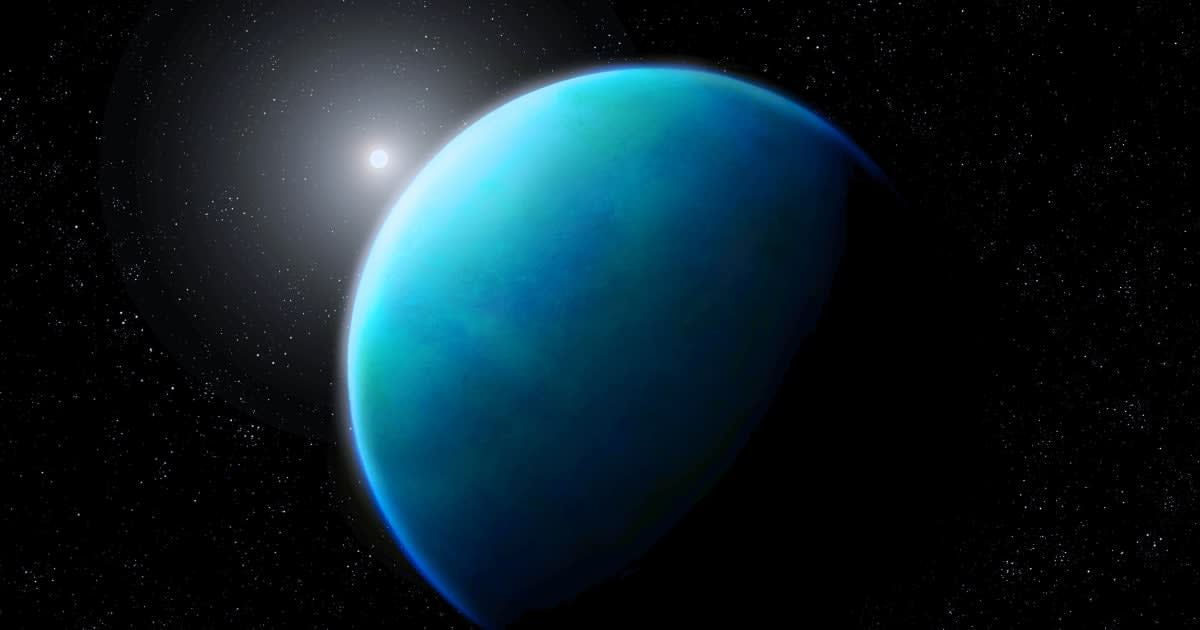
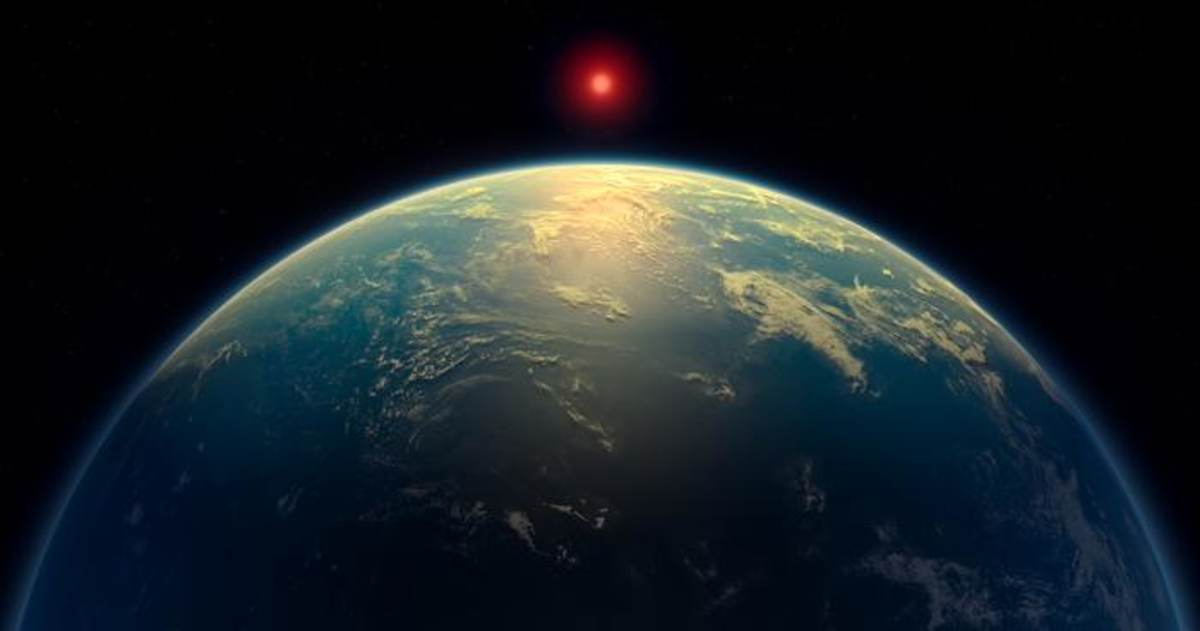
New observations from the James Webb Space Telescope (JWST) are shedding light on the temperate exoplanet K2-18 b, revealing it to be a water-rich world but casting doubt on previous suggestions of a habitable environment, as per the research recently posted to the arXiv preprint server.
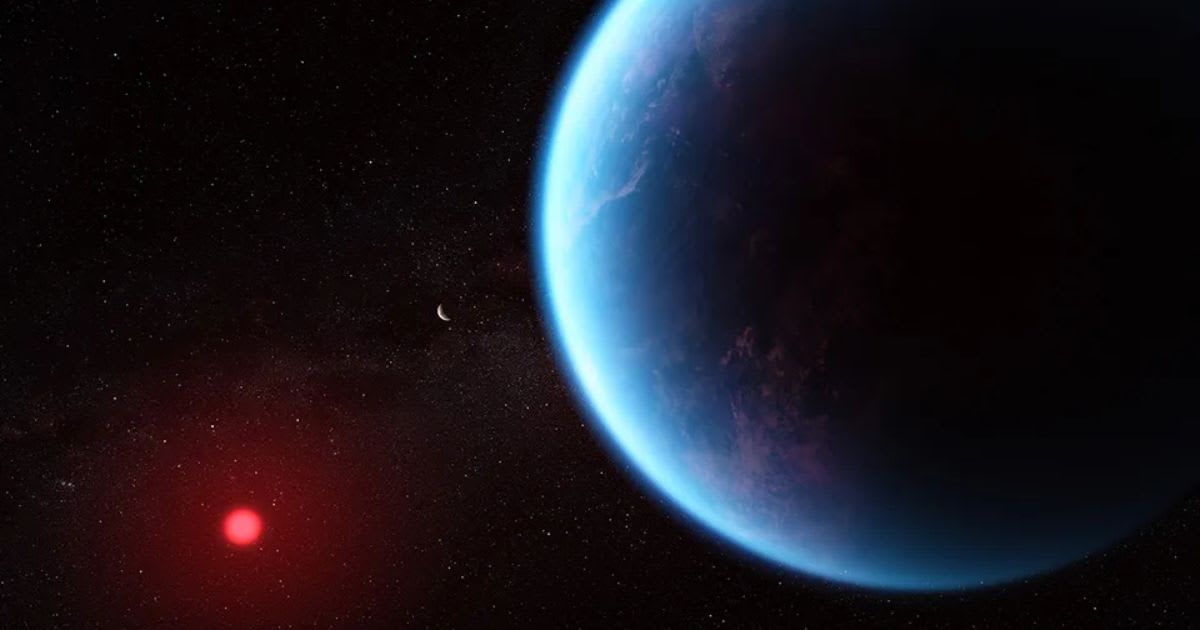
While earlier studies hinted at the presence of dimethyl sulfide (DMS), a potential biosignature gas, the latest data from the JWST's Near-Infrared Spectrograph (NIRSpec) provides a more detailed and nuanced picture. Researchers have now confirmed the robust presence of methane and carbon dioxide in K2-18 b's atmosphere, definitively establishing the planet's water-rich composition. This suggests a significant amount of water, either in a thick, vapor-filled envelope or in a liquid ocean beneath a thinner atmosphere.
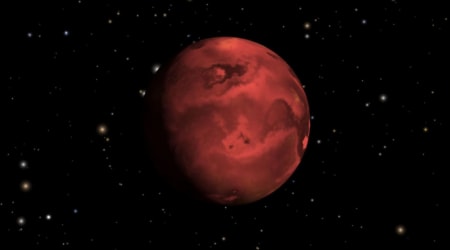
The Webb telescope has detected carbon dioxide and methane in the atmosphere of exoplanet K2-18 b, a potentially habitable world over 8 times bigger than Earth. Webb’s data suggests the planet might be covered in ocean, with a hydrogen-rich atmosphere: https://t.co/qN1SqCfFt1 pic.twitter.com/yoXF3flsUl
— NASA Webb Telescope (@NASAWebb) September 11, 2023
The new findings, however, fail to confirm the presence of other gases that would support the habitability theory. There were no strong signs of water vapor, ammonia, or carbon monoxide. The lack of water vapor could indicate a "cold trap," where water condenses and is removed from the upper atmosphere. The absence of ammonia and carbon monoxide further supports the idea of a small, hydrogen-rich atmosphere sitting atop a liquid-water reservoir.
Although the data showed marginal, low-confidence signals of DMS and other potential biosignatures, scientists now believe these could form naturally through non-biological processes in the planet's unique atmospheric conditions. This makes these gases less reliable as indicators of alien life. The authors of the study write, "K2-18 b, a cool, water-rich world, stands out as one of the most promising temperate sub-Neptunes for exploring the emergence of liquid-water environments in non-Earth-like planets, motivating further characterization of its atmosphere and interior."
The search for life beyond our planet is a quest filled with profound questions: How far can we extend our reach? Which technologies will lead to the first definitive discovery? And what would that discovery mean for humanity? As our view of the cosmos sharpens, scientists agree that the search is accelerating, driven by new technologies and a growing understanding of the universe, as per NASA.
While finding life in our solar system, perhaps beneath the icy crusts of moons like Europa and Enceladus, or deep in the Martian subsurface, remains a tantalizing possibility, many experts believe the first signs will come from an exoplanet. As Mary Voytek, director of NASA’s Astrobiology Program, explains, access to these solar system targets is a major technical hurdle, requiring us to drill through kilometers of ice or rock. In contrast, the vast number of confirmed exoplanets provides an enormous pool of targets for remote observation.
The James Webb Space Telescope is at the forefront of this effort, already providing crucial data on the chemical makeup of exoplanet atmospheres, as seen with its recent observations of K2-18 b. Yet, the work is just beginning. The next generation of massive ground-based telescopes and advanced space-based observatories, such as the proposed Habitable Worlds Observatory, are being designed to push the boundaries even further. According to Shawn Domagal-Goldman, a NASA program scientist, “We’re going to tell the story of life in the cosmos by using that unprecedented imaging capability – to study the long-term evolution of galaxies, the stars they’re made of, the matter that makes up those stars, and to help us understand how habitable worlds came to be.” He added, “And we’re going to search for signs of life on those habitable worlds.”
Are we alone? To find out, we’re building the Habitable Worlds Observatory. This powerful space telescope uses proven technologies from @NASAHubble, @NASAWebb, and @NASARoman to look for signatures of planets that can support life — and maybe life itself. https://t.co/rKKDP1Slys pic.twitter.com/aPwKZDBvSd
— NASA Universe (@NASAUniverse) July 14, 2025