NASA mission to rescue 21-year-old Swift space telescope on track as LINK arrives at launch site
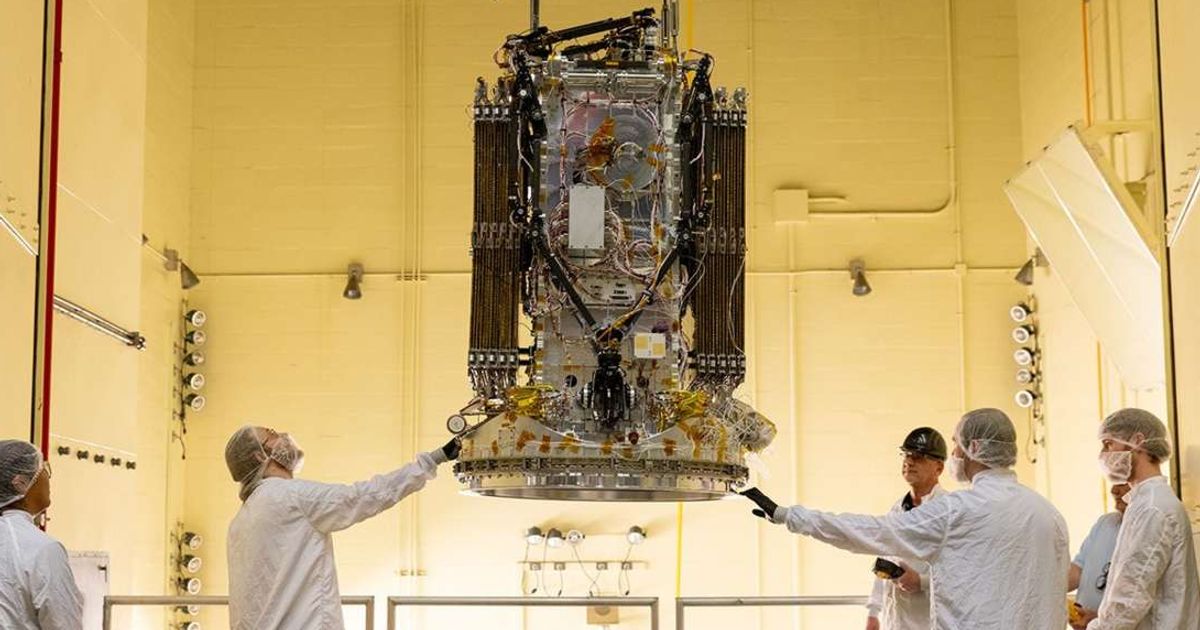
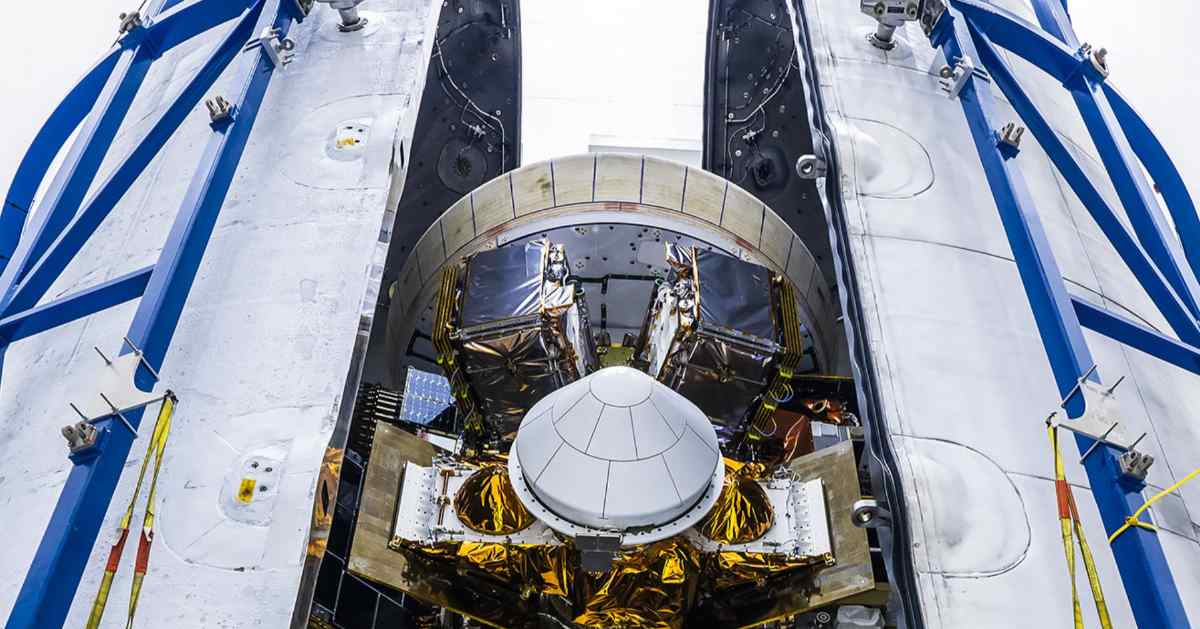
The LINK robotic spacecraft, which was created by the company Katalyst Space Technologies to capture NASA’s Neil Gehrels Swift space telescope and boost it to a higher orbit, has arrived at its launch site, according to the agency. On June 5, 2026, the servicing spacecraft arrived at the Wallops Flight Facility in Virginia, in time for its launch later this month. The contract for the design and development of LINK was awarded to the Arizona-based company only last September for this mission.
LINK, a robotic servicing spacecraft from Katalyst Space designed to boost the orbit of our Swift telescope, has arrived at @NASAWallops! Here, LINK will be installed in a Northrop Grumman Pegasus XL rocket set to launch later this month. Learn more: https://t.co/teg26V6ffj pic.twitter.com/aqtdy3xWTp
— NASA Universe (@NASAUniverse) June 5, 2026
The Swift boost mission was deemed necessary when space weather conditions worsened and caused the Earth's atmosphere to expand outward due to the additional heat generated during the Sun’s increased activity in the wake of Solar Cycle 25's maximum. Projections from January 2026 told the Space Science Mission Operations team at the Goddard Space Flight Center (GSFC) in Greenbelt, Maryland that the space telescope could dip below the critical altitude threshold by early July. This 185-mile threshold is crucial: if Swift falls below this, atmospheric drag will become too great for LINK's propulsion systems to push the space telescope back into a stable orbit. This development forced NASA's hand, with earlier reports stating that the agency had picked June 1, 2026, as the launch date. However, to allow for a more relaxed timeframe for the rescue mission, teams at GSFC adjusted Swift's orientation or attitude in a way that minimized atmospheric drag.
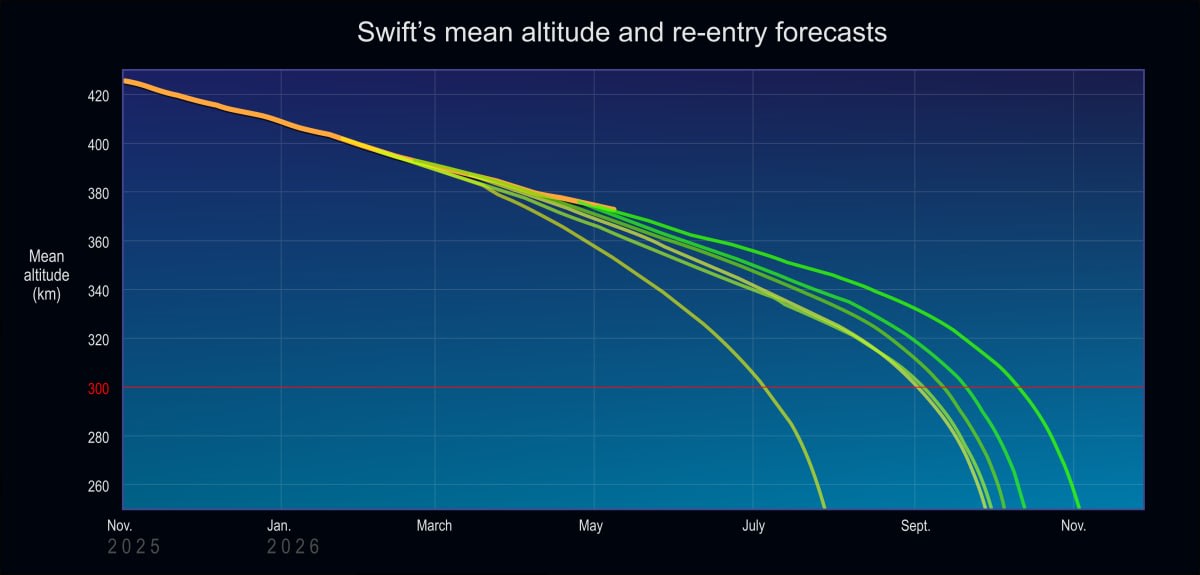
This adjustment has, for now, prevented Swift's re-entry, and the spacecraft is expected to now reach the critical 185-mile altitude threshold by Fall 2026. The revised, and more relaxed timeline, in turn has given ample room to Northrop Grumman's engineers at the Wallops Horizontal Integration Facility to prepare LINK for launch. The robotic spacecraft will fly into space on board a Northrop Grumman-built Pegasus XL rocket.
Welcome Stargazer L-1011! @NorthropGrumman's aircraft arrived at Wallops this afternoon ahead of integration with the Pegasus rocket next week. pic.twitter.com/jAduscSn1o
— NASA Wallops (@NASAWallops) June 5, 2026
Interestingly, the launch of LINK will not take place using the traditional vertical launch method. Instead, Northrop Grumman’s L-1011 carrier aircraft, called Stargazer, will carry the Pegasus XL along with LINK to the Reagan Test Range located at Kwajalein Atoll in the South Pacific. From there, Stargazer will drop the rocket in a horizontal configuration, which will then fire its engines to ascend towards space. This launch approach will allow LINK to directly enter the same orbital plane as Swift, following which the spacecraft will autonomously rendezvous with the space telescope and capture it, before boosting the spacecraft to a higher, more stable orbit.
The Swift boost mission will represent a significant advancement in NASA's capacity to service its aging spacecraft at short notice while they still have the bandwidth for continued operations and the potential to make further scientific discoveries. The Neil Gehrels Swift Observatory itself is over two decades old with contributions to several discoveries about the universe's most powerful explosions. It was launched in November 2004 with the objective of studying gamma-ray bursts using its three telescopes that observe the cosmos in visible, ultraviolet, X-ray, and gamma-ray light.
More on Starlust
Scientists solve a decades-old mystery by finding the hidden source of solar flare gamma rays
NASA’s Fermi Telescope detects gamma rays from a rare, unusually luminous supernova