The Milky Way was in a catastrophic collision 11 billion years ago that set off a 'galactic firework'
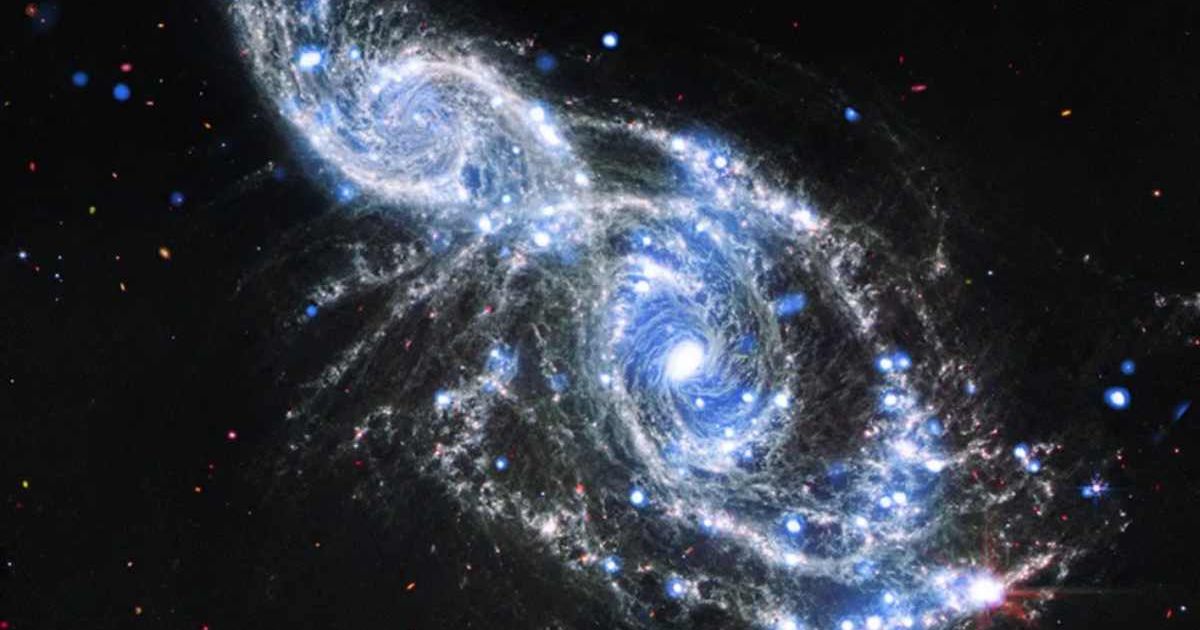
The Milky Way did not always look the way it does now. It was, in fact, a violent collision with a smaller galaxy that played an important role in giving our home galaxy its modern shape. Now, a new study led by scientists at the Institute of Cosmos Sciences of the University of Barcelona (ICCUB) and the Institute of Space Studies of Catalonia (IEEC) has shown using simulations and observational data that such galactic collisions can completely or partially destroy stellar discs of galaxies like the Milky Way. The study, published in the Monthly Notices of the Royal Astronomical Society, has also managed to refine predictions about the last time our galaxy was part of a significant collision.
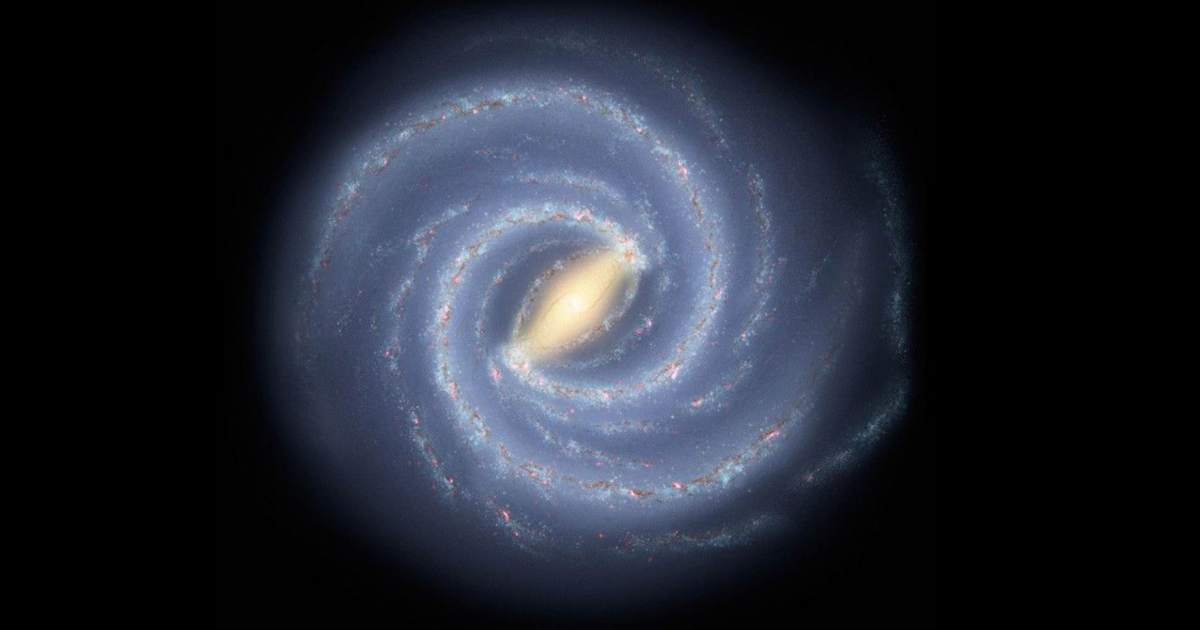
The Milky Way’s disc is a vast, rotating system of stars, with spiral arms extending out from its center. This disc is home to the majority of the galaxy’s stars, including the Sun. It rotates at over 220 kilometers per second. For decades, scientists had guessed that a violent encounter with a smaller galaxy might have shaped the Milky Way as we observe it today. Then, in 2018, observations by the Gaia mission detected unusual motions of a large population of stars, which could only be explained by a massive merger, now referred to as the Gaia-Sausage-Enceladus (GSE) merger. The researchers did simulations (the Auriga simulations) of Milky Way–like galaxies to probe how rotating discs form under different scenarios and how galaxies such as the Milky Way react to ancient collisions.

Analysis shows that rotating stellar discs often formed much earlier than previously thought. But major galactic collisions can destroy the discs partially or completely. Thus, the moment the stars in the Milky Way's disc began rotating in a coherent pattern cannot be the marker of the moment when the disc first took shape. Instead, it likely marked when the galaxy recovered from the merger. Taking cues from simulations, the researchers found that the GSE merger probably occurred about 11 billion years ago, earlier than many previous estimates. This was also the time when the formation of star clusters peaked in the Milky Way. After all, galactic collisions trigger an increase in star formation by compressing gas. “Models of the Gaia–Sausage–Enceladus merger predict that a galactic firework should have followed the impact, raising star formation and fostering the formation of globular clusters,” says co-author Chervin F. P. Laporte, a researcher at the French National Centre for Scientific Research (CNRS) in a statement. “This is the first time this link has been made.”
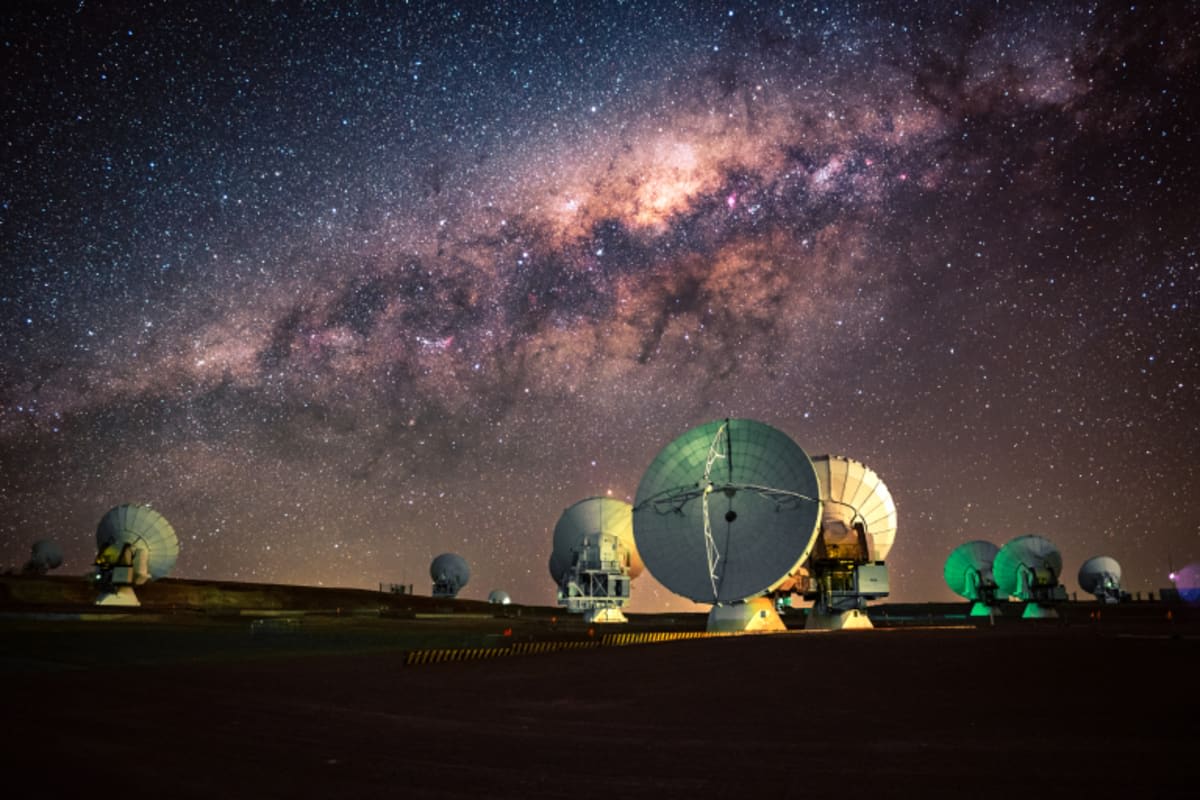
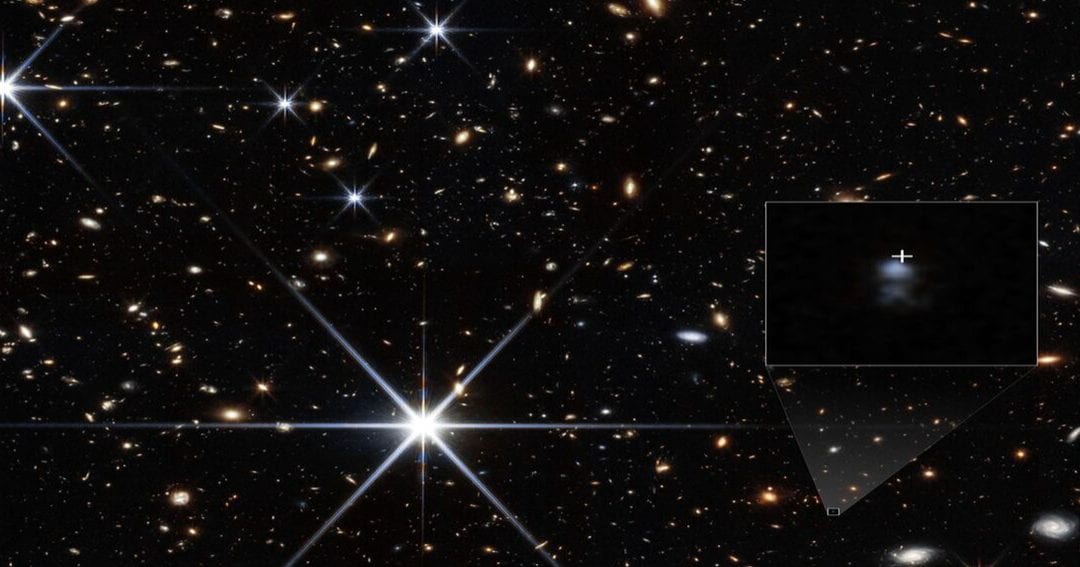
Astronomers cannot travel back in time and sneak a peek of what a young Milky Way looked like. They can only wait for the James Webb Space Telescope and the Atacama Large Millimeter/submillimeter Array (ALMA) to provide them with images of the distant universe. For the moment, knowing the catastrophic past of the Milky Way is a truly big leap. “This research highlights the important relationship between galactic structure and ancient collisions, which must be understood in unison in order to understand the history of our galaxy,” adds Matthew D. A. Orkney, the study’s lead author and a researcher at ICCUB and IEEC.
More on Starlust
Astronomers identify 20 stars as remnants of Loki, a dwarf galaxy consumed by the Milky Way
Tiny satellite galaxies orbiting the Milky Way could reveal the 'climate' of the early universe