New model decodes the Sun’s prominences—floating mountains of plasma larger than Earth
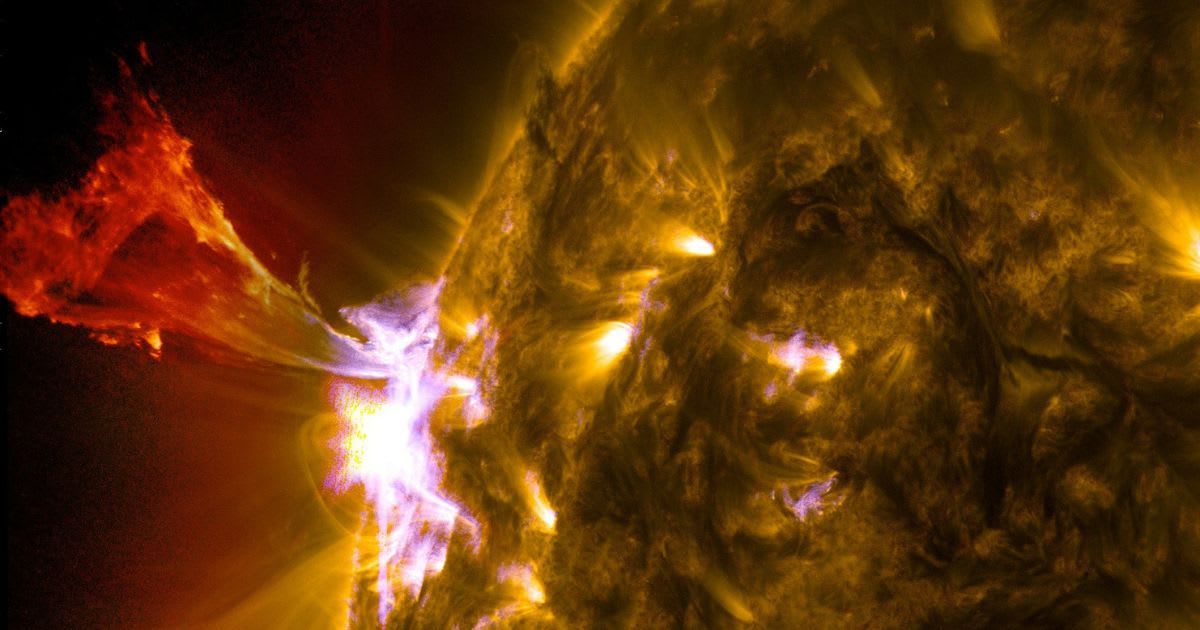
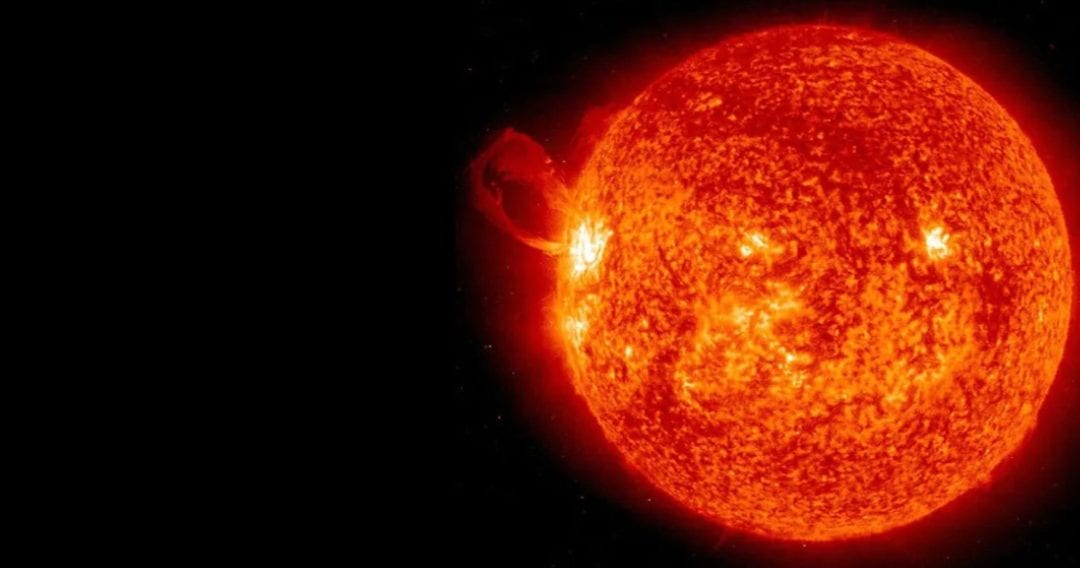
Scientists from Germany’s Max Planck Institute for Solar System Research (MPS) have produced the most realistic simulations yet of solar prominences and how they form and evolve. These dramatic flame-like structures seen high above the star's surface are typically massive, almost like floating mountains of plasma larger than Earth. The new research reveals how prominences survive by balancing being trapped by the Sun's magnetic field with a constant supply of plasma from below. Being one of the greatest mysteries of the solar system, they are crucial to understanding dangerous space weather.
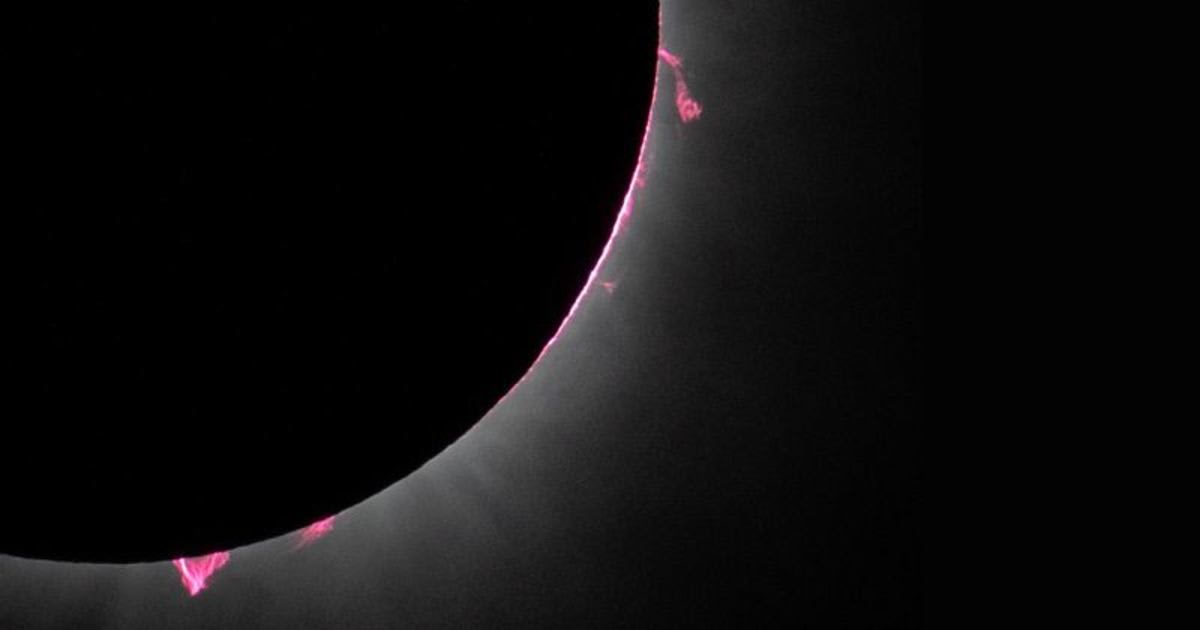
Solar prominences are observed as enormous arcs near the star’s outer atmosphere. The new study (published in Nature Astronomy) explores how these structures form, why they remain stable for a certain period of time, and what causes some of them to violently erupt. While the Sun’s corona temperature can reach more than a million degrees, prominences in the same area are far “cooler,” around 10,000 degrees. These clouds of superheated gas may seem delicate, but their material is more than a hundred times denser than the surrounding corona, and stretches for more than a thousand kilometers.
What Triggers a Solar Prominence?
The behavior of solar prominences has been hard to predict. Sometimes, they fade away quietly and on other occasions, they can send out charged particles into space — enough to trigger violent solar storms that can disrupt satellites, communication and power grids. To prevent this, it’s important to forecast space weather in advance, for which models such as the one in the new study are instrumental. “To protect Earth’s infrastructure in time, reliable forecasts of dangerous space weather are needed,” explains Sami K. Solanki, Director of the “Sun and Heliosphere” Department at MPS and co-author of the study. “A deeper understanding of prominences is a crucial piece of the puzzle.”
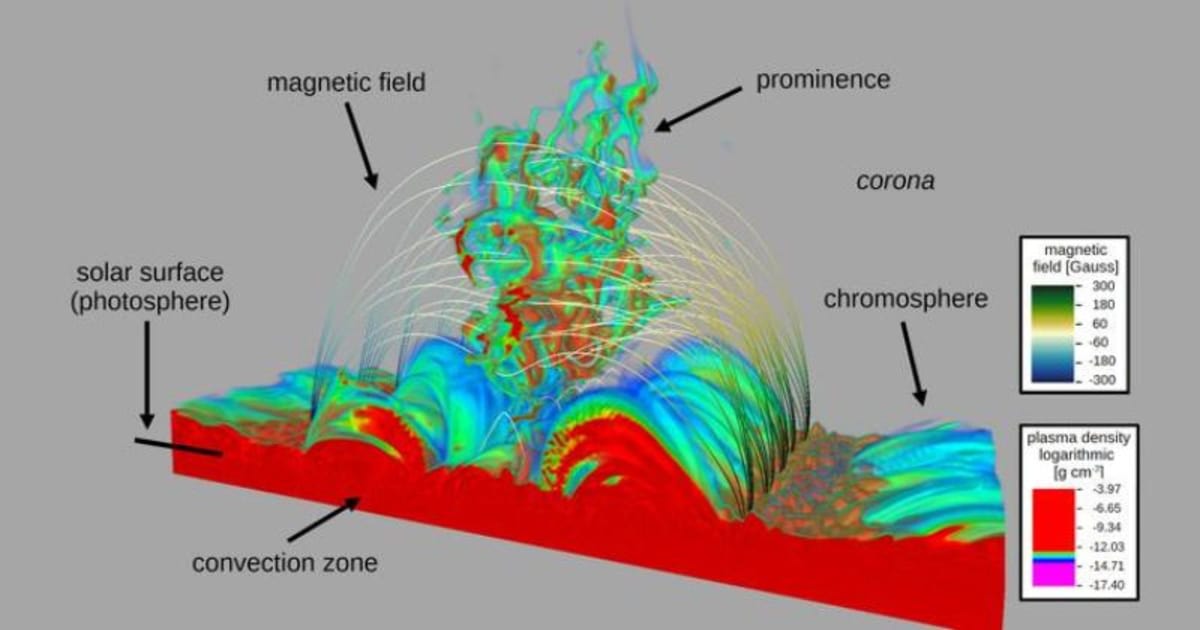
Turbulent plasma flows are contained in the Sun’s lower layers, which generate the constantly changing solar magnetic field. This field extends upward into the corona and forms prominences, shaped like flickering flames or looping ribbons. The study’s lead author, Lisa-Marie Zessner, specifically observed smaller prominences rising up to 20,000 kilometers into the corona. The model showed a common shape — two arched magnetic loops side-by-side, like a double camel hump. A dip lies between them where cooler plasma can collect and remain suspended, which is essentially where the prominence itself forms and sustains.
Two Mechanisms Power the Sun's Prominences
The model shows that solar prominences can survive through two forms of simultaneous plasma supply. Bursts of cool plasma material get launched by turbulent magnetic motion in the cooler chromosphere of the Sun, which end up trapped in the magnetic dip. Alternatively, hot plasma from the corona — flowing along magnetic field lines — could condense and supply fresh material to the prominence. Here, it is continuously both losing and gaining mass as some plasma “rains” downward as well.
10x the diameter of Earth, this solar prominence rising up above the Sun's surface was spotted by our Solar Dynamics Observatory. Prominences are unstable clouds of cooler plasma suspended above the Sun by strong magnetic forces. Check it out: https://t.co/6YlrEBwz18 pic.twitter.com/XPpT1I0TqF
— NASA (@NASA) November 3, 2018
When these two supply mechanisms interact, they keep the prominences alive and stable for weeks or months despite their extreme surroundings. “Our calculations show, more realistically than ever before, how both processes interact to supply the prominences with material and thus keep them alive,” says Lisa-Marie Zessner. This simulation is more accurate than earlier models that examined only the corona and focused on the condensation factor. On the contrary, the new study establishes that processes deep inside the Sun’s visible surface are just as crucial as what happens in the solar atmosphere. These insights can help predict when these floating mountain-like plasma clouds are nearing eruption, and in turn, protect us from dangerous solar weather.
More on Starlust
ESA's Proba-3 images multiple solar prominence eruptions in just hours
The Sun's magnetic 'engine' is located 200,000 kilometers below its surface, new study claims