Asteroid impacts shaped the early Earth's surface, creating conditions conducive for life
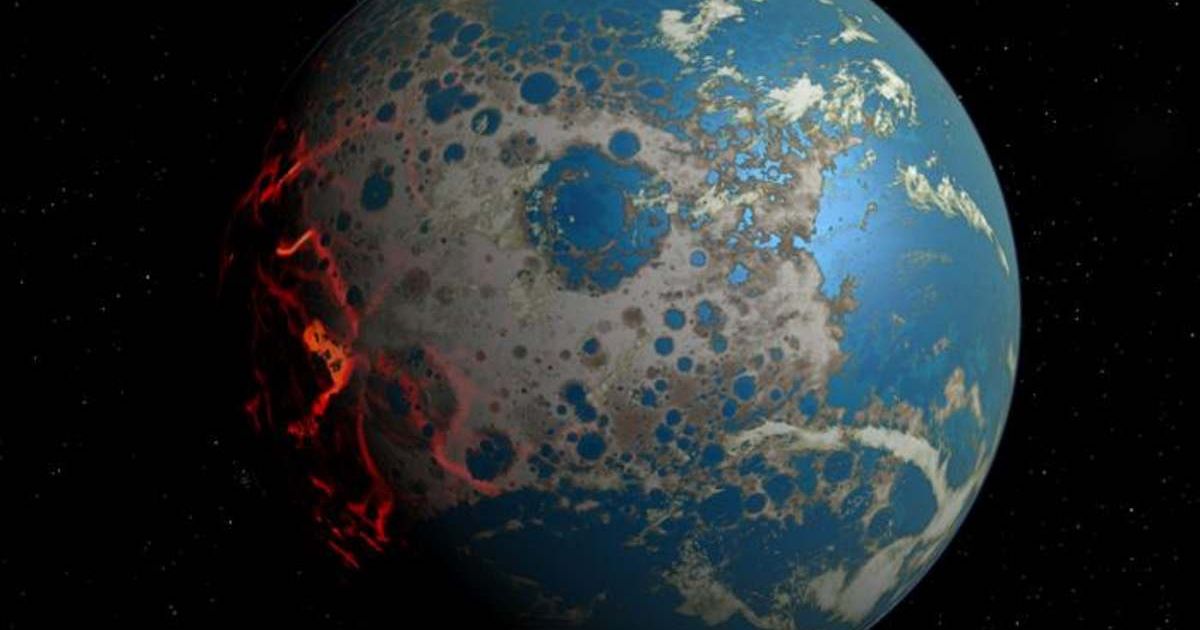
It is difficult to catch a glimpse of Earth’s impact history during its first billion years since few rocks from that period have been found. Now, a research team at the Southwest Research Institute (SwRI) has modelled that eon, conjuring up a picture of how early Earth was repeatedly battered by asteroids and planetesimals. These primordial impactors didn’t just plow up the surface of our planet but created hydrothermal systems where life could have originated, the researchers found, detailing their results in a paper published in the journal AGU Advances.
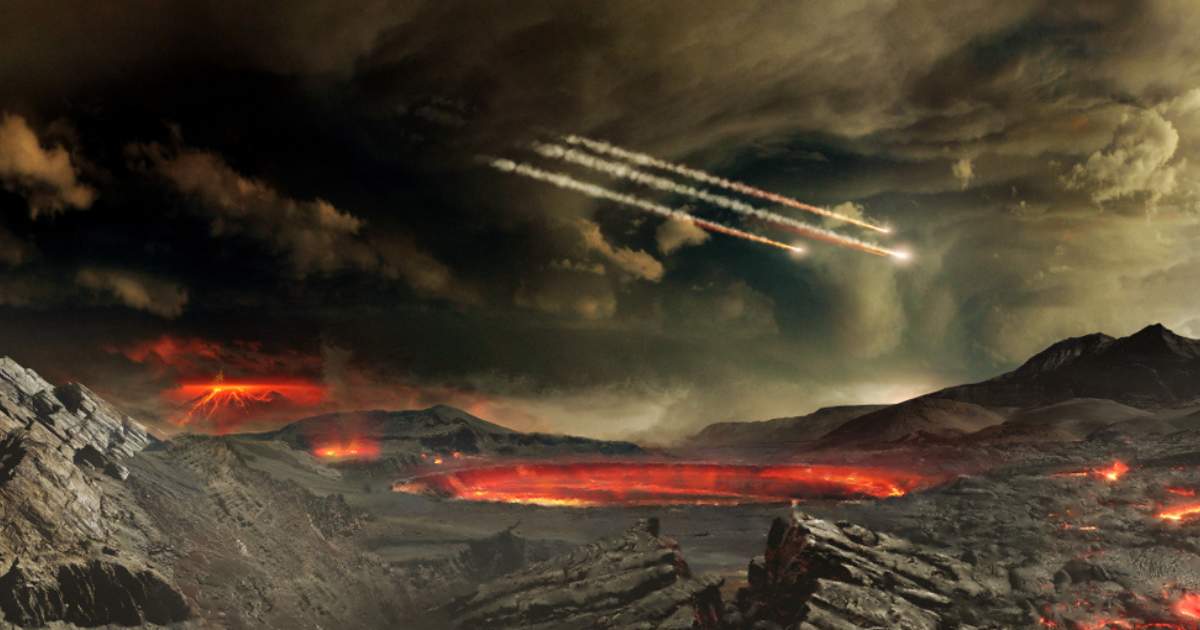
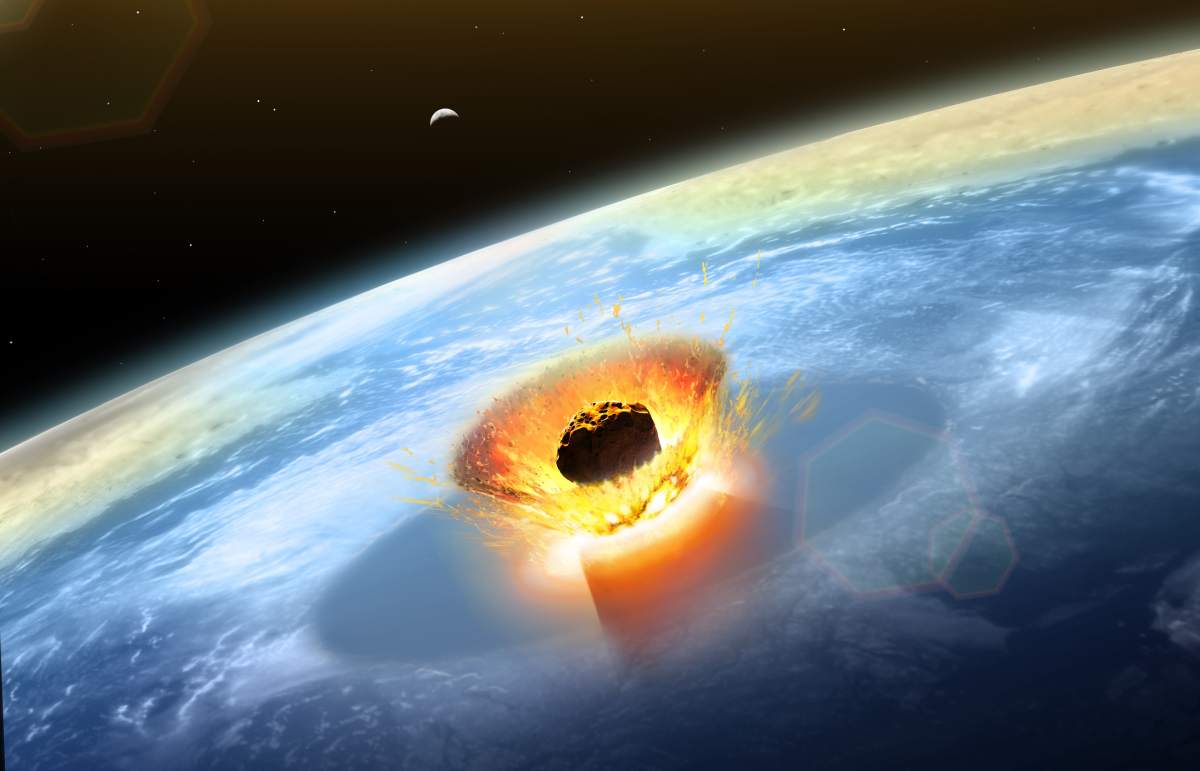
“This modeling is both novel and crucial for understanding the earliest environments life may have emerged from,” said first author Amanda Alexander at SwRI in a statement. “While often considered catastrophic in the context of dinosaur extinction, impact bombardment was also likely critical for creating environments for prebiotic chemistry.” Around 4.5 billion years ago, asteroids slammed into the newborn Earth’s atmosphere with great velocity. The impactors melted and even vaporized rocks in the crust, explosively launching molten material across the landscape. Consequently, impact-derived heat, coupled with the planet’s own internal geothermal contribution, caused hot fluids to spread through the fractured crust.
Such a restless environment spawned hydrothermal systems akin to the network of geysers around modern Yellowstone National Park. These systems were favorable for microbes to get a toehold and evolve. Alexander and her colleagues applied a computational shock physics code (that includes the effects of tensile fragmentation and porosity generation) to simulate such a topsy-turvy world. Their computer models also considered asteroid impacts of different sizes and velocities that could have hit Earth. By varying the temperature conditions and crustal compositions, the team also assessed the volume of the crust that was fractured and made permeable to allow fluid flow for each impact. The researchers say that each impact might have generated hydrothermal activity that was 100 times more intense than that of modern-day Yellowstone.
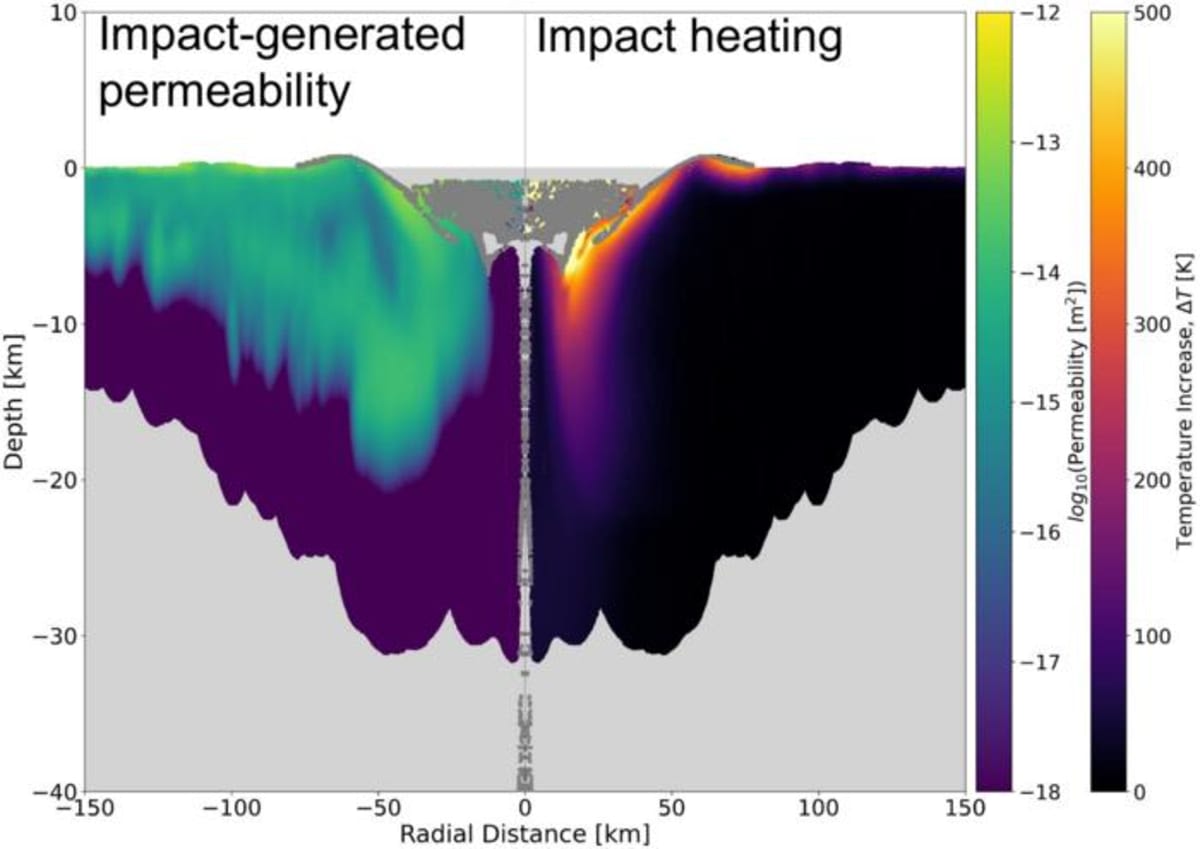
“Because life could have originated or evolved in hydrothermal environments, it is important to understand and quantify the generation of these systems by impacts on the early Earth,” said Alexander, emphasizing that “researchers will need to refine the data for a clearer understanding of the hydrothermal systems.” According to the paper, the simulations suggest that the volume of these impact-induced permeable regions depended strongly on impact energy, which is determined by the impactor's size and velocity. The range of generated permeability within those regions, however, was heavily dependent on the planet's geothermal gradient and crustal composition. Ultimately, these pores and fractures paved the way for the formation of pockets of hot water, creating the subterranean hydrothermal systems.
The models allowed the team to further fine-tune their calculations about how the impacts reshaped the crust over time. “Using a bombardment history model to infer the cumulative effects of recurring impacts, we estimate that the upper 5-mile (8-kilometer) shell of the Earth’s crust likely was highly permeable 4.3 billion years ago and that a significant portion of this volume may have remained permeable until 3.5 billion years ago,” Alexander said. “These results show that impacts were instrumental in driving hydrothermal changes to the early Earth’s crust, with important consequences for the geochemical evolution of near-surface environments.”
More on Starlust:
Asteroid impacts may have helped create microbes that gave Earth its oxygen-rich atmosphere
Why is the Moon's South Pole central to NASA's plans for a crewed landing and a lunar base?