Scientists recreate 'Moon rock' in a lab to study how the Moon ages—and where its water comes from
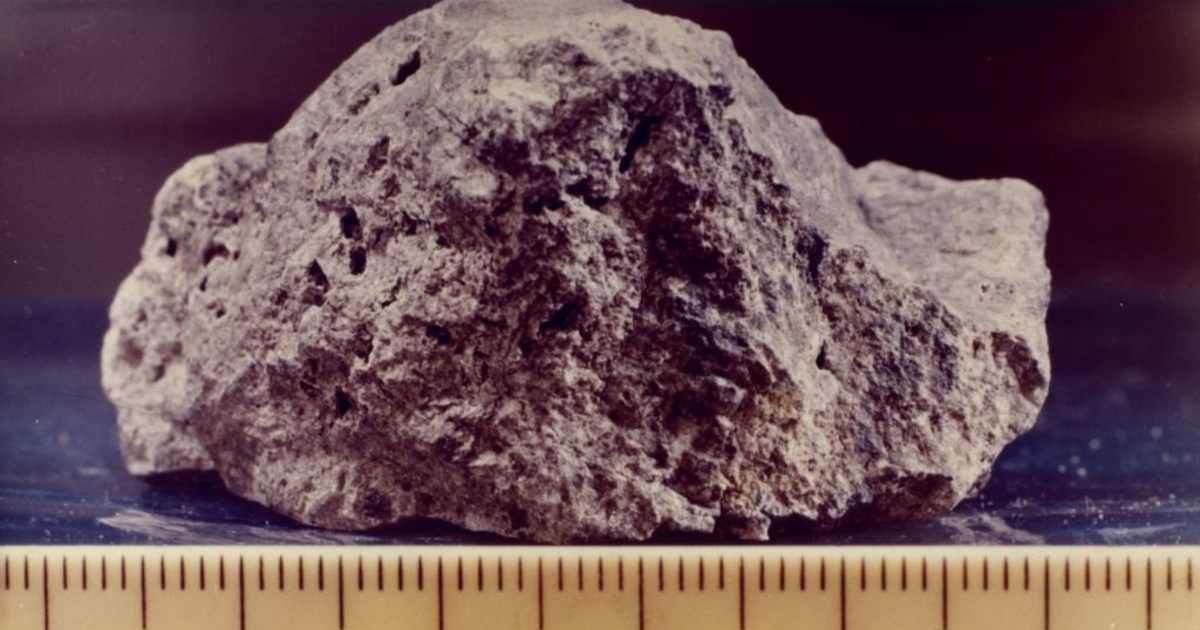
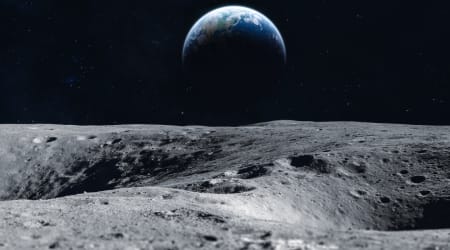
When we look at the Moon, we actually see a surface that has been changing for a long time, even though it may look unchanged from afar. Understanding exactly how the changes happen has been a challenge for scientists, partly because getting actual Moon samples to study in a lab isn't easy and partly because it's hard to pinpoint which force is doing most of the reshaping. Now, a team of researchers at the Georgia Institute of Technology has taken a new approach: instead of waiting for Moon samples to come to them, they recreated Moon rock by using synthetic solar wind.
For this, the researchers took ilmenite, a metallic mineral that is common on the Moon as well as here on Earth. Then they exposed it to a lab-made version of solar wind, the stream of charged particles that flows continuously from the Sun. Under the simulated conditions, the experiment produced tiny metallic particles called nanophase iron. This iron is a known byproduct of space weathering, a gradual process by which the Moon's surface gets altered over time.
Scientists had previously used data influenced by these particles to estimate how long the Moon has been going through space weathering. But it was unclear whether solar wind or tiny meteoroid impacts were the primary cause. The Georgia Tech results point strongly to solar wind as a major cause. "Having the ability to recreate the solar wind and having results look so similar to actual lunar samples is excellent," said co-lead author Advik Vira, a recent Ph.D. graduate, in a statement.
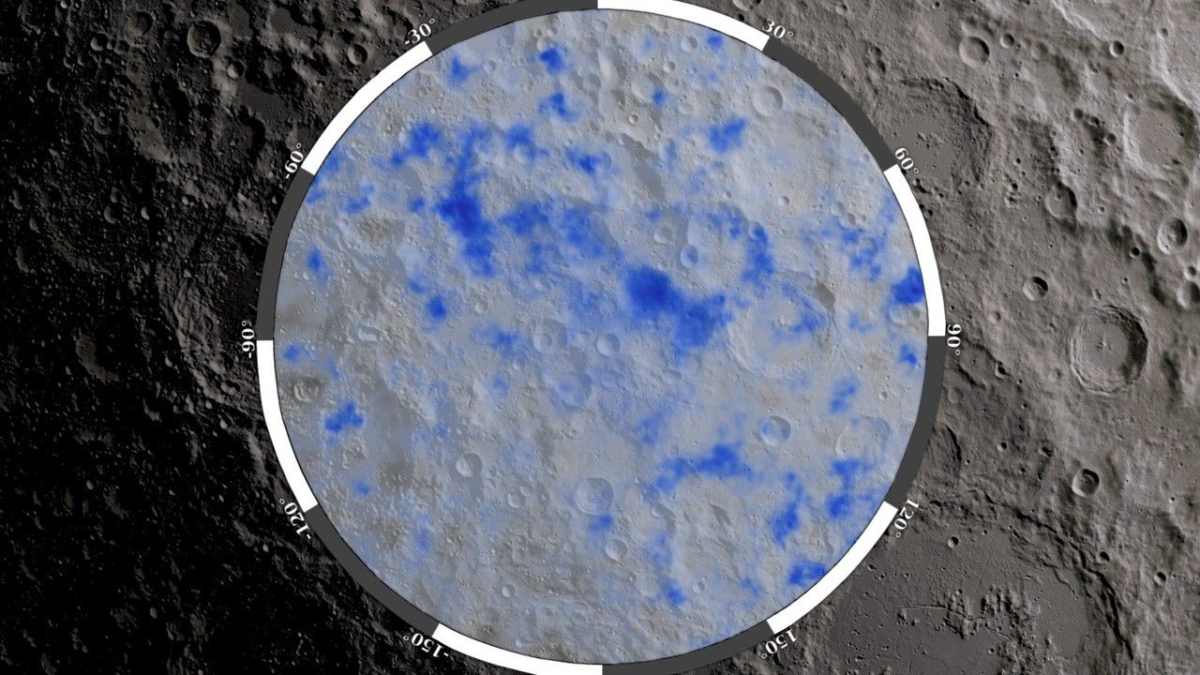
The experiment used a vacuum chamber in Georgia Tech Regents' Professor Thom Orlando's lab to simulate solar wind and high-resolution electron microscopy to analyze the samples. These tools helped the team recreate thousands of years of solar wind exposure under controlled conditions and examine the results at a level of detail that hasn't been achieved before. "Scientists have been doing laboratory radiation experiments for years, but they haven't been able to characterize the results at this level of detail," said lead author Roshan Trivedi, a physics Ph.D. candidate at Georgia Tech.
Can this tell us about water on the Moon?
In previous research, scientists have noted that the lunar South Pole is a strong candidate for water ice. But there is this longstanding question: how does water form on the Moon? This research may be able to explain that. "Water would be a fantastic resource for humans operating on the Moon, but scientifically, we are driven simply by the question of how water gets there in the first place," said Phillip First, a professor in Georgia Tech's School of Physics.
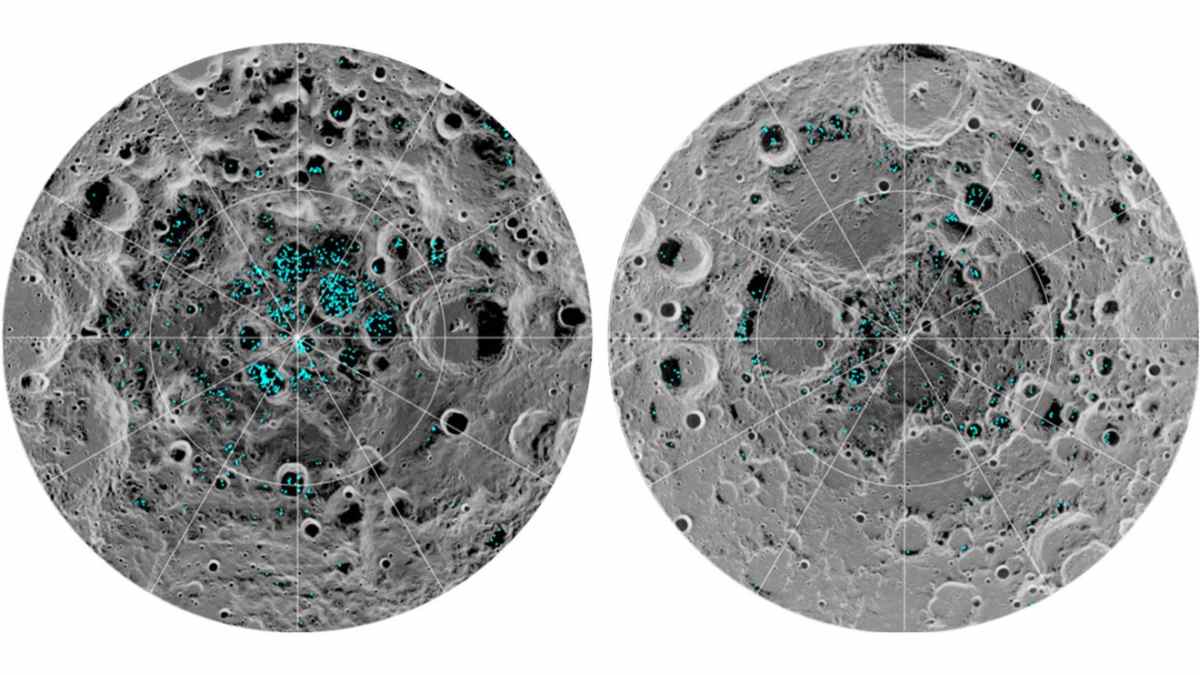
"Solar wind is potentially one way, because protons in solar wind provide the hydrogen of H₂O molecules while oxygen is present in lunar minerals,” First added. The lab experiments also created tiny voids (small empty pockets inside the mineral), which could be the kind of sites where this hydrogen-oxygen bonding happens.
The team can now use this setup to simulate a wide range of exposure ages, meaning they can essentially study different stages of the Moon's surface aging in a controlled environment. These insights can help scientists better interpret remote sensing, thereby reducing their reliance on Moon missions. The work was conducted through Georgia Tech's Center for Lunar Environment and Volatile Exploration Research (CLEVER), which is part of NASA's Solar System Exploration Research Virtual Institute (SSERVI). And the results of the study were published in The Planetary Science Journal.
More on Starlust
NASA names Artemis III astronauts—here's all you need to know about them
Could a meteor storm delay NASA’s Artemis IV Moon landing? Here’s what we know