Astronomers identify 20 stars as remnants of Loki, a dwarf galaxy consumed by the Milky Way
Astronomers have identified a group of 20 ancient, very metal-poor (VMP) stars that are considered remnants of a dwarf galaxy that the Milky Way swallowed. A study published in the Monthly Notices of the Royal Astronomical Society reveals that the chemical signatures of the VMP stars show that they are quite different from other metal-poor stars discovered residing in the Milky Way’s halo.
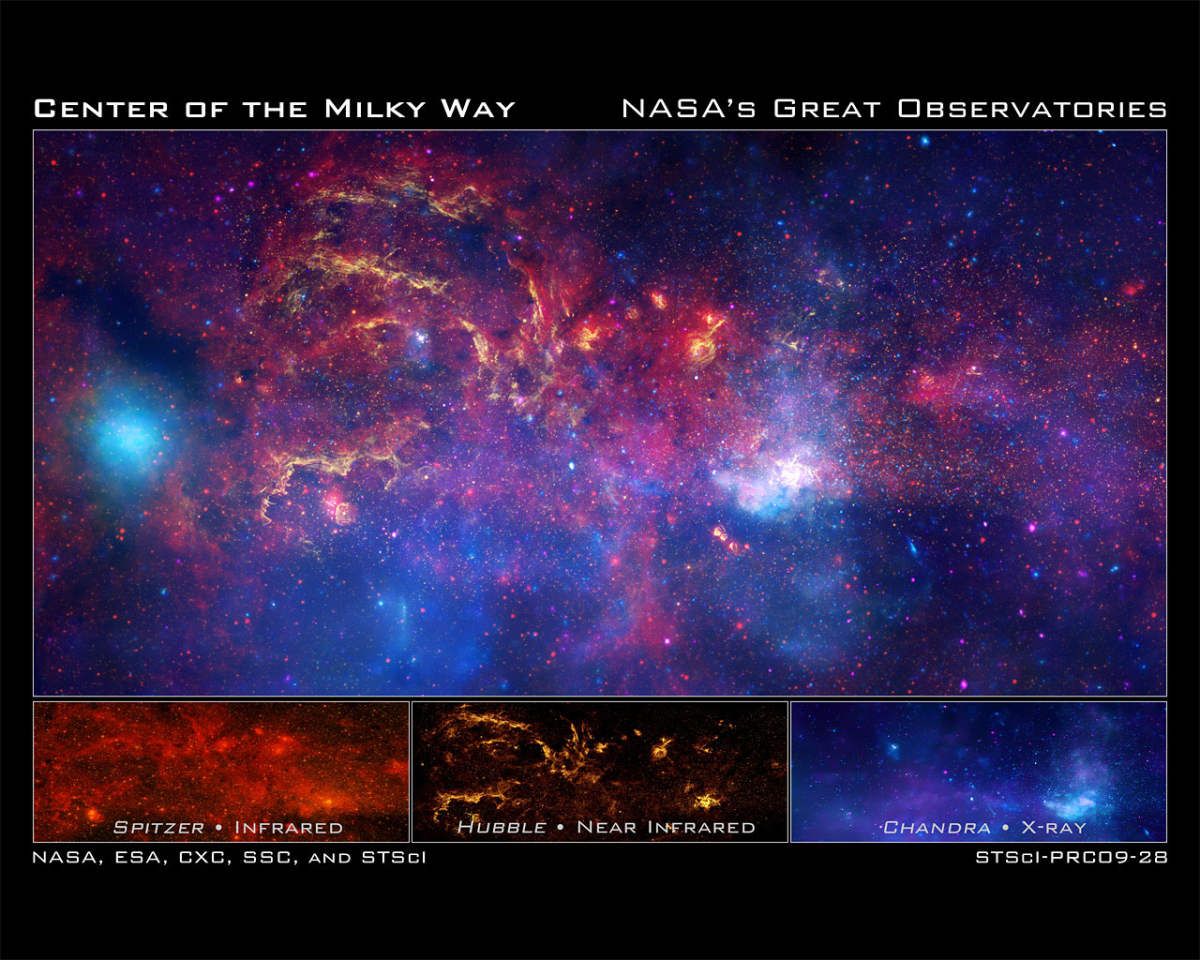
One of the oldest stellar populations known in the universe is VMP stars, which were created within 2-3 billion years after the Big Bang. Their very low levels of heavy elements (such as iron) tell us that they must have been formed at a time when their host environment had not yet undergone multiple cycles of star formation to produce heavier elements. By studying their chemical composition and specialized motion data (kinematics), astronomers were able to trace the history of the Milky Way's evolution through ancient galactic mergers.

In this particular research, the authors looked at the differences in chemical abundance patterns in VMP stars and classical dwarf galaxies. The findings indicate matching elemental ratios, suggesting a strong possibility that these stars had a common origin: an ancient dwarf galaxy that collided into and eventually got consumed by the Milky Way. The ESPaDOnS spectra obtained for the study were of very high quality, allowing researchers to measure 23 chemical species or elements in the stars.
Distances from the Sun to these stars were measured with the help of Gaia Data Release 3 using Bayesian methods. By combining these distances with kinematic information or motion data, specifically, positions, proper motions, and radial velocities, the team was able to create a mathematical 3D model projecting the galactic orbits of these stars. Looking at these orbital properties of the target stars, the researchers confirmed that the stars were scattered across different trajectories, including counter-rotating orbits. The observed stars are all located within 2 kiloparsecs of the Sun, the researchers noted.
A lost galaxy called ‘Loki’ may be hiding inside the Milky Way Astronomers believe they have uncovered traces of a long-vanished dwarf galaxy — nicknamed Loki — that was devoured by our Milky Way billions of years https://t.co/1i2I3kuw5m studying a group of 20 ancient, metal-poor… pic.twitter.com/iXUvoPm6mD
— Black Hole (@konstructivizm) May 2, 2026
As these stars had remained hidden in plain sight within the galactic disk, the researchers unofficially named the theorized progenitor galaxy ‘Loki’, after the Norse god of trickery and deception. The name also reflects the chaotic nature of the ancient accretion or collision event that brought these stars into the Milky Way. That said, Loki is part of a much bigger mystery surrounding the early days of the Milky Way, with our galaxy being a highly active cosmic cannibal. Studies have shown that the Milky Way has absorbed several dwarf galaxies, including Gaia-Enceladus, Sequoia, and Thamnos. A landmark study in 2020 mapping the Milky Way’s history of mergers also identified another dwarf galaxy, named Kraken, which was devoured by our galaxy 11 billion years ago. Currently, the Milky Way is also in the process of tearing apart the Sagittarius Dwarf Spheroidal Galaxy, suggesting that its days of cosmic cannibalism are far from over.
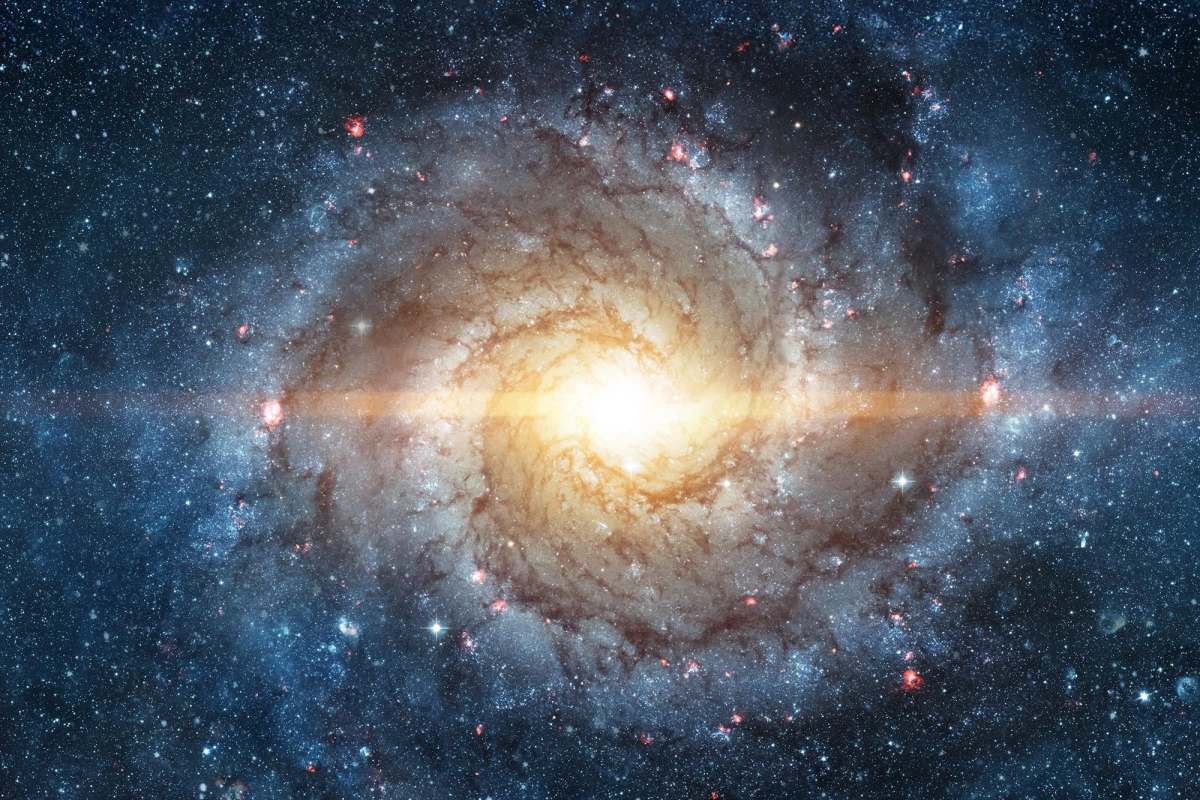
As astronomers investigate the chaotic evolution of the Milky Way, massive ongoing surveys such as WEAVE and 4MOST are expected to contribute significantly, allowing scientists to measure chemical abundances, effective temperatures, and the kinematics of millions upon millions of stars. These finds might enable researchers to finally piece together how the Milky Way evolved through time, bringing to light further remnants of dwarf galaxies and identifying the oldest stellar populations in our cosmic backyard.
More on Starlust
James Webb finds a galaxy from the early universe is not rotating and scientists are stunned