Scientists just fixed the timeline of Oklahoma meteor crater—and linked it to a mass extinction
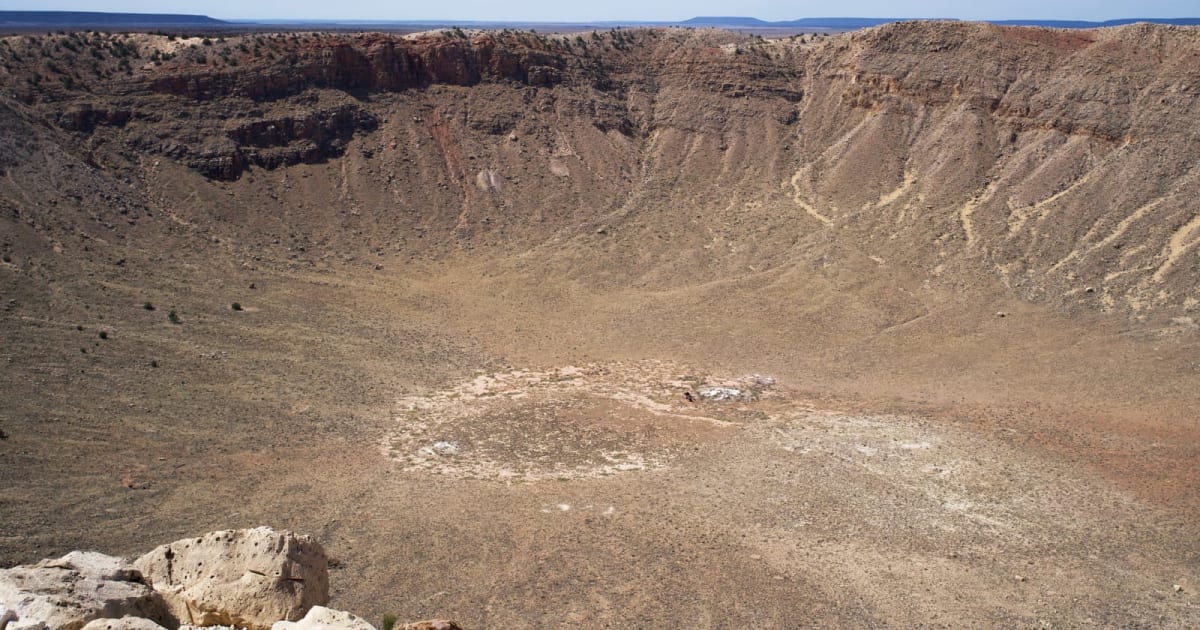
Scientists from the University of Texas at Austin have revealed something surprising related to Oklahoma's geologic history, which can have global implications for ancient life. They estimate that a meteorite crater buried beneath the town of Ames in Oklahoma was created around 370 million years ago and not 467 million years ago, as previously assumed. The revised age shifts the impact from the Middle Ordovician period to the Late Devonian period.
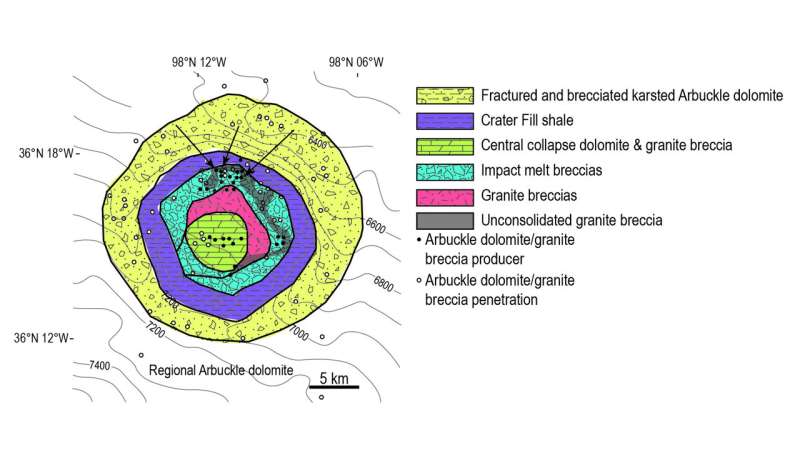
With a diameter of around 9 miles (15 kilometers), the Ames crater was thus far thought to be one of the most significant structures associated with the Ordovician Meteor Event, which saw several meteor impacts across North America. Hence, the crater also formed an integral part of theories related to the implications of the Ordovician meteors on Earth’s geological history, with researchers thinking that the planet might have had a ring of asteroid debris around it like Saturn during the Middle Ordovician period.
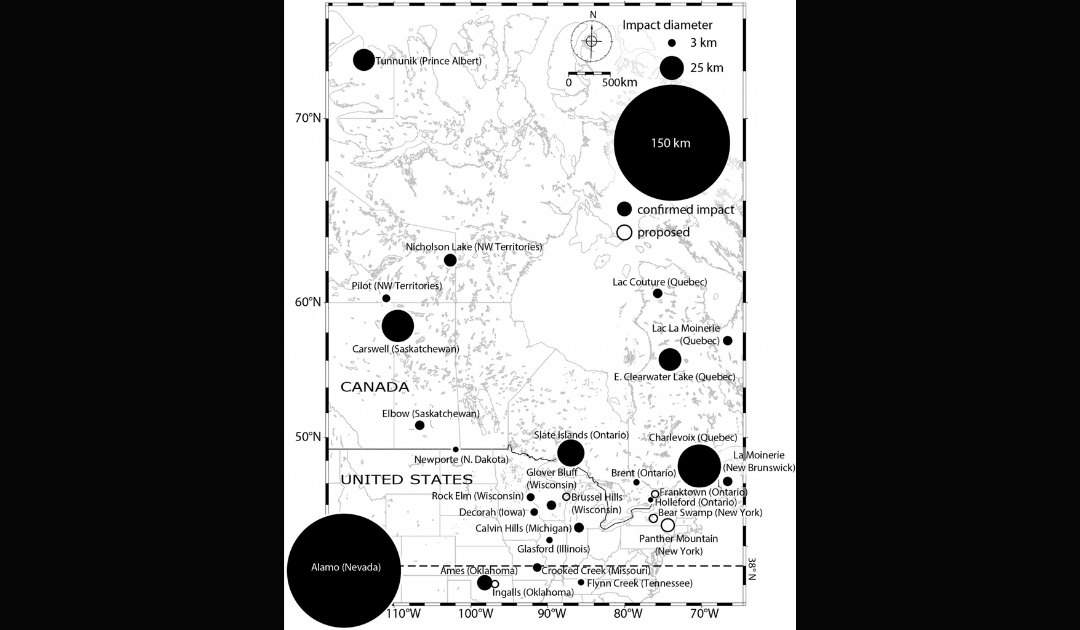
The previous estimation of the age of the Ames meteor impact site was done biochronologically, with researchers discovering fossilized teeth of conodonts, eel-like creatures that lived during the Ordovician period at the site. The researchers involved with the new study, however, think that the teeth were already millions of years old at the time the impact occurred and were subsequently merged with the rocks affected by the collision—thereby indicating an older date than when the impact took place.
Researchers at the Jackson School of Geosciences have rewritten a small part of Oklahoma’s geologic history.
— UT Jackson School of Geosciences (@txgeosciences) September 28, 2026
Read more: https://t.co/UFGpAjMuTt pic.twitter.com/RfWO0Tyv0o
For the new study, which was published in July in Meteoritics & Planetary Science, the scientists analyzed zircon crystals present in granite affected by the impact on the site by applying varying analysis methods, such as uranium-lead dating, which determined both the crater's age and the shock pressure generated by the meteor. The results were quite intriguing, as they revealed a much younger, Devonian age for the crater. This new radiometric date squarely fits into the timing of the Frasnian-Famennian mass extinction event, which took place around 372 million years ago, causing the extinction of a large population of marine life on our planet.
"No matter what technique we used, it was coming back to this younger signal," said Elizabeth Catlos, who's an associate professor at the University of Texas' Department of Earth and Planetary Sciences and the lead author of the study. Also, Danny Stockli, the dean of the Jackson School of Geosciences and a co-author of the paper, said that U-Pb dating is the most accurate way to tell the age of such events. "These small crystals allow us to go back in time and learn about the major changes to Earth's ancient landscapes," he said. "It would be great to do this for more of the meteor impact sites across the continent so we could get a more accurate timeline for these major events."
To further verify their results, the scientists collaborated with NASA to analyze the zircon crystals using techniques like cathodoluminescence and electron backscatter diffraction. These techniques were applied because they allow observations of how the zircon crystal recrystallizes when struck by such a meteor impact.
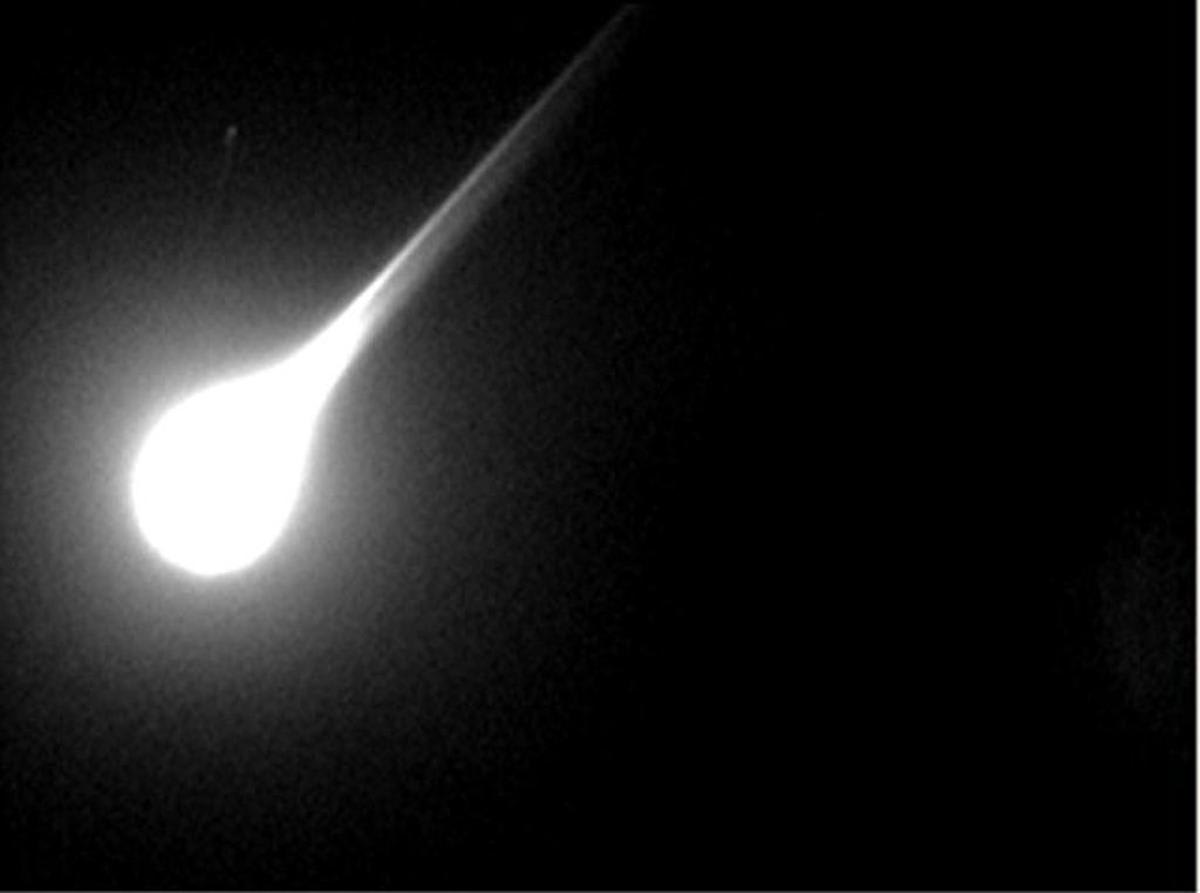
Catlos said that it is very important to have accurate timeliness for mass extinction events and other big moments in the Earth's history because they tell how the planet functions. The source of these extinctions is an important aspect to be considered, whether they are extraterrestrial forces, such as the Ames meteor impact, or an interior force such as volcanic eruptions.
More on Starlust
Scientists find life-supporting organic compounds in meteorite that struck New Jersey home
Century-old meteorite from Azerbaijan reveals new clues about Mercury