ESA's Proba-3 images multiple solar prominence eruptions in just hours
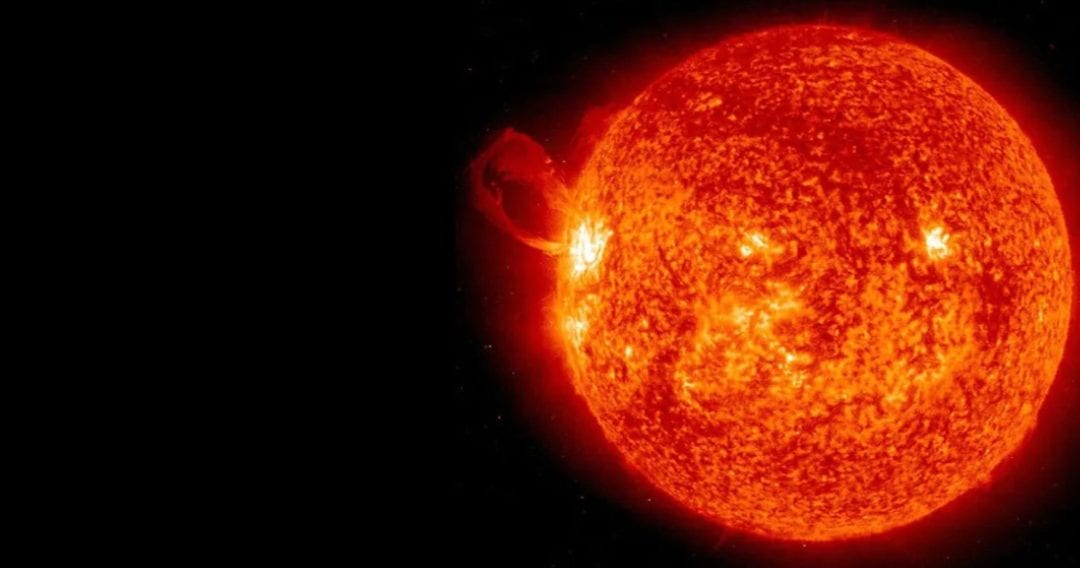
The ASPIICS (Association of Spacecraft for Polarimetric and Imaging Investigation of the Corona of the Sun) coronagraph aboard the European Space Agency's (ESA) Proba-3 captured time-lapse images of the Sun's inner corona and its prominence eruptions. In the animation, put together by combining false-color images obtained by Proba-3 and NASA's Solar Dynamics Observatory (SDO), the corona appears as a yellow luminous halo around the dark orange solar disk. Meanwhile, the prominence eruptions are visible as yellow wave-like ejections. "The corona is extremely hot, about 200 times hotter than the Sun's surface," explained Andrei Zhukov, the principal investigator for ASPIICS, per the ESA press release. "Sometimes, structures made of relatively cold plasma (charged gas) are observed near the Sun—although these are still around 10,000 degrees, they are much colder than the surrounding million-degree hot corona—creating what we call 'a prominence'."
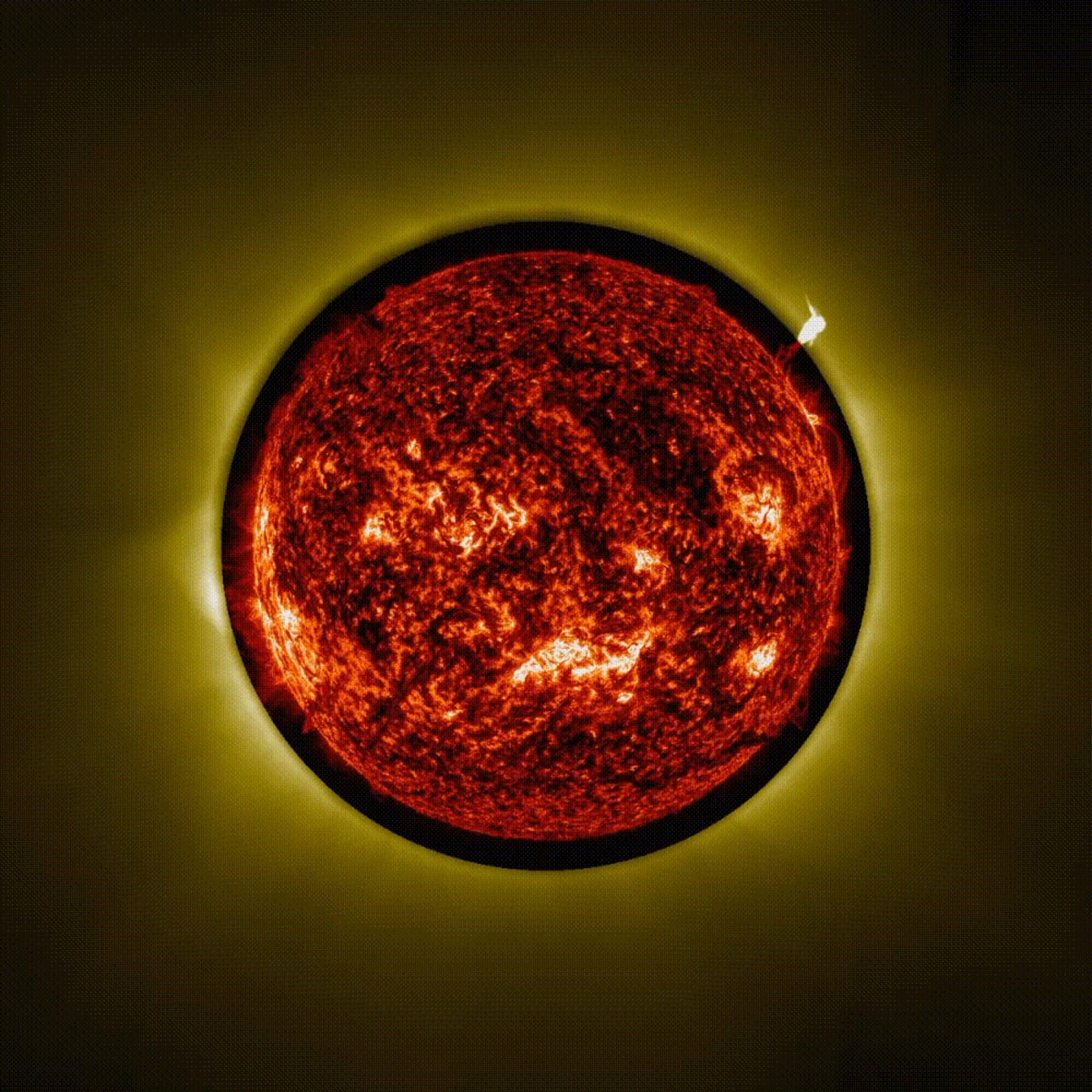
Prominences can inflate outwards from the Sun. They erupt, breaking up and sending plasma in different directions in space. The animation is from an active period on September 21, 2025, during which the coronagraph took one image every five minutes, capturing three prominence eruptions in just five hours. “Seeing so many prominence eruptions in such a short timeframe is rare, so I’m very happy we managed to capture them so clearly during our observation window," Zhukov added. The instrument was able to capture the spectral line emitted by helium present in the coronal gases. As a result, it could show the solar atmosphere as human eyes would perceive it through a yellow ASPIICS filter during a total solar eclipse.
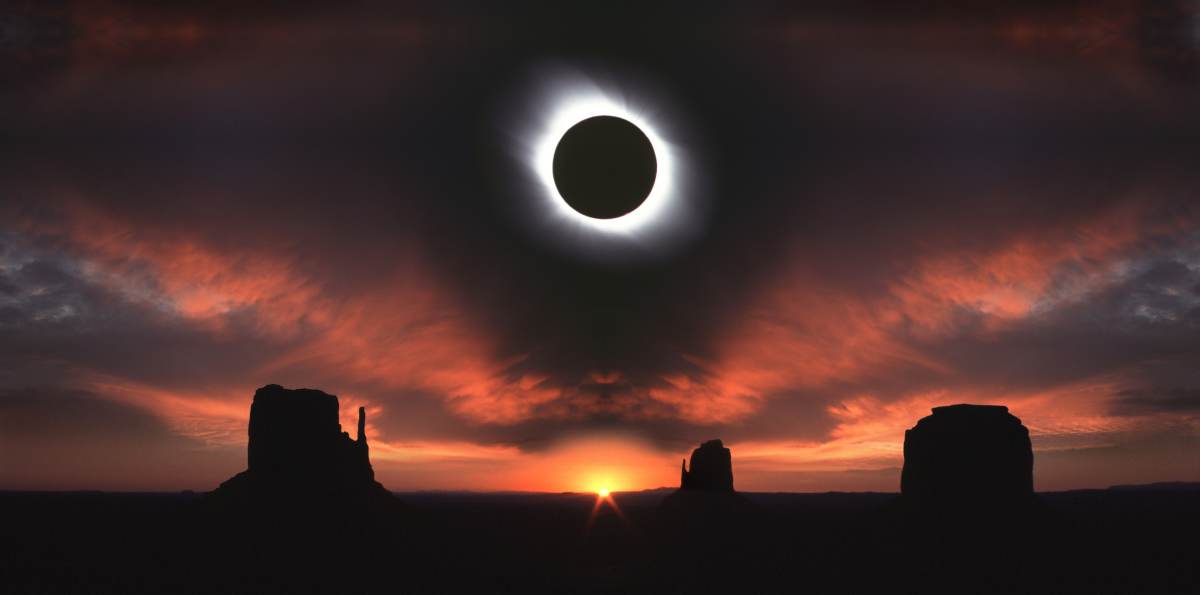
The Sun’s brightest part is so bright that it blocks the faint light from the corona, making it invisible to the instruments that astronomers use. But, during a natural solar eclipse, the Moon blocks the Sun and casts a shadow on Earth, exposing the corona for a few minutes. Since this is a short-lived affair, it leaves major observational gaps. In a press release, Proba-3 Mission Manager Damien Galano at ESA, said, “Thanks to a set of onboard positioning technologies that allow the Proba-3 duo to create a solar eclipse in orbit, the mission is delivering on its promise to fill this gap.”
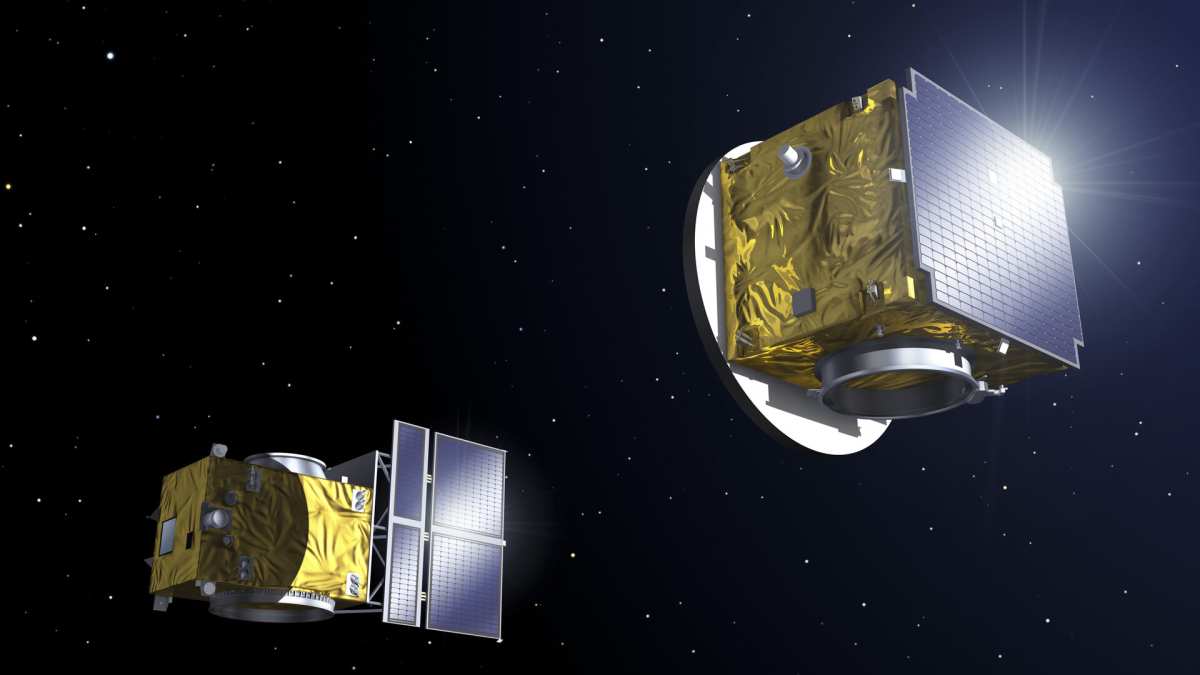
Proba-3, launched on December 5, 2024, mimics a real solar eclipse. After flying closer to the Sun, one spacecraft blocks the bright parts of the Sun, doing as the Moon would in a real eclipse. It then casts a shadow on a second spacecraft that uses an onboard camera to capture the images of the artificial solar eclipse. The spacecraft duo flies in an orbit that brings it as close as 372 miles to Earth and as far as one-sixth of the distance to the Moon. At this latter point, which is more than 37,282 miles away from Earth, they move at speeds between 5,400 and 79,200 miles per hour. Even at the slowest speed, they move fast enough to traverse the distance between New York City and Philadelphia in one minute. While flying in this manner, they control themselves without any human-mediated guidance from Earth.
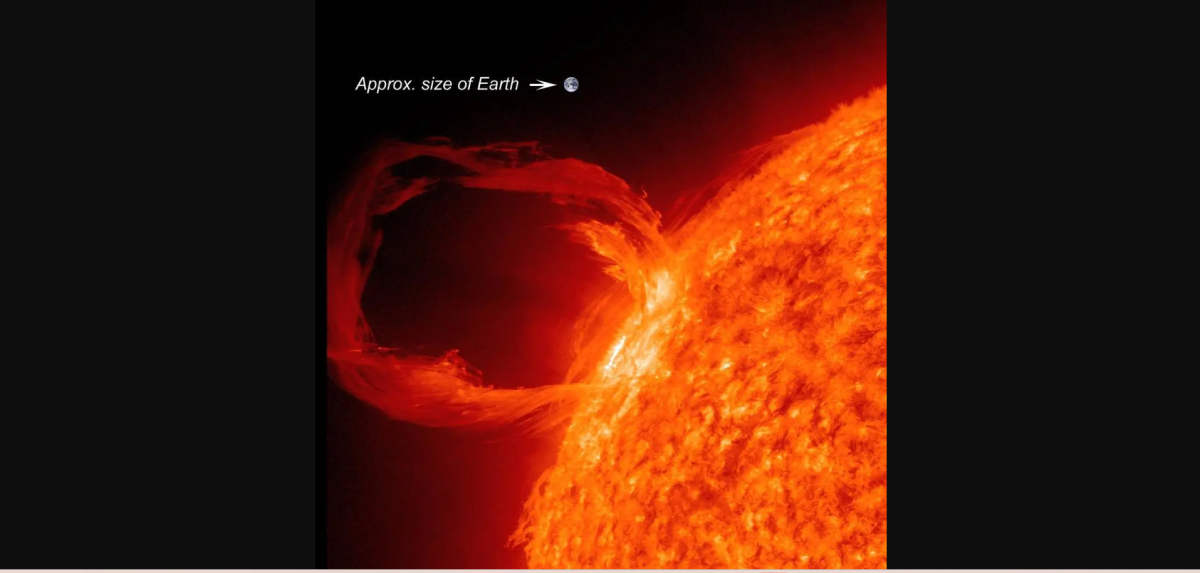
After hundreds of hours of observations, it is clear that Proba-3 is able to provide valuable data, uncovering new insights into the inner regions of the Sun’s corona. “The Proba-3 mission is also studying space weather by observing high-energy particles that the Sun ejects out into space, sometimes in the direction of the Earth,” writes Christopher Palma, a teacher and professor of astronomy at Penn State, in a report published in The Conversation. Solar storms can harm Earth-orbiting satellites. In this respect, data gleaned by Proba-3 can be handy to better predict space weather patterns in time to protect sensitive satellites.
More on Starlust
Aurora alert: One of the fastest solar storms in decades just hit Earth, triggering severe G4 storm