Proba-3: How scientists found a way to create artificial total solar eclipses in space
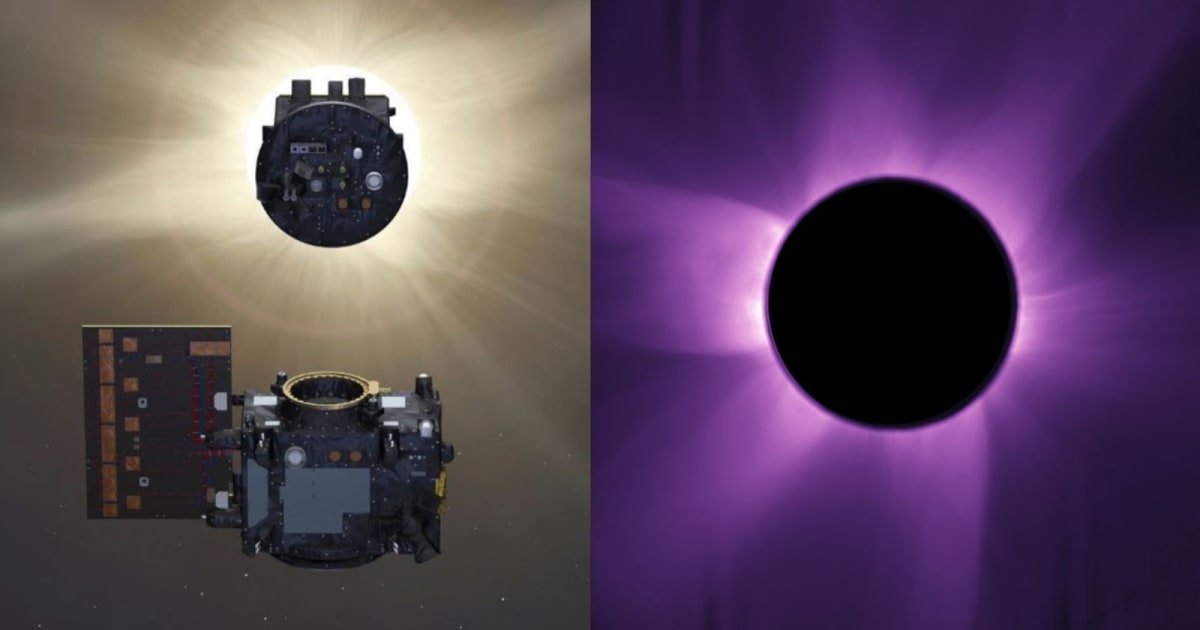
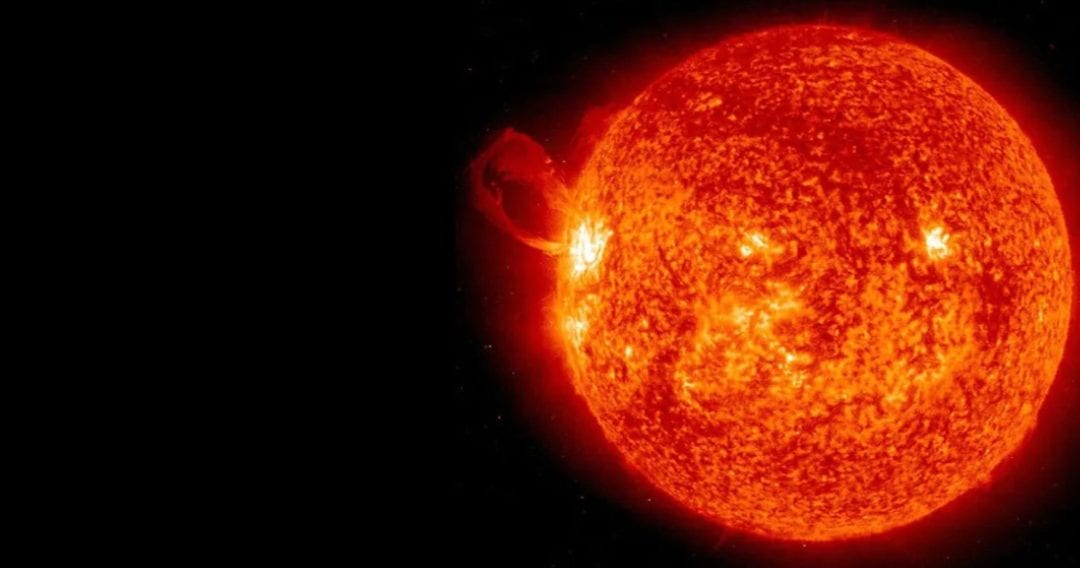
Total solar eclipses present a unique opportunity to study the Sun’s characteristics, primarily its scorching hot corona (outer atmosphere), which heats up to over a million degrees. But one disadvantage of natural solar eclipses is that they last just a few minutes, offering scientists limited time to investigate the full corona. In December 2024, the European Space Agency (ESA) solved this problem by launching the Proba-3 mission, which is designed to create artificial total solar eclipses in space that last up to six hours.
What is the Proba-3 mission?
Proba-3 was launched as a monumental experiment—a ‘formation flying’ mission that includes two satellites that orbit the Earth together at a fixed distance. It is a technology demonstration that ESA states will “validate strategies, guidance, navigation and control and other algorithms, such as relative GPS navigation, previously tried in ground simulators.”
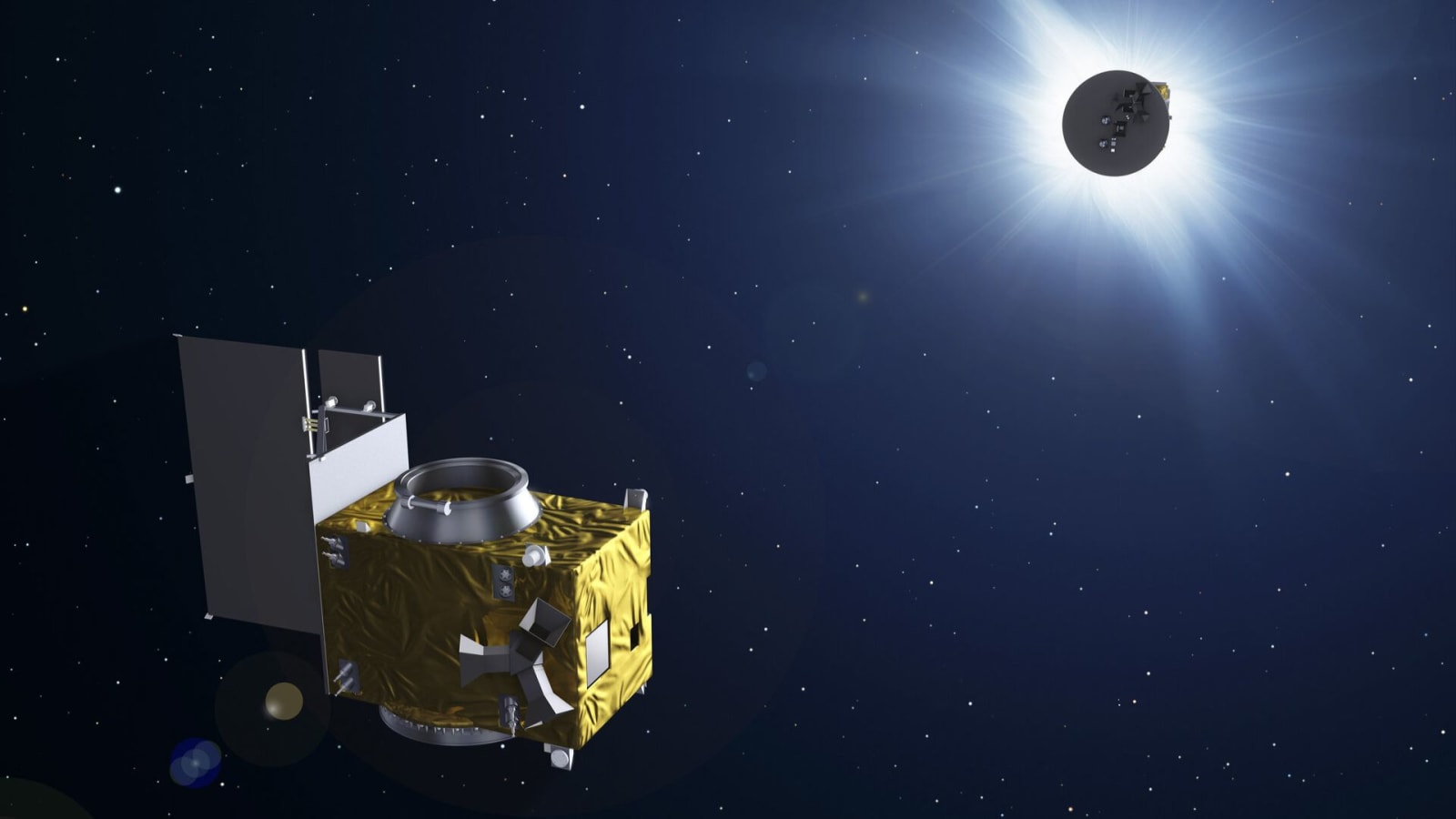
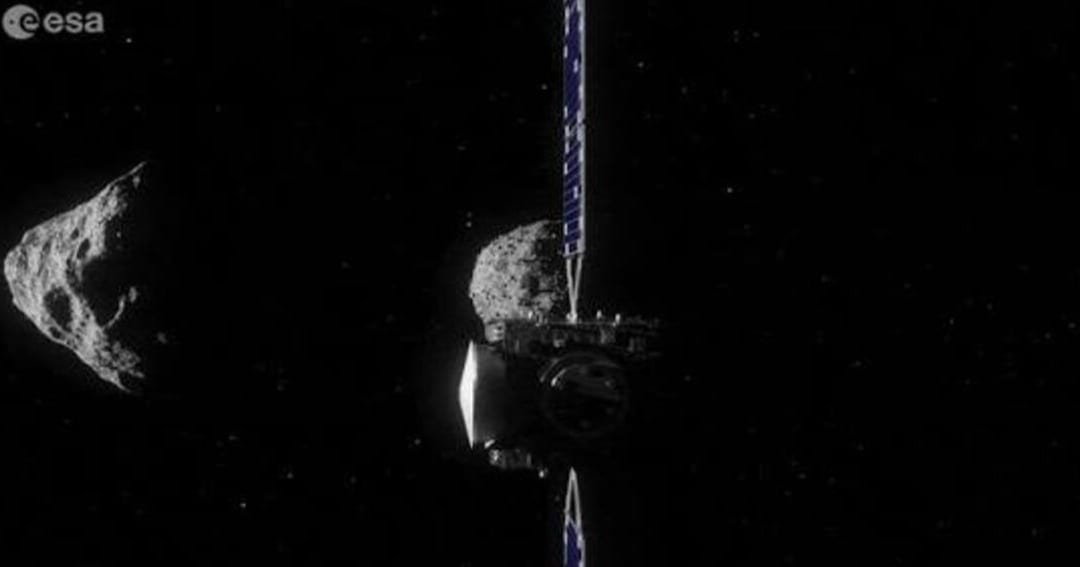
The two satellites are also meant to validate sensors and algorithms that could be used for a future Mars sample return mission and for de-orbiting satellites from low-Earth orbit. However, the major science goal of Proba-3 is to reveal secrets hiding in the Sun’s corona—which is visible only during an eclipse—and investigate its effects on space weather.
How does Proba-3 work?
These two satellites of this mission—called the coronagraph and the occulter—are installed in a highly elliptical orbit (600 x 60530 km) around Earth. They are flying at a distance of approximately 150 meters from each other and complete one orbit in about 19 hours and 36 minutes.
The genius of this mission is in the formation flying, as it enables the satellites to create an artificial solar eclipse. Naturally, a solar eclipse occurs when the Moon completely blocks the Sun when seen from Earth. When this happens, the corona is unveiled, and the prominences (charged plasma loops extending out of the Sun) become visible. During other forms of eclipse, such as partial or annular, the Moon doesn’t block the Sun fully, so the corona is not visible as clearly.
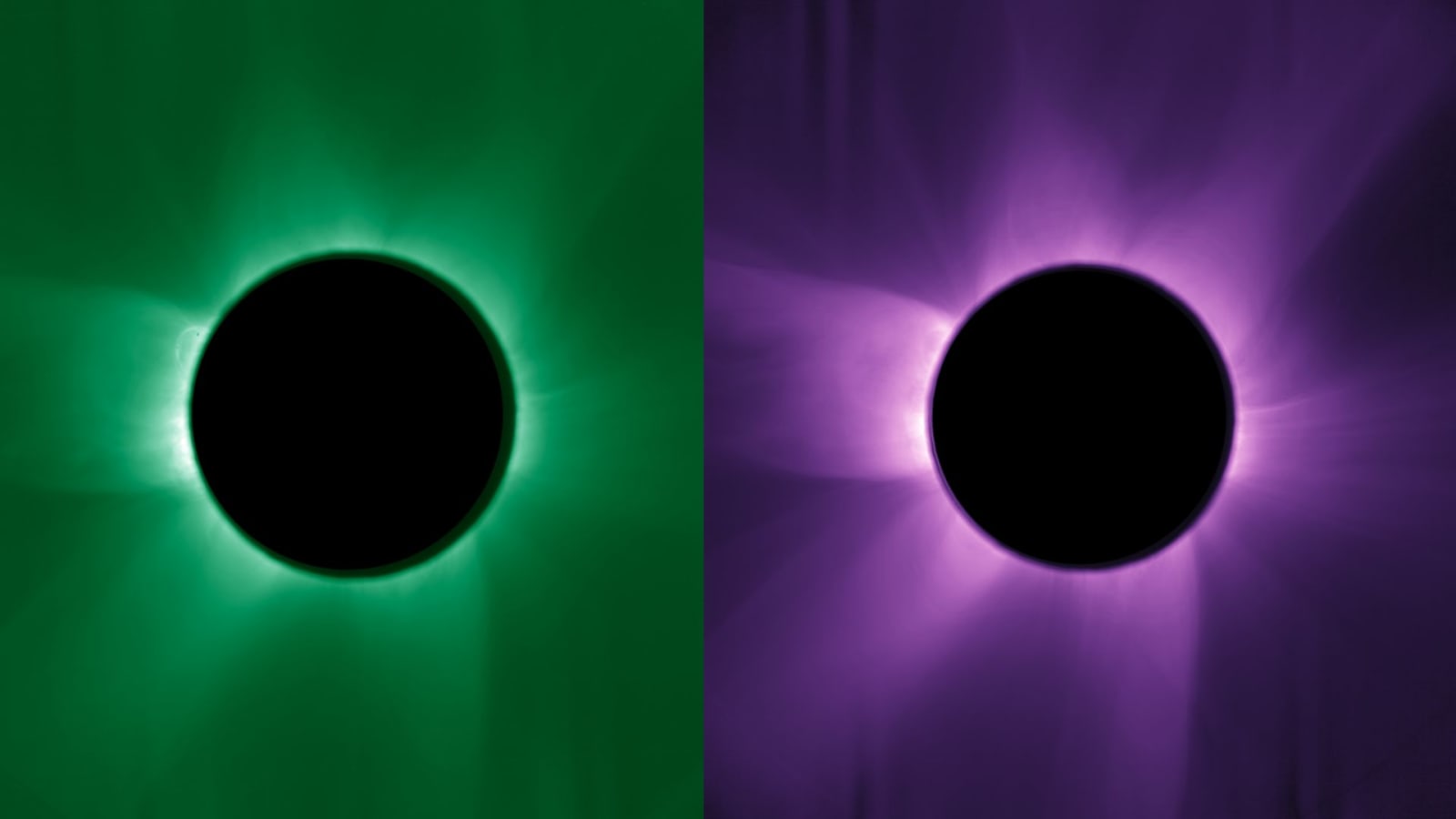
With Proba-3, scientists now have the luxury of creating eclipses using the occulter. It acts as the artificial moon and covers the Sun using its 1.4-meter disc and casts a shadow on the coronagraph (Earth in this case), which is equipped with a 5 cm aperture telescope. Each of these eclipses lasts for six hours at a time in every orbit, giving scientists ample time to study the corona—something that is impossible during a natural eclipse.
Why study eclipses?
The corona is mysterious because it is hotter than the Sun's surface, where the temperature is about 5,500°C, and investigating it may reveal the reason behind this heating. Besides, the corona also affects space weather, as it’s closely linked with solar flares, solar winds, and coronal mass ejections that can reach Earth and disrupt communication and navigation systems in low-Earth orbit as well as on the ground.

Eclipses also affect Earth as our planet’s illumination changes along with the atmosphere when it’s under the Moon’s shadow. According to NASA, this blockade of solar energy is great for studying the Sun's effects on the ionosphere—the charged upper layer of our planet’s atmosphere.
More on Starlust
August 12 solar eclipse from International Space Station: NASA astronaut Jessica Meir shares photos
Mark your calendar: 2027 brings a "ring of fire" eclipse and a record-long total eclipse