Are slow solar winds really that slow? ESA's Proba-3 makes surprising revelation
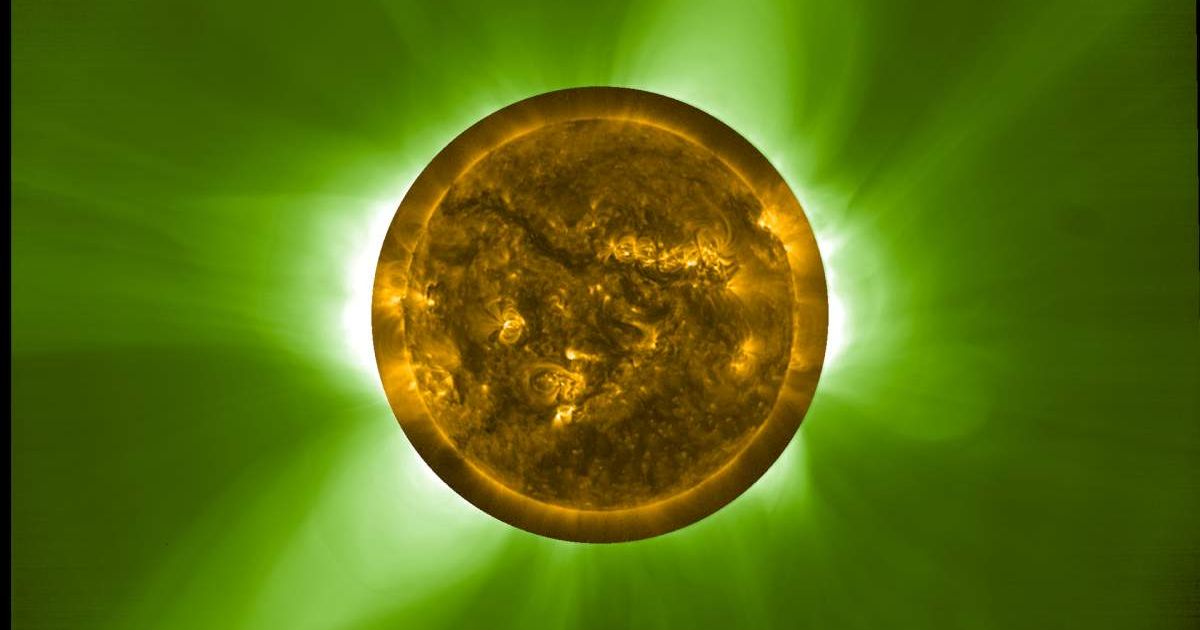
Slow solar wind is not really as "slow" as previously understood. That's what Andrei Zhukov of the Royal Observatory of Belgium and his team have reported in their study published in The Astrophysical Journal Letters. “In the inner corona, a region very difficult to observe, we saw slow solar wind gusts moving three to four times faster than expected,” said Zhukov, who's also the principal investigator of Proba-3's ASPIICS instrument, which made the observation.
Andrei Zhukov of the @ORB_KSB is the Principal Investigator of ASPIICS. Our big ASPIICS team is looking forward to working on the future data! 🤩 #PROBA3 #SolarEclipse pic.twitter.com/81jX31clNe
— Observatory.be (@ORB_KSB) April 4, 2024
Solar winds—the stream of charged particles emanating from the Sun—can be both fast and slow. In that respect, they are quite like winds here on Earth. But there's a catch. Fast solar winds move along a smooth current from magnetic structures on the Sun, called coronal holes. Slow solar winds, on the other hand, are more unpredictable and difficult to understand. Scientists believe they are generated by the Sun's magnetic field lines separating and merging again. This process releases electrically charged gas or blobs of plasma. Previous studies had found that solar winds close to the Sun's surface travel at speeds of around 100 km/s, but Zhukov and his team found plasma moving at speeds of 250-500 km/s.
"We can track how solar wind speeds up close to the Sun, we see it all over Proba-3's field of view, and we have already seen speeds and accelerations that surprised us," said Joe Zander, the Proba-3 project scientist at ESA, in a statement. Before Proba-3 became operational, scientists relied on rare natural eclipses to study the otherwise imperceptible solar corona. Since July 2025, however, Proba-3 has already created 57 artificial eclipses, collecting over 250 hours of data from this critical zone. That's the equivalent of the observation time spanning 5,000 total solar eclipses seen from Earth.
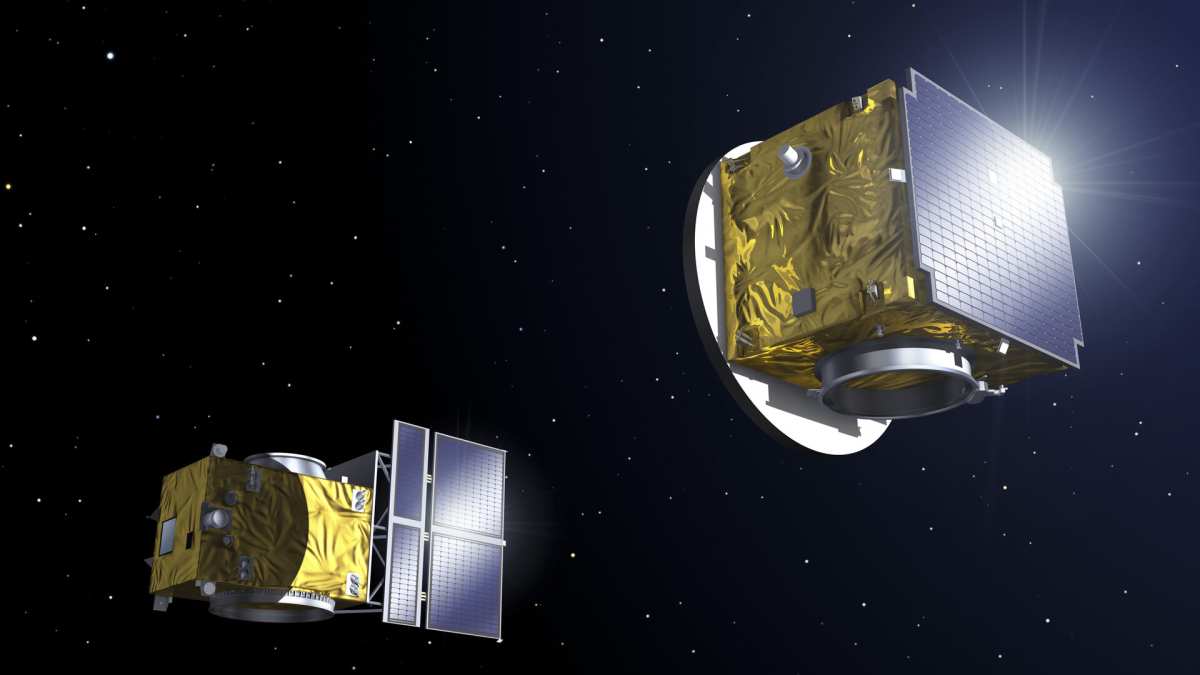
Proba-3's ASPIICS (Association of Spacecraft for Polarimetric and Imaging Investigation of the Corona of the Sun) coronagraph instrument can observe down to 70,000 km from the Sun's surface. No other space-based coronagraph comes even close. The instrument takes one or two images a minute, which are then stitched into videos that show movements inside the corona. “These intricate movements have never been observed in optical wavelengths so low in the Sun’s inner corona,” noted Zender.
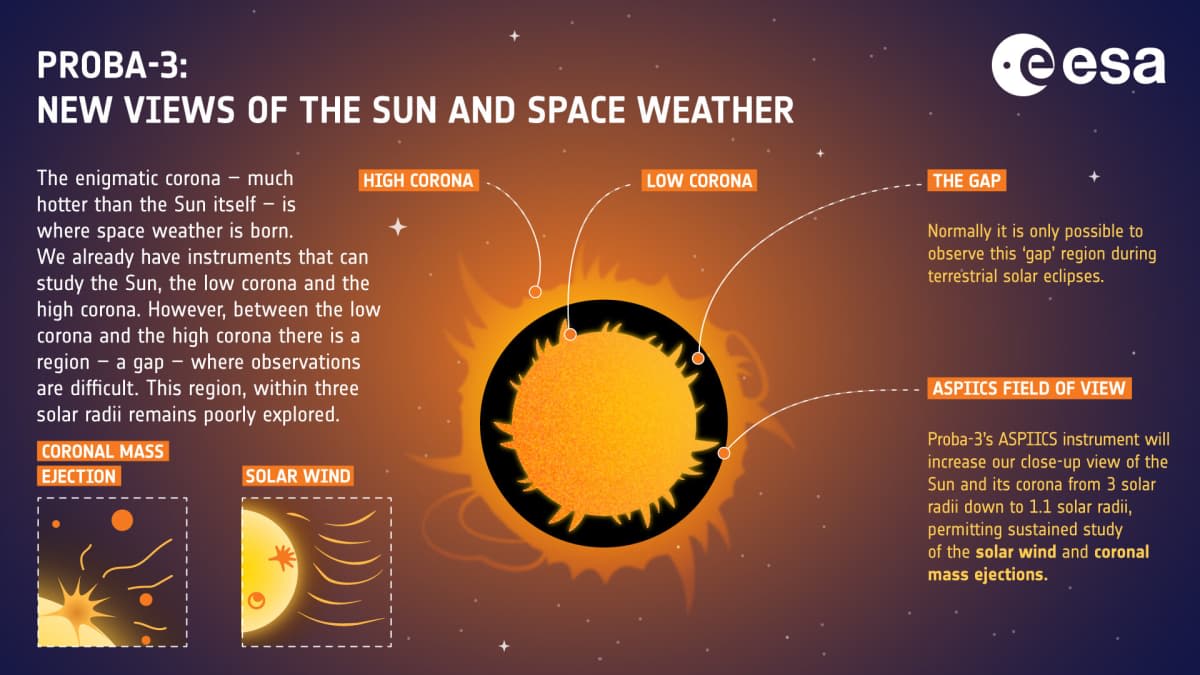
“Slow solar wind is naturally not uniform, involving lots of small-scale structures in the Sun’s magnetic field that we can see thanks to ASPIICS,” added Zhukov. The wide range of speeds, accelerations, and movement directions of slow solar winds shown in the ASPIICS data further proves why they continue to evade easy understanding. “This first dataset is just the beginning of the much longer journey to fully understand what’s happening. Now it’s up to theoretical experts to compare this to models of the magnetic field and plasma acceleration in the Sun’s corona,” explained Joe.
More on Starlust
European Space Agency's Proba-3 mission delivers first images of artificial solar eclipses
ESA's Proba-3 images multiple solar prominence eruptions in just hours