President Trump awards NASA's Artemis II crew the Congressional Space Medal of Honor
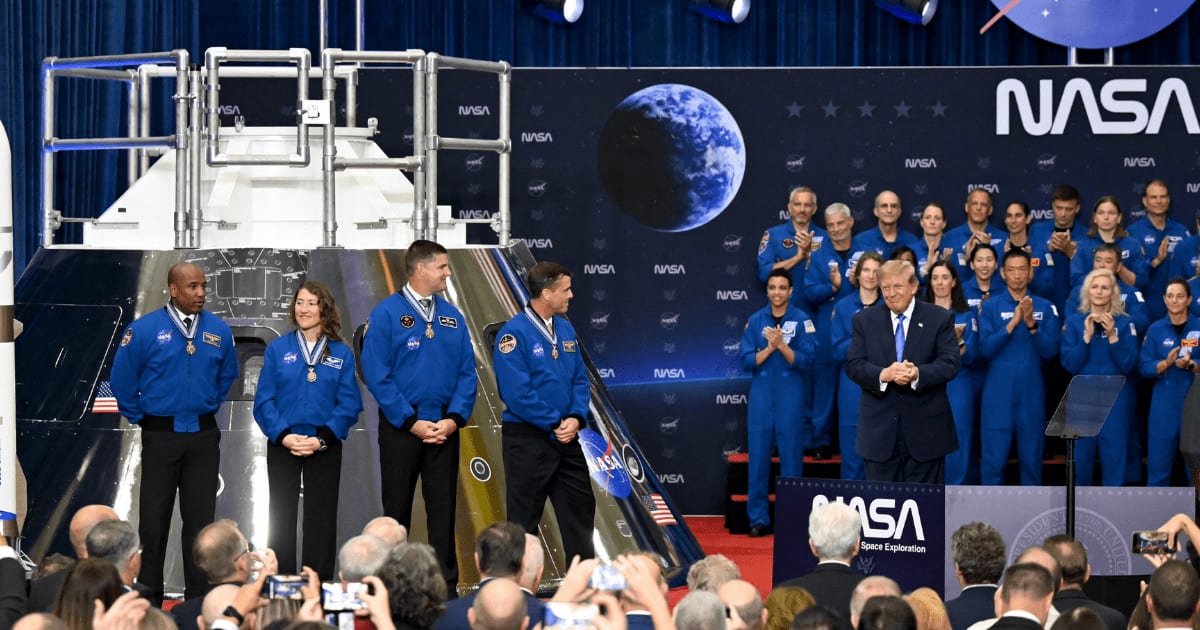
The Artemis II crew reached another major milestone on Friday, August 28, 2026, when President Donald Trump presented them with the Congressional Space Medal of Honor. This award is the country’s highest honor for space exploration and has not been presented since 2023. NASA astronauts Reid Wiseman, Victor Glover, and Christina Koch accepted the honor alongside Canadian Space Agency astronaut Jeremy Hansen.
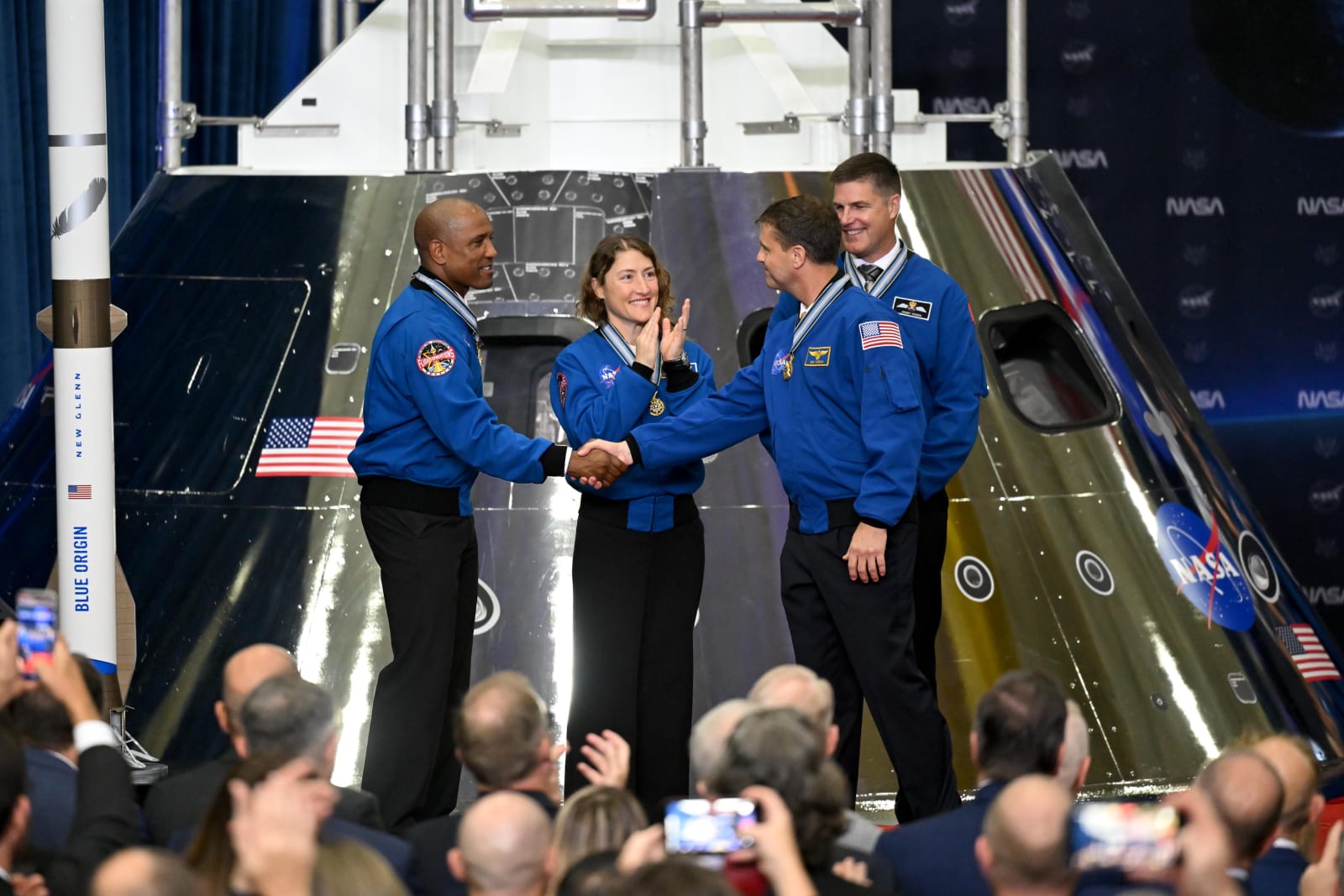
"We gather on these historic grounds to celebrate the immense courage of four intrepid space heroes whose sense of daring and adventure led them further from Earth than anyone has ever traveled ever before," Trump said. "Today we're proudly awarding the Congressional Space Medal of Honor to the remarkable crew of Artemis II. These astronauts did not do it alone. I want to salute all of the engineers, and scientists, launch and landing specialists, everyone at NASA who helped make this mission a great success,” he added.
LIVE: Watch as @POTUS awards the Artemis II crew – Reid Wiseman, Victor Glover, Christina Koch, and Jeremy Hansen – with the Congressional Space Medal of Honor.https://t.co/8A8khuQlXu
— NASA (@NASA) August 28, 2026
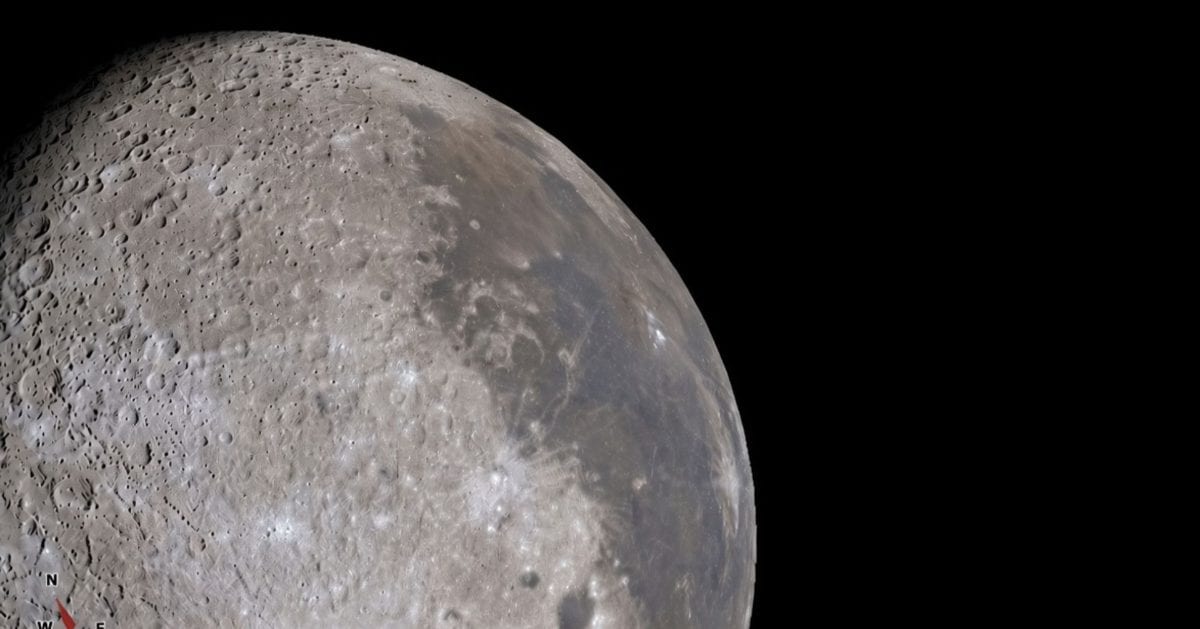
Artemis II made history by traveling 252,756 miles from Earth. In doing so, the crew reached farther from our planet than any humans before them, and they also broke the record set by the Apollo 13 crew in 1970. It was also the first crewed flight of NASA's SLS rocket. Rep. Brian Babin, who chairs the House Committee on Science, Space and Technology, said the crew "traveled farther from Earth than any human beings in history and embody the pioneering spirit that has made America the world's preeminent spacefaring nation." Trump called the mission "absolutely flawless."
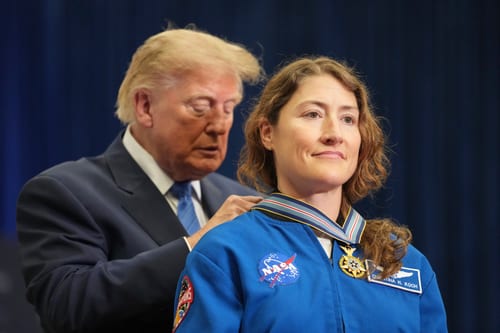
The history of the Congressional Space Medal of Honor
This award was created by Congress in 1969. It was designed to honor those astronauts who show exceptional bravery and contribute meaningfully to the country and humanity. Before the Artemis II crew, this award was given to the crews of Apollo 1, Challenger, and Columbia, all honored after their deaths. Artemis II crew became the 34th recipient of this honor.
Today at @NASAJohnson, the four crew members of Artemis II received the Congressional Space Medal of Honor from President Donald J. Trump for their historic, record-setting mission around the Moon. https://t.co/9uGYYLxhES pic.twitter.com/SIknQU4lVr
— NASA (@NASA) August 28, 2026
On this occasion, Reid Wiseman, who commanded Artemis II, said, “It was the honor of my lifetime to fly on Integrity around the Moon with Victor, Christina, and Jeremy. Having President Trump here at the agency’s Johnson Space Center to honor NASA and my crew underscores the significance of what our teams accomplished.” He further added that he is looking forward to Artemis III, which will continue this legacy.

Victor Glover, the pilot of Artemis II, called it a profound honor made possible by years of work from people he'll likely never meet. Adding to this, Christina Koch thanked everyone who made the mission possible. Earlier, Christina also received the Princess of Asturias Award for Concord in 2026 for her role as the first woman to travel around the Moon.
What’s next for NASA?
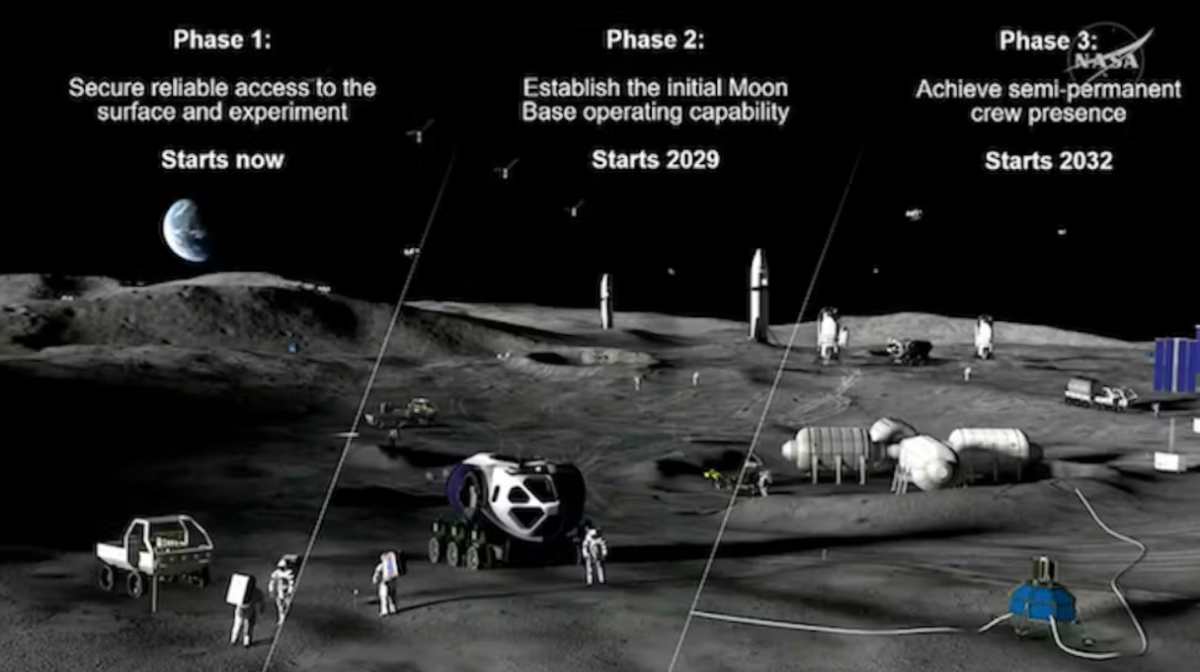
NASA Administrator Jared Isaacman said the space agency is now working towards building a lasting presence on the Moon with its planned lunar base. For now, Artemis III is targeted for 2027 and will test the docking of Orion with a commercial lunar lander. After that, Artemis IV is planned for 2028, with the goal of returning humans to the Moon’s surface. “We’re going for all humanity,” Wiseman said.
More on Starlust:
NASA administrator says he's 'extremely confident' Artemis III will launch in 2027