NASA's Artemis II astronauts to receive Congressional Space Medal of Honor on August 28; Here’s how to watch the ceremony live
Artemis II launched on April 1 and it marked the return of astronauts to the lunar vicinity after over 50 years.
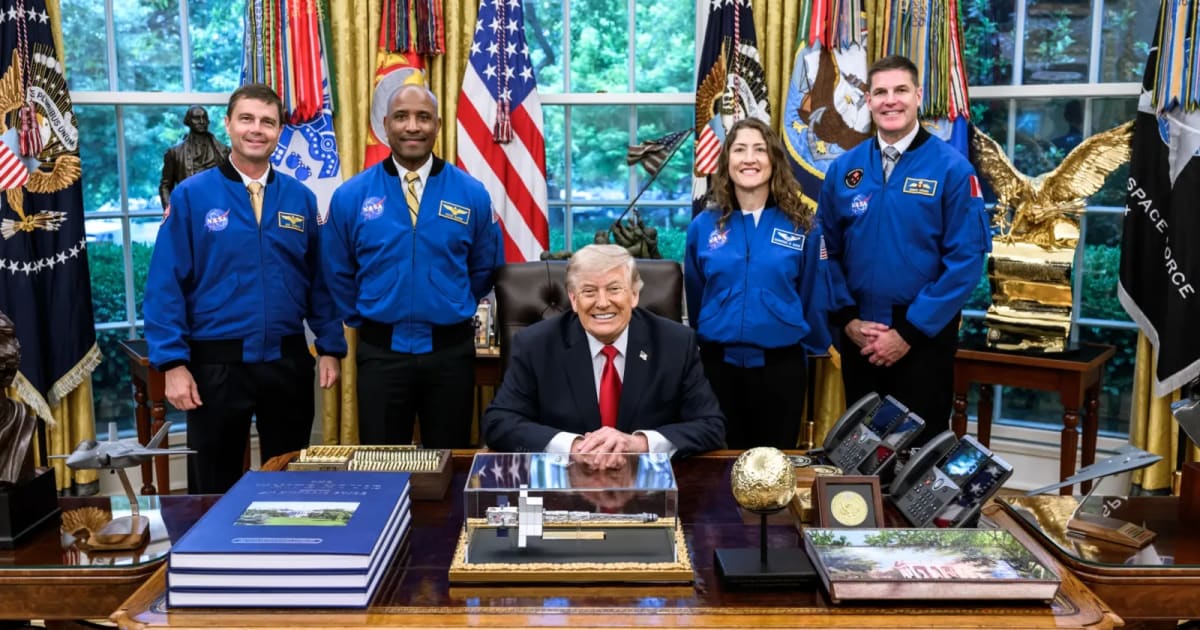
Artemis II crew (from left) NASA astronauts Reid Wiseman, Victor Glover, Christina Koch, and Canadian astronaut Jeremy Hansen in the White House Oval Office with President Donald Trump, April 29, 2026. (Cover Image Source: The White House)

The four astronauts who flew to the Moon earlier this year will receive the highest U.S. government award for achievements in spaceflight on Friday, August 28. These astronauts were part of NASA’s Artemis II mission—the first crewed lunar endeavor since Apollo 17, which launched in 1972. They will receive the Congressional Space Medal of Honor from U.S. President Donald Trump at 11 am EDT at NASA’s Johnson Space Center in Houston, Texas. 
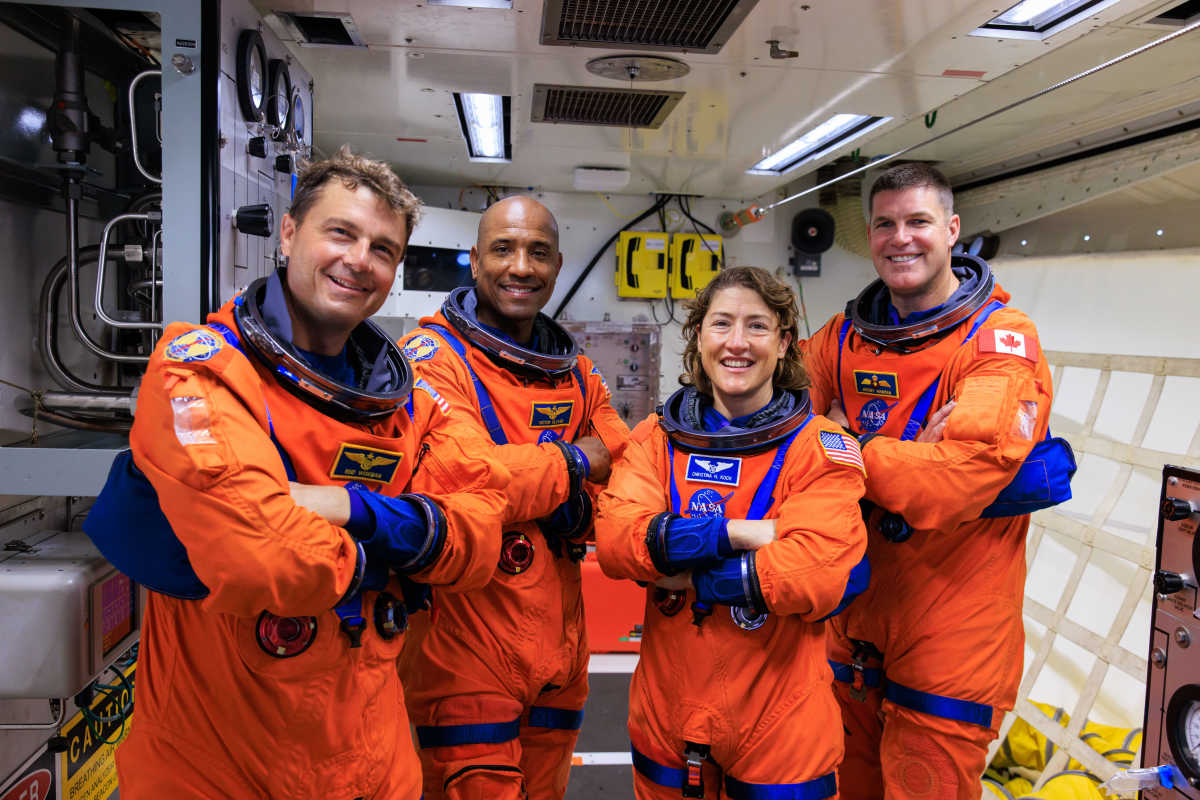
Artemis II NASA astronauts (left to right) Reid Wiseman, Victor Glover, and Christina Koch, and CSA astronaut Jeremy Hansen stand in the white room on the crew access arm of the mobile launcher at Launch Pad 39B. (Cover Image Source: NASA/Frank Michaux)
Artemis II NASA astronauts (left to right) Reid Wiseman, Victor Glover, Christina Koch, and CSA astronaut Jeremy Hansen stand in the white room on the crew access arm of the mobile launcher at Launch Pad 39B. (Image Source: NASA/Frank Michaux)

The Artemis II crew, which spent 10 days in April traveling to the Moon and back, comprised NASA astronauts Reid Wiseman, Christina Koch, Victor Glover, and Canada’s Jeremy Hansen. The historic mission made Koch the first woman to fly to the Moon, Glover the first person of color on a lunar mission, and Hansen the first Canadian to embark on a lunar journey. Artemis II was not a landing mission, as its primary objective was to test the SLS rocket and the Orion spacecraft with humans onboard in lunar orbit. 

How to watch the award ceremony live? 

NASA will stream the award ceremony live on a variety of platforms. The coverage will begin at 11 am, and you can stream it live on NASA’s official X profile, Discovery+, Amazon Prime, YouTube, and NASA+. NASA administrator Jared Isaacman will also join the President and the astronauts in the ceremony. 

Artemis II astronauts join elite list 

The Congressional Space Medal has been awarded to 30 astronauts to date. Interestingly, only five women have received the prestigious honor and Koch will be the sixth to join the elite list. 17 astronauts have been awarded the medal posthumously, and they belonged to the crews of Apollo 1, Challenger, and Columbia, which ended in tragedy. 
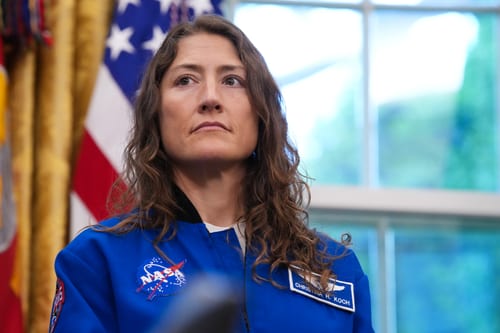
WASHINGTON, DC - APRIL 29: Artemis II astronaut, mission specialist Christina Koch attends an event with U.S. President Donald Trump in the Oval Office of the White House on April 29, 2026 in Washington, DC. The astronauts set a new record for the farthest any human has ever traveled into space aboard the Artemis II Space Launch System rocket and Orion spacecraft, orbiting around the moon and back while reaching 252,756 miles from Earth. (Photo by Andrew Harnik/Getty Images)
Artemis II astronaut mission specialist Christina Koch attends an event with U.S. President Donald Trump in the Oval Office of the White House on April 29, 2026, in Washington, DC. (Image Source: Andrew Harnik/Staff | Getty Images)

The medal is presented by the U.S. President upon recommendations from the NASA Administrator and approval from Congress, and it is meant to honor “any astronaut who in the performance of his duties has distinguished himself by exceptionally meritorious efforts and contributions to the welfare of the Nation and of mankind.” The medals were last awarded in January 2023 to Douglas Hurley and Robert Behnken, who flew on SpaceX’s Demo-2 test flight to the International Space Station on May 30, 2020. It was the first crewed mission of NASA's Commercial Crew Program. It also marked the first time American astronauts launched from American soil on an American rocket (SpaceX's Falcon 9) since the conclusion of the Space Shuttle Program in 2011.  

Former NASA astronauts Robert Behnken, left, and Douglas Hurley, right, are seen after being awarded the Congressional Space Medal of Honor by Vice President Kamala Harris, Jan 31, 2023.
Former NASA astronauts Robert Behnken, left, and Douglas Hurley, right, are seen after being awarded the Congressional Space Medal of Honor by Vice President Kamala Harris, Jan 31, 2023. (Image Source: NASA/Joel Kowsky)

Artemis II launched on April 1, and it marked the return of astronauts to the lunar vicinity after over 50 years. Over ten days, NASA tested critical components of the Orion spacecraft, such as the life support system and how space radiation would affect humans around the Moon.
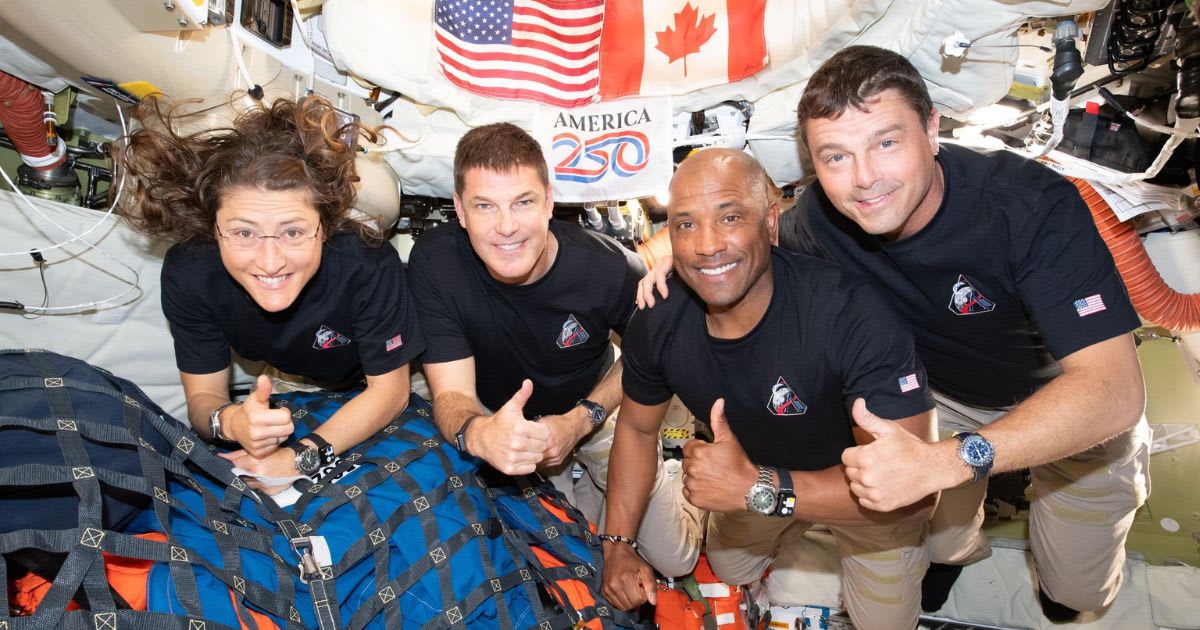
The Artemis II crew – (from left) Mission Specialist Christina Koch, Mission Specialist Jeremy Hansen, Pilot Victor Glover, and Commander Reid Wiseman – pause for a group photo inside the Orion spacecraft on their way home. (Cover Image Source: NASA)
The Artemis II crew—(from left) Mission Specialist Christina Koch, Mission Specialist Jeremy Hansen, Pilot Victor Glover, and Commander Reid Wiseman—pause for a group photo inside the Orion spacecraft on their way home. (Image Source: NASA)

During Artemis II, the astronauts also witnessed a historic first-ever total solar eclipse from their unique vantage point during a flyby and traveled 252,756 miles from Earth, breaking the record for human spaceflight’s farthest distance previously set by the Apollo 13 crew. On April 10, the Orion spacecraft made a safe splashdown in the Pacific Ocean, setting the stage for a Moon landing that is targeted during Artemis IV in 2028.

More on Starlust

Artemis II in photos: Humanity’s historic mission around the Moon and back

Artemis II in numbers: 10 facts about NASA’s historic Moon mission
MORE STORIES

The Artemis II astronauts saw colorful hues on the sun-lit surface and this data collected during the lunar flyby could help scientists uncover the evolutionary journey of the Moon.
3 hours ago
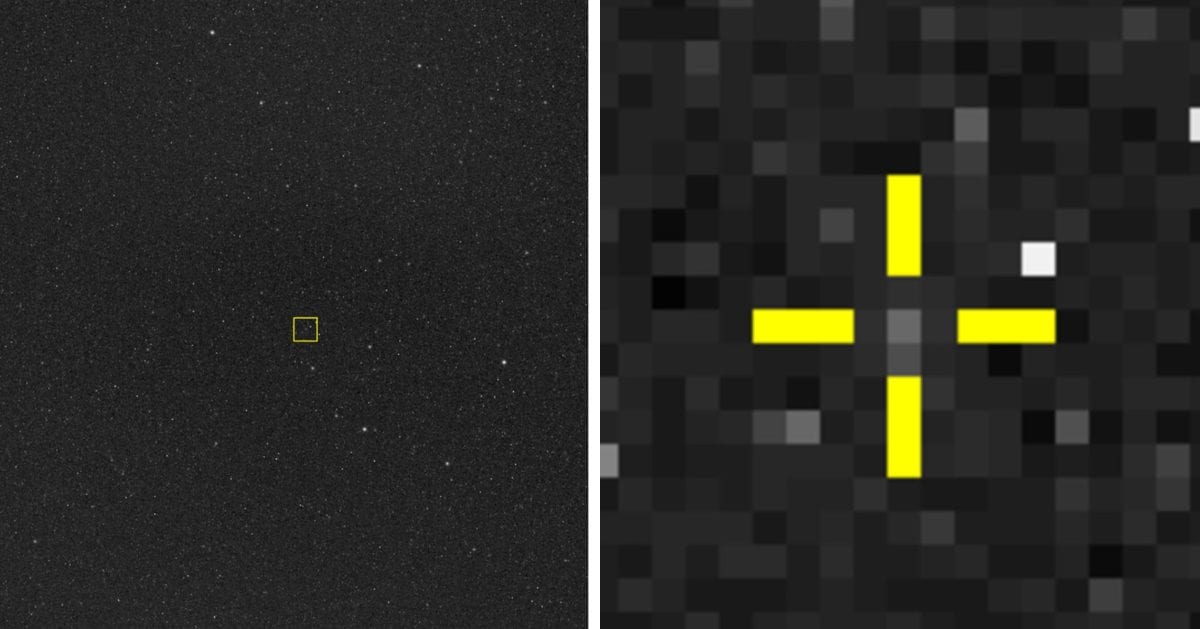
The European Space Agency's Hera spacecraft has imaged the Didymos-Dimorphos system from a distance of more than 100,000 miles. It's the same system that was deliberately hit by NASA with its DART spacecraft.
4 hours ago
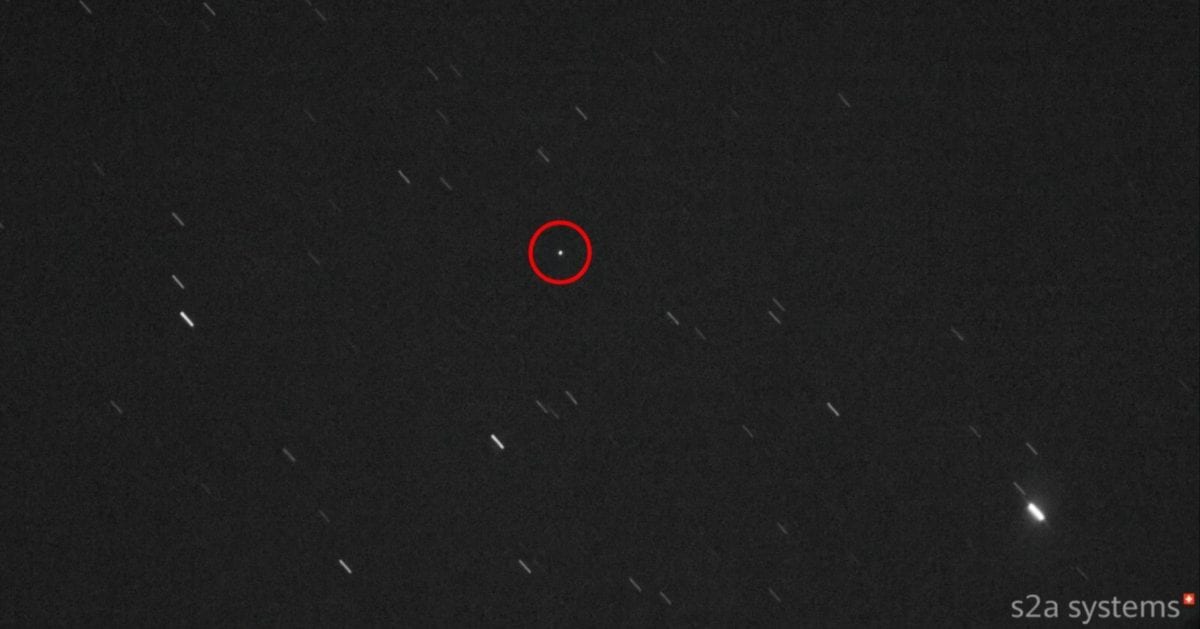
The probe whipped past our planet on September 28 from a distance of around 5,370 miles and was captured by a ground-based optical telescope.
1 day ago
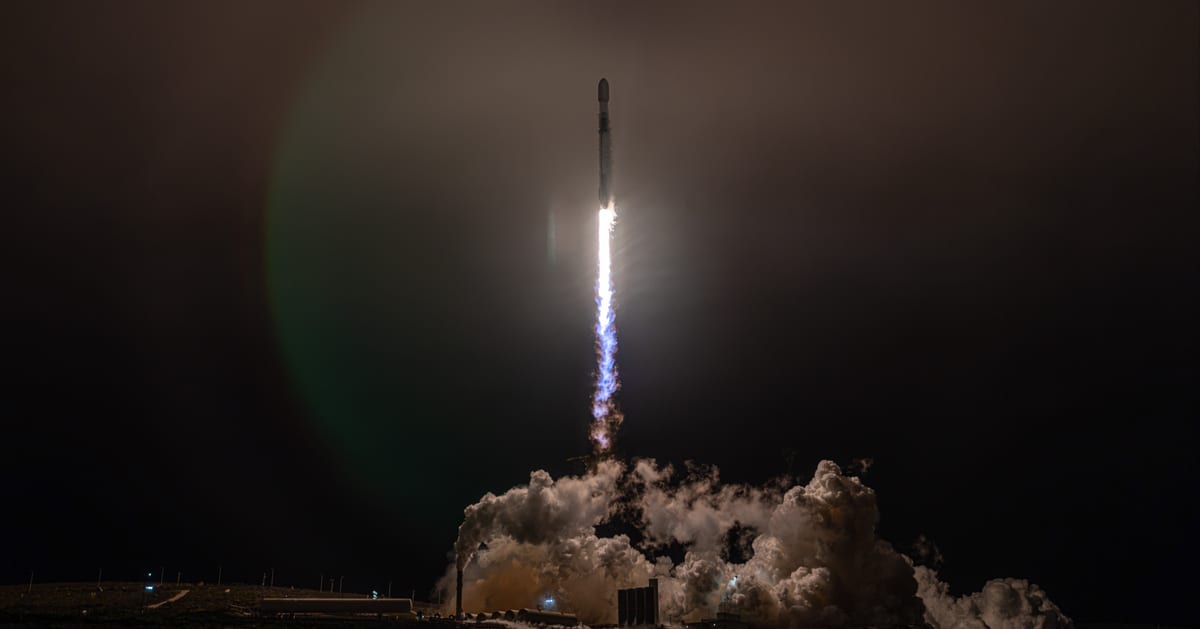
The rocket’s first stage landed back at Vandenberg a little over seven minutes after liftoff. Watch the livestream here.
1 day ago
Maye's comments about being 'skeptical' of the Moon landings prompted NASA chief Isaacman to offer 'receipts' as proof. Read the exchange here.
2 days ago
A weather satellite launched by the Soviet Union has fragmented for the second time, raising concerns about the safety of other spacecraft near it.
3 days ago
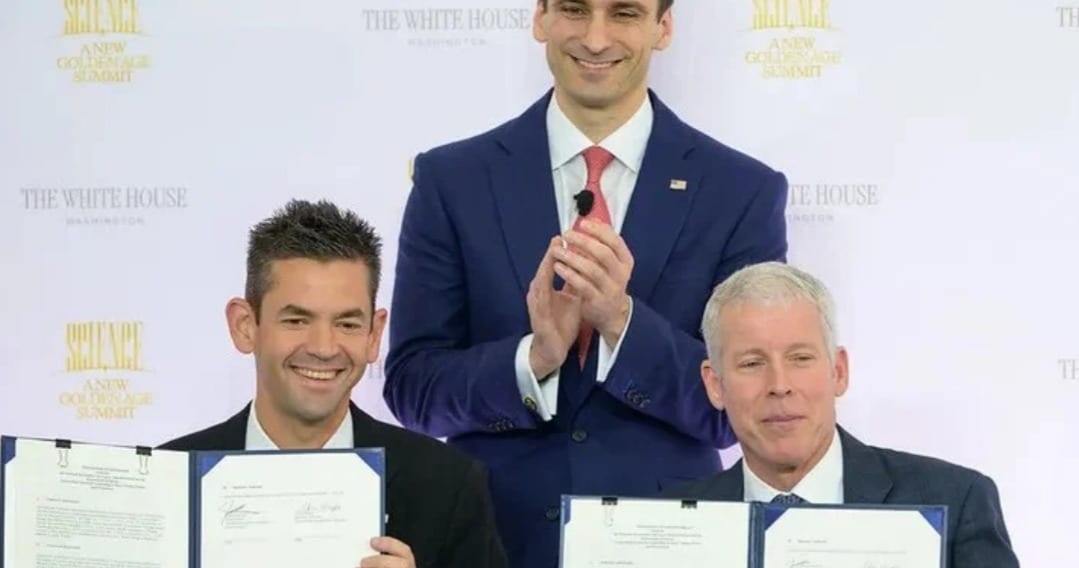
The new MoU between NASA and DOE establishes a framework for comprehensive collaboration, covering everything from research to launch integration and operations.
3 days ago
While Flight 12 and 14's upper stages exploded, the recovery of Ship 40 gives SpaceX an opportunity to inspect a returning second stage.
3 days ago
During their long-duration stay aboard the International Space Station, Crew-12 traveled more than 100 million miles and completed more than 3,792 orbits of Earth. Watch them discuss their experience during a live presser on October 15.
3 days ago
After 237 days in orbit, the four astronauts safely splashed down in the Pacific Ocean on October 8, 2026.
3 days ago