Watch: ISRO’s Gaganyaan astronauts train in reduced gravity on Russian aircraft
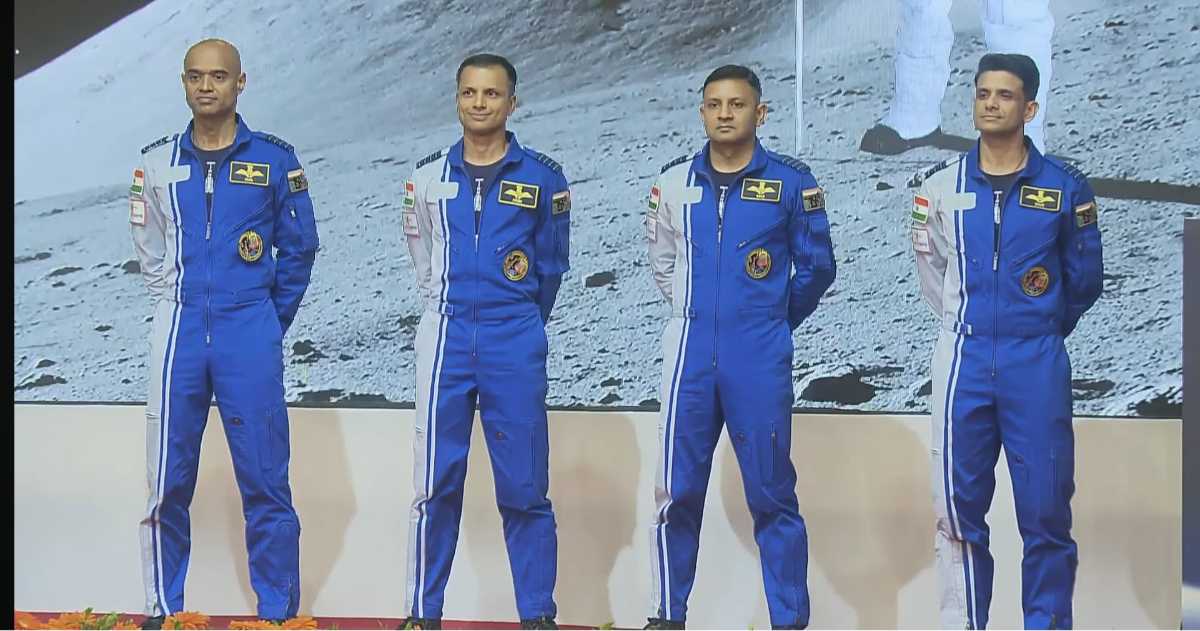
The Indian Space Research Organization (ISRO) is yet to launch the first uncrewed test mission of the Gaganyaan program, but training of the four astronaut-designates is well underway. A video that surfaced online recently shows Wing Commanders Shubhanshu Shukla and Group Captains Prashanth Balakrishnan Nair, Ajit Krishnan, and Angad Pratap training under simulated reduced-gravity conditions in a Russian Il-76MDK parabolic aircraft. The mission will see three of them spend three days at an altitude of 400 km (about 250 miles) above Earth for what will be India's first manned spaceflight endeavor.
🇮🇳🇷🇺 India's Gaganyaatris experienced reduced-gravity training in Russia's Il-76MDK parabolic aircraft! ✈️ The aircraft follows specially designed flight paths to simulate Lunar (0.18g) and Martian (0.38g) gravity, giving astronauts 25–30 seconds of reduced gravity to float, somersault and practice movements. For example a person weighing 75 kg on Earth, will weigh only 13.5 kg on the Moon and 28.5 kg on Mars! One day we will see them floating continuously in our own Gaganyaan capsule 🧑🚀
— indianspaceflight.in🇮🇳 (@ispaceflight_in) November 24, 2026
During the exercise, the Russian aircraft followed specific flight trajectories to simulate lunar and Martian gravity, reportedly giving the astronauts 25-30 seconds to float around and walk upside down. Shukla, of course, is no stranger to reduced gravity, having flown as the pilot of the Axiom Mission 4 (Ax-04) to the International Space Station last year. Nair was part of the mission's backup crew.
ISRO will launch three uncrewed missions first before attempting the crewed flight. Scheduled for next month, the first uncrewed mission of the program, dubbed G1, will carry a half-humanoid robot named 'Vyomitra' and will validate the human-rated LVM3 launch vehicle, crew module, life-support technologies, and recovery systems. An India Today report dated November 20 claimed that the mission was unlikely to launch before February 2027 due to certain pending simulations and assessments. However, ISRO Chairman V. Narayanan confirmed earlier today that the mission remains on schedule. "No, it is not delayed," he told the media on the sidelines of the India International Space Conclave 2026. "And it is a technology-intensive activity. We are in the final phase. The rocket, all the items are ready. We are working on the orbital module. And at the earliest opportunity, it will be launched."
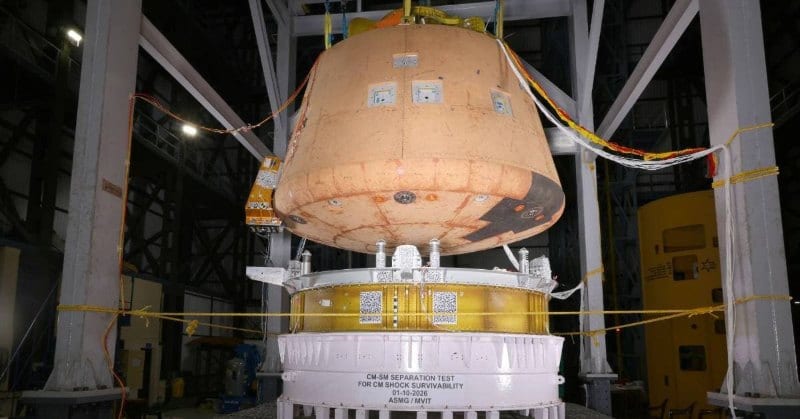
Narayanan had indicated a 2026 launch for the first Gaganyaan mission back in September, during a press conference following the successful launch of the EOS-05 mission. "Unlike other satellite missions, human beings are involved here, so the safety of human beings is very important," he had said, stressing the sheer complexity of the mission, adding that around 8,000 tests had already been completed at the time.
Sriharikota, Andhra Pradesh: ISRO Chief Dr V Narayanan says, "Gaganyaan, as you are aware, is a technology-intensive mission. So, we have to do the human-rating of the vehicle, followed by the development of the crew escape system and the environmental control system. Till today, around 8,000 tests have been completed. Unlike other satellite missions, human beings are involved here, so the safety of human beings is very important. We have planned three uncrewed missions followed by the crewed mission. The first uncrewed mission is getting ready for launch this year. Once we review the results, we will go for two more uncrewed missions, followed by the crewed mission..."
— IANS (@ians_india) September 3, 2026
This is welcome news, considering Gaganyaan has already suffered multiple delays. Approved in January 2019, the program began with the target of launching India's first crewed mission by 2022. But the Covid-19 pandemic forced revisions in 2021, and the first uncrewed flight was rescheduled to December of that year. By August 2025, the target date for the first uncrewed mission had been pushed back to the fourth quarter of the year before being finally shifted to the fourth quarter of 2026. If all goes to plan now, ISRO is likely to launch the astronauts to space next year itself.
More on Starlust
ISRO completes key test for GSLV rocket’s cryogenic engine for next navigation satellite launch
ISRO completes critical crew module separation tests ahead of first uncrewed Gaganyaan mission