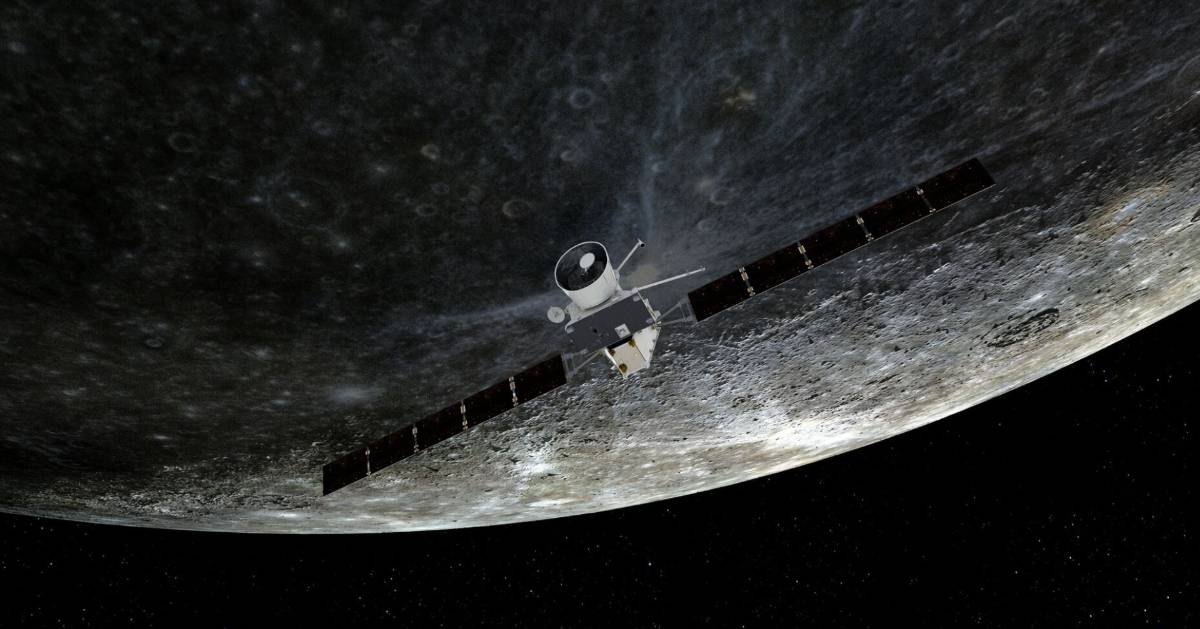
Farewell, Earth! NASA's ESCAPADE captures stunning images of our planet as it heads for Mars
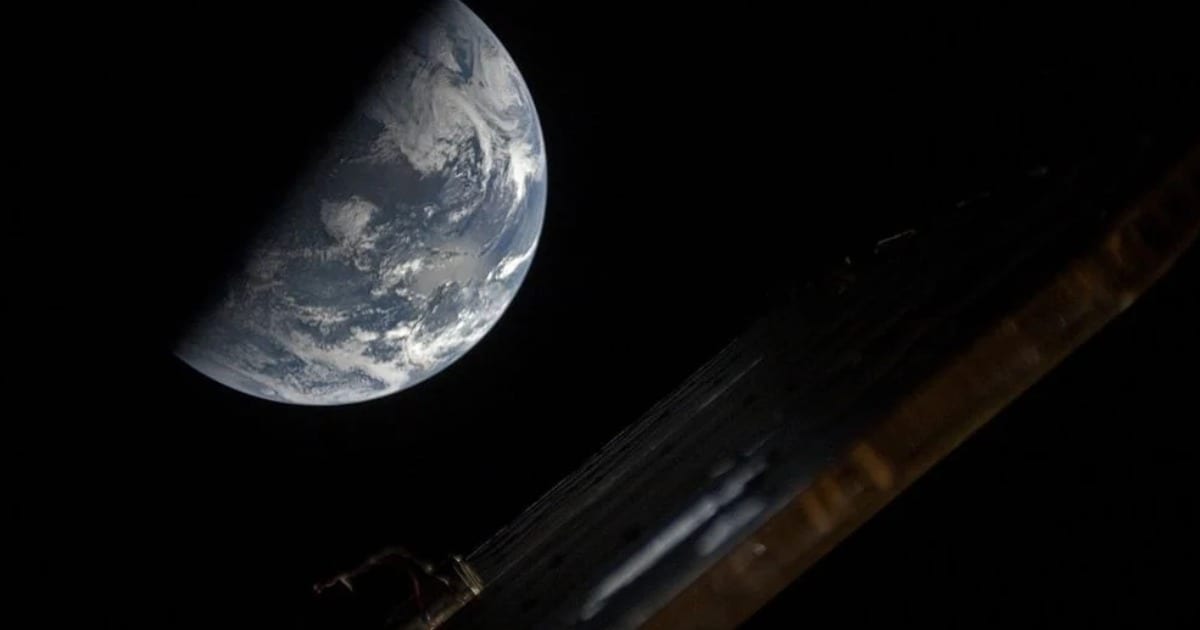
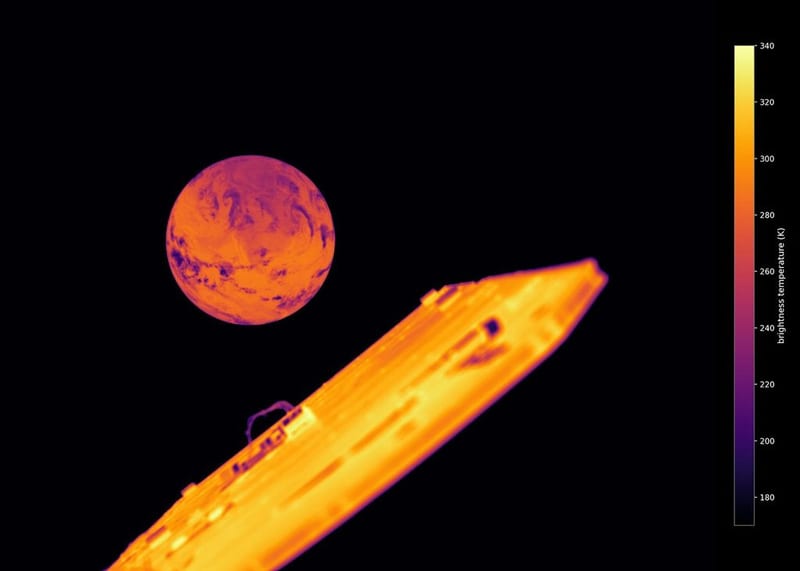
One of NASA's twin ESCAPADE spacecraft—Gold—snapped breathtaking images of our home planet before embarking on its 10-month journey to Mars along with its twin, Blue. Both the spacecraft, built by Rocket Lab, achieved a remarkable milestone earlier this month when they completed their respective powered flybys of Earth. Blue completed this maneuver at 5 a.m. EST on November 7, whereas Gold completed its own at 6 a.m. EST on November 9. The pictures shown below, which were released in an update by NASA yesterday, were taken around three hours after Gold's flyby, when it was located 38,500 miles above Earth. They show Earth's Western Hemisphere vanishing in the distance, with one of the spacecraft's solar panels visible in the foreground.
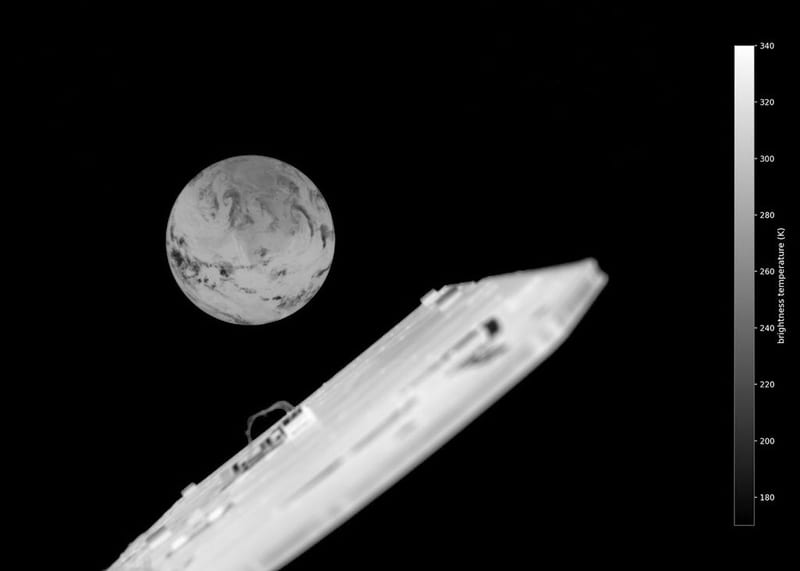
The visible and infrared images were captured using the Visible and Infrared Observation System camera of the ESCAPADE spacecraft. The camera was provided by Northern Arizona University.
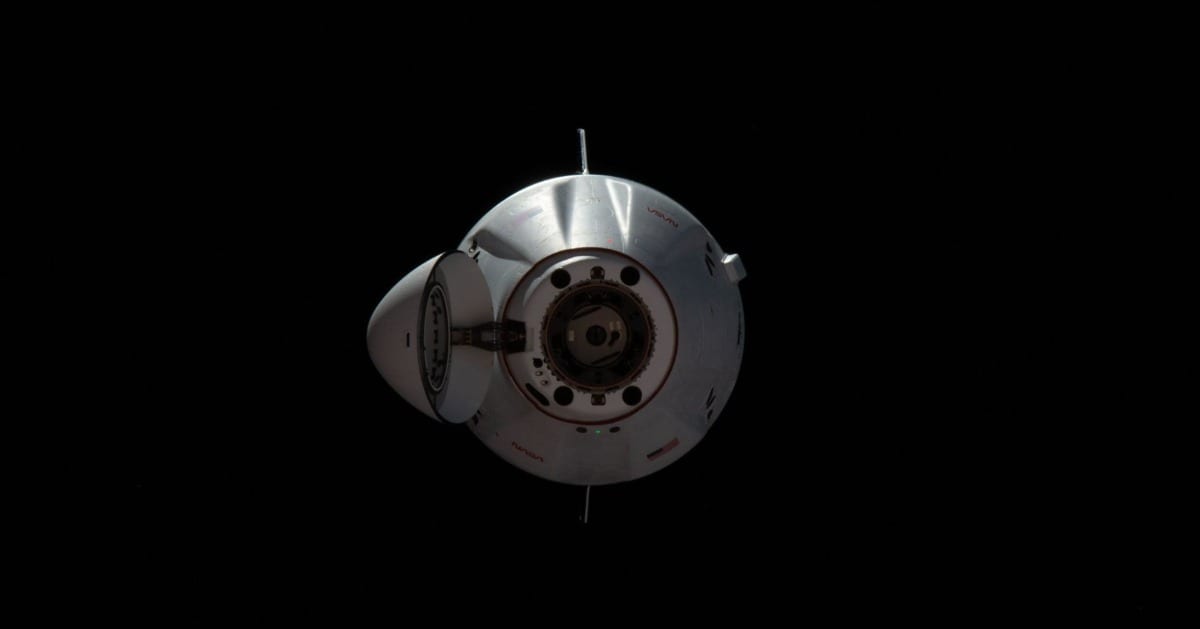
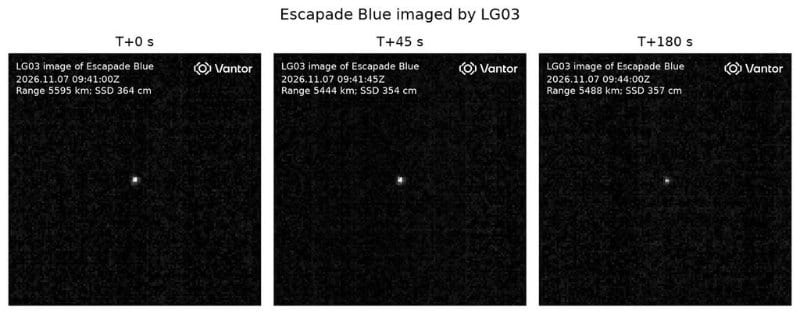
Also, as both the fridge-sized spacecraft were making their close approach to Earth, a few images of the twins (shown below) were captured by a Vantor Worldview Legion satellite from around 3,000 miles away. A team member of the ESCAPADE mission also snapped the spacecraft flying over his home near Los Angeles.
The ESCAPADE twins are, in fact, the first Mars-bound spacecraft to execute powered Earth flybys, also called the Oberth maneuver. While performing the flybys, they each combined a nine-minute engine burn with Earth's gravitational pull to pick up a powerful velocity boost. This raised the spacecraft's speed by more than 1,000 mph—from 6.3 miles per second to 6.7 miles per second—sending them on their way to the Red Planet. “This is the first time NASA has used a powered Earth flyby to propel a spacecraft toward Mars, and we’ve now executed this maneuver twice, flawlessly, in just two days,” said Asal Naseri, Acting Associate Flight Director for the Heliophysics Division at NASA Headquarters in Washington, in a statement.
ESCAPADE’s view of Earth as Blue and Gold pass by on their way to Mars. Two weeks ago, the Rocket Lab-built spacecraft completed powered flybys of Earth two days apart. About three hours later, one spacecraft captured this farewell view of our planet from 38,500 miles away. Here are a few images from the next stage of the @escapade_mars mission for @NASA and @ucbssl. 📸 @NASA/@ucbssl/@NAU/@RocketLab
— Rocket Lab (@RocketLab) November 23, 2026
The ESCAPADE probes launched on November 13, 2025, from the Cape Canaveral Space Force Station in Florida, when Earth and Mars were on opposite sides of the Sun. So they settled in a kidney-bean-shaped orbit around the second Sun-Earth Lagrange Point (L2) about a million miles from Earth before heading back to our planet for the gravitational slingshot maneuver. Lead Mission Designer Jeff Parker of Advanced Space hailed the spacecraft for "pioneering a new strategy for getting to Mars." "This method provides the flexibility to launch almost anytime and then use Earth’s gravity to get a boost to Mars, rather than waiting every two years to launch there directly when the planets are aligned."
A historic first, with a view of home! 🌎 Gold, one of UC Berkeley’s twin ESCAPADE spacecraft, captured this image of Earth after completing the first successful powered Earth gravity assist for a deep-space mission. Both satellites are now on their way to Mars!
— UC Berkeley (@UCBerkeley) November 23, 2026
The next significant milestone of the ESCAPADE mission is the Mars orbit insertion, scheduled for September 7 and September 9 in 2027. Upon reaching Mars' orbit, the spacecraft will analyze how solar wind—a million-mile-per-hour stream of particles from the Sun—interacts with the Red Planet's environment and results in the erosion of its atmosphere.
More on Starlust
Voyager 1 has crossed the one light-day milestone—but a data issue is playing spoilsport
2 rockets in 32 hours: SpaceX smashes fastest turnaround time record with two launches from one pad