2 rockets in 32 hours: SpaceX smashes fastest turnaround time record with two launches from one pad
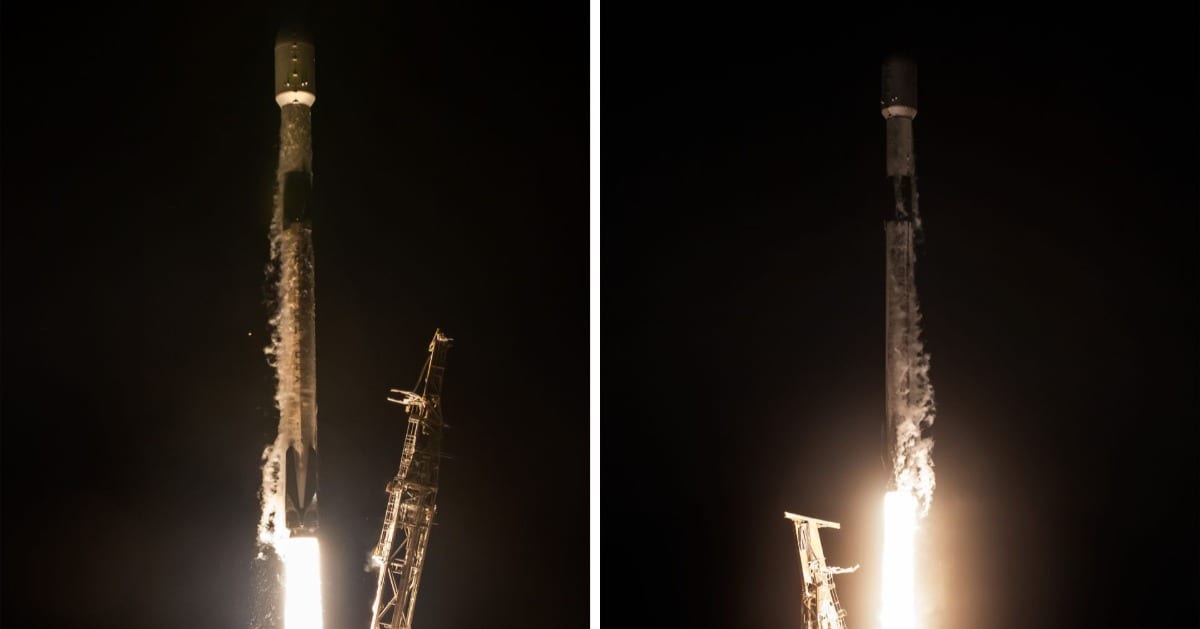
SpaceX has set another record by clocking the fastest turnaround time between two missions from one launchpad. With Sunday’s launch, SpaceX has now flown two Falcon 9 missions just 32 hours apart from Space Launch Complex 4E (SLC-4E) at Vandenberg Space Force Base in California. With this milestone, the company broke the previous record of 45 hours between two missions from Pad 40 at Cape Canaveral Space Force Station in Florida.
Massive high five to the @SpaceX west coast team for a world record launch to launch turn from Pad 4e last night! 32 hr, 3 min, 21 sec! This smashed the previous record of 45 hrs from Pad 40. Team got there with several hours of margin. Next goal… the 24 hr turn! 🏎️🚀🏎️🚀
— Kiko Dontchev (@TurkeyBeaver) November 22, 2026
“Massive high five to the SpaceX west coast team for a world record launch to launch turn from Pad 4e last night! 32 hr, 3 min, 21 sec! This smashed the previous record of 45 hrs from Pad 40,” SpaceX’s VP of launch Kiko Dontchev posted on X. “Team got there with several hours of margin. Next goal… the 24 hr turn!”
Liftoff! https://t.co/MliO0n8EfK
— SpaceX (@SpaceX) November 21, 2026
The first of the two missions launched on November 20 at 8:20 p.m. PT for the U.S. Space Force. Named USSF-317, it marked the 11th flight for the first stage Falcon 9 booster, which previously launched NROL-105, USSF-385, and eight Starlink missions. A few minutes after stage separation, the first stage landed on the Of Course I Still Love You droneship stationed in the Pacific Ocean.
Liftoff! https://t.co/pO89FePth1
— SpaceX (@SpaceX) November 22, 2026
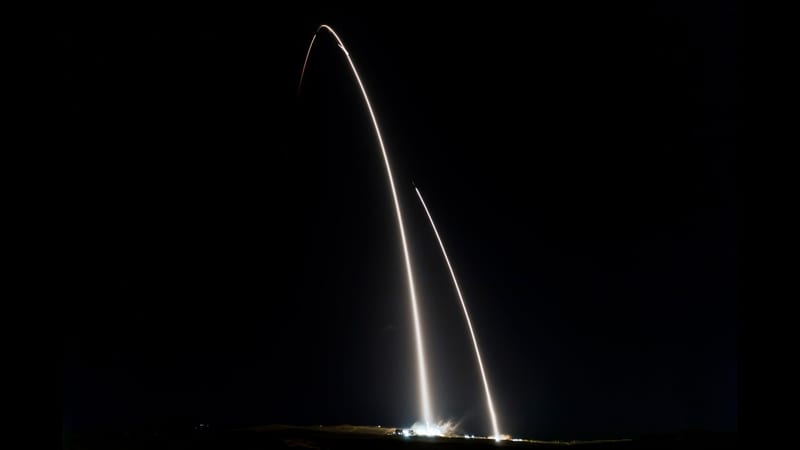
The second mission, named NROL-136, was for the National Reconnaissance Office (NRO), and it launched on November 22 at 4:23 a.m. PT. According to SpaceX, it was the 14th flight for the first stage booster, which previously launched Sentinel-6B, Twilight, NROL-172, Transporter-17, USSF-259, and eight Starlink missions. Following stage separation, the booster touched down on Landing Zone 4 (LZ-4) at Vandenberg Space Force Base. Sunday’s launch marked the 15th mission SpaceX has launched for the NRO’s “proliferated constellation of satellites,” built to collect intelligence from space in partnership with SpaceX and Northrop Grumman.
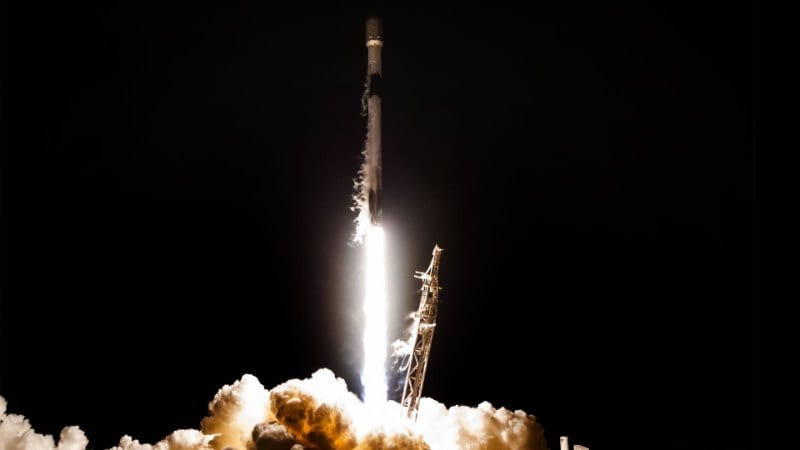
The constellation development began with the launch of NROL-146 on May 22, 2024, and 11 successful missions were completed between 2024 and 2025, followed by four more in 2026. The NRO says that many more missions are planned until 2029 to expand the constellation. “The NRO’s proliferated system will increase timeliness of access, diversify communication pathways, and enhance resilience,” an official statement read. “It will provide greater revisit rates and increased coverage, and eliminate single points of failure. With hundreds of small satellites on orbit, data will be delivered in minutes or even seconds. This will ensure the analysts, warfighters, and civil agencies NRO serves receive actionable information faster than ever before.”
There are two more missions for the U.S. Space Force scheduled for November 24 and November 28. The first (USSF-266) is targeted for launch within a four-hour launch window that opens at 7:55 a.m. PT from Launch Complex 4E at Vandenberg. It will be the 29th flight for the first stage booster, which has launched two USSF missions along with Crew-7, CRS-29, PACE, Transporter-10, EarthCARE, NROL-186, Transporter-13, TRACERS, NROL-48, COSMO-SkyMED Second Generation FM3, and 16 Starlink missions. The second mission (USSF-380) is also scheduled to launch from Vandenberg within a four-hour window opening at 8:39 p.m. PT, marking the 27th flight for its first stage booster.