Physicist Brian Cox reveals what he finds 'remarkable' about interstellar comet 3I/ATLAS

English physicist and science communicator Professor Brian Cox draws parallels between the journey of 3I/ATLAS and that undertaken by humanity.
English physicist and musician Brian Cox holds a talk about black holes on day three of Glastonbury Festival 2024 at Worthy Farm, Pilton on June 28, 2024 in Glastonbury, England. (Cover Image Source: Getty |Leon Neal)

The comet 3I/ATLAS has fascinated everyone, from seasoned astronomers to casual sky watchers, and English physicist Brian Cox is no exception. In a recent interview with the BBC, the University of Manchester particle physics professor talked about what he finds "remarkable" about the interstellar comet.

Comet 3I/ATLAS moves across a dense star field  (Image Source: International Gemini Observatory/NOIRLab)
Comet 3I/ATLAS moves across a dense star field (Image Source: International Gemini Observatory/NOIRLab)

"There's an estimate from a couple of days ago that it might have formed seven and a half billion years ago," he said. "So it was made before the Earth and the Sun had formed out of a cloud of dust. And it's been on its journey across the Milky Way galaxy, and the thing I find remarkable, [...] it's only 400 years [ago] that we were arguing about whether the Earth went around the Sun." 
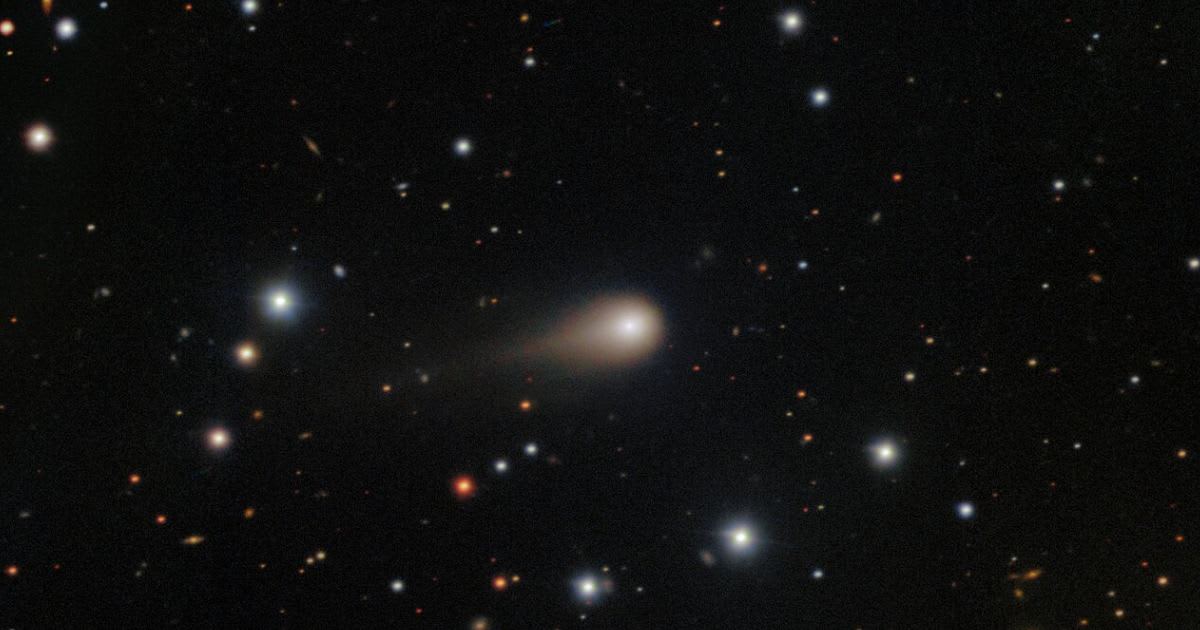
deep image of interstellar Comet 3I/ATLAS captured on Sept 4, 2025.
Image of interstellar Comet 3I/ATLAS captured on Sept 4, 2025 (Image Source: International Gemini Observatory)

"Now we've sent spacecraft to the planets that Kepler and others were seeing move in the sky, and we're taking photographs of interstellar comets from the surface of other planets in about 400 years," he added, referring to the photos of the object taken from Mars. "So that, to me, is a remarkable story."
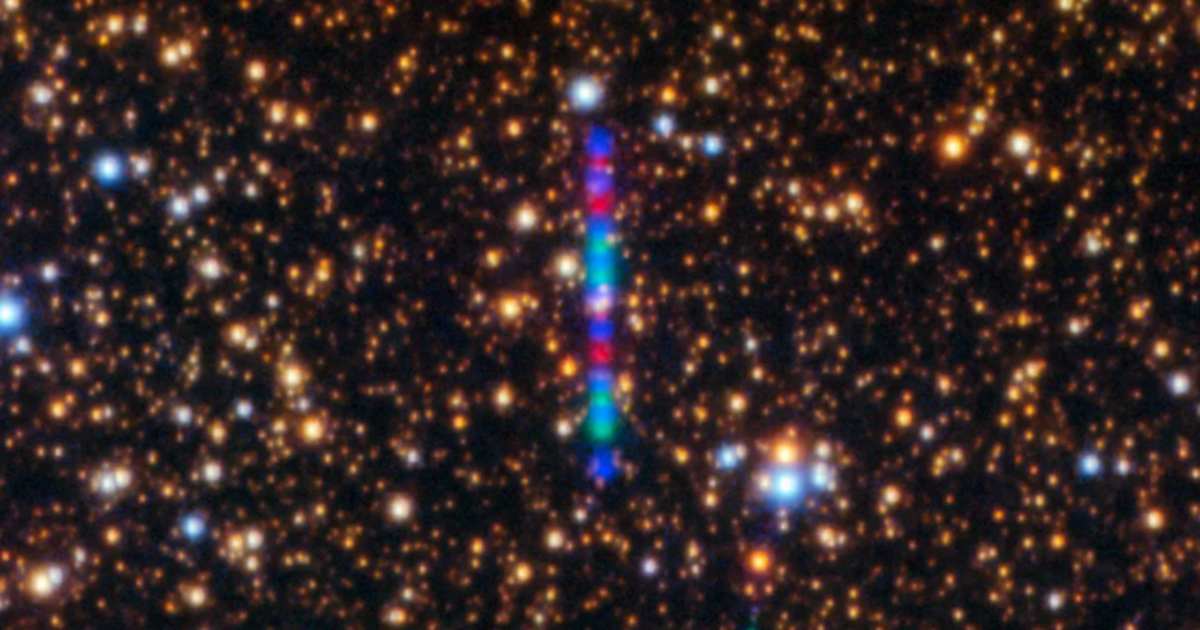
Interstellar comet 3I/ATLAS going past a dense star field  (Image credit: International Gemini Observatory/NOIRLab/NSF/AURA/K. Meech (IfA/U. Hawaii). Image processing: Jen Miller & Mahdi Zamani (NSF NOIRLab))
Interstellar comet 3I/ATLAS going past a dense star field (Image credit: International Gemini Observatory/NOIRLab/NSF/AURA/K. Meech (IfA/U. Hawaii). Image processing: Jen Miller & Mahdi Zamani-NSF NOIRLab)

The European Space Agency's (ESA) ExoMars Trace Gas Orbiter could capture images of the comet with the help of its Colour and Stereo Surface Imaging System (CaSSIS). This was no ordinary feat. "This was a very challenging observation for the instrument. The comet is around 10,000 to 100,000 times fainter than our usual target," explained Nick Thomas, Principal Investigator of the CaSSIS camera. 
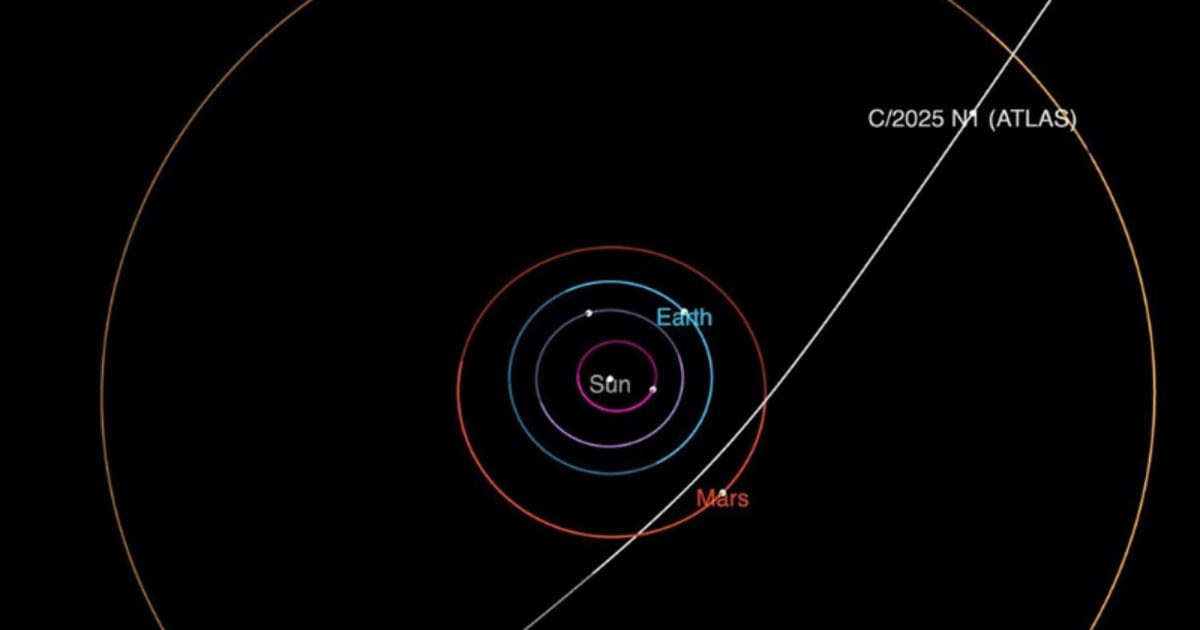
Image shows the trajectory of comet 3I/ATLAS as it passes through the solar system (Image Credit: NASA | JPL-Caltech)

The Jupiter Icy Moons Explorer (JUICE) spacecraft is also tasked to photograph the comet after it reaches the aphelion, per the ESA.
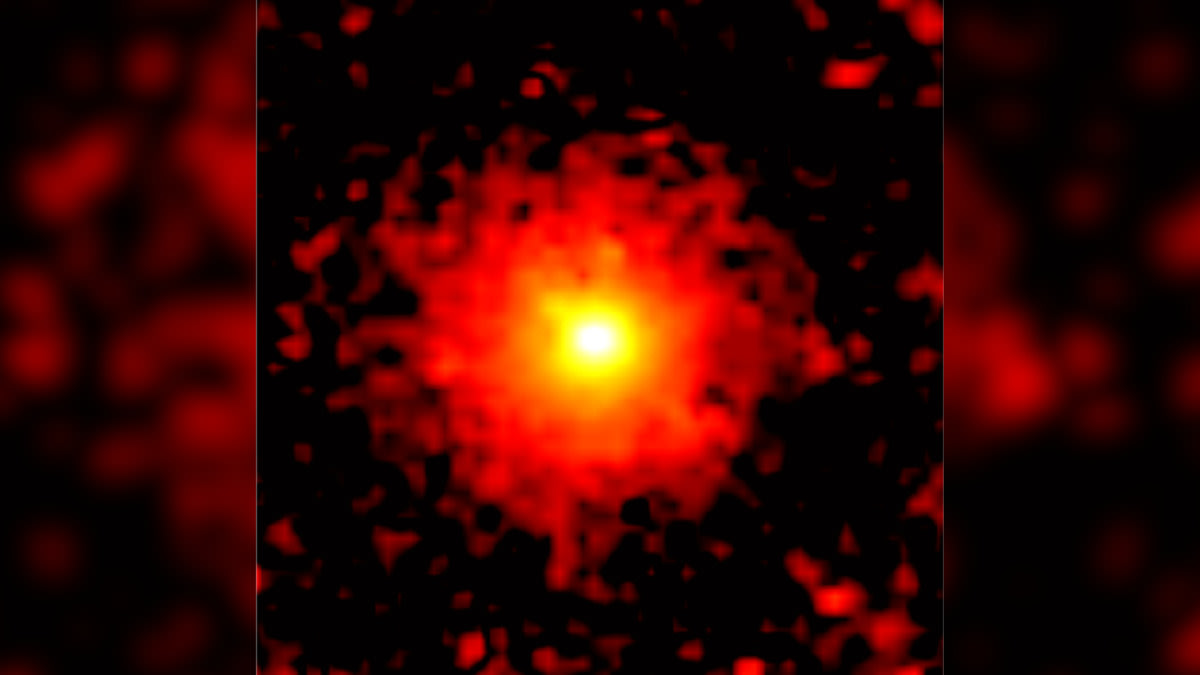
A view of comet 3I/ATLAS, as seen by NASA’s SPHEREx, which observed the interstellar object from 7–15 August 2025. (Image Source: NASA | Photo by NASA / SPHEREx)
A view of comet 3I/ATLAS, as seen by NASA’s SPHEREx, which observed the interstellar object from 7–15 August 2025. (Image Source: NASA | Photo by NASA / SPHEREx) 

Comet 3I/ATLAS was first spotted by the Asteroid Terrestrial impact Last Alert System (ATLAS) telescope on July 1, 2025. Not only did it appear to be the fastest object of its kind ever observed, but its eccentricity, ranging between 6.1 and 6.2, confirmed that it is interstellar in nature, the third observed so far after 1I/'Oumuamua in 2017 and 2I/Borisov in 2019. That's not all. With its probable age being more than 7 billion years, per Oxford University astronomer Matthew Hopkins, it could be the oldest comet ever observed.
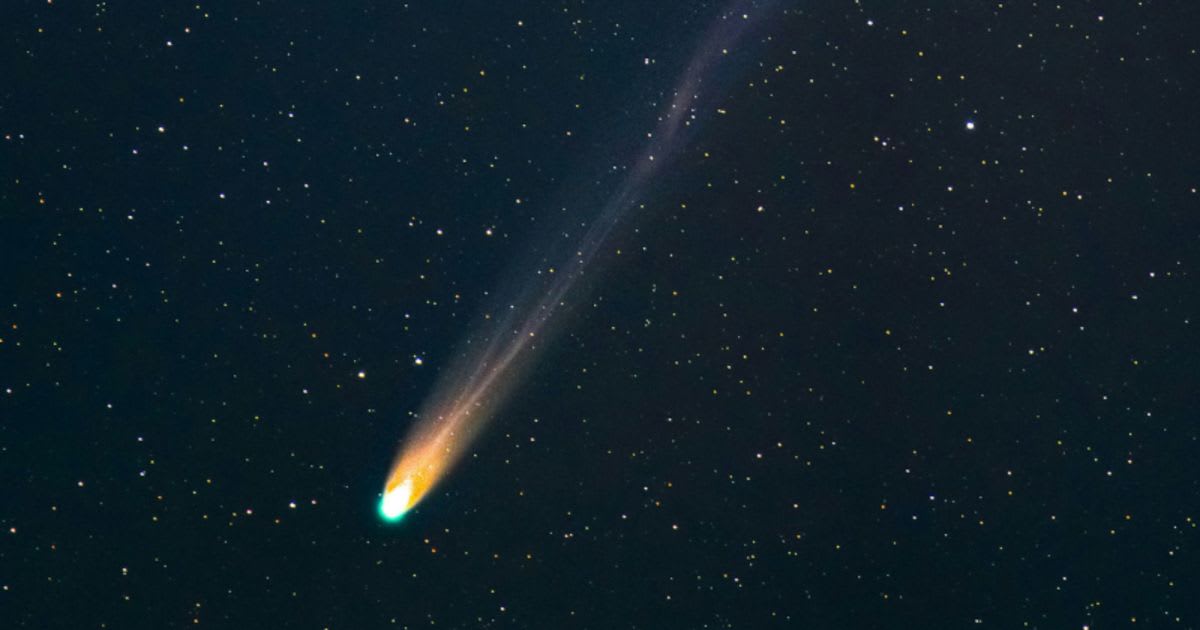
An image of a comet on a night full of stars (Image Source:  Unsplash | Jacob Dyer)
An image of a comet on a night full of stars (Image Source: Unsplash | Jacob Dyer)

There has also been speculation that 3I/ATLAS might be an alien spacecraft or piece of alien technology. The theories spread and prompted clarifications from NASA and SETI that there’s no evidence for these claims. In fact, more recently, the MeerKAT radio telescope in South Africa, operated by the South African Radio Astronomy Observatory, detected lines of radio absorption by hydroxyl radicals, a pattern consistent with usual comet activity.


Interstellar comet 3I/ATLAS right now is approximately 199 million miles away from us, per The Sky Live, traversing the constellation Virgo. According to astronomers, on December 19, 2025, the comet will be closest to the Earth, at a distance of 268.9 million kilometers or 167.2 million miles (or 1.797 AU).  

(NOTE: This video clip was posted by a YouTube channel that shares snippets from UK TV programs)

More on Starlust

Astronomers stunned as interstellar comet 3I/ATLAS unexpectedly turns blue and bright near the Sun

Comet 3I/ATLAS is in the Virgo constellation—here's how you can locate it 

MORE STORIES

The findings suggest that water may have been present on Mars more recently than initially thought.
13 hours ago
While no known asteroid is on collision course, there are several NEOs which may sneak up on Earth.
5 days ago
Microbes left behind on the Moon by astronauts could survive longer than we think.
5 days ago
It was Nancy Roman's efforts that brought the revolutionary Hubble Space Telescope into existence.
5 days ago
The rumor was being circulated on social media platforms, and was recently debunked by NASA.
6 days ago
The star, named S301, orbits the supermassive black hole Sagittarius A* at the Milky Way's center.
6 days ago
Coronal mass ejections are massive expulsions of plasma and magnetic fields from the Sun’s lower corona.
Aug 17, 2026
The comet completes one orbit around the Sun every 5.5 years and passed perihelion 2 months ago.
Aug 15, 2026
The satellite pair is designed to create artificial total solar eclipses in space that last up to six hours. 
Aug 14, 2026
This eROSITA data set is the most comprehensive catalogue of the X-ray universe currently available.
Aug 12, 2026