Astrophysicist explains how Mars Orbiters captured closest view of interstellar comet 3I/ATLAS
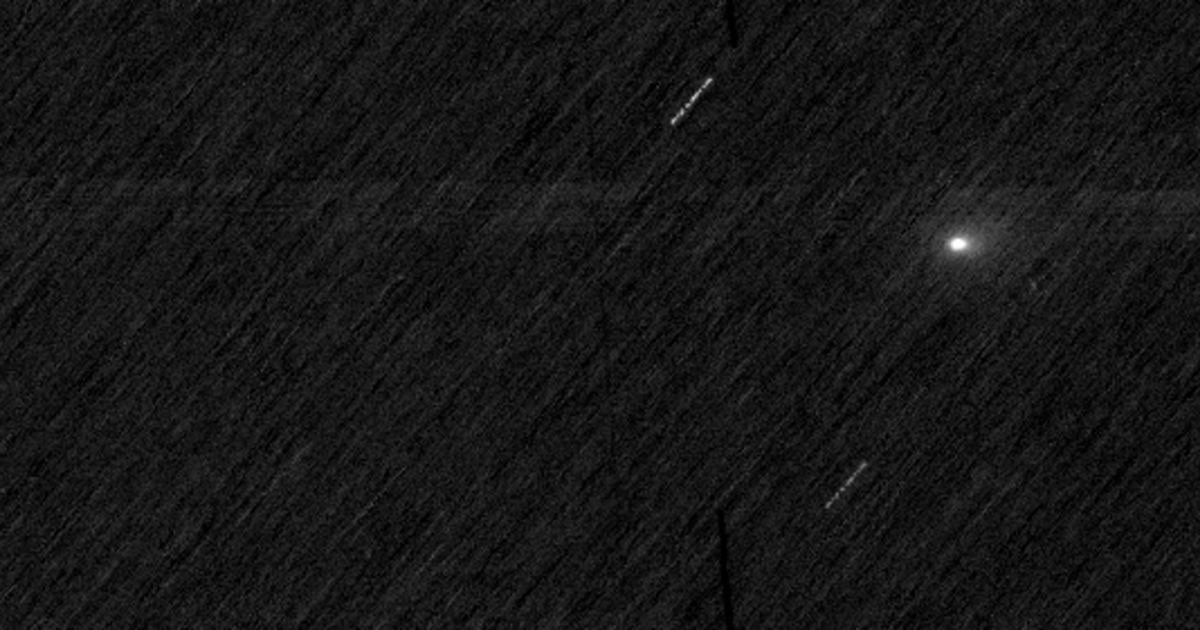
The European Space Agency (ESA) has successfully captured the closest-ever images of the interstellar comet 3I/ATLAS, with its ExoMars Trace Gas Orbiter (TGO) providing the first visual data from the Martian neighborhood, as per the European Space Agency (ESA).
☄️ #3I/ATLAS comet update!
— European Space Agency (@esa) October 7, 2025
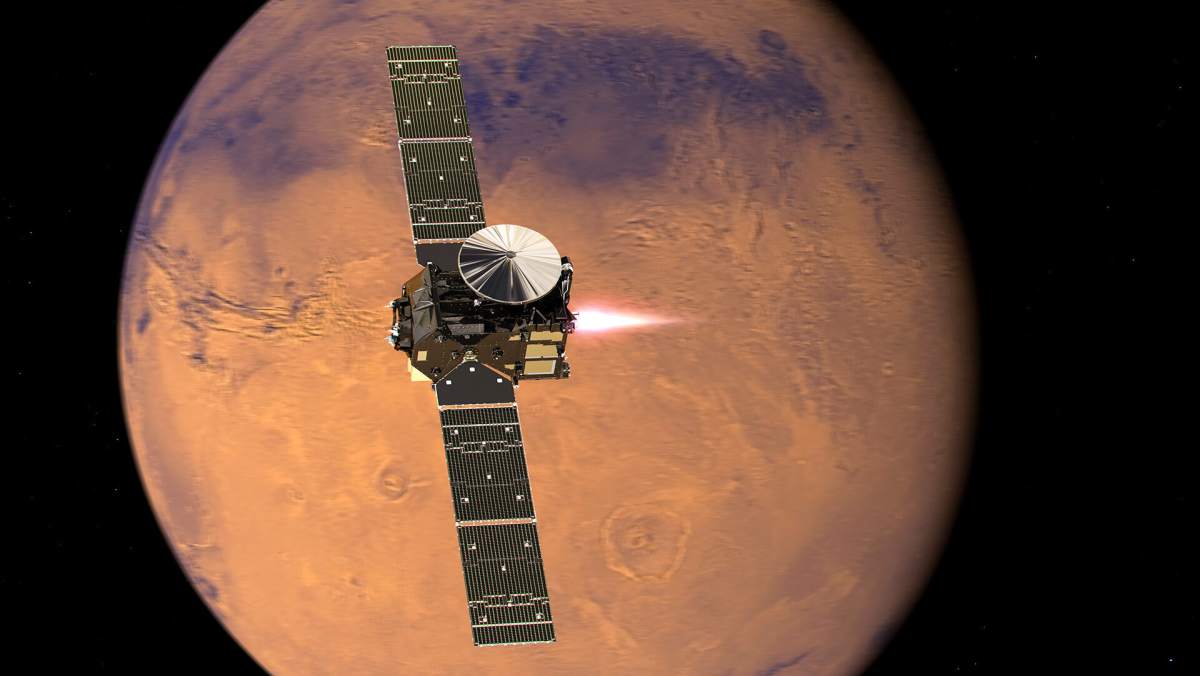
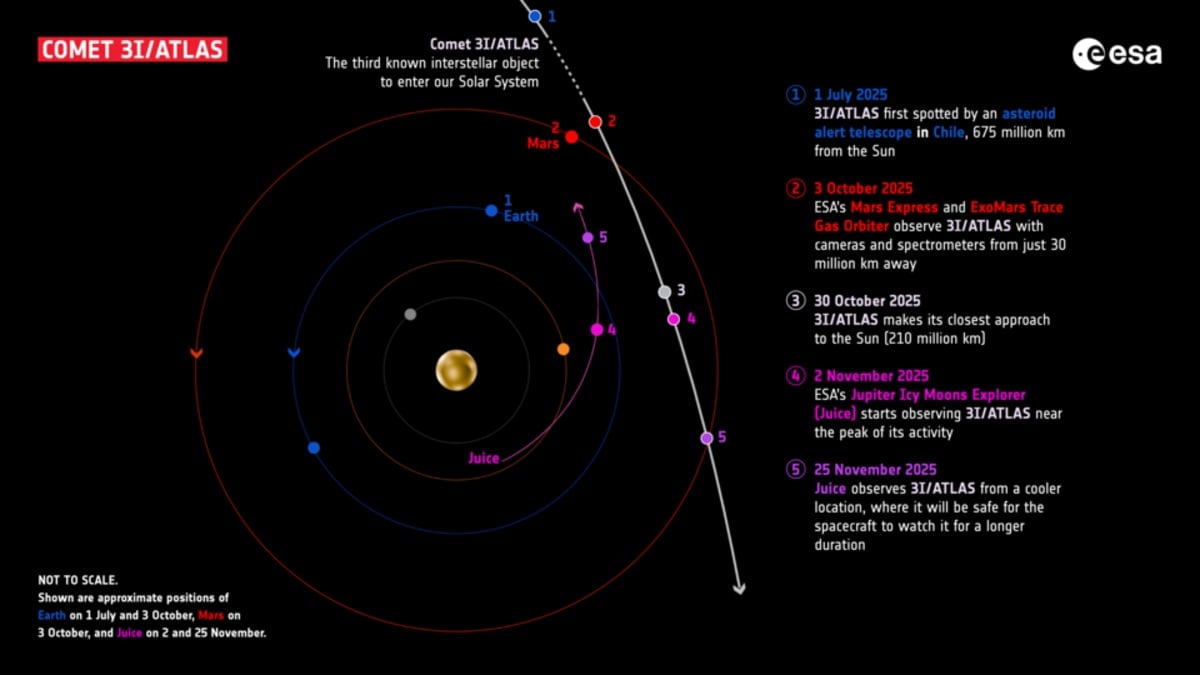
On 3 October, our ExoMars Trace Gas Orbiter (TGO) turned its eyes towards interstellar comet 3I/ATLAS as it passed close to Mars.
Together with Mars Express, ExoMars TGO had the closest view of the comet of all of our spacecraft. It looked towards the… pic.twitter.com/HJE1CeaEwq
During the comet’s closest approach to the Red Planet on October 3, the TGO's Colour and Stereo Surface Imaging System (CaSSIS) snapped a series of images, showing the cosmic visitor as a faint, fuzzy white dot. At the time of observation, the icy-rocky object was approximately 18.64 million miles from the spacecraft. ESA scientists had expressed uncertainty about the outcome, as the cameras were designed for high-resolution images of Mars’s surface, not distant, dimmer objects.
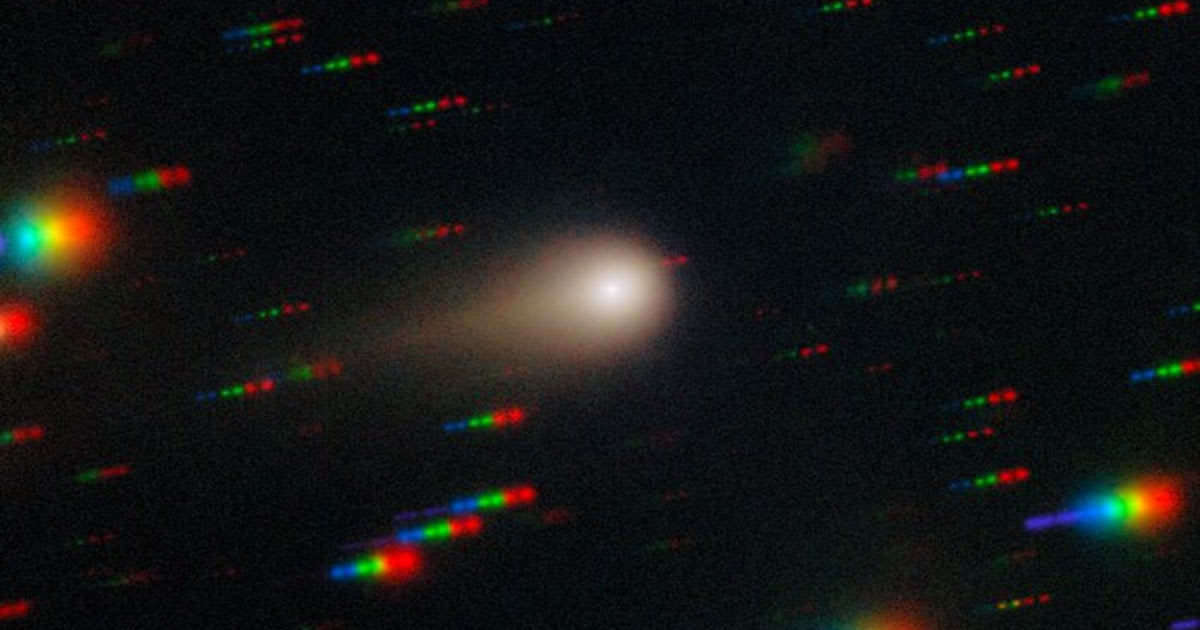
Astrophysicist Avi Loeb, in his Medium blog, provided a detailed technical explanation of the CaSSIS data, noting that the image of 3I/ATLAS as a "fuzzy ball of light" is qualitatively similar to observations made by the Hubble Space Telescope in July, despite Hubble viewing the comet from a much greater distance of 450 million kilometers (279 million miles).
Loeb's analysis reveals that the TGO’s camera, with a resolution translating to 340 kilometers (approx 211 miles) per pixel at that range, was only able to detect the brightest, most central region of the comet's surrounding glow, or coma. The visible extent of the bright core in the CaSSIS images is approximately 680 kilometers wide. This dimension is an order of magnitude smaller than the glow visible in the Hubble images. According to Loeb, this disparity is expected, suggesting that the lower surface-brightness envelope of the coma, which is known to extend hundreds of thousands of kilometers, was undetectable by the smaller CaSSIS mirror. The analysis also suggests no significant increase in the comet’s outgassing over the past three months.
While a companion orbiter, Mars Express, failed to detect the comet due to insufficient exposure time, researchers are eagerly anticipating the next round of observations. The highest-resolution images are expected from NASA’s Mars Reconnaissance Orbiter (MRO), which carries the more powerful High Resolution Imaging Experiment (HiRISE) camera. The HiRISE instrument, with its larger 50-centimeter mirror, is expected to deliver images with a resolution down to 30 kilometers per pixel, which should provide the best constraint yet on the actual diameter of the comet’s nucleus. Data from China’s Tianwen-1 and the UAE's Hope Orbiter are also anticipated in the coming days. Loeb emphasized that the HiRISE data will be the most valuable, stating that the brightest pixel in that picture will be key to understanding the enigmatic interstellar visitor.
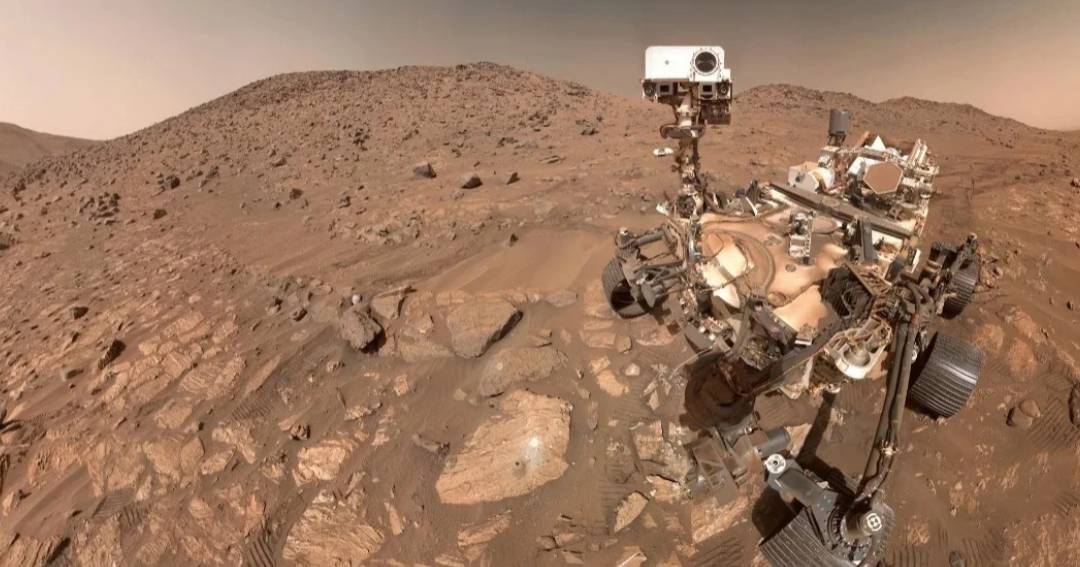
The interstellar object recently sparked public speculation after NASA's Perseverance rover on Mars captured a new image showing a peculiar, elongated bright streak. The image, taken by the rover's Right Navigation Camera (Navcam), showed a streak significantly longer than it was wide. This unusual geometry fueled viral rumors that the object might be a massive cylindrical structure, but Loeb explained it was not the case.

What makes 3I/ATLAS such a compelling target for intense observation is its unique origin: it hails from outside our Solar System. According to ESA, this makes 3I/ATLAS only the third interstellar comet ever detected, following the groundbreaking discoveries of 1I/ʻOumuamua in 2017 and 2I/Borisov in 2019. These objects are considered genuinely foreign to our cosmic neighborhood. Unlike every planet, moon, asteroid, and native comet, which share a common genesis, interstellar comets are true outsiders. They carry invaluable chemical and physical clues about the formation of worlds far beyond our Sun’s influence.