A 50-year-old secret of Milky Way's central supermassive black hole is finally out
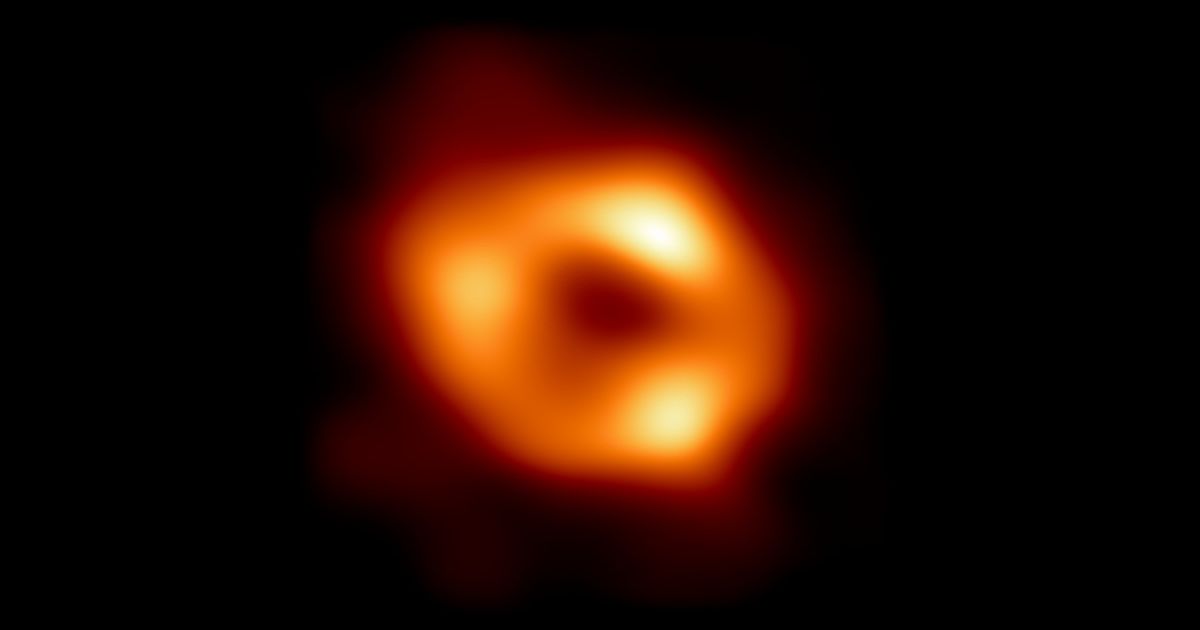
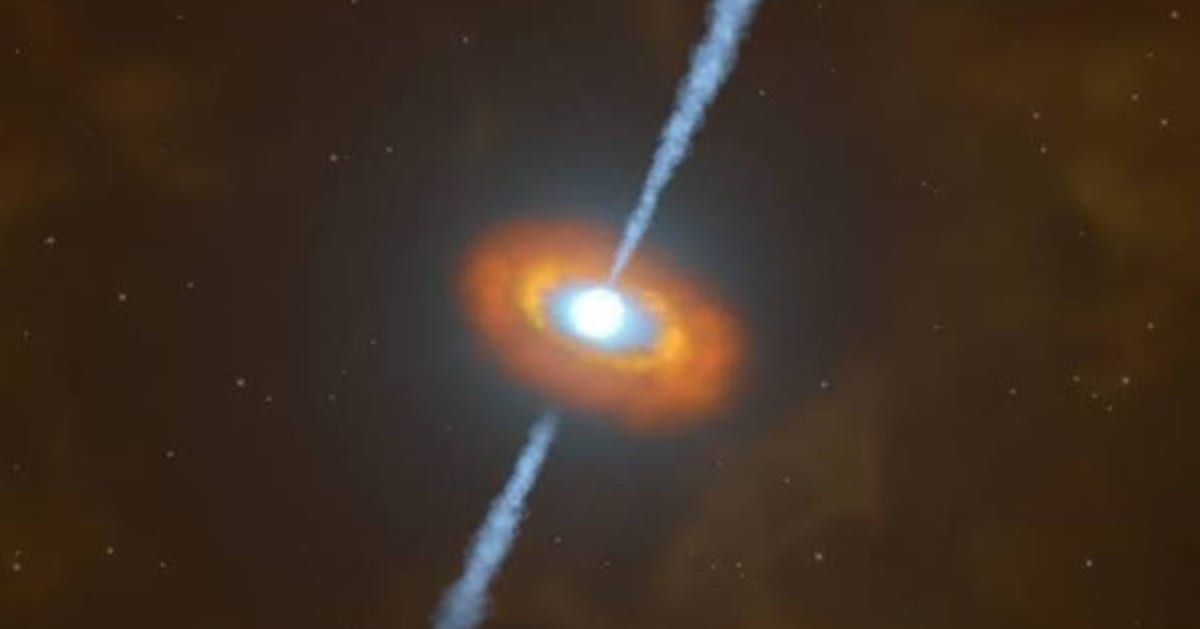
Sagittarius A* (Sgr A*), the supermassive black hole lying at the heart of the Milky Way, has finally given away one of its longest-standing secrets. Astrophysicists at Northwestern University have found evidence of a powerful wind blowing away from the black hole. The study, published in The Astrophysical Journal Letters, provides insights into how the black hole interacts with matter lying in its vicinity, thus opening a new avenue of research into the physics that prevails in the center of our galaxy.
This discovery confirms what theoretical physicists have long held—black holes gorging on materials should also spew out wind or jets. A black hole generates enough energy to push out materials even when it swallows a small amount of gas. Without wind, Sgr A* would have been an oddball. “Unless a black hole exists in a perfect vacuum, it must blow a wind somehow,” said Mark Gorski, a research assistant professor at Northwestern and co-lead of the study, in a statement. “And there is no perfect vacuum in the universe. With new observations, this is the first time we’ve had a clean enough view to see the wind’s imprint.”
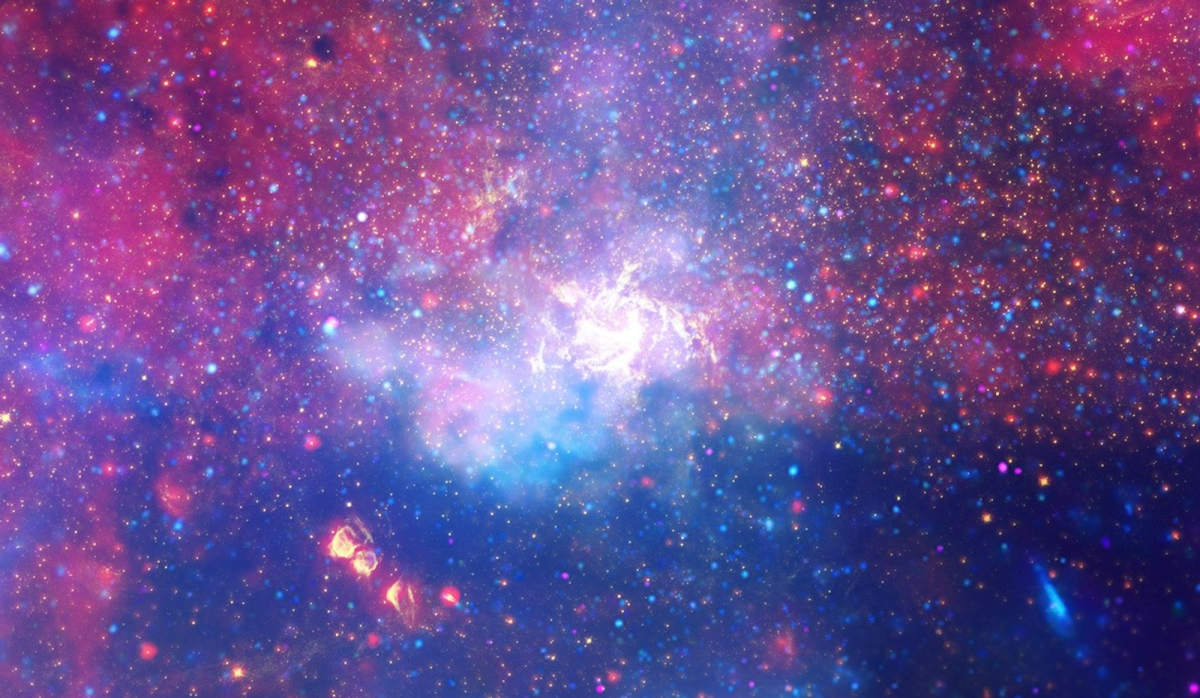
“We looked at the data and said, ‘There it is. There is the thing that everybody’s been looking for 50 years,’” added Gorski. Astronomers had detected past eruptions from Sgr A*, but they had been unable to catch it blowing away wind or jets. The team thinks it is probably because the black hole is in a quieter phase and is very difficult to see. “To observe our own black hole, we have to look through the plane of our galaxy,” said Elena Murchikova, an assistant professor of physics and astronomy at Northwestern, who co-led the study with Gorski. “That means we have to peer through gas, dust and ionized structures, and you can’t really see through all of that easily.”
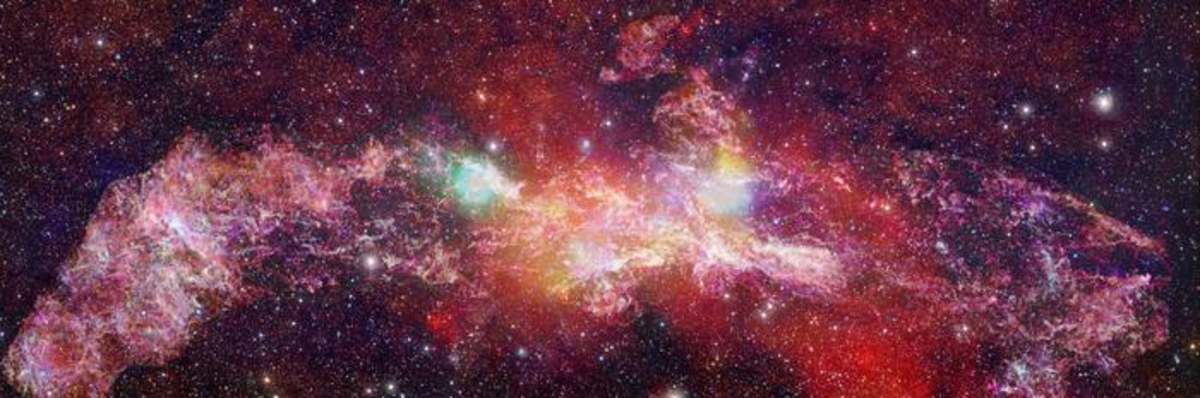
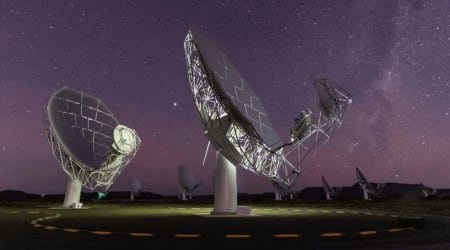
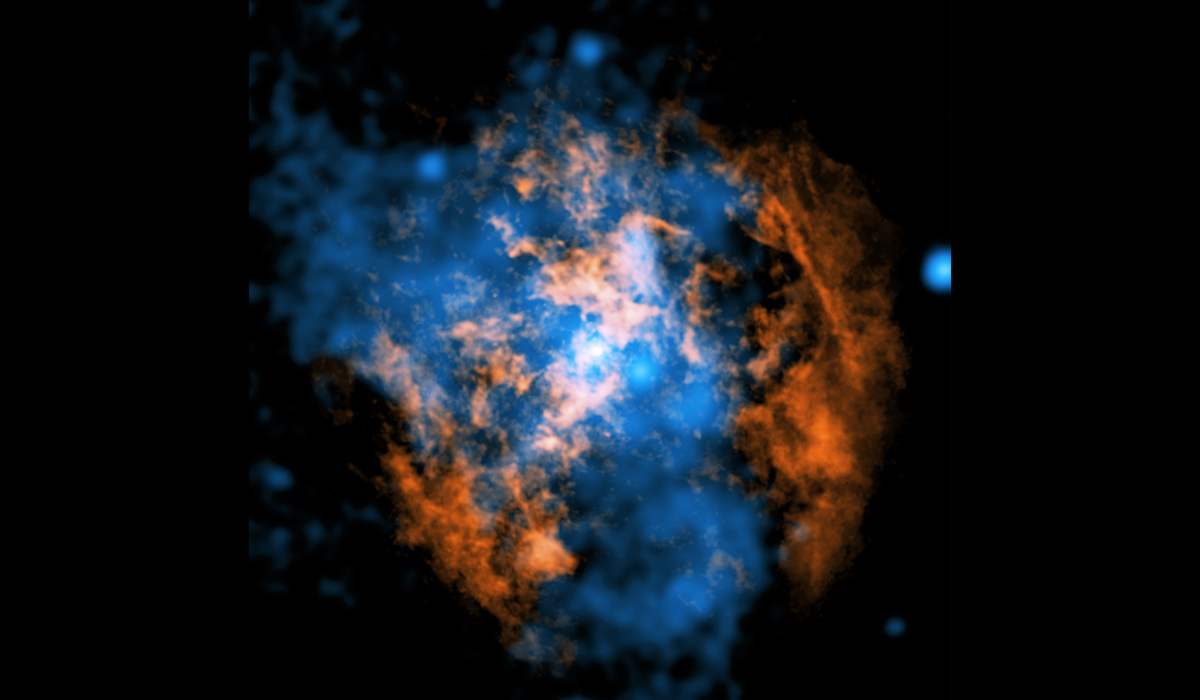
But things changed with powerful radio telescopes such as the Atacama Large Millimeter/Submillimeter Array (ALMA) in Chile. Gorski and Murchikova used five years of ALMA data to construct the sharpest image ever of the cold molecular gas around the black hole. The image showed that the gas is located very close—within just one parsec or three light-years—to Sgr A*. With the help of a calibration method, Gorski and Murchikova removed the black hole’s bright radio signals, creating an image that is 100 times deeper and 80 times sharper than the previous ones. But one feature in the image stunned them. They noticed a cone-shaped cavity. It is nearly one parsec long and 45 degrees wide and does not have any cold molecular gas. According to them, hot, energetic wind blowing from the black hole might have created such a hollowed-out region.

“If you blow hot material from the black hole, it’s not going to want to exist with the cold material,” Gorski said. “It’s either going to push the cold material out or heat it up. And, if it’s too hot, you will no longer see the cold gas.” Stars are known to generate powerful winds. But they are not so strong to create such a huge cavity-like region. “It’s a huge absence of material,” Gorski said. “We calculated how much energy was needed to create this cavity. It is more than can be provided by the stars in that area. Basically, there has to be input from the supermassive black hole. And, if you follow the shape of the cone, it’s pointed directly at the black hole.”
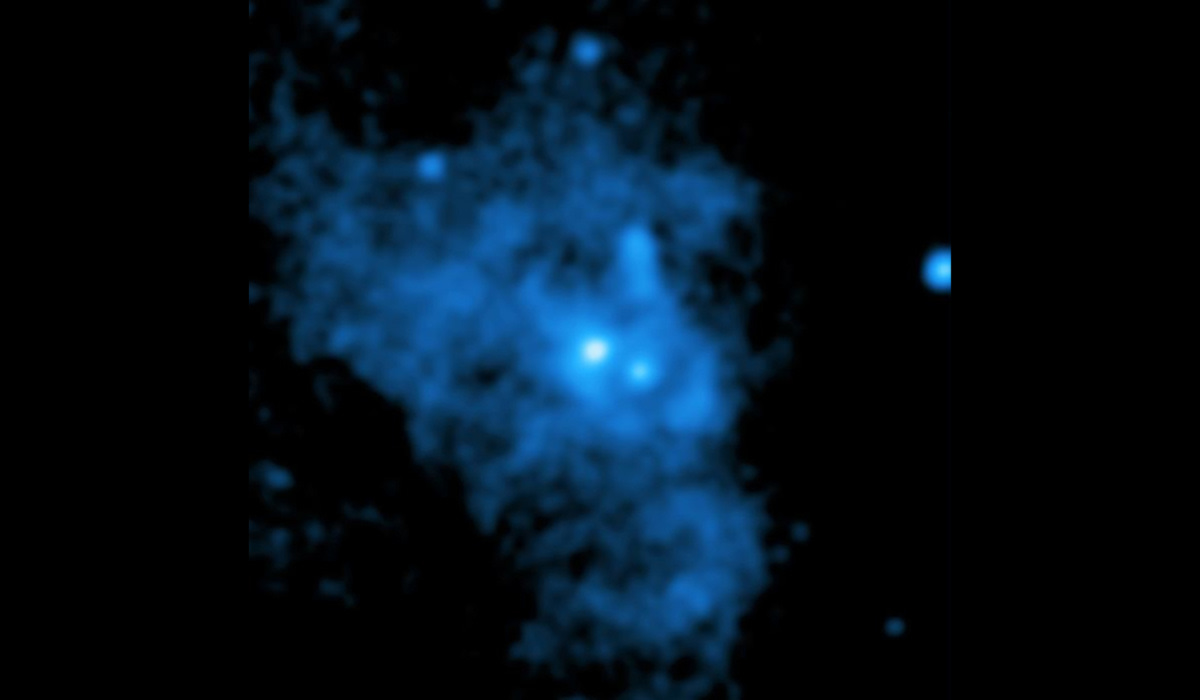
Observations of the same location by NASA’s Chandra X-ray Observatory detected X-ray emissions, confirming their results of a cone-shaped cavity devoid of cold gas. In addition, the researchers estimate that the wind has been flowing out for 20,000 years. But compared to other galaxies’ supermassive black holes, Sgr A* is relatively calm. “The majority of other galaxies spend most of their lives in a state where they are not particularly active,” Murchikova said. “But we can only see them when they are in a fireworks stage. It is very attractive to study black holes when they are in the fireworks stage, but that’s not actually their dominant state. Sgr A* finally gives us a window into the life of a black hole in this quiet state.”
More on Starlust
Astronomers spent 6 years studying a supermassive black hole’s revival. Here’s what they found