SDSS Data Release 20 reveals all-sky map of supermassive black holes
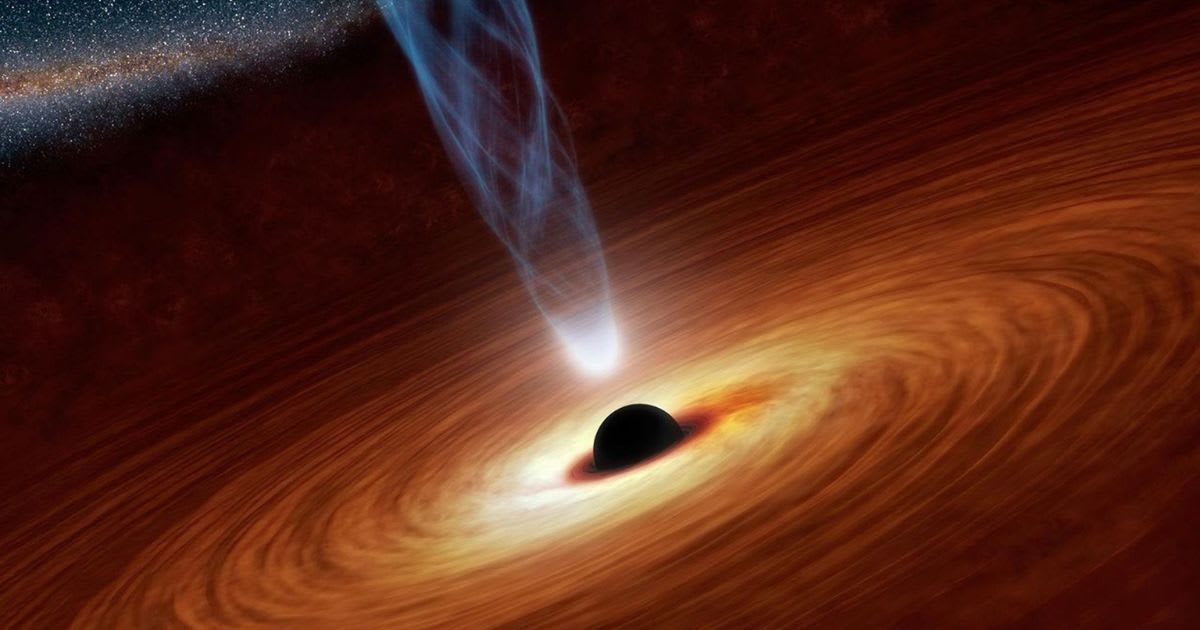
The Sloan Digital Sky Survey (SDSS) has officially published its twentieth data release (DR20), which contains information about quasars, active galactic nuclei, and supermassive black holes (SMBHs), with a notable 3-to-4-fold expansion in data on SMBHs over DR19. Besides such extreme objects, it also includes data on stars and interstellar space, supported by advanced tools to navigate through a massive dataset of 3.3 million optical spectra across 500,000 galaxies and 1.5 million stars. The maps paint a picture of the local and distant universe, deepening our understanding of the physical processes that shape the cosmos.
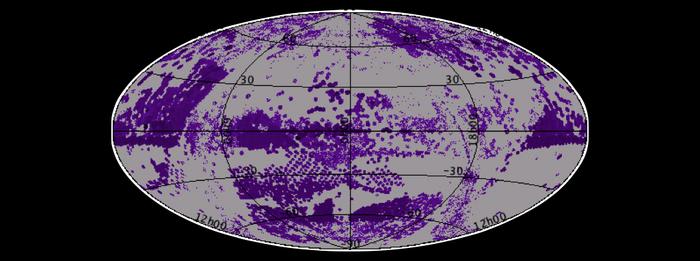
Two observatories—Las Campanas Observatory (LCO) in Chile and Apache Point Observatory (APO) in New Mexico—played a pivotal role in gathering this huge DR20 dataset in coordination with space-based observatories, delivering the first extra-galactic optical spectra from the southern hemisphere. DR20 also offers a comprehensive map of X-ray sources. The survey combines optical spectra with X-ray observations, providing identifications and precise distance measurements (redshifts) for about 200,000 X-ray sources. Active supermassive black holes constitute the vast majority of these X-ray sources.

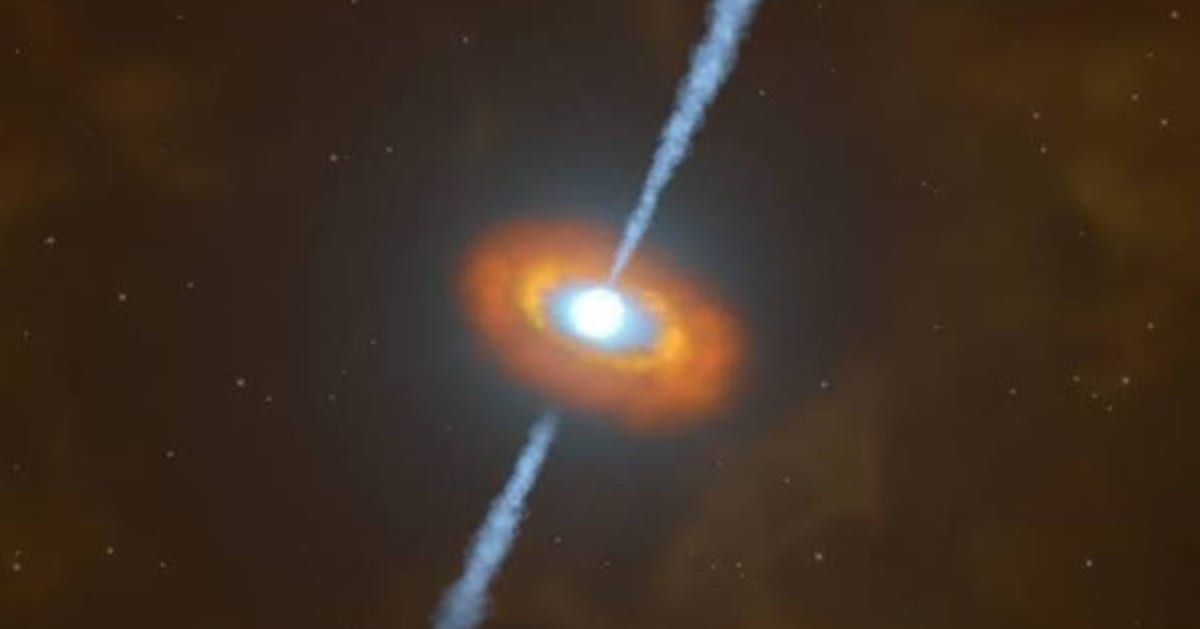
In these surveys, astronomers use X-rays to peer directly into the central engines of these black holes and probe the hot X-ray coronae that surround them. This allows them to track the black holes and their growth from our cosmic neighborhood to the dawn of the universe. A combination of optical and X-ray surveys detected some of the rarest, most luminous quasars. The surveys also uncovered that very massive black holes and the brightest active galactic nuclei (AGN) were more numerous when the universe was young, suggesting that giant black holes grew more rapidly in the early universe than previously thought.

Surveys that use optical and ultraviolet light miss many actively growing black holes hidden by material. Furthermore, an estimate of black hole growth over cosmic time reveals that black holes detected in soft X-rays represent only a small fraction of the total mass accumulated by supermassive black holes. The researchers conclude that thick clouds of dust and gas hid 70 to 90% of the growth of supermassive black holes, or that they grew during phases where even X-ray emissions were suppressed.
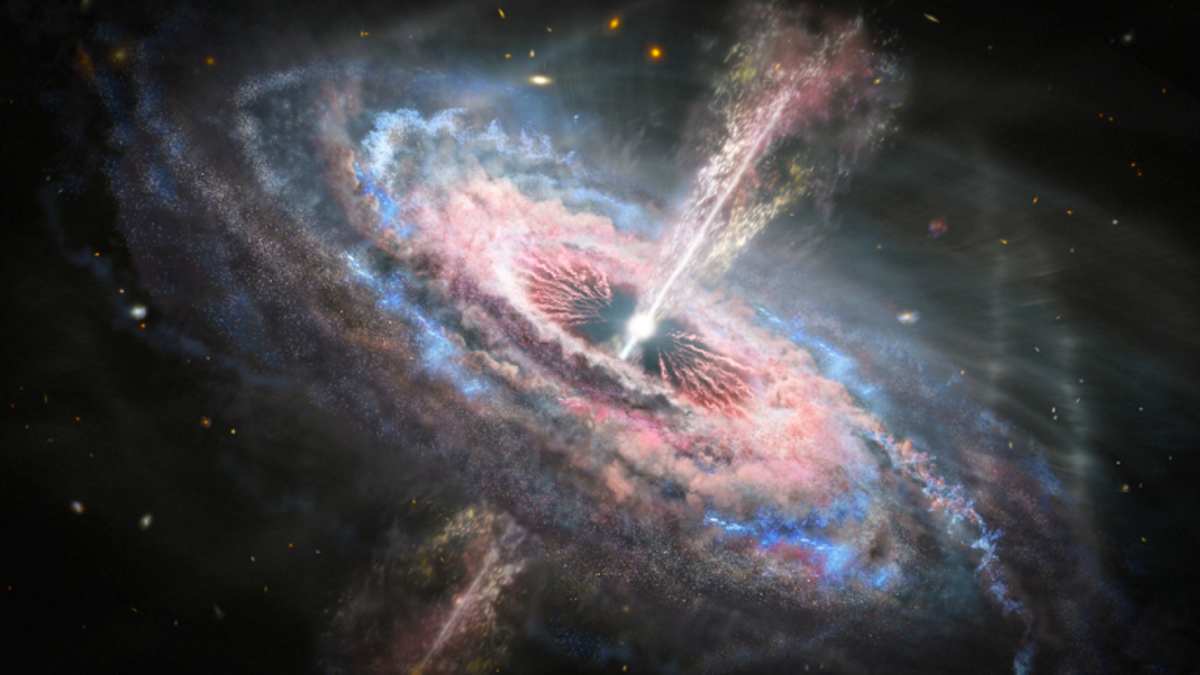
Such difficulties in detecting black holes are being addressed by DR20’s Black Hole Mapper, which peers into quasars. Since quasars are powered by supermassive black holes, probing their emissions helps measure the masses of the black holes. The survey also monitored tens of thousands of quasars over repeated epochs, allowing for the detection of accreting gas outflows, binary supermassive black hole candidates, and dramatic “changing-look” quasars transitioning states.
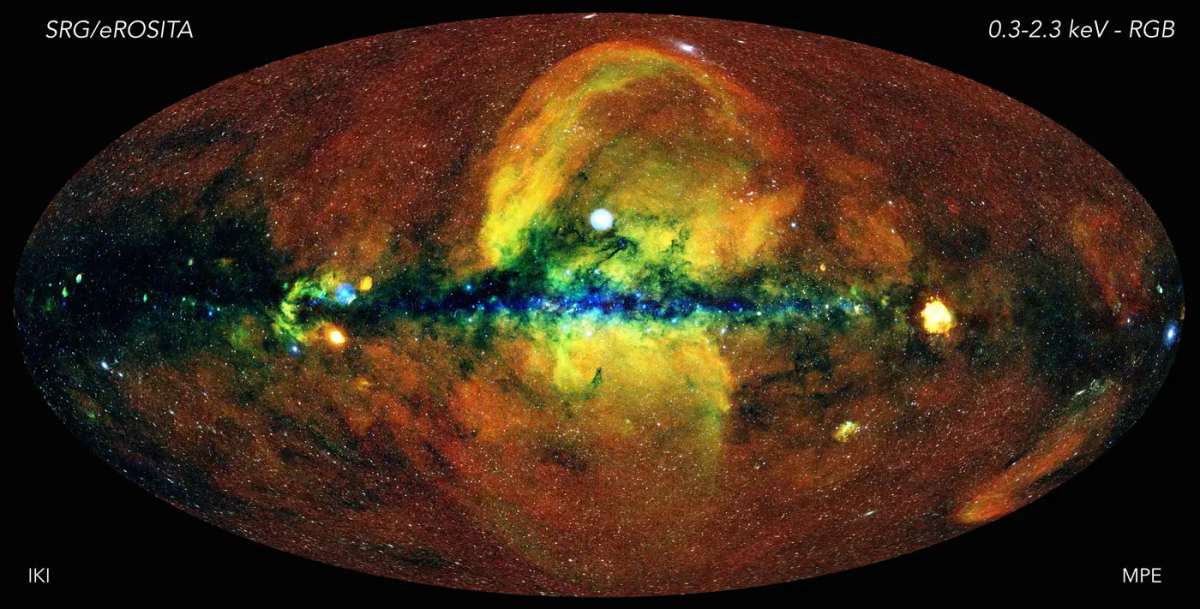
“Quasars have long been known to vary, and it is extremely exciting to be at the point where we can use those variations at scale, across multiple frequencies, to learn more about how black holes grow and evolve over cosmic time,” said SDSS-V Director Juna Kollmeier in an SDSS press release. “The combination of optical and X-rays is extremely powerful, and we are proud to work with the eROSITA team on this cross-survey collaboration.”
More on Starlust:
Supermassive black hole winds are 100 times stronger than thought, traveling 300,000 light-years
A supermassive black hole dimmed its galaxy 20-fold—in just 20 years