The mystery behind 'little red dots' discovered by James Webb Telescope has finally been solved
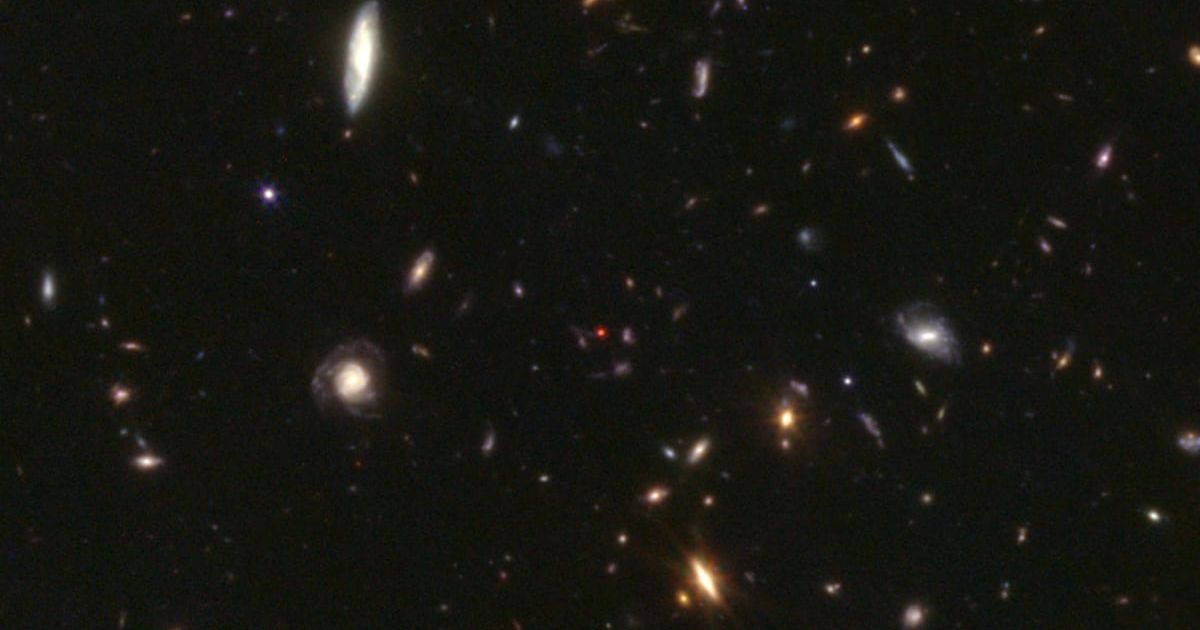
The "little red dots" were discovered by the telescope in 2021, and what followed was a theory that the dots were massive galaxies.
PUBLISHED JAN 16, 2026
The little red dots are young black holes, enshrouded in a cocoon of gas, which they are consuming in order to grow larger (Cover Image Source: JWST/Darach Watson)

The mystery of the red light-emitting objects that were observed by the James Webb Space Telescope has finally been solved. The "little red dots" that were discovered in 2021 are actually baby black holes that are going through a massive growth spurt, according to a new study that has been published in the journal Nature. 
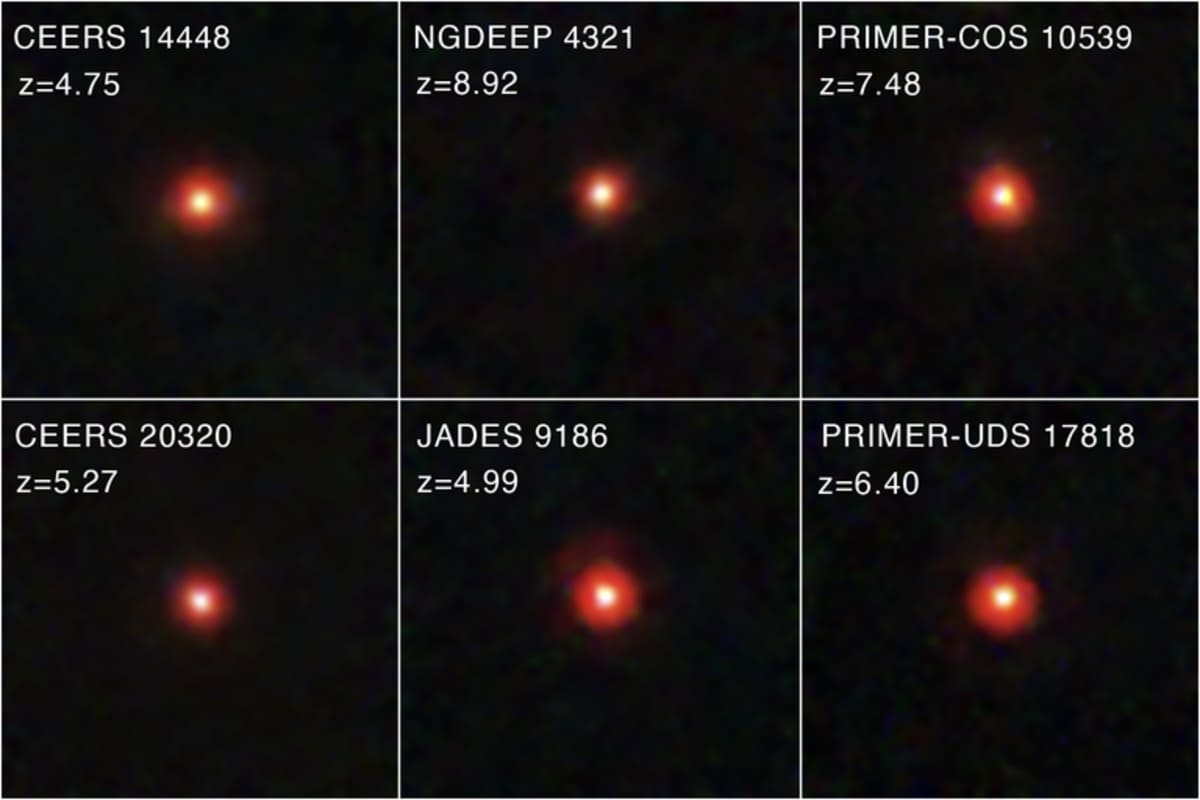
A team of astronomers sifted through James Webb Space Telescope data from multiple surveys to compile one of the largest samples of “little red dots” (LRDs) to date (Image Source: NASA, ESA, CSA, STScI, Dale Kocevski)

When the JWST started to transmit images from its orbit, which is 1.5 million kilometers away, scientists were baffled by the presence of small red dots in the distant regions of space. These dots were present when the universe was just a few hundred million years old (that is pretty young on the cosmic scale), but they disappeared after a billion years. The first theory that came up was that these are giant galaxies. But this theory does not fit the current understanding of how long it takes for galaxies to develop. Scientists at the Cosmic Dawn Center of the Niels Bohr Institute have now proved that these are much smaller and more active than previously thought. 

The James Webb Space Telescope (JWST or Webb) observes outer space to detect anomalies. Elements of this image are furnished by NASA (Representative Image by alex-mit / Getty Images)
The James Webb Space Telescope (JWST or Webb) observes outer space to detect anomalies. Elements of this image are furnished by NASA (Representative Image by Alex-Mit / Getty Images)

According to the study, these dots are actually young black holes that are thickly clouded with gas. As the black hole ingests the gas, it generates extreme amounts of heat. “This radiation through the cocoon is what gives little red dots their unique red color,” said Professor Darach Watson, one of the lead researchers on the project, in a statement. Although these black holes weigh 10 million times more than our Sun, they are actually “lightweights” compared to the black holes that have been discovered so far. And while they are growing, they are “messy eaters” because they consume just part of the gas that they suck in, with the rest being blown back out into space because of the immense heat.
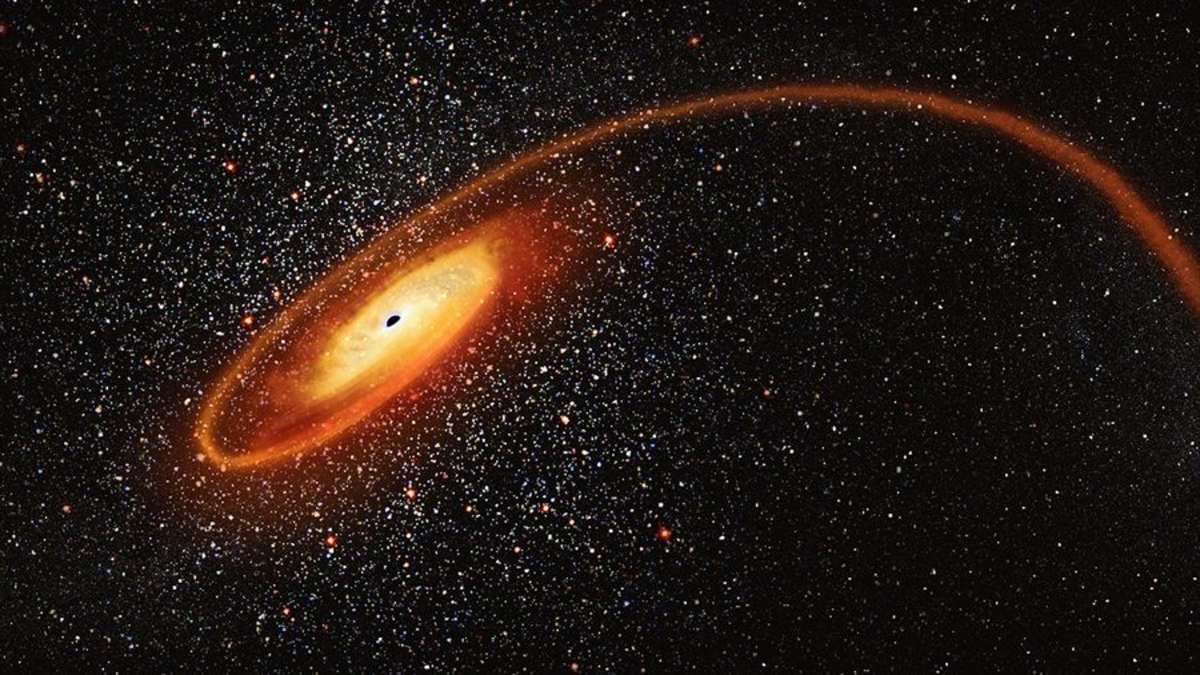
Illustration of a Mid-Sized Black Hole Eating a Star. This artist's concept depicts a cosmic homicide in action (Image Source: NASA)
Illustration of a mid-sized black hole eating a star. This artist's concept depicts a cosmic homicide in action (Representative Image Source: NASA)

This discovery expands our existing knowledge of the history of the universe. For many years, there was no explanation for how supermassive black holes, some of which are a billion times more massive than the Sun, could have appeared so quickly after the Big Bang. By revealing themselves as black holes in an unseen period of rapid growth, "little red dots" provide some answers. The dense gas cocoons that surround them are fueling stations that pump gas into the black holes at an incredible rate, allowing them to reach massive sizes in a remarkably short period of time. Moreover, their existence is compatible with our current knowledge of physics because they are actually much smaller than previously thought. Scientists no longer have to search for unusual or "new" types of events in the universe to explain their existence. 

The James Webb Space Telescope has played a huge role in furthering our understanding of the early universe. By detecting these little red dots and helping solve the mystery behind them, it just added another feather to its cap.

More on Starlust

Solving the mystery of 'little red dots' in early universe, scientists discover a new class of black hole stars

Astronomers stunned as JWST just spotted a 'Big Red Dot', a supermassive black hole devouring the early universe

MORE STORIES

Although Uranus possesses rings, they are not as structured and bright as the rings of Saturn. They are rather dark, narrow, and tough to study.
20 hours ago
ISS Expedition 74 aims to boost space health and future medical breakthroughs on Earth.
1 day ago
Citizen scientists will look for warped spacetime using data from the European Space Agency's Euclid telescope.
1 day ago
A boxful of soil-living worms was sent to the International Space Station to assess the dangers.
2 days ago
The ancient ocean on Mars probably occupied a third of its surface.
3 days ago
April skies light up as a comet with bright tail and rare visibility reaches perihelion.
5 days ago
Scientists predict wave behavior using factors like gravity, atmosphere and liquid composition.
5 days ago
Parker Solar Probe has uncovered new details about how magnetic reconnection on the Sun flings charged particles at insane speeds.
6 days ago
Maintaining liquid surface water is one of the preconditions that a planet has to meet in order to support life as we know it.
6 days ago
SOHO, STEREO, and PUNCH show different perspectives of the Kreutz sungrazing comet’s dramatic end.
6 days ago