Subaru, James Webb study galaxy cluster from 12.6 billion years ago—here's what they found
Using the Subaru Telescope, an international team of researchers has discovered a massive protocluster of galaxies from when the universe was merely 1.2 billion years old. They further explored this ancient cosmic structure using the James Webb Space Telescope (JWST) and found evidence of a turbulent cosmic environment where galaxies evolved entirely differently than their more isolated counterparts. The findings of the study have been published in The Astrophysical Journal Letters, and are likely to change how astronomers understand the evolution of the early universe.
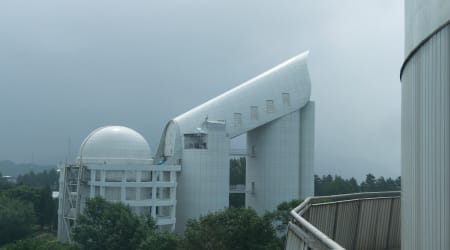
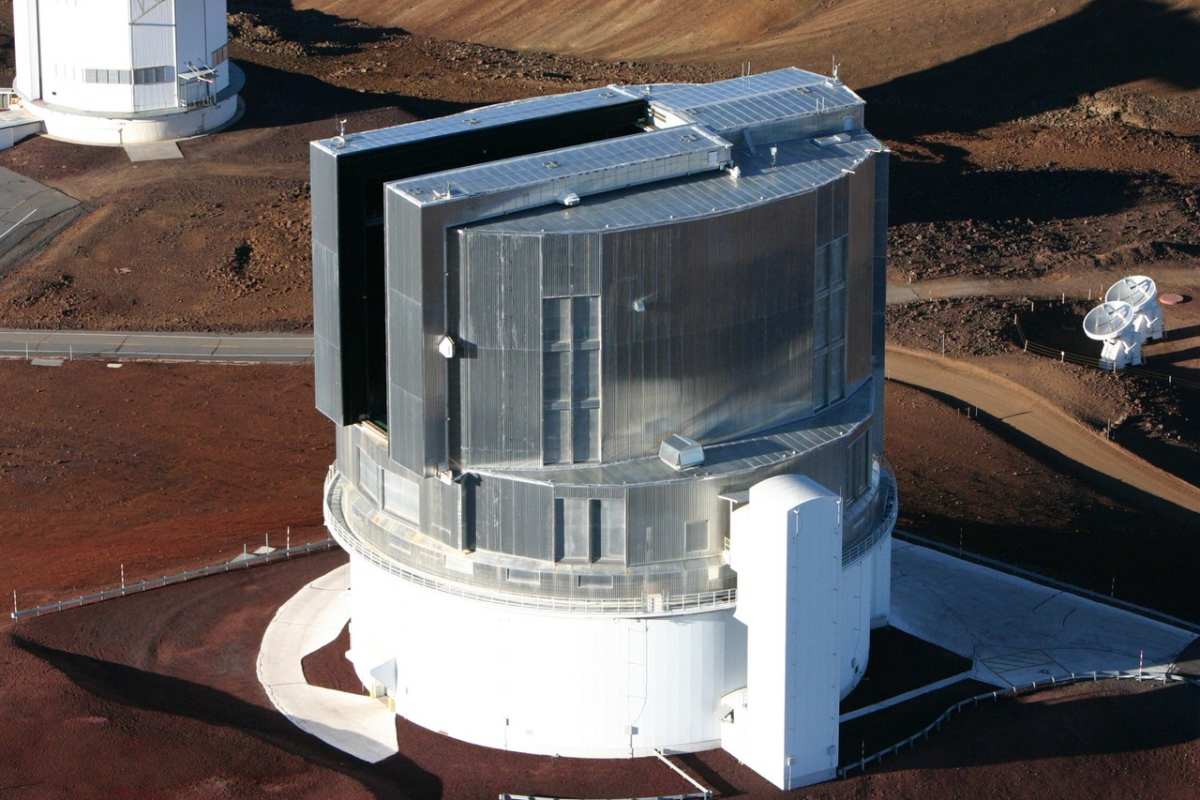
The universe is structured as an immense web of galaxies, which often gather into groups that merge into colossal clusters, which drift in the vastness of space like islands of matter. These clusters connect through filaments stretching across hundreds of millions of light-years. However, these massive structures didn’t form instantly and the exact conditions of their births remain a mystery: astronomers have long debated when the surrounding cosmic environment first began shaping young galaxies into these massive clusters. To investigate this, an international research team led by astronomers at the National Astronomical Observatory of Japan (NAOJ) scanned a large portion of the sky using the Subaru Telescope's wide-field camera, Hyper Suprime-Cam (HSC). This survey led to the discovery of a colossal protocluster that existed 12.6 billion years ago.
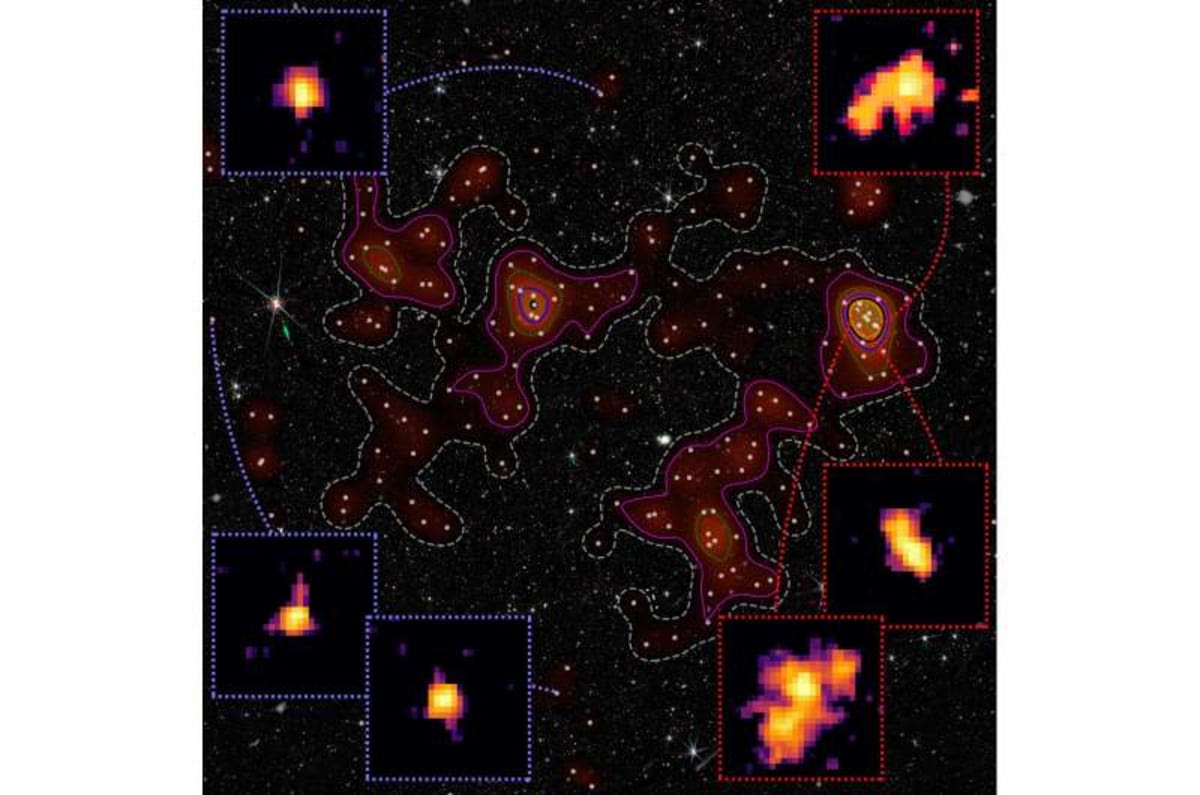
The team detected the protocluster by tracking down a specific light signal called Lyman-alpha emission, which is emitted by young galaxies experiencing rapid star formation. Tracking this light, the team discovered the galaxy protocluster and named it the ‘Loktak Protocluster’ after Loktak Lake in Manipur, India. Just as the famous lake is dotted with floating landmasses, four separate concentrations of galaxies connect to form this larger structure. "Protoclusters are the construction sites of the most massive structures in the present-day universe," lead author Ronaldo Laishram of NAOJ said, as per Phys.org. "Finding such a clearly organized system at this early epoch gives us a rare chance to study how the environment affects galaxy growth in the young universe," he added.

To look closer, the team turned the infrared vision of JWST toward the Loktak Protocluster. Because the universe is expanding, the original ultraviolet and optical light emitted by these galaxies 12.6 billion years ago has been stretched—or redshifted—into longer, invisible wavelengths. JWST used its Near-Infrared Camera (NIRCam) to capture this redshifted light, allowing astronomers to see what the galaxies originally looked like in their "rest-frame" wavelengths. When examining the rest-frame ultraviolet light—which highlights regions of active star formation—the galaxies inside the protocluster looked largely the same as isolated galaxies. However, when looking at the rest-frame optical light, which traces older, established stellar populations, a surprising difference emerged. The galaxies inside the protocluster were, on average, 40 percent (or 1.4 times) larger. This discovery suggests that the dense cluster environment was already physically stretching the older stars of these galaxies, likely through gravitational tidal interactions, without triggering rapid star formation at their edges. Until now, scientists were uncertain exactly when these galaxy-shaping environmental effects first emerged. The observations of the Loktak Protocluster seem to suggest that the process began very early. Even before giant galaxy clusters fully matured, the dense cosmic environment was already dictating how its inhabitants would grow.
More on Starlust
New instrument, TIME, maps the Milky Way's core to prepare for a survey of the early universe
Mercury may have accumulated all its water ice deposits in just 'one day'