Never-seen-before map shows how solar particles interact with Earth's magnetic bubble
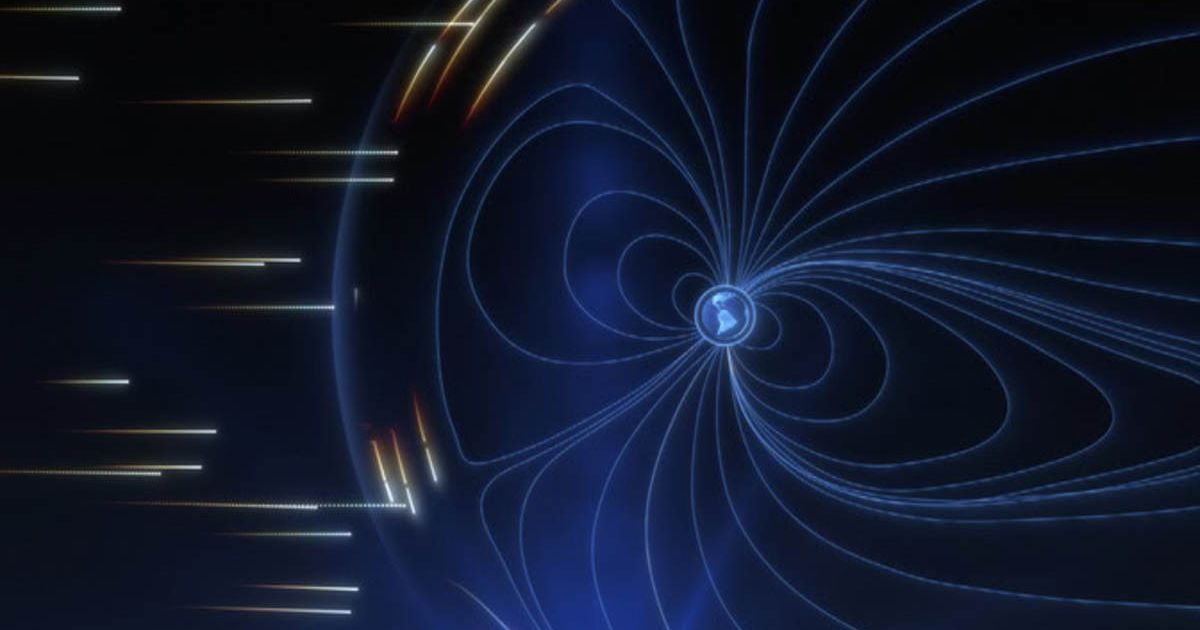
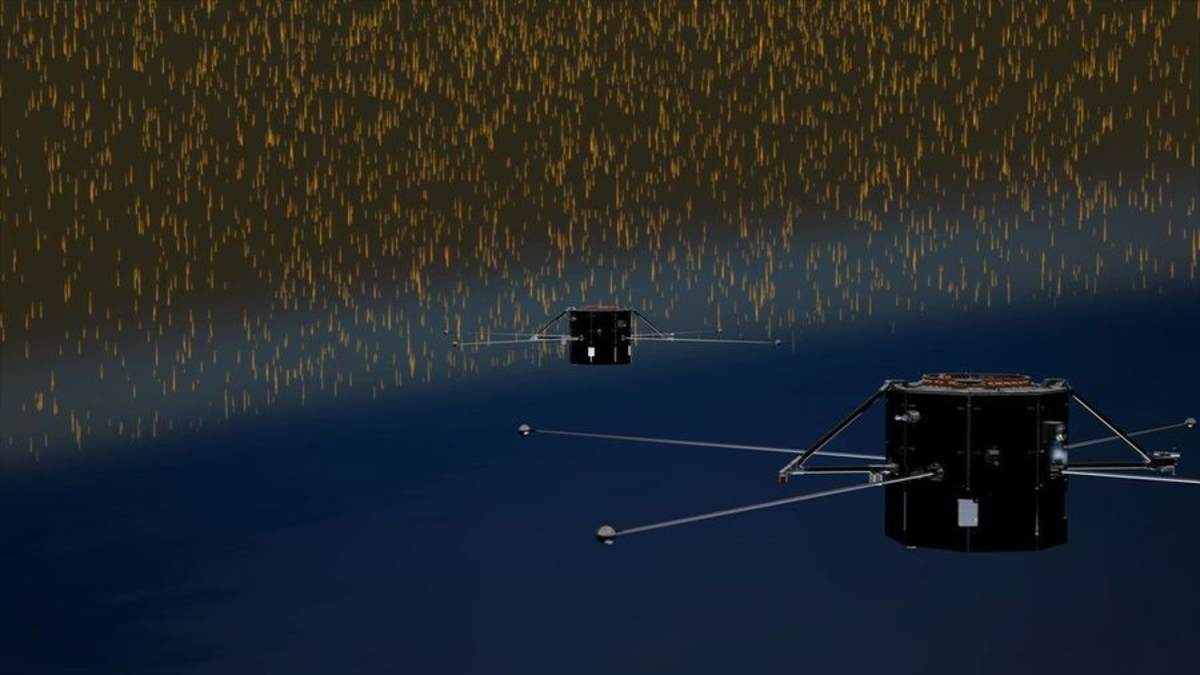
A research team at the University of Iowa has mapped in minute detail how solar energy interacts with Earth’s magnetic field and crosses the magnetic boundary that deflects most of the Sun's energy-packed particles. Insights gleaned from this study can help researchers better understand how the energetic material hurled toward Earth influences space weather. The discovery, published in the journal Geophysical Research Letters, comes from NASA’s TRACERS mission, a pair of satellites launched in 2025 to investigate the complex interactions between solar particles and Earth’s magnetic environment.
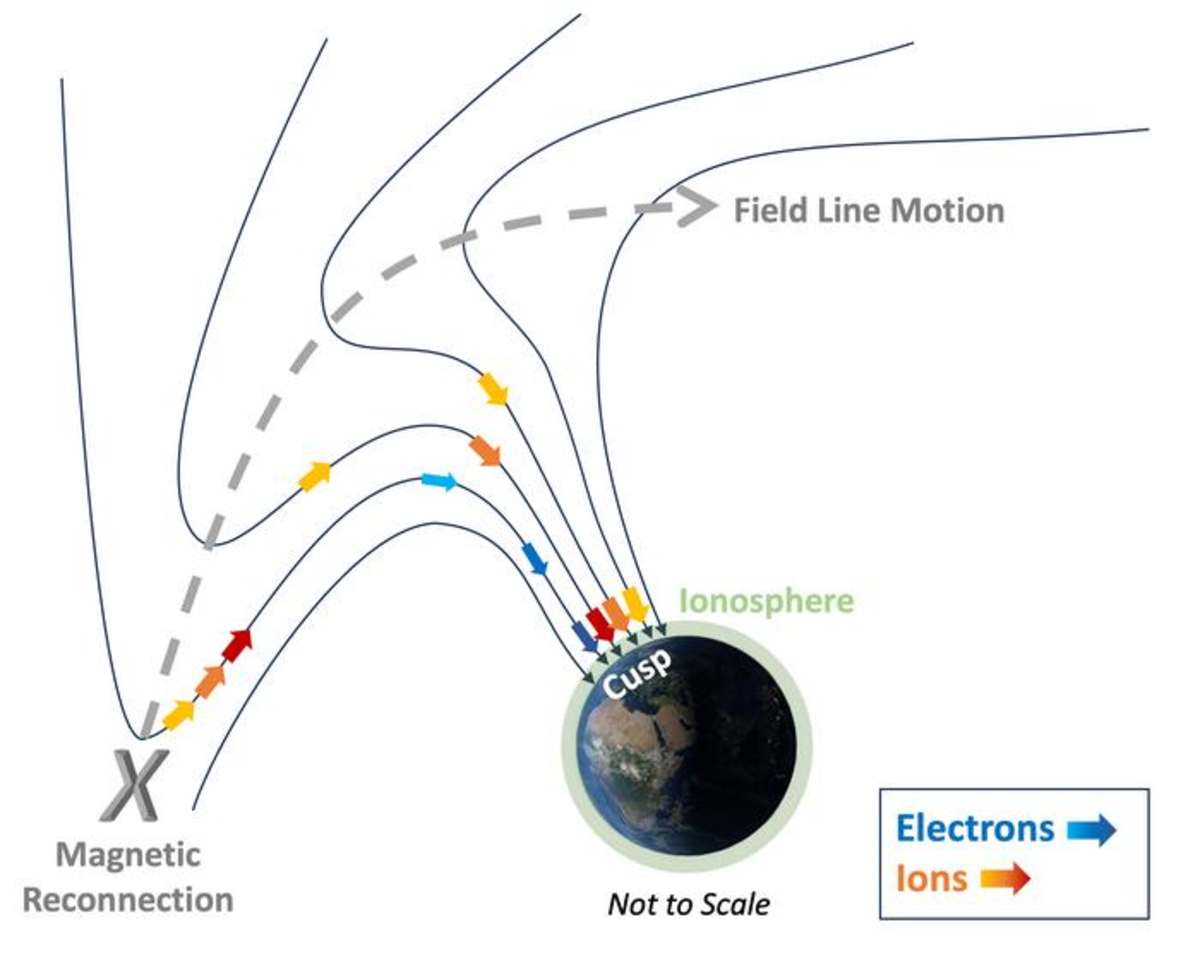
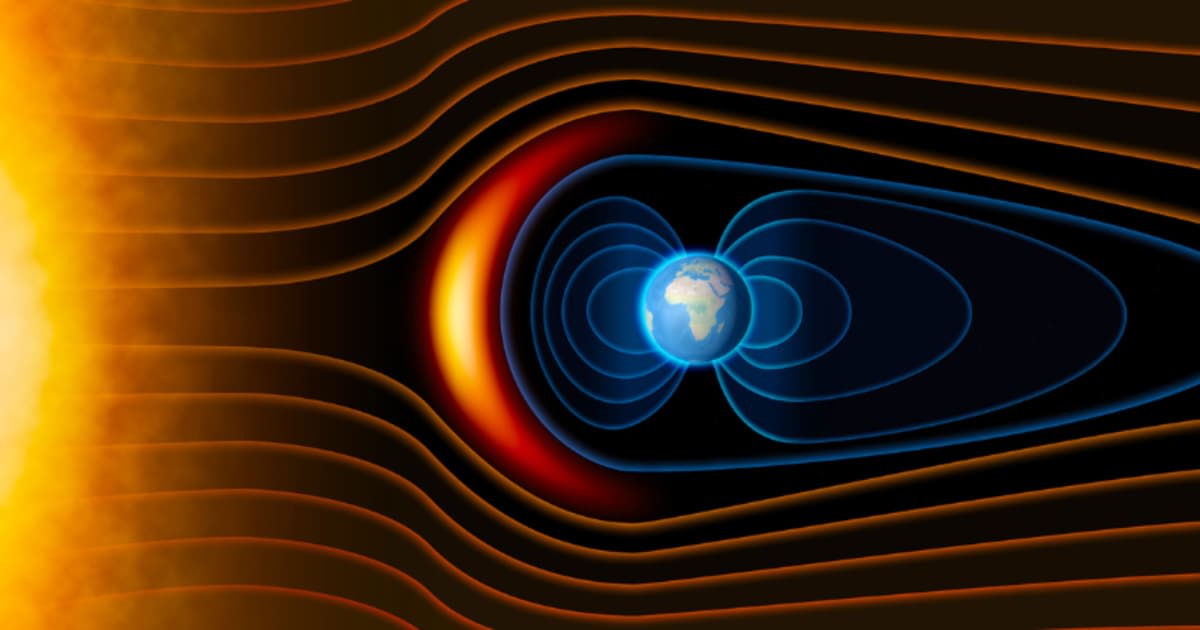
Earth’s magnetic field wraps our planet like a giant protective bubble. But there are vulnerabilities known as magnetic cusps—funnel-like regions that act as natural channels for solar charged particles to enter Earth’s ionosphere, the upper layer of the atmosphere. The TRACERS mission helped researchers measure the velocities and concentrations of electrons as the satellites passed through these specific locations in low-Earth orbit. With these measurements, they were able to precisely map the trajectory of solar energy from magnetic reconnection—its first encounter with Earth’s magnetic field tens of thousands of miles from Earth’s surface—down to interactions at locations in low-Earth orbit a few hundred miles above our planet. “With magnetic reconnection, we don't really know how it varies at a fine scale. We have a hunch that it’s either varying in time or varying spatially,” says corresponding author Jasper Halekas, professor in the Department of Physics and Astronomy at Iowa, in a statement. “Our electron edge measurements reveal for the first time how these processes vary on small time and spatial scales at the edge of the cusp, helping us to better understand the efficiency of the sun-Earth coupling.”
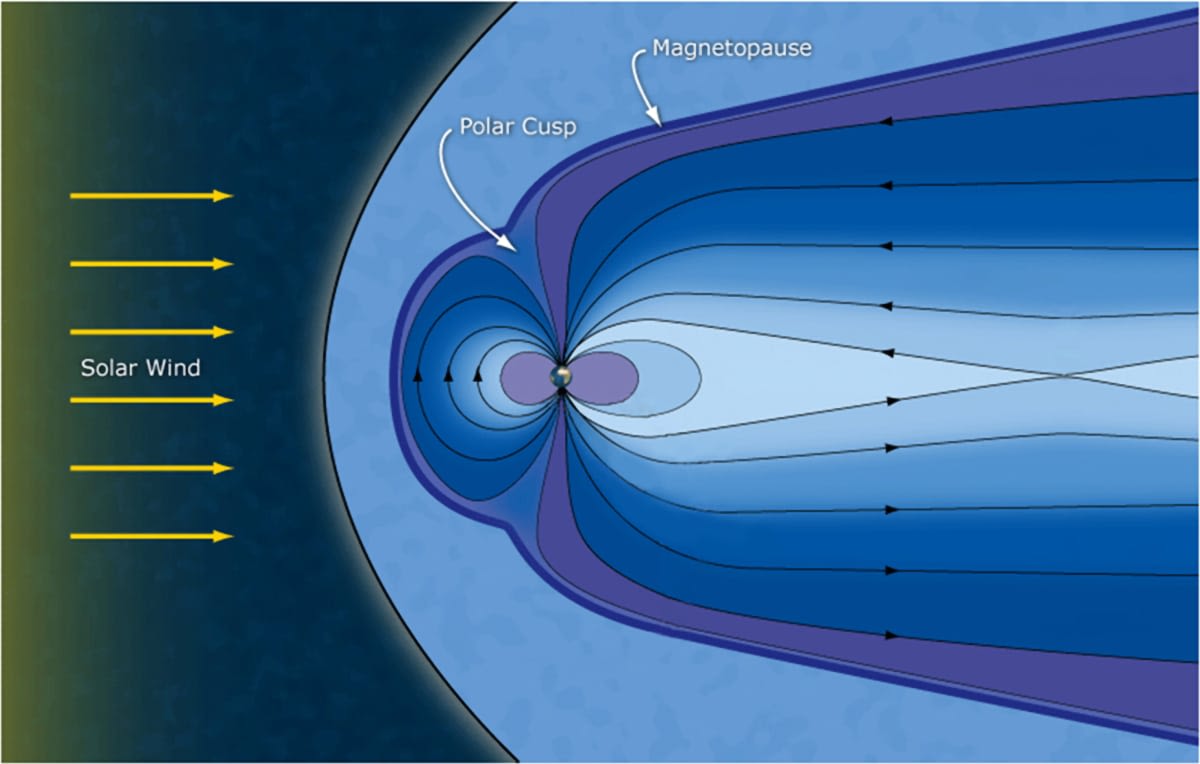
TRACERS consists of twin satellites that drift through low-Earth orbit, sampling electrons, ions, and the broader plasma environment involved in the interactions between the Sun and the Earth. Magnetic reconnection releases enormous amounts of energy, opening pathways that allow solar particles to stream into Earth’s space environment. While physicists know that reconnection allows solar energy to penetrate our planet’s magnetic system, they are not sure how the process behaves on small scales. “This is important because magnetic reconnection is how the energy from the sun gets into Earth’s system,” Halekas says. “It’s important to know the duty cycle of that reconnection — is it happening continuously, or is it sort of turning on and off?”
To find the answer, the researchers focused on electrons—the lightest charged particles in the plasma streaming through near-Earth space. Electrons are ideal cosmic messengers. Since they are so lightweight, they travel much faster than heavier ions. The TRACERS satellites monitored these electrons as they flowed through the aforementioned cusps where solar particles can travel relatively directly into the upper atmosphere. Because they travel so fast, these electrons carry an early message about magnetic reconnection that is happening some 30,000 miles away at the edges of Earth’s magnetic bubble. While the reconnection event itself launches a massive, slower-moving wave of plasma down the field lines, the speedy electrons arrive at the ionosphere first. “The electrons are saying, magnetic reconnection is taking place way out here, and we’re letting you know that there’s going to be this wave of mass and energy coming to us,” Halekas explains.
The team analyzed 149 passages through cusp regions. In 57 of those encounters, they observed distinctive electron-dispersion signatures—telltale patterns revealing that magnetic reconnection had recently occurred. The researchers were able to gather such information from data collected by the Analyzer for Cusp Electrons instrument (ACE), designed and built at Iowa. “The equatorward edge is the leading edge of the cusp, where the solar wind energy and plasma can first reach the ionosphere,” says Halekas, instrument lead for the ACE instrument. “The electron and ion signatures we see there are the proof we’re seeing the effects of magnetic reconnection.”
More on Starlust:
How scientists traced an 800-year-old solar event using ancient trees and historical records
Anatomy of a star: What keeps the Sun shining for billions of years