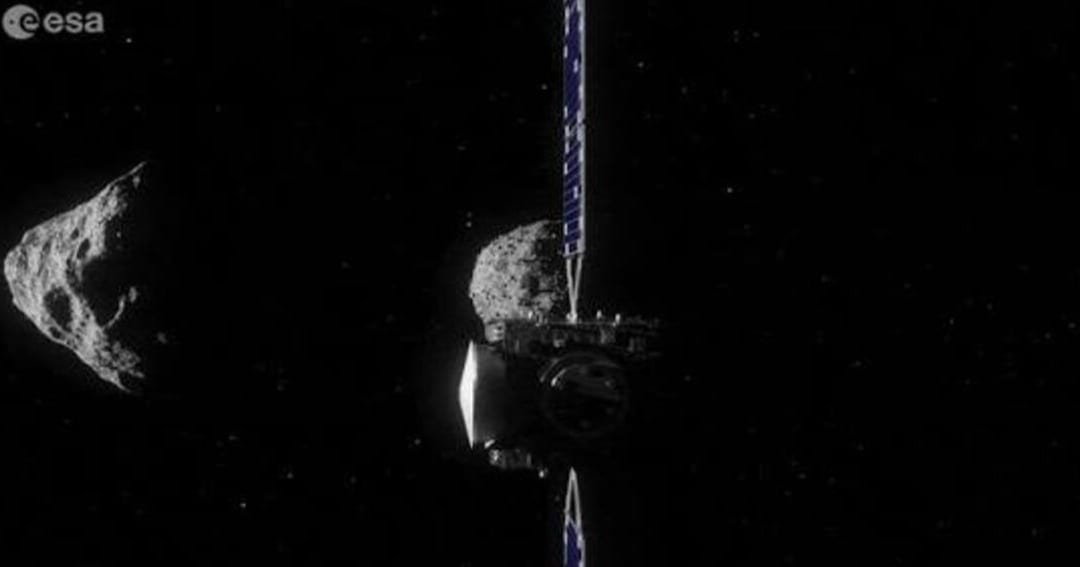
Chinese space probe travels 621 million miles over 400 days to study an asteroid, shares photo
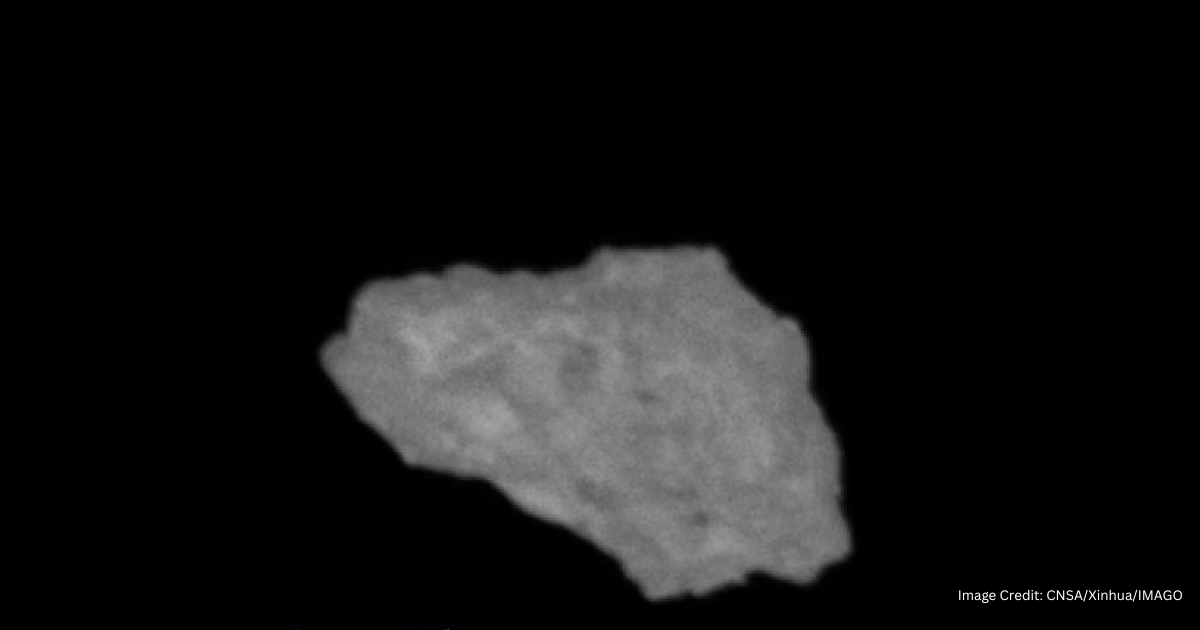
The China National Space Administration (CNSA) announced on July 6 that the Tianwen-2 spacecraft had reached a distance of 12.42 miles (20 kilometers) from asteroid 2016 HO3, also officially known as Kamo'oalewa. After launching on May 29, 2025, from the Xichang Satellite Launch Center, the probe travelled 621.3 million miles (1 billion kilometers) to rendezvous with the asteroid, which looks like a rugged rocky mass against black space in a photo that the space agency has also released this week.
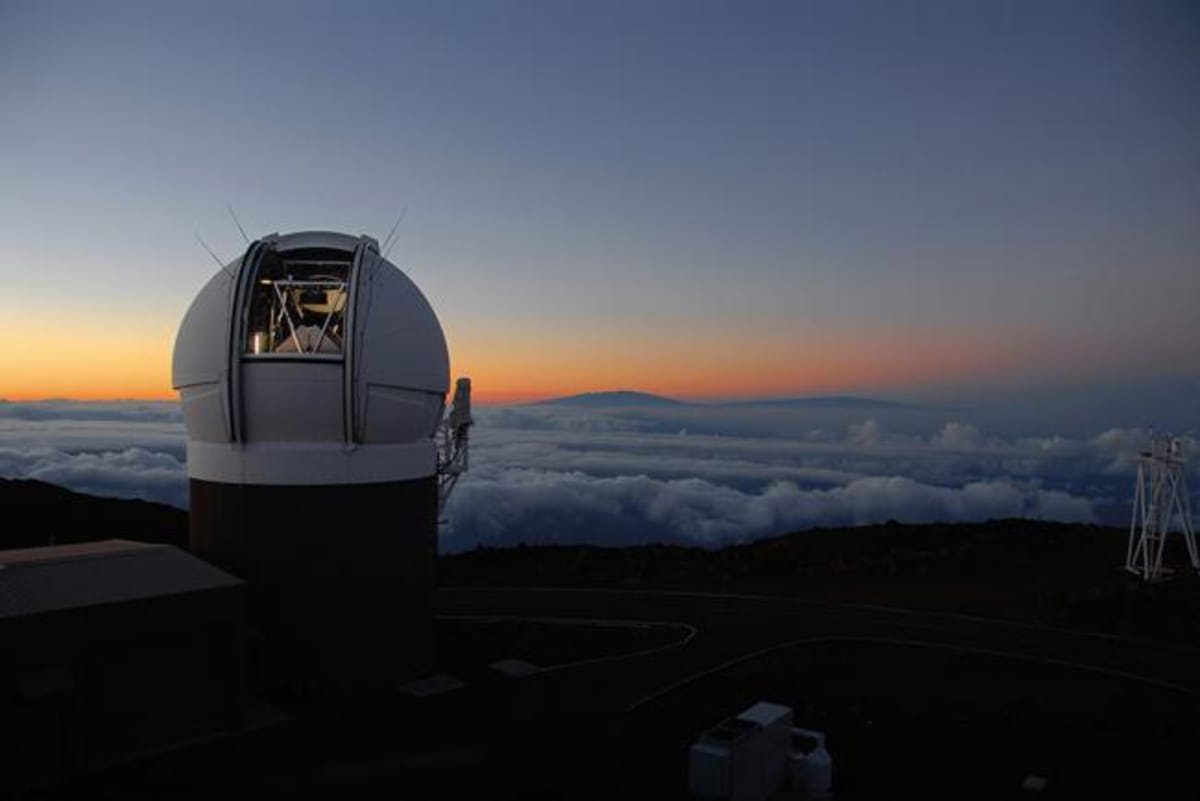
The Pan-STARRS 1 asteroid survey telescope on Haleakala, Hawaii, operated by the University of Hawaii's Institute for Astronomy, first spotted 2016 HO3 more than a decade back on April 27, 2016. The asteroid orbits the Sun and also appears to revolve around Earth. However, it is not a true satellite of Earth, but rather a near-Earth companion. This means that the asteroid never ventures too far away from our planet. Instead, it loops around Earth as they both go around the Sun, leading experts to classify it as a quasi-satellite.
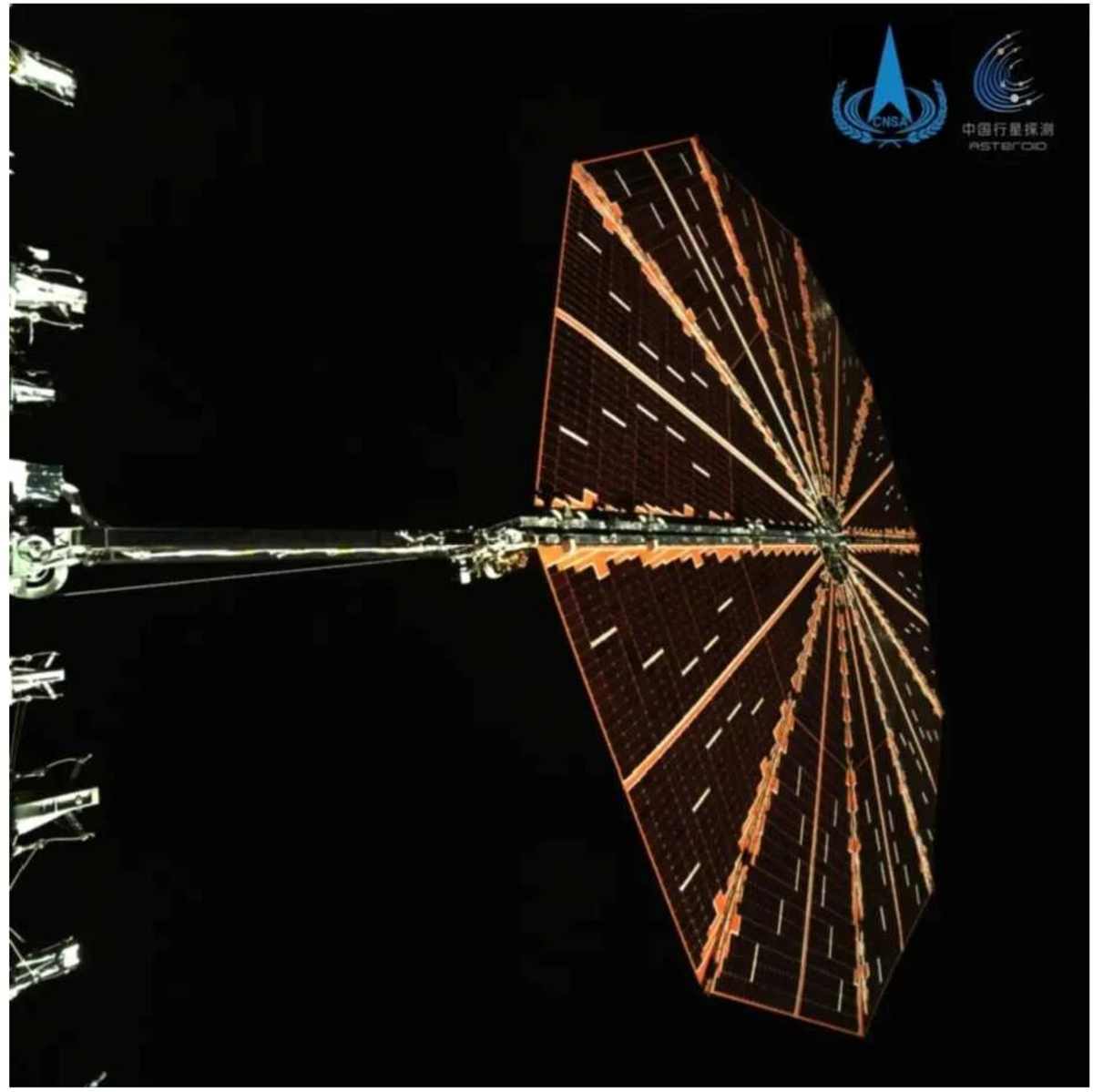
Another asteroid, named 2003 YN107, maintained a similar orbital pattern for more than a decade before shifting its trajectory and leaving Earth's vicinity. But 2016 HO3 has stayed locked in a dance with us ever since it was discovered. According to calculations by experts from NASA's Center for Near-Earth Object (NEO) Studies at the Jet Propulsion Laboratory in Pasadena, California, 2016 HO3 has been a stable quasi-satellite of Earth for almost a century, and it will remain Earth’s companion for centuries to come.
This long-term stability will allow researchers to study it closely for years. For the moment, the Chinese probe has gathered imaging data of the asteroid as it has approached. The team also used optical navigation data procured as the probe neared the space rock. This helped them reduce the positional error—previously determined solely by ground-based observations from hundreds of miles away—to the order of just a few miles.
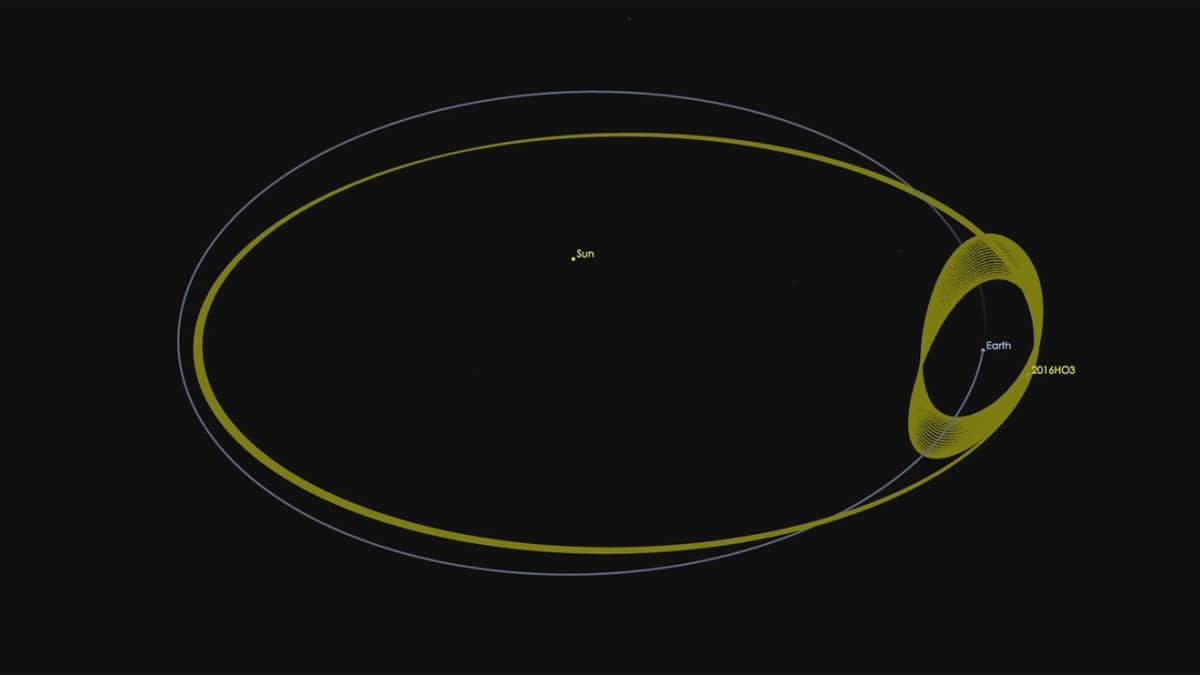
During a journey that lasted for 400 days, the probe carried out important deep-space maneuvers and mid-course corrections to reach its target. Just one month ago, on June 6, the spacecraft detected the asteroid for the first time. By June 7, it arrived at a distance of 18,641 miles (30,000 kilometers) from the object and applied capture control, achieving a coplanar flight with the stony straggler.
By June 19, the probe approached even closer, reaching a distance of 1,242 miles (2,000 kilometers) from the asteroid. The exact size of this object is yet to be determined; it is possibly larger than 40 meters and smaller than 100 meters, according to an estimate by the Jet Propulsion Laboratory. The Chinese probe, which is currently catching a close-up glimpse of the asteroid, will soon provide definitive answers about its size. After landing on the object, the probe will carry out detailed scientific explorations, unveiling the asteroid’s shape, chemical composition, and internal structure, before eventually collecting samples to return to Earth.
More on Starlust:
What would really happen if an asteroid hit Earth today—and is NASA ready?
A 'potentially hazardous asteroid,' about a mile wide, is set to pass close to Earth on June 27