Scientists find AI can be fooled into detecting false signs of alien life
When NASA's Perseverance rover completed its first artificial intelligence-directed drive on Mars last December, it highlighted just how much machine learning is already used in planetary exploration. But a new study by Ankit Gupta and Christoph Adami at Michigan State University (MSU) suggests that relying on AI to search for extraterrestrial life could come with a massive blind spot. They show that existing AI models can be fooled into detecting biosignatures when none actually exist. This not only raises the possibility of generating false positives but could also spell disaster for upcoming multibillion-dollar space missions. The researchers will present their findings at the 2026 Conference on Artificial Life in Waterloo, Canada, this August.

Astrobiologists are pinning their hopes on current and future NASA missions to look for life on Mars and the icy moons of Saturn and Jupiter. Many believe AI can provide the analytical breakthrough needed to detect signs of extraterrestrial life. While AI algorithms are already used to autonomously navigate rovers across the Martian surface, scientists have yet to find a definitive biosignature. “There is no one smoking gun biosignature that could be used to say there's life out there. But there are certain universal features that are pretty good indicators,” Adami, a core faculty member in MSU’s ecology, evolution, and behavior program, said in a statement. “One of them is that life needs to encode information."
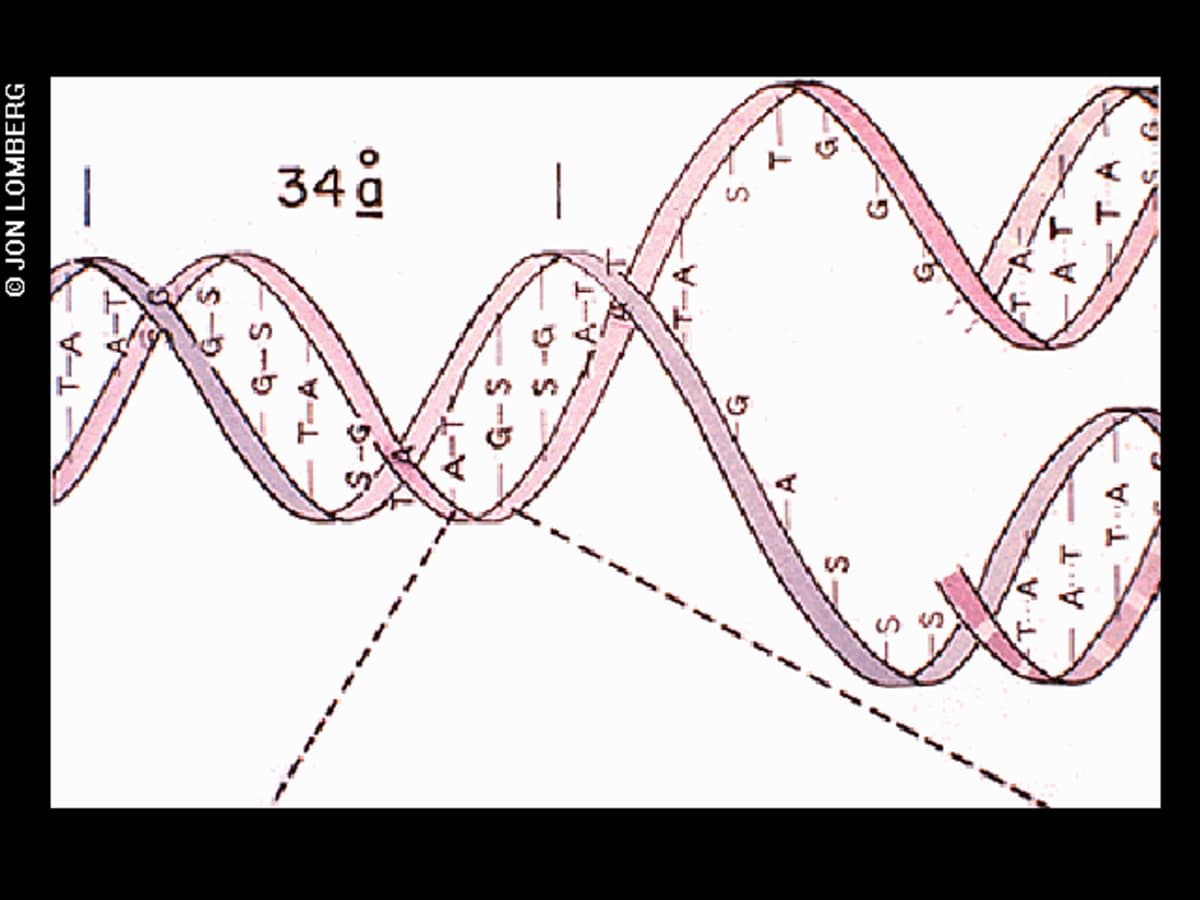
One such feature is the ability to store and replicate that information. Living organisms on Earth use chain-like molecules, like DNA, to carry the genetic instructions necessary for life and replicate themselves. To investigate whether AI could recognize these self-replicating signatures, researchers turned to an unusual laboratory—not a microscope, but a computer simulation called Avida. Using this software, they generated artificial forms of "digital life." Just as the genetic code in biological organisms mutates and accumulates errors over time, the code in these digital organisms copied itself and gained errors. Out of the tens of thousands of digital organisms generated, some contained the instructions to replicate, while others did not.

Next, the team used both types of digital organisms to train a neural network to differentiate between the two. Initially, the AI achieved an impressive 99.97 percent accuracy, suggesting that machine learning might indeed become a powerful ally in the search for life beyond Earth. However, when researchers exposed the network to unfamiliar examples, its high confidence quickly became a liability. By altering just one instruction at a time in the computer code of a non-replicating organism, the team deceived the AI into misclassifying it as self-replicating. "No matter what sequence of commands we started with, we were able to fool the AI 100% of the time," said Gupta, a doctoral student in computer science and engineering at MSU. In the next phase of their research, the team plans to expose the AI to real-world data to explore just how easily it can be deceived outside of a simulation.
More on Starlust:
Could scientists have missed signs of alien life? Study highlights risk of 'false negatives'