Four dead stars discovered not too far from Earth stun scientists

For years, our cosmic neighborhood has been considered to be a familiar patch of space where few surprises are expected. Now, a team from the University of Warwick and the University of Colorado Boulder has stunned the astronomy community by discovering four previously hidden white dwarf stars quietly orbiting their brighter red dwarf companions within just 65 light-years of Earth. The discovery, published in Monthly Notices of the Royal Astronomical Society, is the first direct observation of these elusive stellar companions and a reminder that even our own cosmic neighborhood can surprise us from time to time.
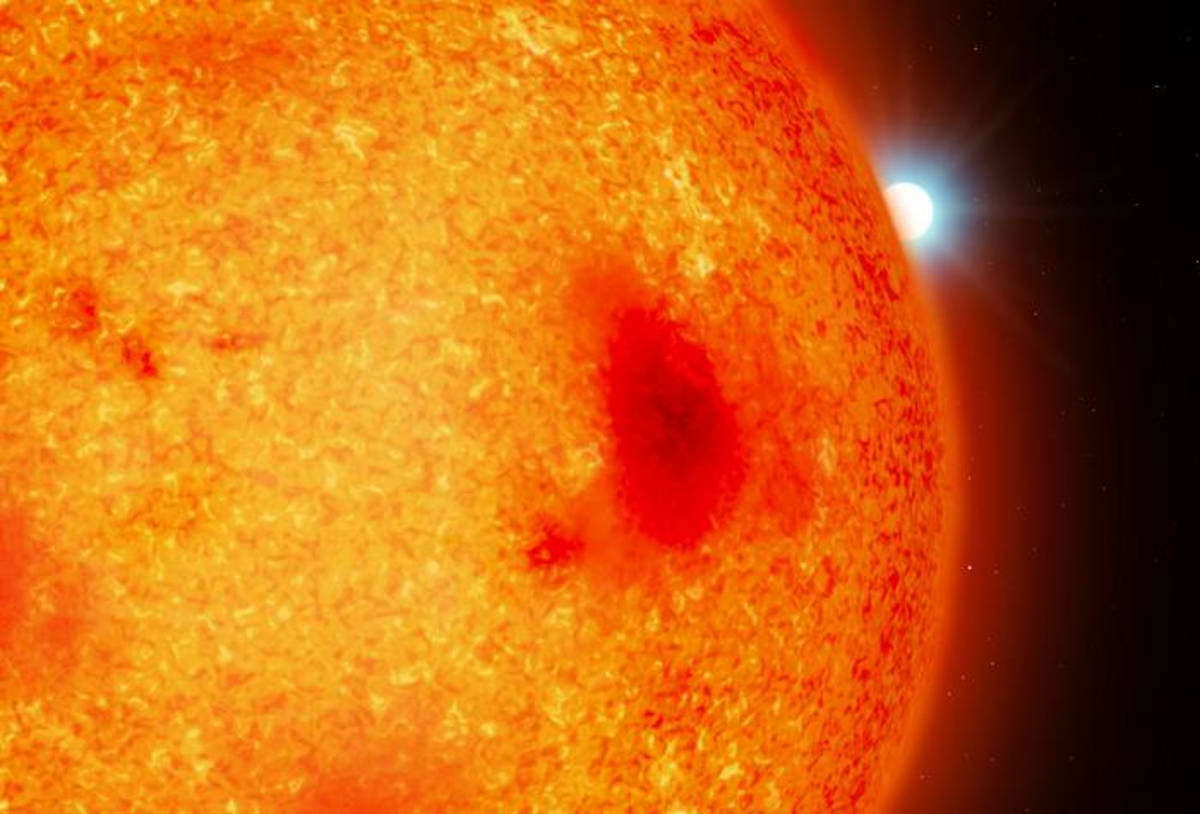
When stars with initial masses between around 80% and ten times that of the Sun run out of their nuclear fuel, they shed their outer layers, collapsing into white dwarfs with Earth-sized stellar cores. Ordinarily, nearby white dwarfs are relatively easy to identify. But these four had been overshadowed by their brighter red dwarf companions. These stars’ visible light overwhelmed the faint glow of the white dwarfs. Viewed from Earth, they appeared to be single-star systems and eluded detection despite decades of observation.

In a statement, first author Dr. Mairi O’Brien, Research Fellow, University of Warwick, said, “Nearby isolated white dwarfs are usually easy to find, but we couldn't see these four stars directly in visible wavelengths because their red dwarf companions were drowning out their light. It's a reminder that even in our own cosmic neighborhood, we can still find surprises if we look in the right way, at the right wavelengths.” Clues to the presence of the hidden white dwarf stars came not from their light but from tiny shifts in the motion of their brighter partners. The researchers noticed that several nearby red dwarfs exhibited a subtle back-and-forth movement known as a radial velocity wobble. This indicates the presence of unseen companions exerting a gravitational pull. To solve this puzzle, the team used the ultraviolet spectrograph of the Hubble Space Telescope.

White dwarfs are usually visible in ultraviolet light. But red dwarfs often make detection difficult since their flares mimic the ultraviolet signature of a white dwarf. Using specially developed custom calibration techniques, the researchers successfully separated genuine white dwarf emissions from stellar flare activity, finally revealing the four hidden stars. Of the four binary systems, one stands out. Known as G 203-47, the binary system lies just 25 light-years from Earth, making its white dwarf the ninth-closest known to the Sun. However, its presence was only confirmed 27 years after its initial radial wobble observation.
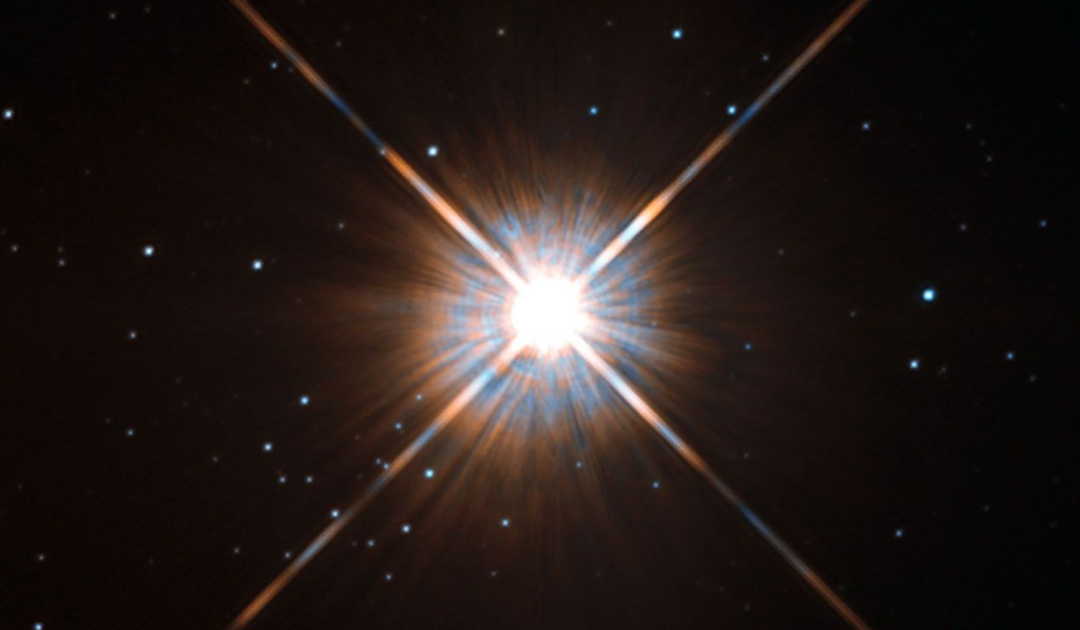
What's also unusual is that the red dwarf completes one orbit around the white dwarf every 14.9 days, while taking more than 100 days to complete one rotation. They should be tidally synced like the Earth-Moon system, with one side of the Moon permanently facing away from Earth, but the red dwarf happens to rotate far too slowly for that. This indicates that the binaries may have had different histories, where some got tidally locked due to violent interactions, while others experienced much gentler encounters. What's perhaps even more interesting is that more such binaries could be hovering in our cosmic neighborhood. “Only about 30 per cent of red dwarfs within 20 parsecs have been systematically surveyed for hidden white dwarf companions,” said Professor Pier-Emmanuel Tremblay, Astronomy and Astrophysics Group, University of Warwick. “We think there could be as many as 9 or 10 additional binary systems in our local stellar environment that we haven’t found yet.”
More on Starlust
NASA's James Webb cuts through dust to reveal 16.5 million never-before-seen stars in Cigar Galaxy