Could a world trapped in endless day and night still host life? Here's what scientists found
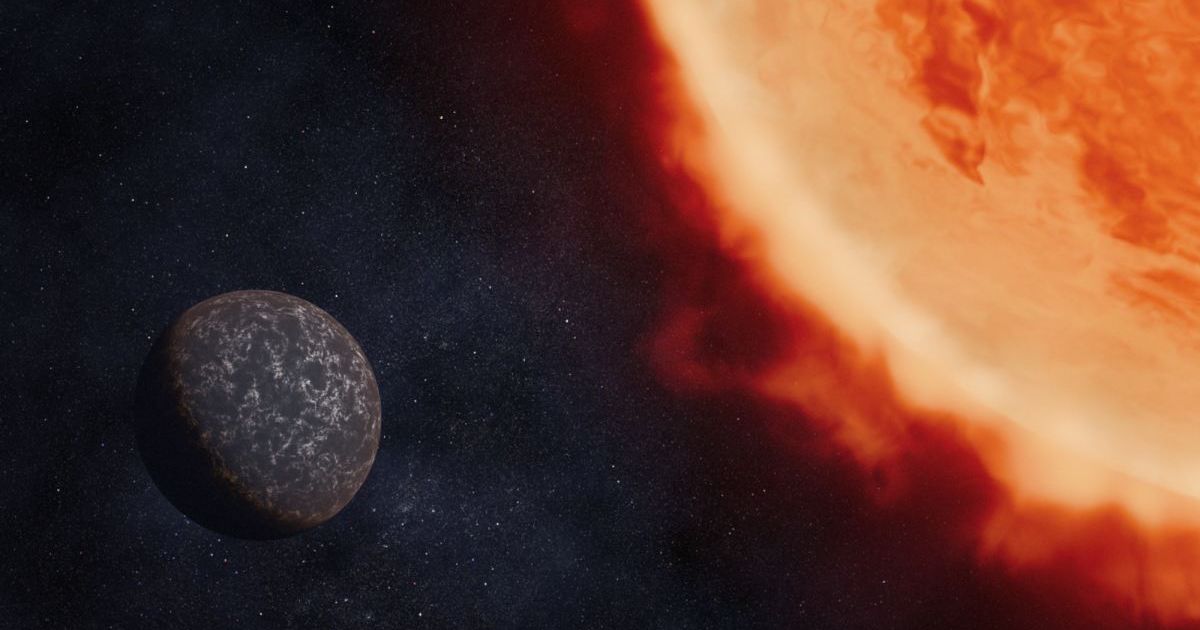
In 2019, NASA discovered a super-Earth exoplanet (LHS 3844 b) 48.5 light-years away that is stuck in a permanent split. Its one side is locked in an endless day, while the other is frozen in permanent night, cold enough to reach absolute zero (zero Kelvin). Scientists assumed that such conditions were simply too hard to support life. But now, a team of researchers has studied the planet’s surface using a working lab model. The result suggests that this world might not be as lifeless as long assumed. The findings have been published in the journal Nature Communications.
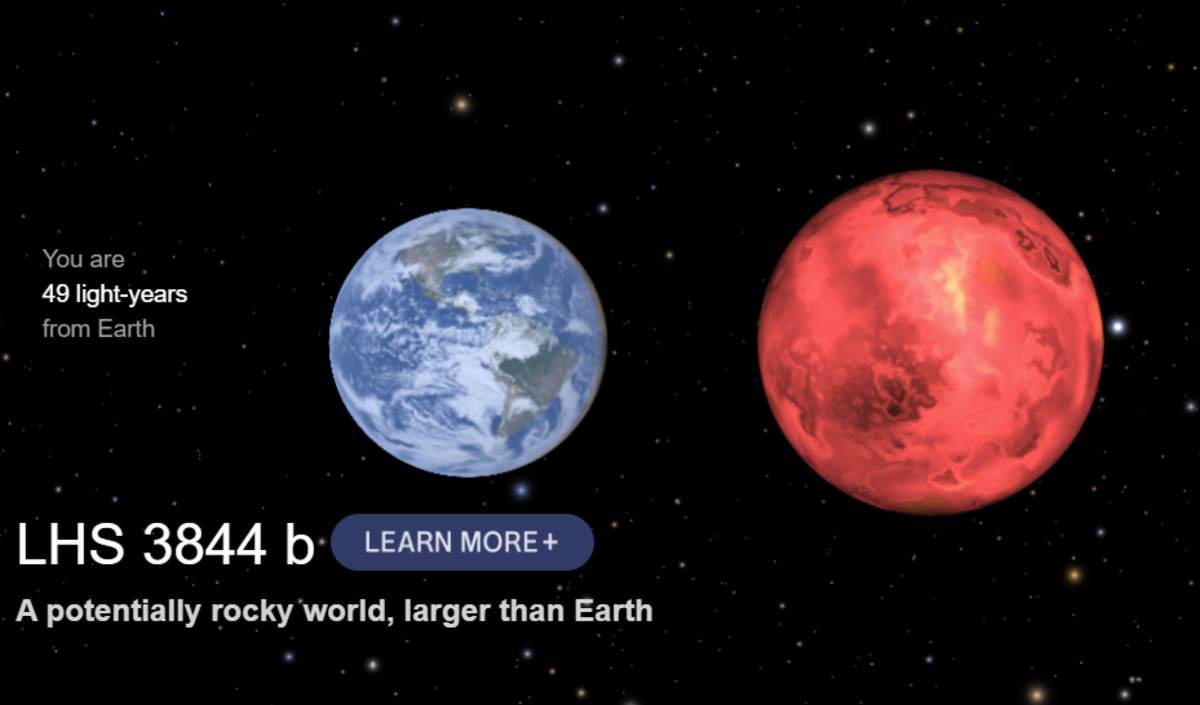
What makes this exoplanet so extreme?
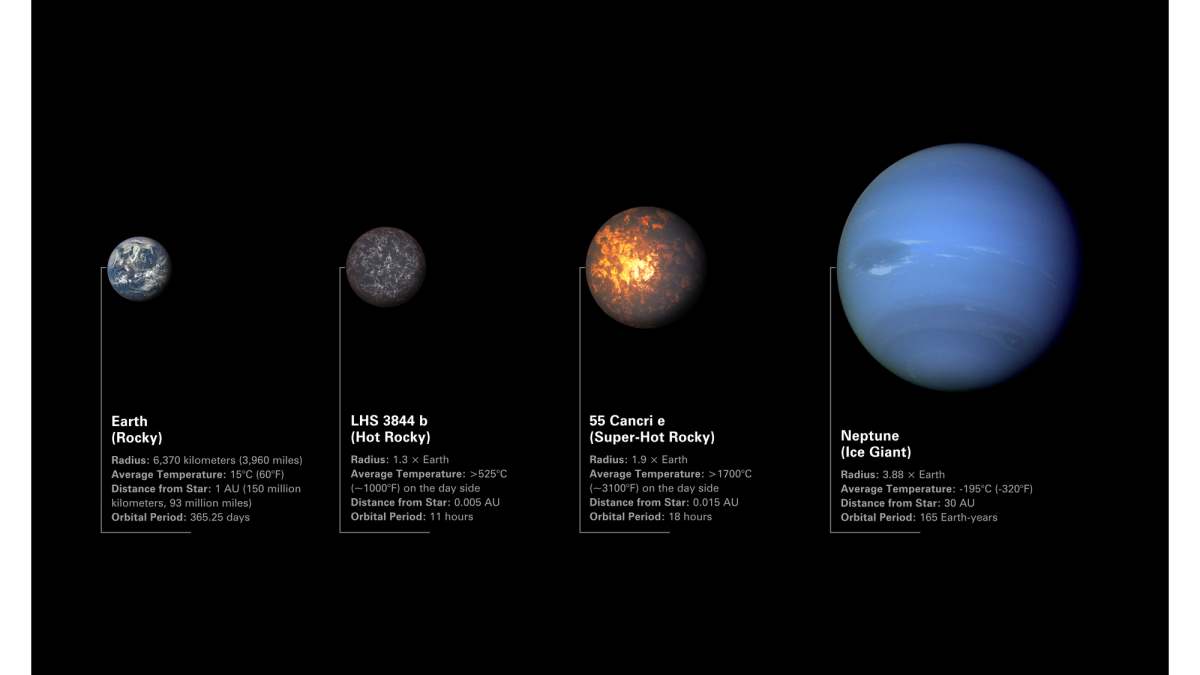
The planet LHS 3844b is slightly larger than Earth and orbits a small red dwarf star. Because the speed of its axial spin matches that of its orbit, the same side always faces its star. Explaining this, Daisuke Noto, a postdoctoral researcher in Hugo Ulloa's Penn GEFLOW Lab at the University of Pennsylvania, said, "Many celestial bodies, like moons and planets, that are very close to their parent stars, are what we call tidally locked. Meaning, as they spin around on their axes and orbit around their parent stars, those rates and frequencies match, leading to the phenomenon of us seeing only one side of our Moon."
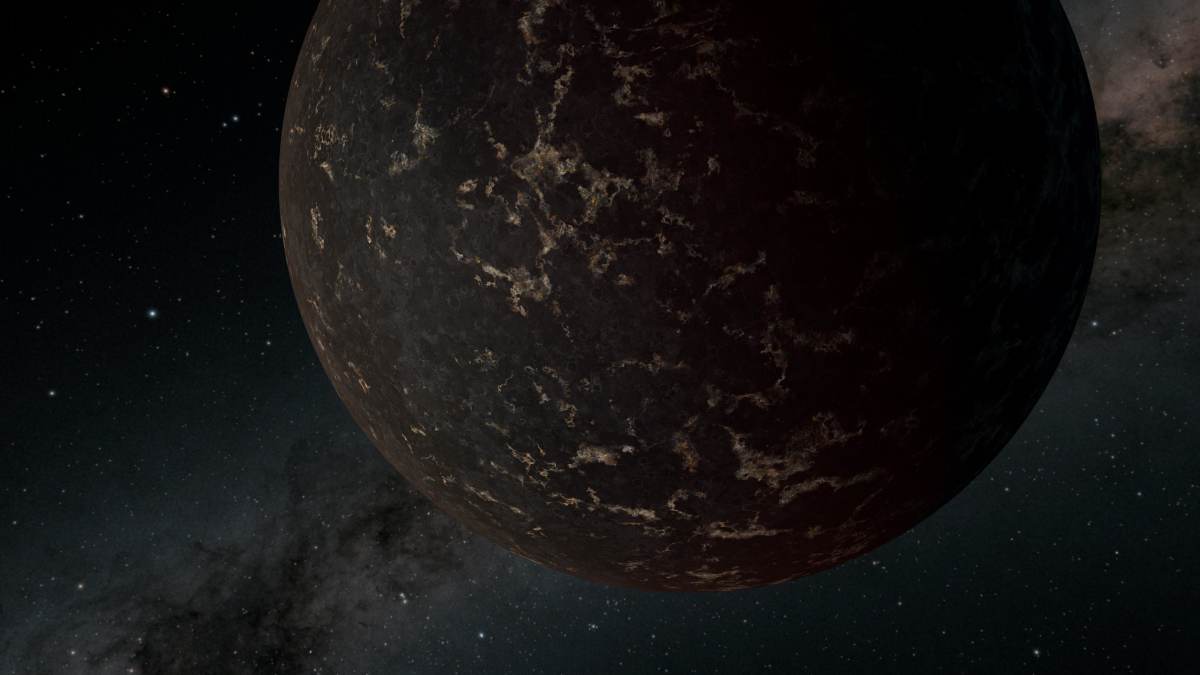
On LHS 3844b, the locking creates a day side that reaches 1,000 to 2,000 Kelvin and a night side with a temperature of absolute zero. "Just looking at the extreme temperatures on the day and night sides, like 1,000–2,000 Kelvin on the day side and absolute zero on the night side, might lead one to conclude these exoplanets are too harsh for life. But," said Noto, "life might find a way." Writing in Nature Communications with colleagues from the Japan Agency for Marine-Earth Science and Technology and Hokkaido University, Noto's team argued that these exoplanets "may be more tolerant of sustaining life as 'tidal locking' can contribute to maintaining moderate thermal environments locally by distributing heat flux laterally."
How did scientists study a planet so far away?
"Building an actual exoplanet in the lab wasn't in the budget," Noto told Penn Today, so the group filled a tabletop-sized tank with glycerol and mixed in crystals that shift hue with temperature. Four thermostats around the tank's edges recreated the hot-and-cold split found on a planet like LHS 3844b, and the shifting colors let researchers track exactly how heat moved through the fluid.
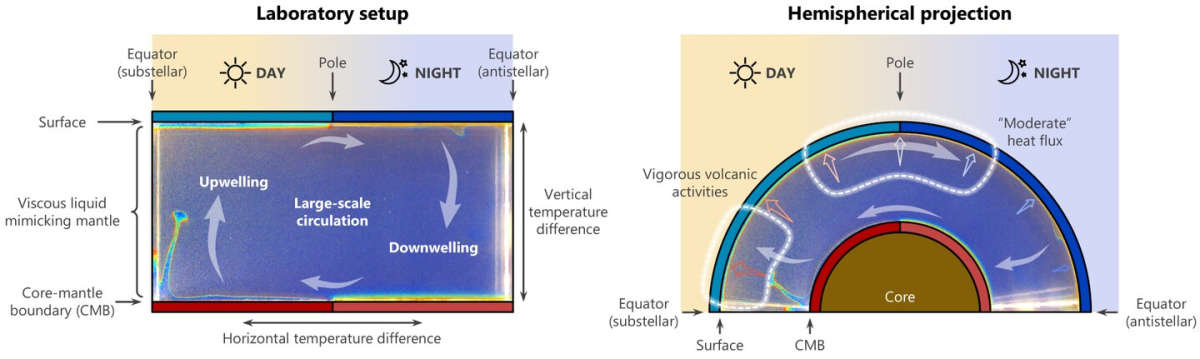
The research team found that the mantle flow followed one loop. The hot materials rise on the day side, drift across the top, cool, then sink on the night side before cycling back around. "It's not chaotic like Earth's mantle. It's slow and steady. Predictable. Kind of boring—but in a good way," Noto said. They also noted mushroom-shaped plumes occasionally rose from the tank's base, but unlike Earth's shifting hotspots, these stayed fixed in place. The heat transport measurements, known as Nusselt numbers, came out close to Earth's own. This suggests that some tidally locked exoplanets could have localized geothermal conditions capable of supplying the ingredients life needs, especially in their mid-latitudes.
Noto suggests that this continuous flow of internal heat could affect a planet's liquid core and potentially generate magnetic fields different from Earth's. "That's something we couldn't test in this experiment," he said, "but it's an exciting direction for future work." Commenting on what’s ahead, Noto added, "We are planning to further extend the experimental methods to delve deeper into different systems on our planet in different contexts. The possibilities are, quite literally, out of this world."
More on Starlust
Oxygen on exoplanets is not necessarily a sign of life: A new study delves deeper into the problem
Will Earth survive the Sun’s death? Here’s what a new study found