First 'true sugar' molecule found in interstellar space could reshape what we know of life's origins
Sugars are key molecules in prebiotic chemistry and the emergence of life, and they may have come from space. For the first time, scientists have discovered an abundant, true sugar molecule in interstellar space, a finding that bolsters this idea. This discovery, reported in a paper published in Nature Astronomy, could reshape our understanding of how life’s ingredients might have been ferried to early Earth billions of years ago.
From microbes to humans, sugars are essential molecules for every living organism. For decades, scientists have wondered about the origin of sugars on Earth. On the early, turbulent Earth, conditions were not favorable to churn out sugar molecules in large amounts, with laboratory experiments showing insufficient amounts under prebiotic conditions. Previous studies, however, have detected sugars such as ribose and glucose in meteorites and even on the asteroid Bennu. But until now, no true, complex sugar had been detected in the interstellar medium.
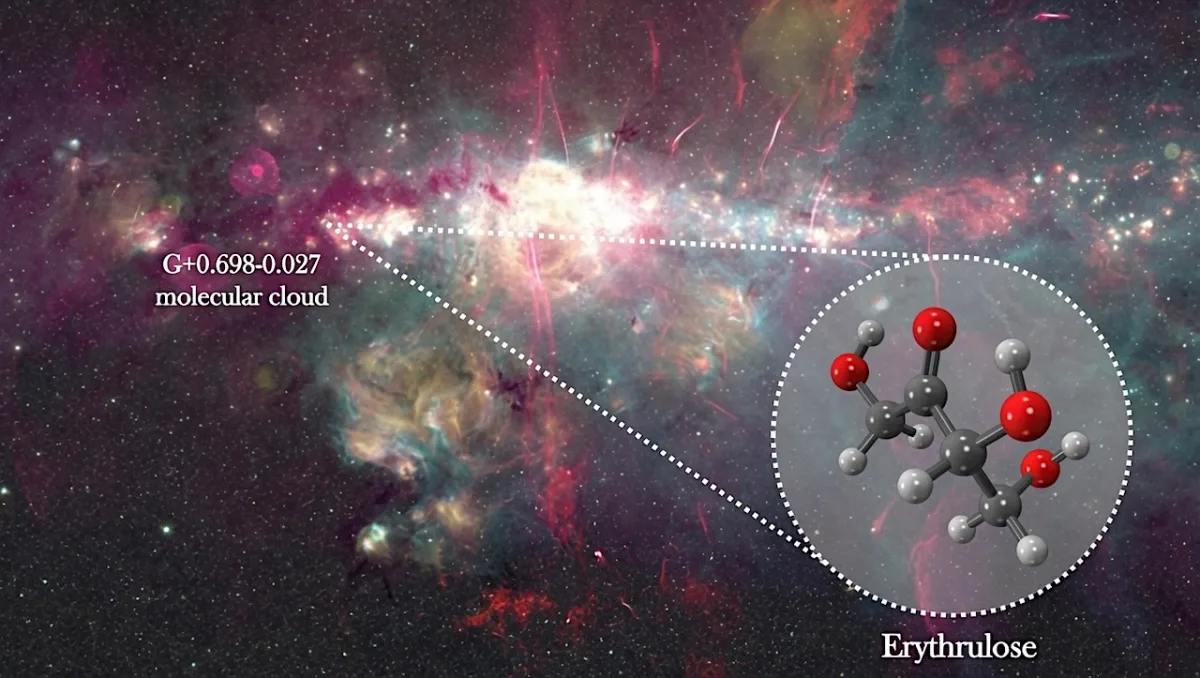
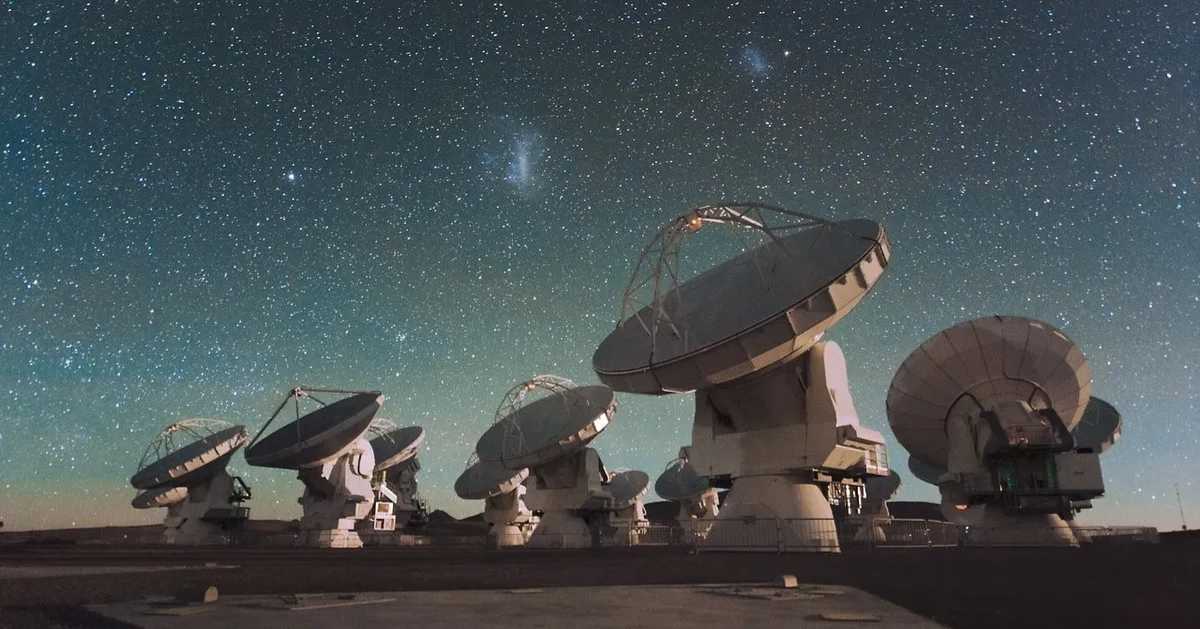
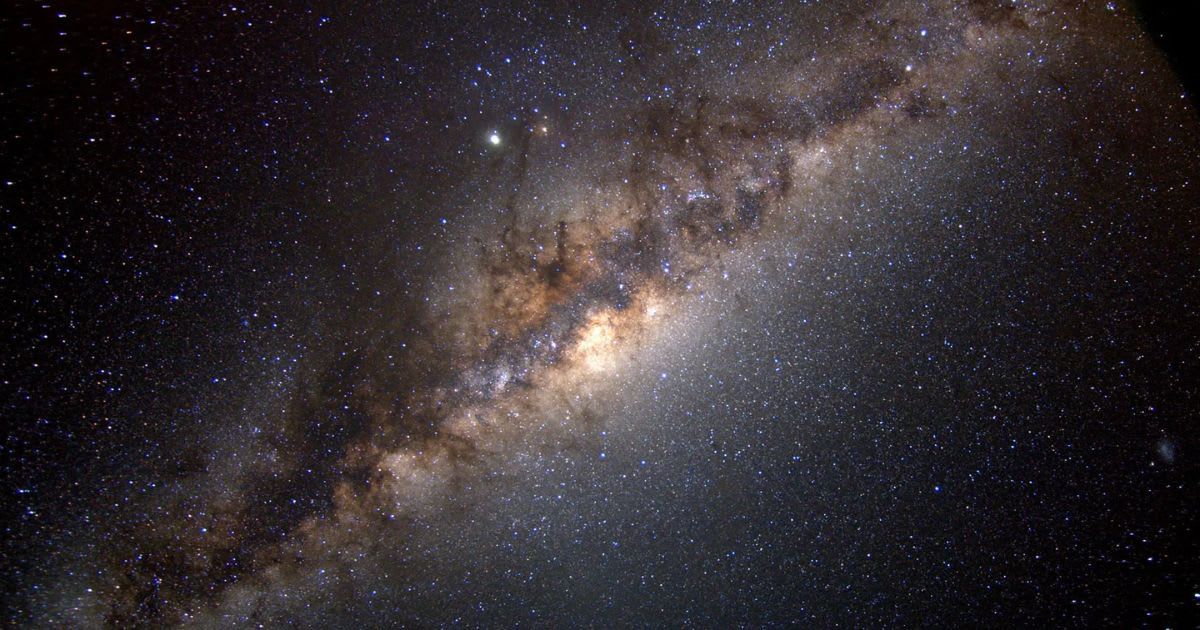
The international research team, led by researcher Izaskun Jiménez-Serra at the Center for Astrobiology (CAB), CSIC-INTA, in Torrejón de Ardoz, Spain, detected the sugar using two of Europe’s most powerful radio telescopes—the 40-meter Yebes telescope and the 30-meter IRAM telescope, both located in Spain. While surveying the emissions from a molecular cloud known as G+0.693−0.027 lying near the center of the Milky Way, they discovered a four-carbon sugar whose emissions matched those of erythrulose measured in laboratory experiments. This cloud is known to be one of the richest molecular reserves in our galaxy.
Erythrulose appears to be at least eight times more abundant than analogous three-carbon sugars, which were not detected in the same cloud. With the help of quantum chemical and astrochemical models, the researchers predict that the sugar forms on interstellar dust grains through the reactions of two-carbon organic compounds such as aldehydes and alcohols. "This finding was unexpected, as the prevailing view in astrochemistry is that interstellar molecules grow in size through the sequential addition of carbon atoms," says Jiménez-Serra, lead author of this work, according to a report by Phys.org.
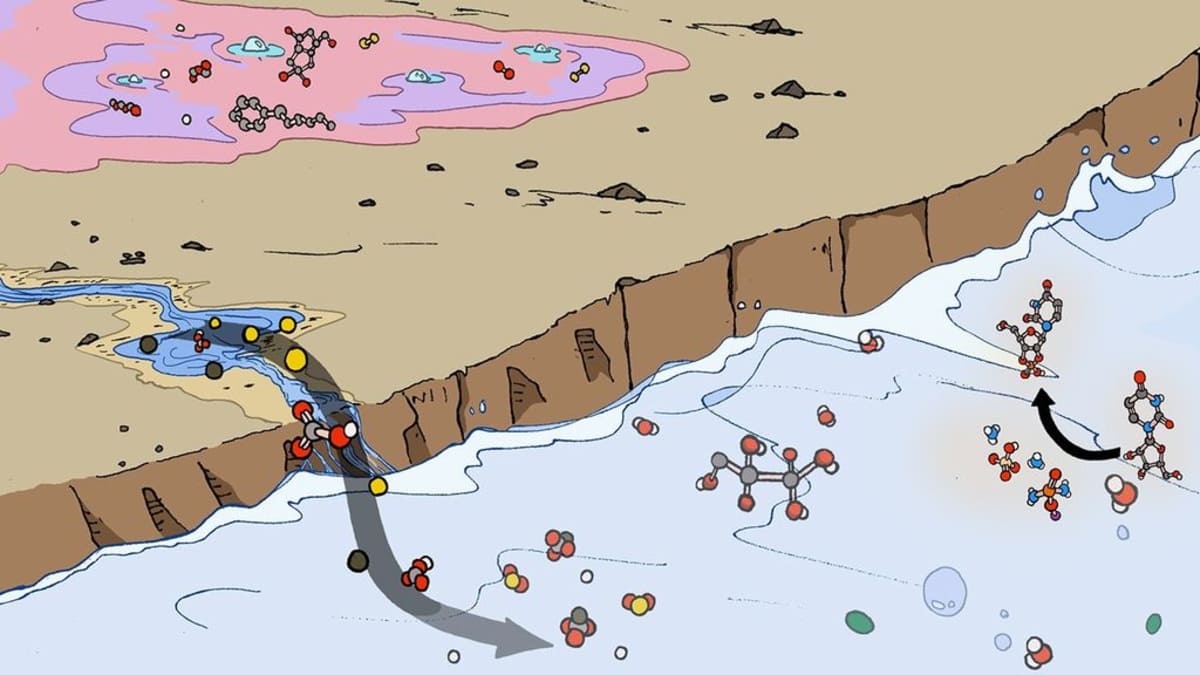
Such an abundance of erythrulose in the molecular cloud allows researchers to estimate that between half a million and fifty million metric tons of this sugar were delivered to Earth during the Late Heavy Bombardment—a chaotic period between 4.1 and 3.8 billion years ago when Earth was repeatedly battered by asteroids and comets. If these estimates are correct, then Earth received a steady supply of crucial prebiotic building blocks, such as complex organic molecules, from space. These deliveries from across the universe could have provided the raw materials for the first metabolic reactions and, eventually, the replication processes that are key to the emergence of life. "The detection of erythrulose is very exciting because it opens up the possibility of discovering in space other sugars such as ribose, which is part of RNA, and other important molecules for the origin of life," says Carlos Briones, co-author of the study.
More on Stsrlust:
After Bennu, scientists find all DNA and RNA building blocks in asteroid Ryugu samples
Scientists find AI can be fooled into detecting false signs of alien life