NASA challenges stargazers to spot Hubble's favorite celestial sights in the August night sky
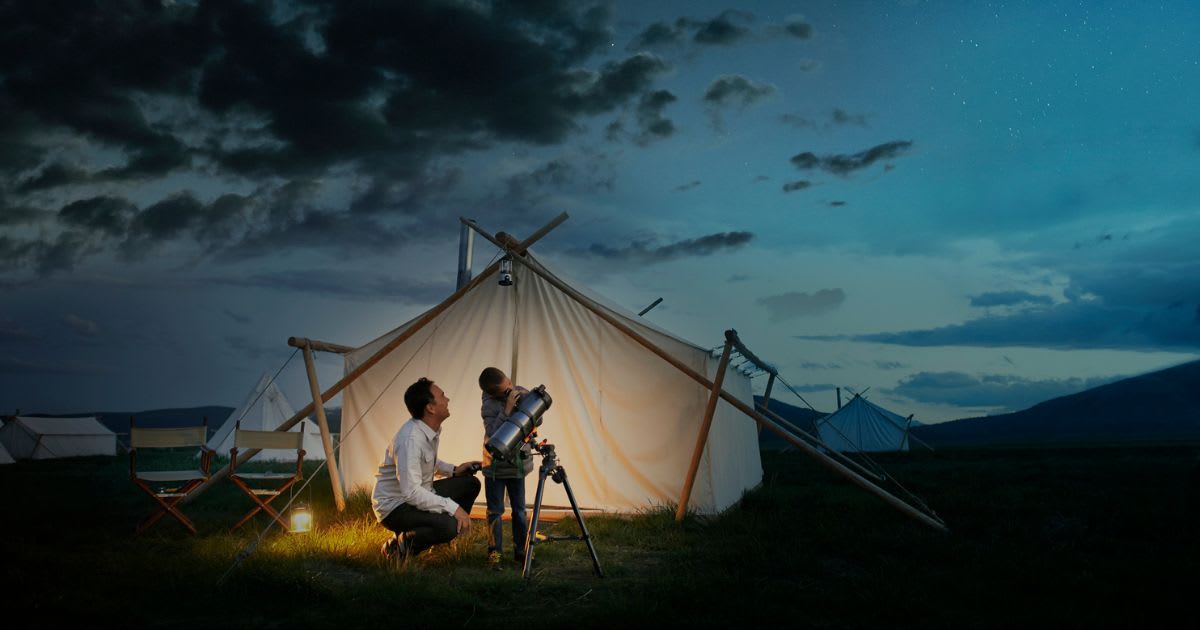
NASA is challenging stargazers to spot some of the celestial wonders that the Hubble Space Telescope has famously imaged in August. NASA announced the "Hubble's Night Sky Challenge" on X and their website, providing a guided tour for observers in both the Northern and Southern Hemispheres. It serves as the perfect opportunity and excuse to step out with your buddies and organize stargazing parties. Stargazers are encouraged to compare their images with that of the Hubble Telescope.
What's up this August? 🔭
— Hubble (@NASAHubble) July 28, 2025
Find out what cosmic objects are part of next month's Night Sky Challenge here: https://t.co/W5gA2Smtem
If you don't have a telescope or binoculars, you can search for a local star party or club here: https://t.co/yAE26glPia pic.twitter.com/QQCltSFM2V
The challenge categorizes celestial objects by their estimated viewing difficulty, ranging from 1 (easiest) to 3 (hardest). It allows stargazers to choose targets that match their experience level and equipment. Objects designated with an "M" are from the renowned Messier catalog, a collection of some of the most spectacular deep-sky objects. Those marked with a "C" belong to the Caldwell catalog, which complements the Messier list with additional noteworthy clusters, nebulae, and galaxies. To maximize your chances of success, it's recommended to consult the list specifically tailored to your hemisphere, as some objects may only be visible from certain latitudes.
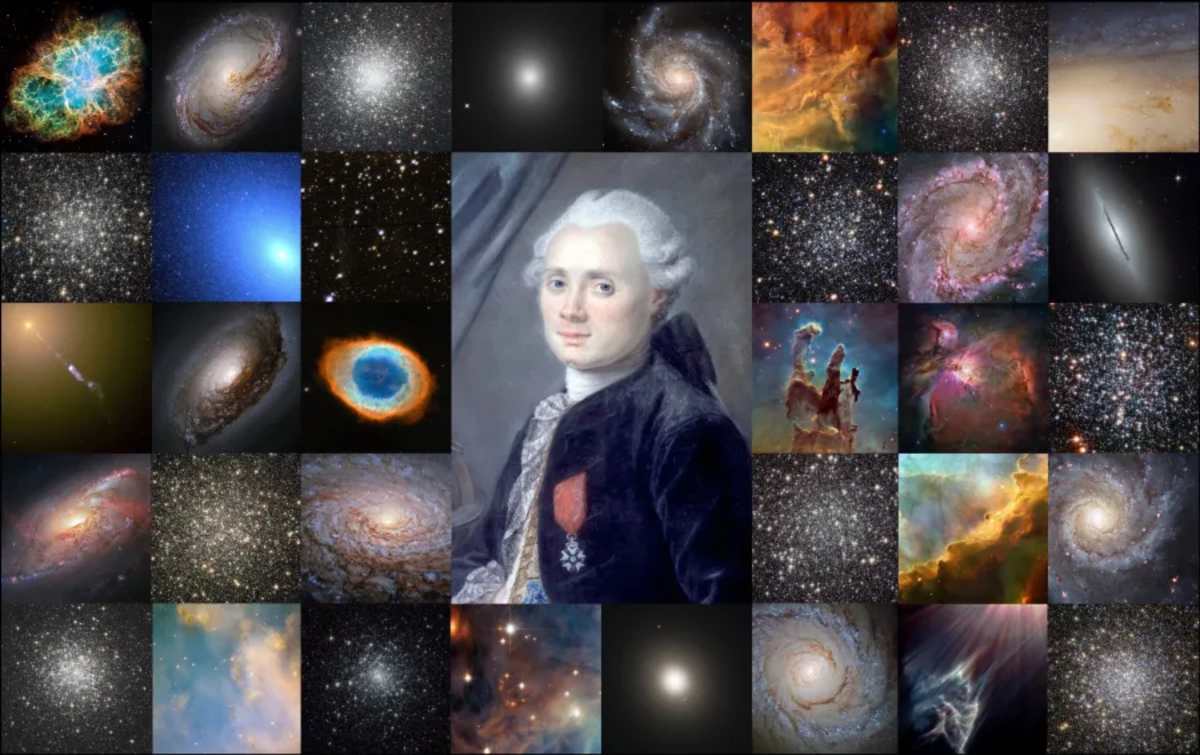
For those in the Northern Hemisphere, the challenge highlights several captivating sights. Among the easiest, designated Difficulty 1, are prominent nebulae and clusters such as M8: the Lagoon Nebula (a diffuse nebula), M11: the Wild Duck Cluster (an open cluster), and M16: the Eagle Nebula (an open cluster combined with a nebula). Also in this accessible category are M22: the Sagittarius Cluster (a globular cluster) and M57: the Ring Nebula (a planetary nebula). Stepping up to Difficulty 2, stargazers can seek out M20: the Trifid Nebula (another diffuse nebula) and C6: the Cat's Eye Nebula (a planetary nebula), offering a slightly greater test of observational skill.

Meanwhile, observers in the Southern Hemisphere are also presented with a rich selection of Hubble's favorite cosmic targets. Similar to the Northern hemisphere, Difficulty 1 includes the readily visible M8: the Lagoon Nebula, M11: the Wild Duck Cluster, M16: the Eagle Nebula, M22: the Sagittarius Cluster, and M57: the Ring Nebula. Additionally, Southern stargazers at this difficulty level can find C86 and C93, both globular clusters. Moving to Difficulty 2, the challenge includes M20: the Trifid Nebula, C78 (a globular cluster), and C101 (a barred spiral galaxy). For those seeking a significant challenge, Difficulty 3 presents C68: the R CrA Nebula (a bright nebula), promising a rewarding deep-sky experience for persistent observers.
This August challenge from NASA offers a fantastic opportunity to engage with the cosmos, especially as NASA's Hubble Space Telescope prepares to mark an incredible 35 years in orbit in 2025, according to NASA Science. Since its launch and deployment in April 1990, Hubble's groundbreaking observations from its low-Earth orbit position, free from atmospheric distortions, have profoundly reshaped our understanding of the universe. Its powerful insights have effectively rewritten astronomy textbooks, delivering iconic images that remain invaluable scientific and cultural assets worldwide.

Dedicated astronomers servicing missions and the continuous efforts of talented engineers on the ground have ensured that Hubble continues to operate in excellent health decades after its initial launch. Its unique capability to observe in ultraviolet, visible, and near-infrared light makes it a vital and complementary partner to other significant missions like the James Webb Space Telescope and the upcoming Nancy Grace Roman Space Telescope, ensuring a comprehensive view of the cosmos for years to come.