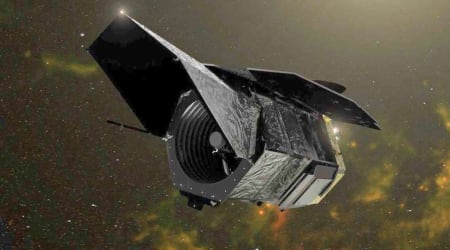
NASA’s second ESCAPADE spacecraft nails a key trajectory maneuver
The maneuver was scheduled for much earlier but was delayed on account of lower-than-expected thrust during burn attempts.
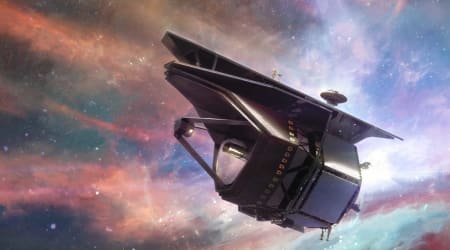
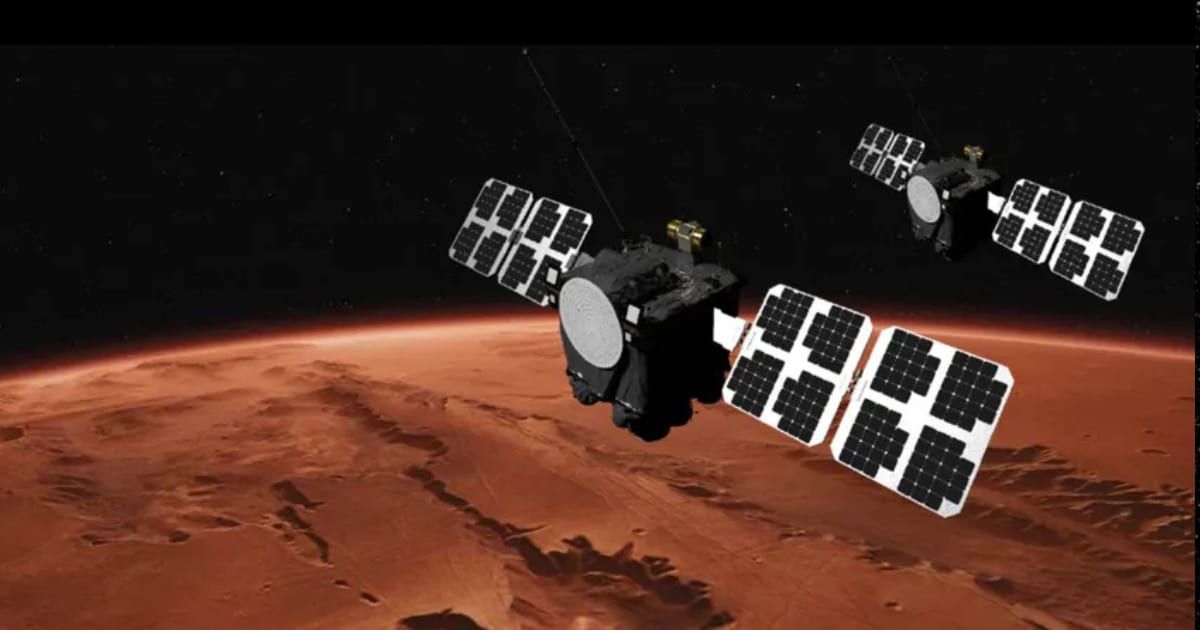
Illustration of the twin ESCAPADE spacecraft orbiting Mars. (Cover Image Source: NASA)

NASA’s ESCAPADE mission has cleared another major milestone as the second of its twin spacecraft successfully completed a crucial trajectory correction maneuver, keeping the mission on course for Mars. According to NASA, on January 6, NASA’s mission operations team carried out the maneuver after postponing an earlier attempt in December 2025. ESCAPADE, short for Escape and Plasma Acceleration and Dynamics Explorers, is made up of two identical spacecraft designed to fly together and study Mars as a coordinated pair.
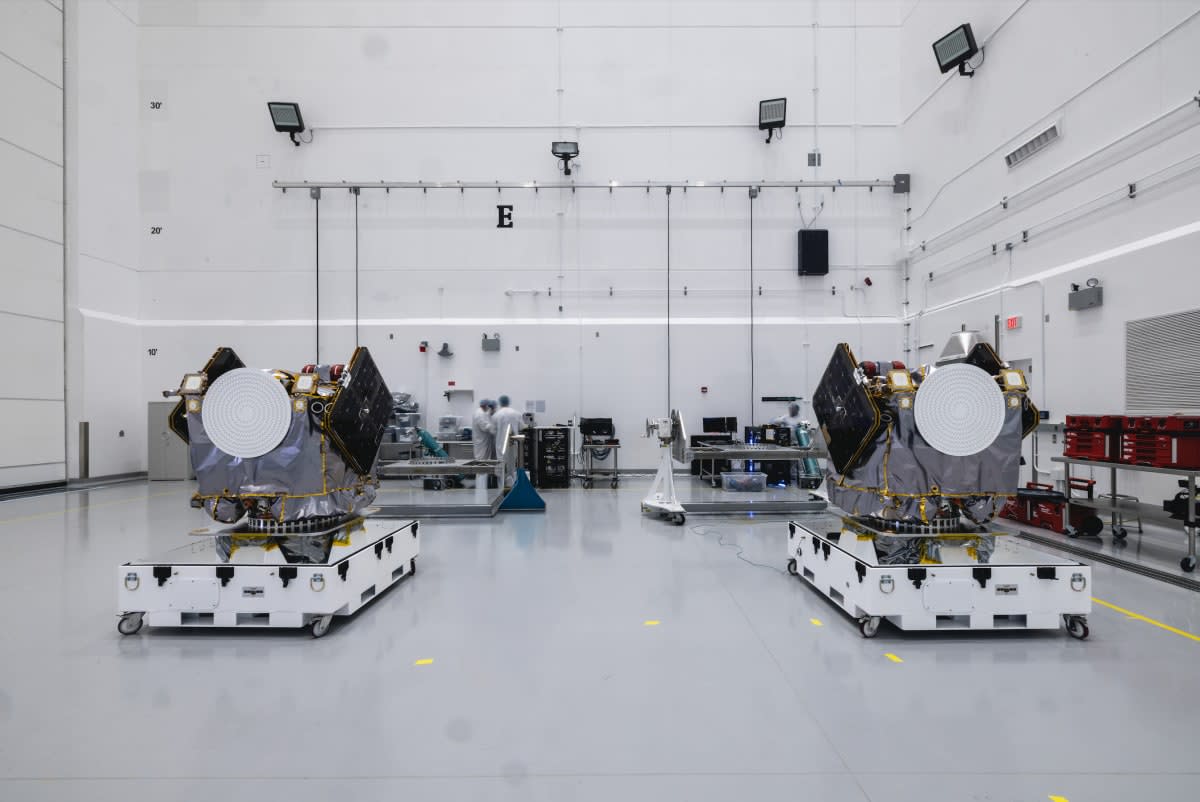
NASA’s two ESCAPADE spacecraft appear inside a clean room at the Astrotech Space Operations Facility in Titusville, Florida, in September 2025. (Image Source: NASA/Rocket Labs)

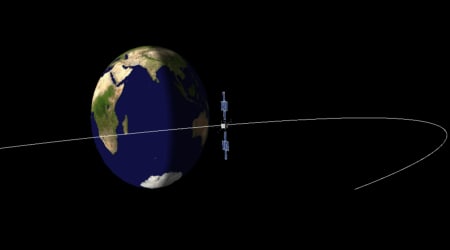
While one spacecraft completed its two trajectory correction maneuvers as planned in December, engineers observed lower-than-expected thrust during burn attempts on December 8 and December 12 for the second spacecraft. Because of this, the team delayed its maneuver to analyze the issue and proceed cautiously. The January 6 maneuver places the spacecraft into what is known as a “loiter” or Earth-proximity orbit. From this position, the spacecraft will circle a stable region of space called Lagrange Point 2, located about one million miles from Earth

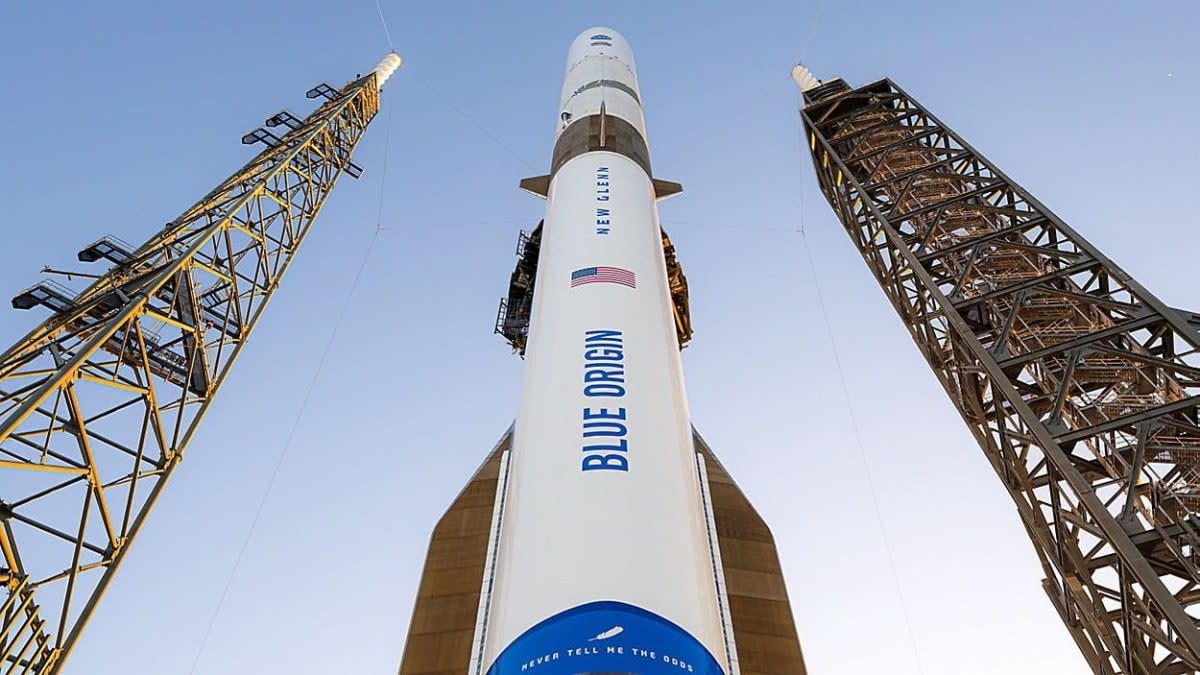
NASA’s twin ESCAPADE (Escape and Plasma Acceleration and Dynamics Explorers) spacecraft sit atop Blue Origin’s New Glenn rocket ahead of launch from Space Launch Complex 36 at Cape Canaveral Space Force Station in Florida. (Image Source: Blue Origin)

In November 2026, both ESCAPADE spacecraft will return for a close flyby of Earth. During this pass, they will use Earth’s gravity to gain speed and redirect their trajectory toward Mars. If all continues as planned, the twin spacecraft will arrive at Mars in September 2027. Once in orbit around Mars, ESCAPADE will begin its primary science mission: studying how the solar wind, a stream of charged particles flowing from the Sun, interacts with the Martian environment. Unlike Earth, Mars does not have a strong global magnetic field to protect it. Instead, it has a unique “hybrid” magnetosphere made up of leftover magnetic fields in the planet’s crust and a weaker magnetic field in its upper atmosphere. These magnetic structures interact continuously with the solar wind and Mars’ thin atmosphere, driving atmospheric escape.
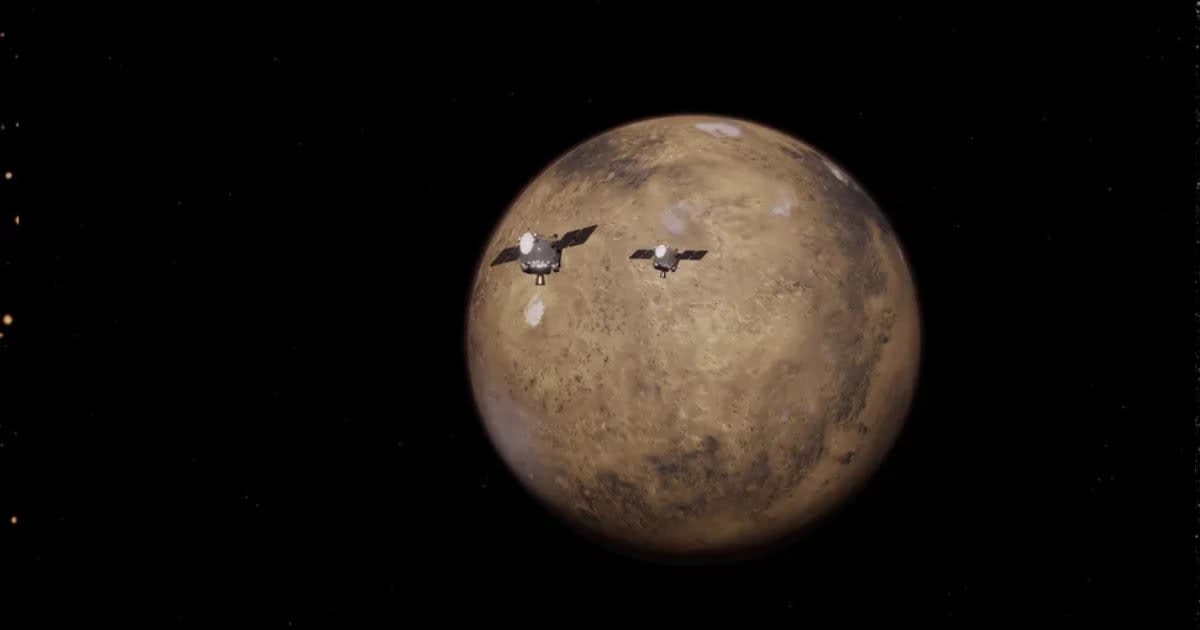
An artist’s concept shows the two ESCAPADE spacecraft at Mars. (Representative Image Source: NASA/Rocket Labs)

ESCAPADE’s twin spacecraft, according to NASA, will orbit Mars at altitudes ranging from about 100 to 6,200 miles. By taking measurements from two locations at the same time, the mission will allow scientists to observe how solar wind energy moves through Mars’ magnetosphere and upper atmosphere in real time. At times, one spacecraft will be upstream in the solar wind, while the other will observe the response inside Mars’ magnetic environment. This two-point approach will help scientists better understand how atmospheric loss happens and how quickly it can change.
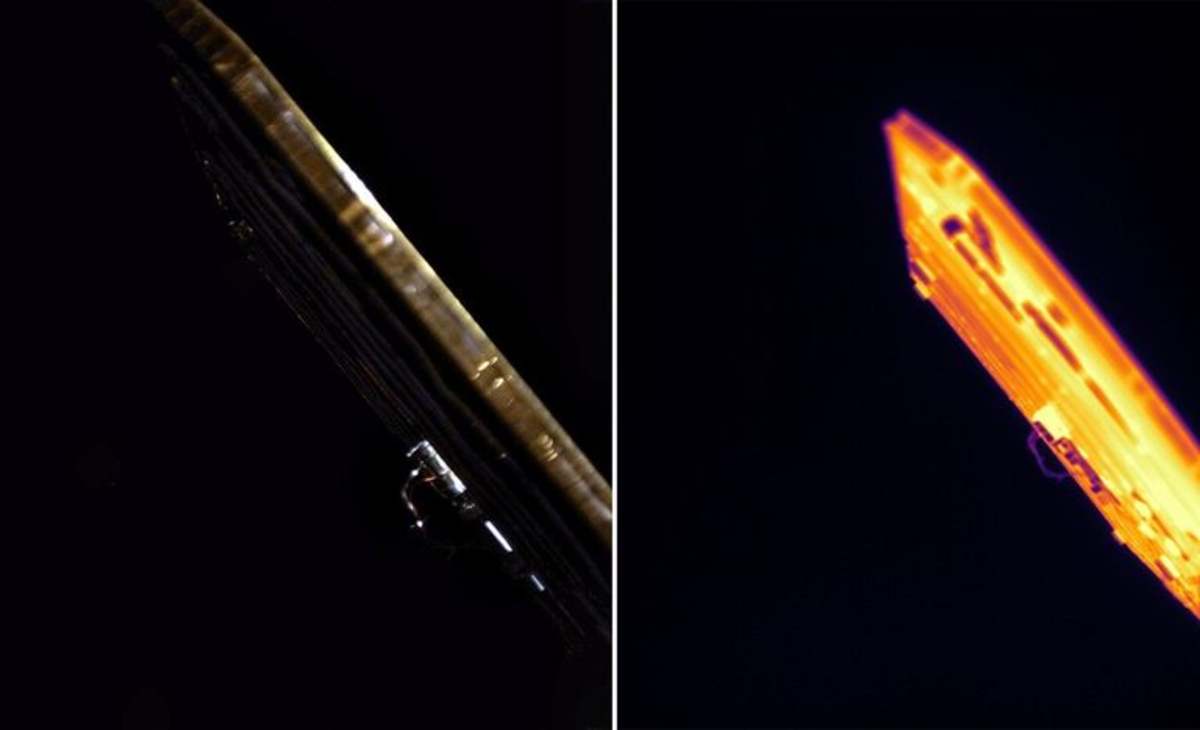
These images show the side of a solar panel on one of NASA’s two ESCAPADE spacecraft. The image on the left is from the spacecraft’s visible-light camera. The image on the right was taken with its infrared camera, showing which parts of the array are warmer (yellow and orange) and cooler (purple and black) (Image Source: NASA/UCB-SSL/RL/NAU-Radiant/Lucint)
These images show the side of a solar panel on one of NASA’s two ESCAPADE spacecraft. (Image Source: NASA/UCB-SSL/RL/NAU-Radiant/Lucint)

ESCAPADE is managed by the Space Sciences Laboratory at the University of California, Berkeley. Key partners include Rocket Lab, NASA’s Goddard Space Flight Center, Embry-Riddle Aeronautical University, Advanced Space LLC, and Blue Origin. By studying how Mars lost its once-thick atmosphere, scientists hope to gain insight into how planetary climates evolve over time. The results could also help researchers better understand the habitability of distant exoplanets and guide the design of future robotic and human missions that must operate in Mars’ challenging space-weather environment.

More on Starlust

China eyes lunar water ice as Chang’e 7 gets ready for the Moon's south pole
Vera Rubin Observatory finds asteroid nearly the size of 8 football fields spinning every two minutes

MORE STORIES

The imaging was done using an instrument that also found changing composition of the comet.
1 day ago
The rover ventured farther west than it had ever been since landing at the Jezero Crater in 2021.
4 days ago
When used in future space missions, it could process huge amounts of data directly in space instead of taking most of the help from Earth.
6 days ago
Called Solar Neutrino Astro-Particle PhYsics CubeSat (SNAPPY), the project launched on May 3, 2026, atop a SpaceX Falcon 9 rocket.
May 8, 2026
The STORIE instrument will be installed on the exterior of the International Space Station, from where it will measure the speed and direction of energetic neutral atoms in the ring current.
May 8, 2026
The new technology, called LESTR, mimics cold temperatures without the use of cryogenic liquids.
May 7, 2026
Part of ESA’s Copernicus program, the constellation allows all-weather, day-night monitoring.
May 5, 2026
New study shows abrasive lunar regolith can boost composites, cutting cost for future Moon missions
Apr 28, 2026
The modified Nikon Z9 was put through space-like conditions to test if it could hold its own in a radiation-heavy environment.
Apr 27, 2026
"This Earth Day, we are reminded that solid evidence is the foundation of effective action to protect our planet." 
Apr 23, 2026