Solar wind from giant coronal hole expected to hit Earth just before 3I/ATLAS' closest approach
A pair of massive solar eruptions, known as coronal mass ejections, was detected on December 16 and is currently on a direct collision course with Earth.
UPDATED DEC 17, 2025
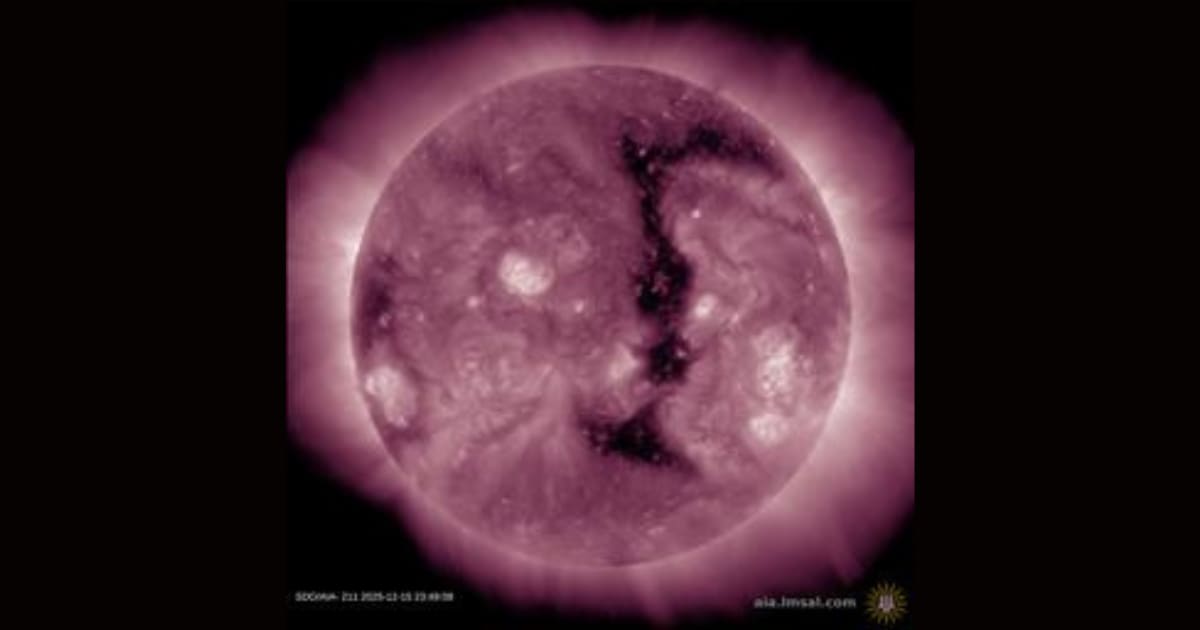
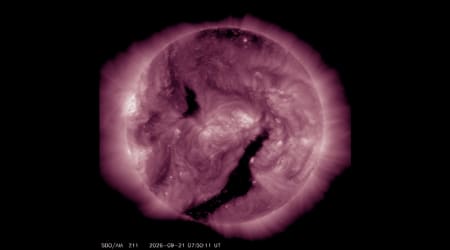
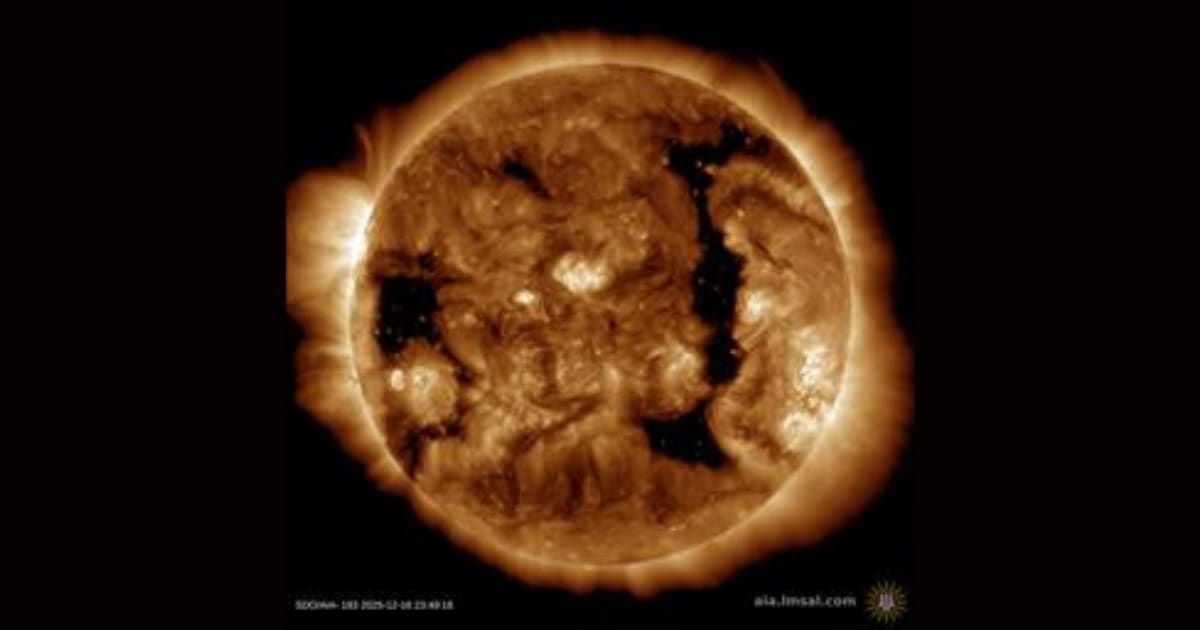
Coronal hole on the outer atmosphere of the Sun, as well as the cooler dense plumes of plasma. (Cover Image Source: Solar Dynamics Observatory (SDO)/NASA/Atmospheric Imaging Assembly (AIA) and Helioseismic and Magnetic Imager (HMI) science teams)

Forecasters have issued alerts for potential geomagnetic storms due to solar material hurtling toward Earth. Two coronal mass ejections—giant bursts of solar wind—were spotted on December 16 and are now racing toward our planet, according to the Space Weather Prediction Center

Coronal hole on the outer atmosphere of the Sun, as well as the cooler dense plumes of plasma (Image Source: Solar Dynamics Observatory (SDO)/NASA/Atmospheric Imaging Assembly (AIA) and Helioseismic and Magnetic Imager (HMI) science teams)
Coronal hole on the outer atmosphere of the Sun, as well as the cooler dense plumes of plasma on December 15, 2025 [Image Source: Solar Dynamics Observatory (SDO)/NASA/Atmospheric Imaging Assembly (AIA) and Helioseismic and Magnetic Imager (HMI) science teams]

The CMEs will arrive just before the close approach of Comet 3I/ATLAS, which will happen this Friday, December 19, 2025. Crucially, the comet poses no threat whatsoever to our planet, passing by at a distance of 167 million miles (1.798402 Astronomical Units), according to Sky Live. This separation is almost twice the distance between the Earth and the Sun. 
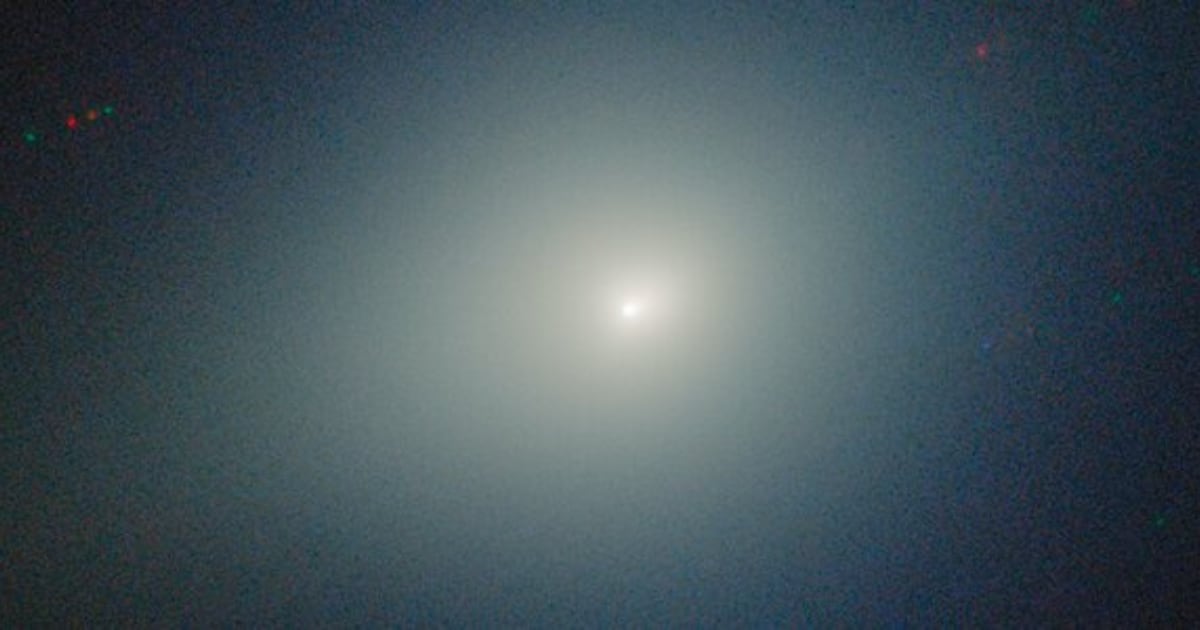
Gemini North captured new images of Comet 3I/ATLAS after it reemerged from behind the Sun on its path out of the Solar System (Cover Image Source: NOIRLab)
Gemini North captured new images of Comet 3I/ATLAS after it reemerged from behind the Sun on its path out of the Solar System (Image Source: NOIRLab)

The first CME should arrive late in the day on December 18, Thursday, and is forecast to produce a G1 (minor) geomagnetic storm. The second and stronger CME arrives a little later, early on December 19. That one is predicted to raise the activity to a G2 (moderate) storm level, says the Space Weather Prediction Center

An SwRI-led study of the Sun confirms decades-old theoretical models about solar magnetic reconnection (Image Source: Southwest Research Institute)
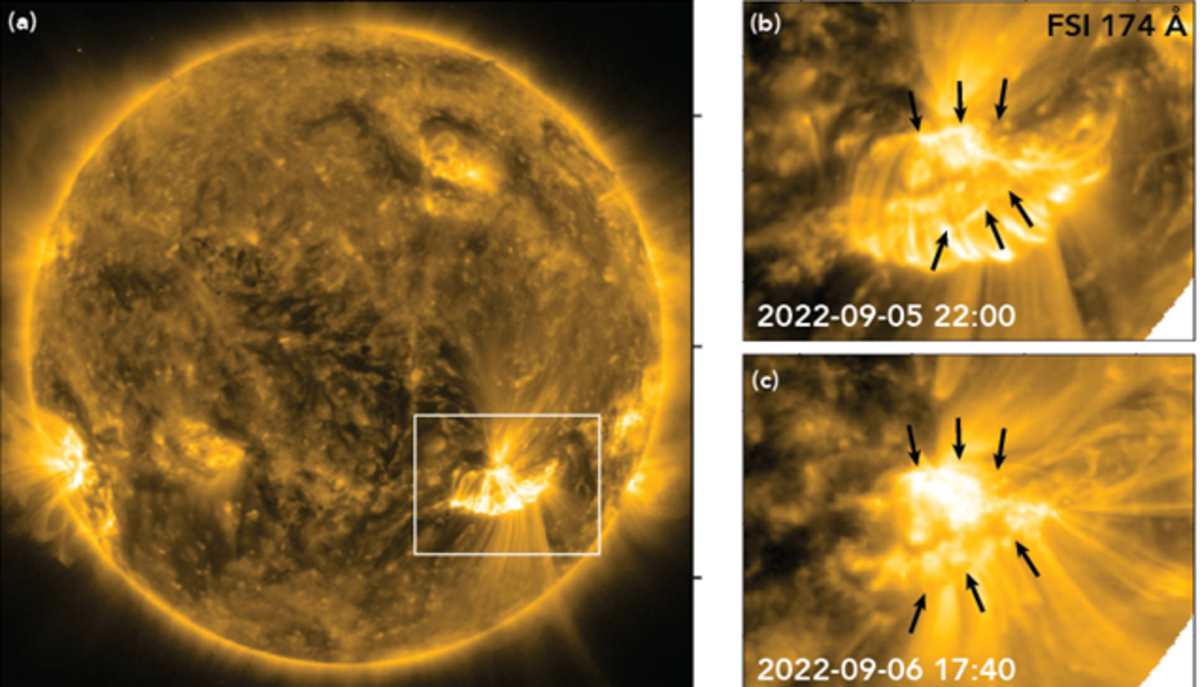
A SwRI-led study of the Sun confirms decades-old theoretical models about solar magnetic reconnection (Representative Image Source: Southwest Research Institute)

The geomagnetic disturbance may persist for some time due to the unending stream of fast solar wind; Kp could reach 5. According to Earth Sky, if this indeed happens, observers in high-latitude regions, cities like Reykjavik, and areas of northern Scotland and southern coastal Alaska may witness a short-term yet dramatic intensification of the Northern Lights, or aurora borealis, visual evidence of "space weather," a dynamic cosmic interaction involving the Sun and Earth. These colorful, often delicate light shows are visual evidence of the intricate dance between charged particles and magnetism, according to NASA

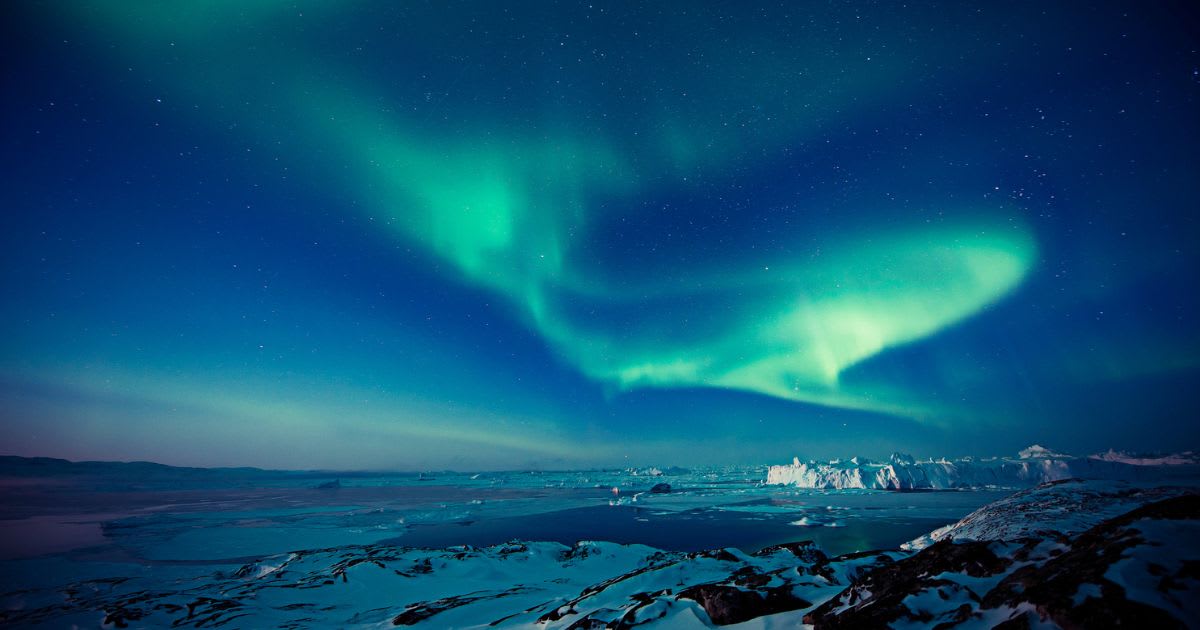
Image of Northern lights (aurora borealis) over icebergs near ilulissat (Cover Image Source: Getty | Andre Schoenherr)
Image of Northern lights (aurora borealis) over icebergs near Ilulissat (Image Source: Getty | Andre Schoenherr)

Meanwhile, in a major solar science achievement, astronomers using NASA's Parker Solar Probe have created the first continuous, 2D maps of the outer limit of the Sun's atmosphere, per NASA. This critical boundary, which researchers call the Alfvén surface, is the point where the Sun's material finally breaks free to form the solar wind, the super-fast, million-mile-per-hour stream of charged particles that permeates the solar system, affecting everything from planets to spacecraft. The new findings, published in the Astrophysical Journal Letters, rely on data from the probe's SWEAP instrument. The maps show that as the Sun progresses through its natural 11-year cycle and becomes more active, this escape boundary grows larger, becomes rougher, and develops spikier features.
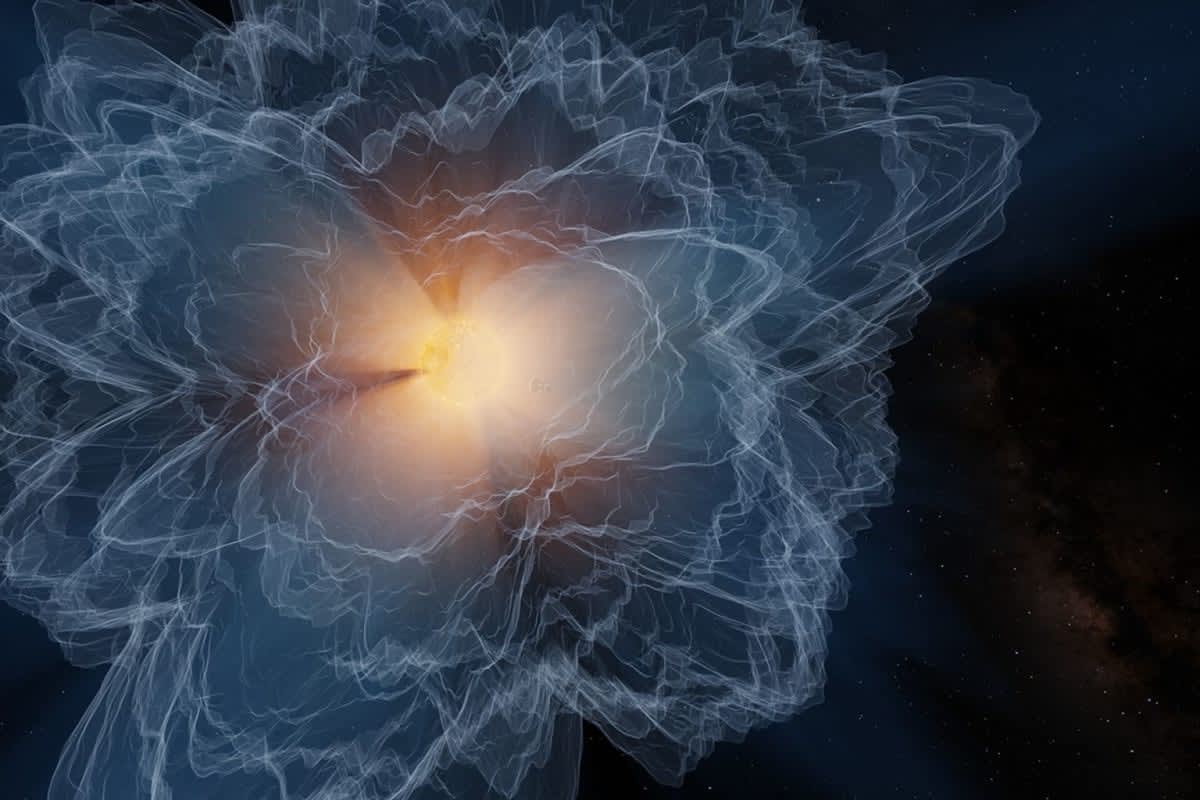
This artist’s concept depicts the boundary of the Sun’s atmosphere, known as the Alfvén surface (Image Source: CfA | Melissa Weiss)
An artist’s concept depicting the boundary of the Sun’s atmosphere, known as the Alfvén surface (Image Source: CfA | Melissa Weiss)

While others, the Solar Orbiter and NASA's Wind, have been tracking this boundary, the Parker Solar Probe is uniquely positioned: flying closer to the Sun than any mission before it, it repeatedly crosses the Alfvén surface. This unprecedented proximity provides direct confirmation of those maps and shows precisely how the boundary shifts with solar activity. Pinpointing the exact position and nature of this boundary is crucial. This could hold the key to unraveling some of the longest-standing mysteries about the Sun's superheated outer layer, or corona, and improve our understanding of how solar activity affects technology and life throughout the solar system, including here on Earth.  

More on Starlust

Triple coronal mass ejections are headed to Earth and could trigger auroras in northern skies

Dual solar wind streams from two giant coronal holes could reach Earth on October 3
MORE STORIES

The metal deposits date back to a time when Mars' climate was changing from wet to dry
1 day ago
Scientists have found that liquid-water habitable zones can overlap with ultraviolet habitable zones around low-mass stars.
1 day ago
Although Uranus possesses rings, they are not as structured and bright as the rings of Saturn. They are rather dark, narrow, and tough to study.
2 days ago
ISS Expedition 74 aims to boost space health and future medical breakthroughs on Earth.
2 days ago
Citizen scientists will look for warped spacetime using data from the European Space Agency's Euclid telescope.
3 days ago
A boxful of soil-living worms was sent to the International Space Station to assess the dangers.
4 days ago
The ancient ocean on Mars probably occupied a third of its surface.
5 days ago
April skies light up as a comet with bright tail and rare visibility reaches perihelion.
7 days ago
Scientists predict wave behavior using factors like gravity, atmosphere and liquid composition.
7 days ago
Parker Solar Probe has uncovered new details about how magnetic reconnection on the Sun flings charged particles at insane speeds.
Apr 17, 2026