NASA's Psyche spacecraft to capture never-seen-before images of Mars during gravity assist move
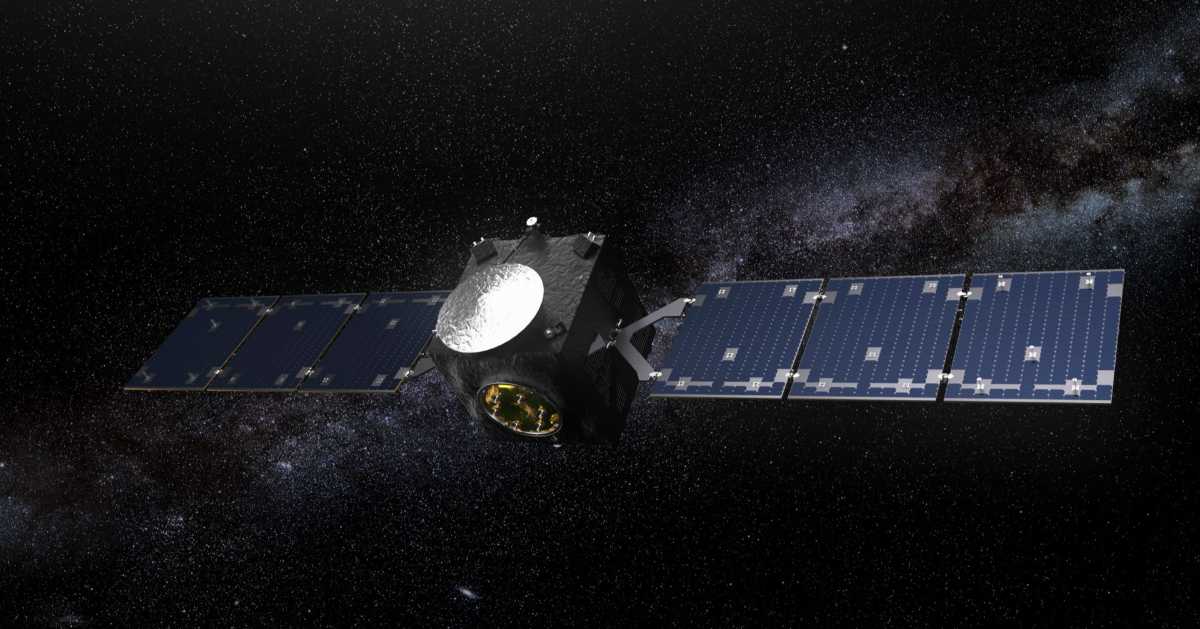
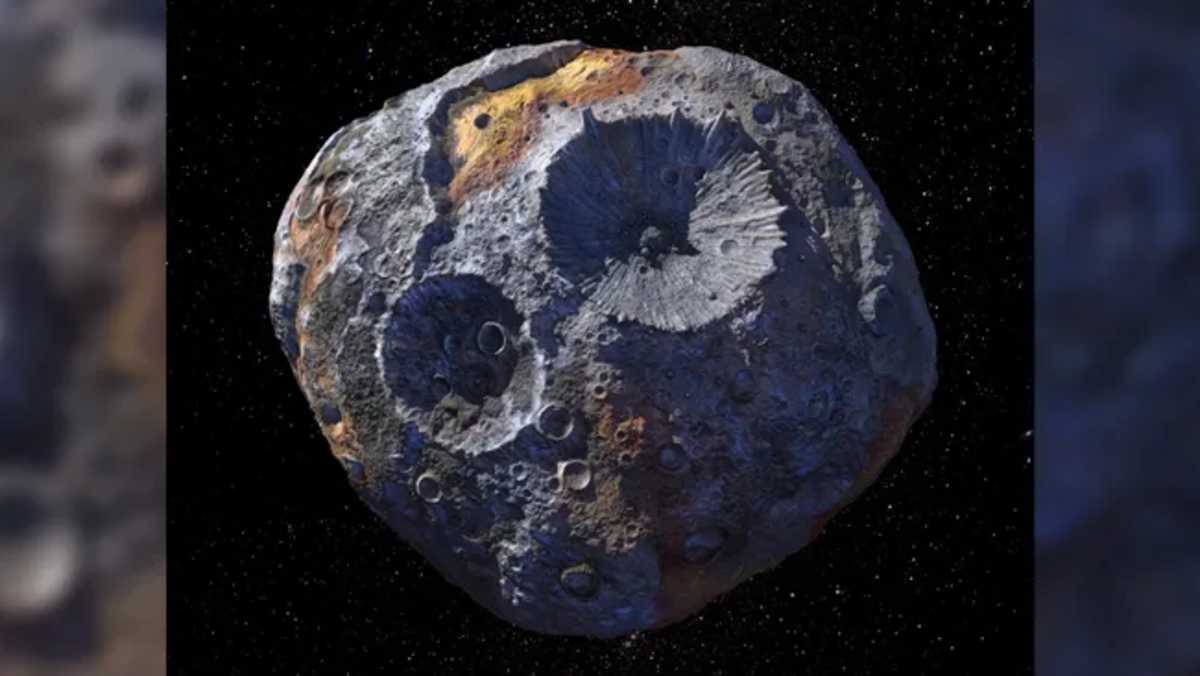
On its quest to catch up with the asteroid Psyche, NASA’s Psyche spacecraft will harness the gravitational pull of Mars to speed up and adjust its path toward the metal-rich asteroid. For this purpose, on May 15, the spacecraft will pass just 2800 miles (4,500 kilometers) from the Red Planet’s surface at some 12,333 mph (19,848 kph). Since its launch on Oct. 13, 2023, a solar-electric propulsion system with the inert gas xenon as its propellant has been powering Psyche toward its eponymous target. The planned gravity assist from Mars will be used to gain a speed boost and help Psyche save its propellant. This planned move will not only propel Psyche towards its target faster, but will also allow scientists to practice operational procedures and calibrate scientific instruments.
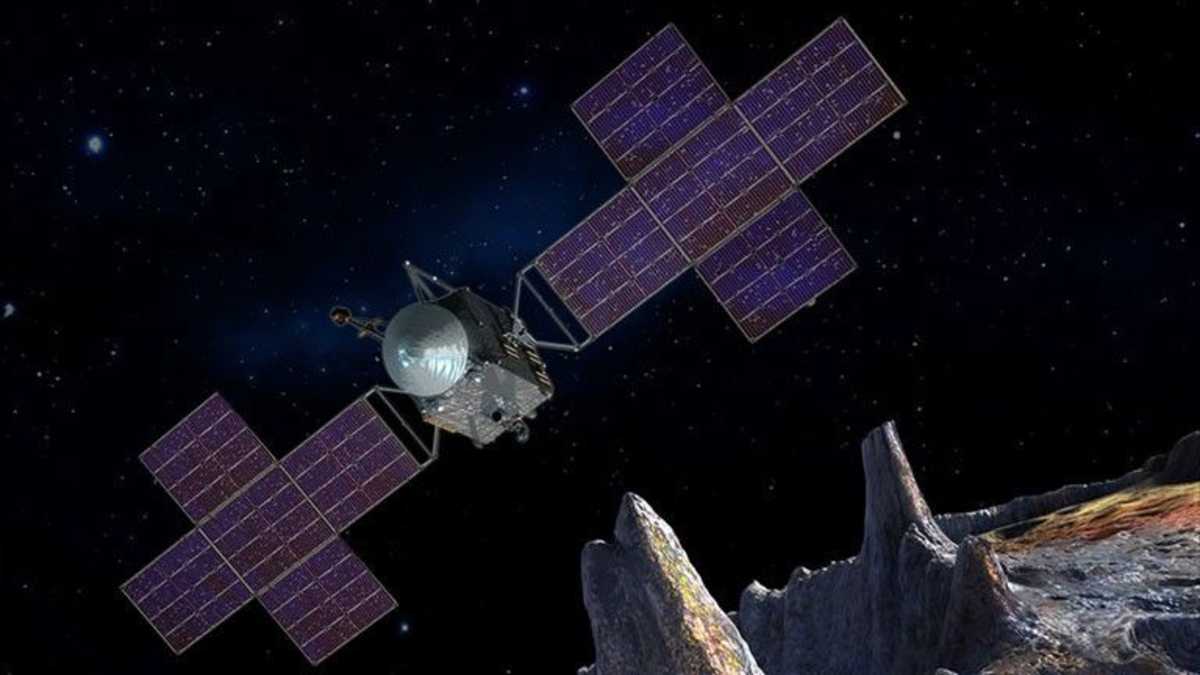
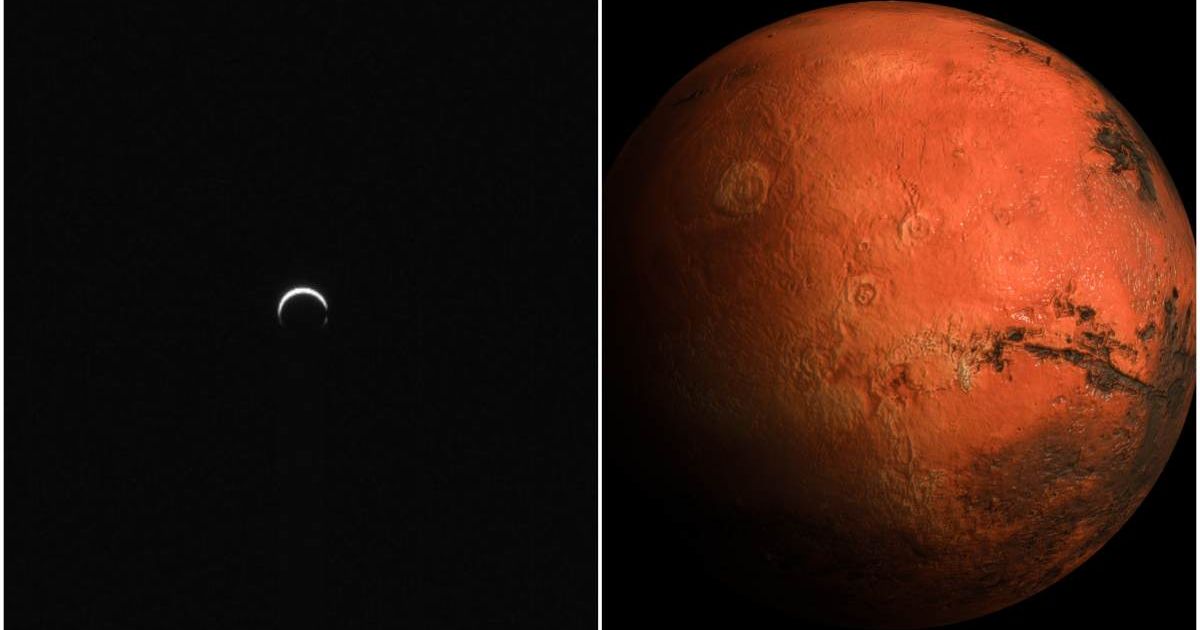
To make the most of this maneuver, Psyche’s operations team has decided to use the spacecraft’s multispectral imager to capture thousands of images of Mars. The images will yield useful data that will help the Psyche team fine-tune techniques necessary to maximize the utility of science instruments. This will pay off as the spacecraft nears the asteroid and starts orbiting it in late 2029. For the upcoming gravity assist maneuver, the Psyche mission control team carried out a trajectory correction on 23 February, when they used the spacecraft's thrusters for 12 hours to increase its speed and refine its trajectory for the Mars approach. In preparation for the maneuver, the spacecraft has already begun beaming back images to Earth. Since 7 May, the imager on Psyche has been sending back data that includes the first “raw” images of a starfield and a tiny Mars. The mission team wants to process these images, balance their brightness and contrast, and produce a time-lapse of the flyby in the coming weeks.
“We are now exactly on target for the flyby, and we’ve programmed the flight computer with everything that the spacecraft will do throughout May,” said Sarah Bairstow, Psyche’s mission planning lead at NASA’s Jet Propulsion Laboratory (JPL) in Southern California, which manages the mission. “This is our first opportunity in flight to calibrate Psyche’s imager with something bigger than a few pixels, and we’ll also make observations with the mission’s other science instruments," she added.

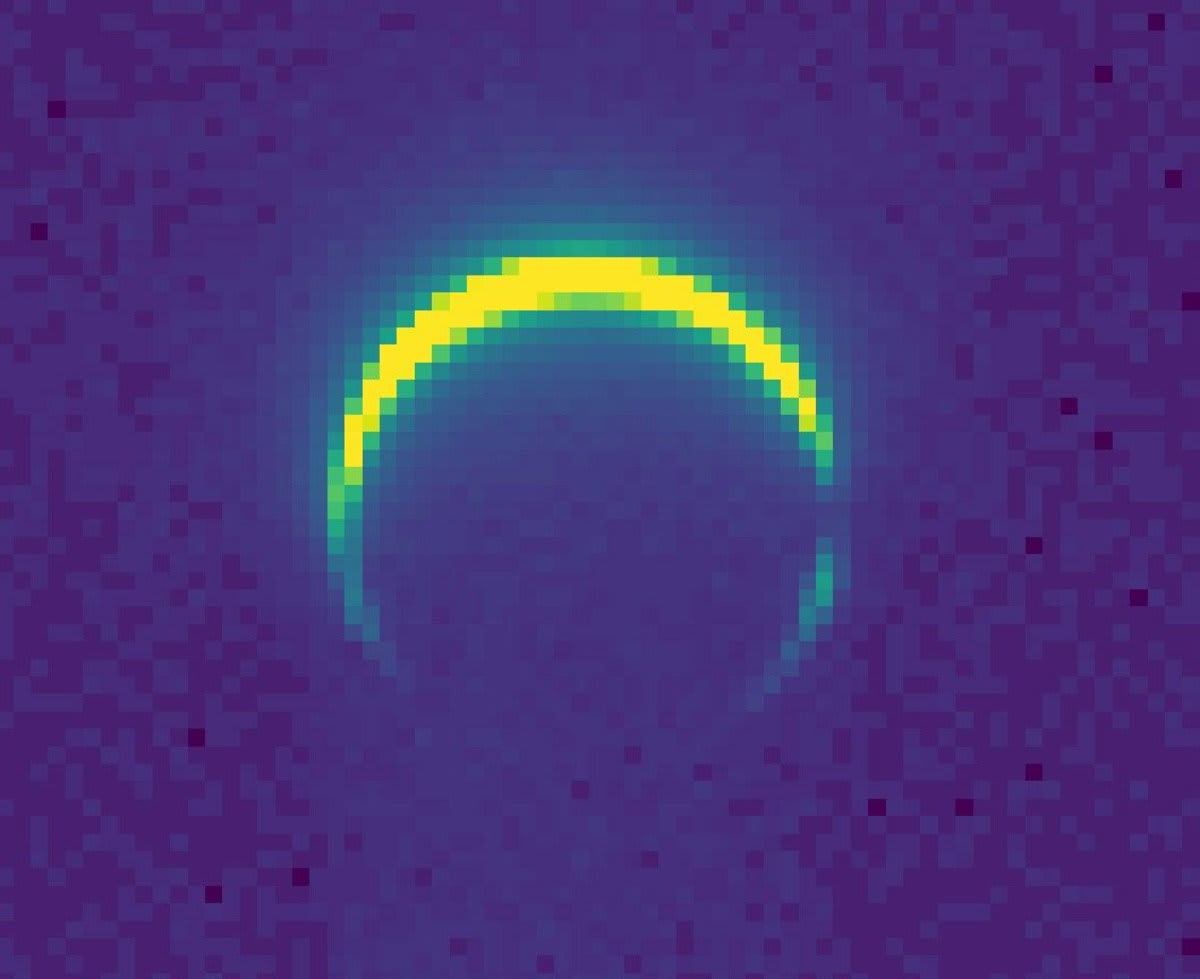
As Psyche approaches Mars, the Red Planet will not initially look like the fully illuminated reddish disk that we are all familiar with from earlier photographs. Rather, scientists will see a tiny crescent: “We are approaching Mars at a very high phase angle, which means we are catching up with the planet from its night side with only a sliver of sunlight creating a thin crescent,” said Jim Bell, the Psyche imager instrument lead at Arizona State University in Tempe. “The thin crescent on approach and the nearly ‘full Mars’ view after we fly past create opportunities for the imaging team for both great calibration observations as well as just plain beautiful photos," he added.
Phobos and Deimos, the moons of Mars, are battered by micrometeorites that cause the moons to eject dust particles into space. This, in turn, can create a faint dusty ring, or torus, around Mars. The Sun’s relative position with Psyche and Mars may cause dusty material to scatter sunlight, making it visible in the processed observations. The imager will also carry out “satellite search” observations of the space surrounding the planet — an exercise that will help the team when they search for any moonlets around the asteroid Psyche. In addition, the spacecraft’s magnetometer will aid in the detection of the planet’s magnetic field that redirects charged particles from the Sun.

The gamma-ray and neutron spectrometer will monitor and record how the flux of cosmic rays (highly energetic subatomic particles from interstellar space) changes during the flyby. “Ultimately, though, the only reason for this flyby is to get a little help from Mars to speed us up and tilt our trajectory in the direction of the asteroid Psyche,” said Lindy Elkins-Tanton, principal investigator for Psyche at the University of California, Berkeley. “But if all our instruments are powered up, and we can do important testing and calibration of the science instruments, that would be the icing on the cake,” she explained.
More on Starlust
A visit to an asteroid could be cheaper than trips to the Moon, claims new study
China launches Tianzhou-10—its largest resupply mission to the Tiangong space station