Newly detected 40-meter asteroid close to Venus orbit could strike Earth with city-level impact
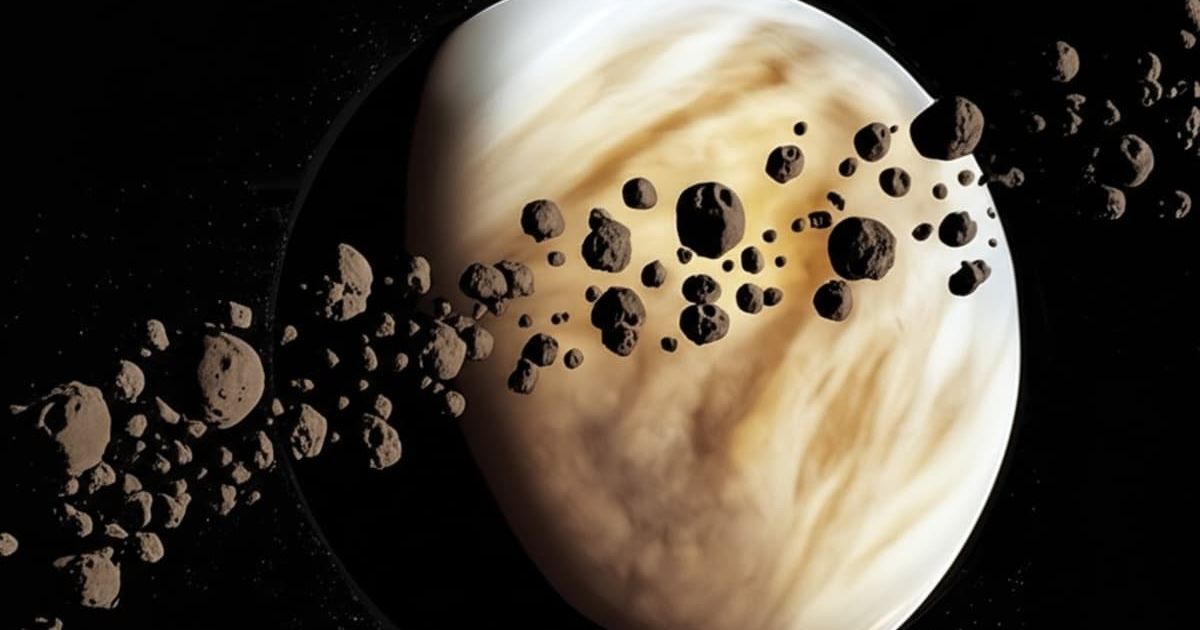
In our cosmic backyard, a cluster of 20 rogue asteroids circles the Sun along paths close to the orbit of Venus. Some briefly come into view, while others remain hidden, posing a collision threat to Earth. Now, a study, published in Astronomy & Astrophysics, has identified 2025 TV10 as the 21st known Venus co-orbital asteroid. Valerio Carruba, a scientist at the São Paulo State University in Brazil who led the study, reveals that the newly detected asteroid is one of the potentially riskiest known members of this population identified so far. Its orbit lies very close to Earth, resulting in a small minimum orbital intersection distance (MOID) - a key measure scientists use to estimate how closely the orbital paths of two astronomical objects may approach each other and to assess a potential collision risk between them.

“It is difficult to observe because it is faint and visible only during restricted windows,” says Carruba in an exclusive interview with Starlust.org. “The broader implication is that Venus co-orbitals may be an under-observed population relevant to planetary defense.” Unlike asteroids in the main belt between Mars and Jupiter, these objects orbit much closer to Earth. Their trajectories can change over time due to orbital evolution, gravitational perturbations, and repeated close encounters with terrestrial planets. “These objects are chaotic on timescales of around 150 years,” adds Carruba, who studies asteroid dynamics. "The asteroid could approach Earth to within 0.0005 astronomical unit (AU) at around 380 years from now, at which point an impact becomes possible," he adds.
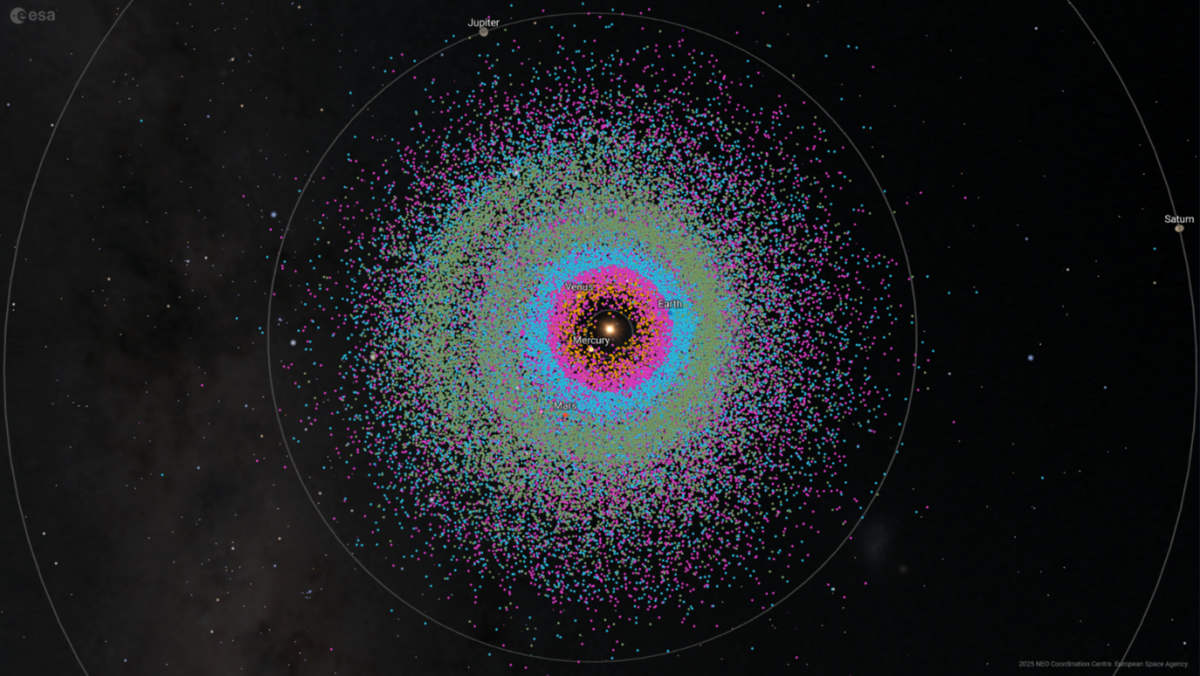
These asteroids are not a threat simply because they are closer, but the concern is their orbital geometry: some Venus co-orbitals can evolve onto paths with small MOIDs with Earth. “Their location interior to or near Earth’s orbit also makes them harder to observe from the ground, because they often appear near the Sun in the sky,” Carruba says. "The asteroid is estimated to be at most 40 meters in size. It would most likely disintegrate in the atmosphere, similar to a larger Chelyabinsk meteor or a Tunguska event." For reference, a near-Earth asteroid that exploded 14–20 miles above Chelyabinsk in Russia was about 20 meters and injured about 1,500 people, mostly due to shattered glass shards. According to Carruba, an object of this size could cause damage on a city scale, but it would not have global consequences. “For larger Venus co-orbitals, earlier simulations showed that objects of a few hundred meters could cause regional devastation, large craters, or tsunamis if they impacted offshore,” he notes.
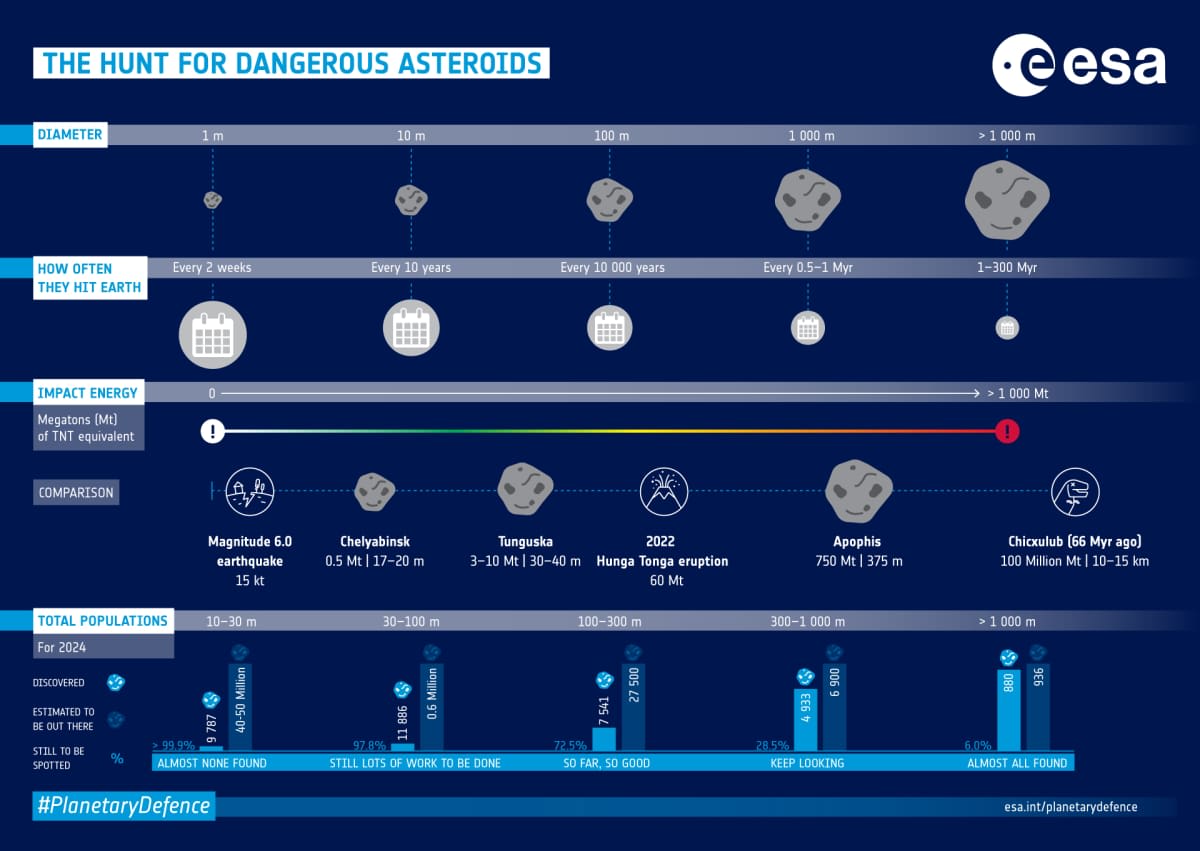
To keep track of these threats, sustained monitoring of near-Sun regions is needed. “Ground-based surveys such as Rubin may detect some objects during favorable configurations, but space-based telescopes in Venus-like orbits or near the Sun-Venus L2 Lagrangian point would be particularly valuable for finding low-eccentricity Venus co-orbitals,” Carruba contends. But how can we deflect any of these asteroids that might head our way? “If discovered with enough warning, NASA’s DART mission demonstrated the kinetic-impact technique, showing that a spacecraft can alter an asteroid’s motion,” says Carruba. However, deflection requires early detection, precise orbit determination, and sufficient lead time. Unfortunately, most of the orbits of the currently known Venus co-orbital asteroids are poorly known.
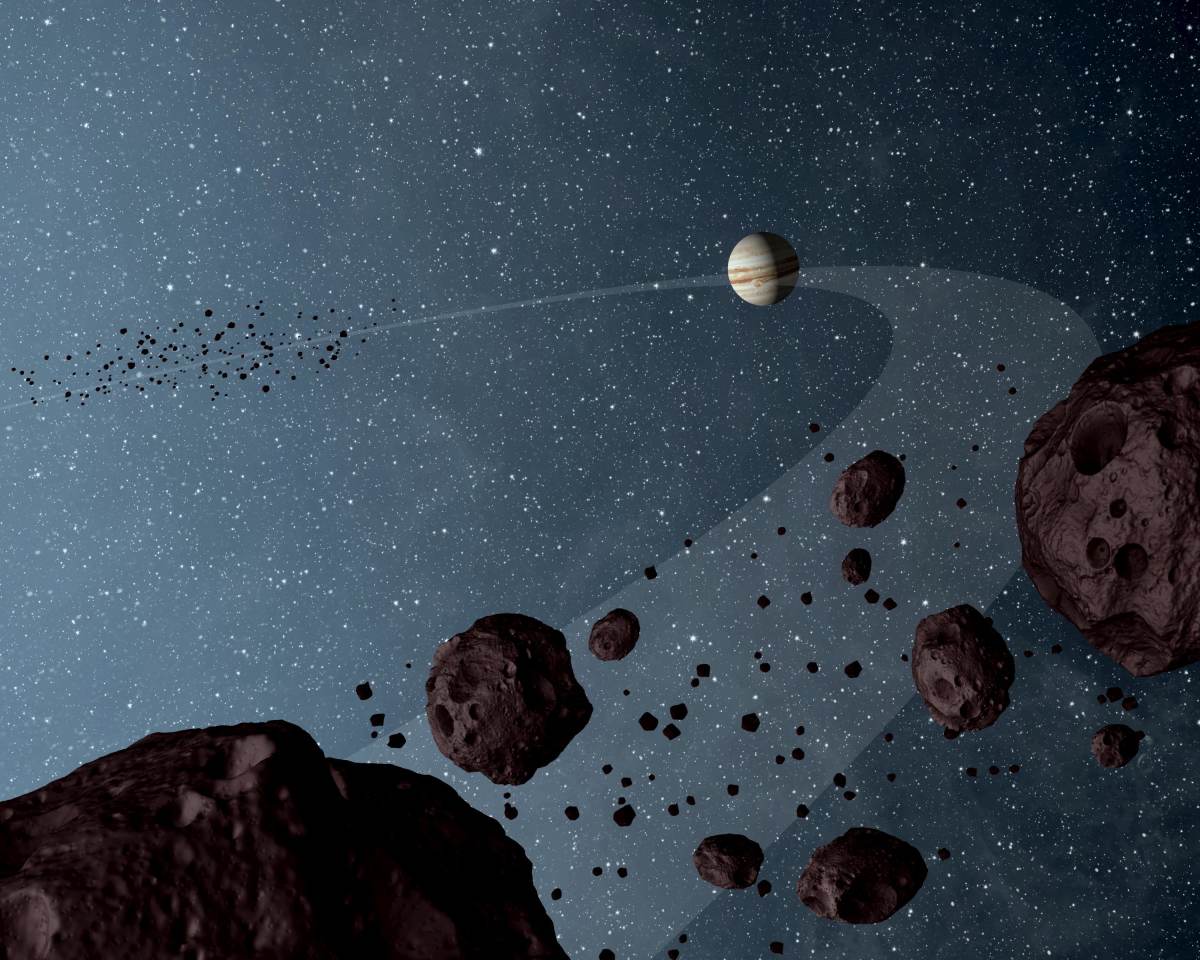
Models of near-Earth object sources indicate that they likely originate from the same broad source regions as other near-Earth asteroids, including main-belt escape routes and possibly cometary sources, before evolving into Venus co-orbital states. Asteroids don’t always conjure up doomsday scenarios. They may deposit life-brewing molecules on an Earth-like planet. “Asteroids may contain organic molecules, including nucleobases, which are molecular building blocks found in DNA and RNA and other prebiotic compounds, but these compounds are fragile and may not survive exposure to cosmic rays and UV radiation on the asteroid surface,” Carruba explains. According to Carruba, a mission to a co-orbital Venus asteroid could be scientifically interesting, especially for detecting its composition and organic chemistry. “But such a mission would require detailed orbit determination, target accessibility studies, and instruments suitable for an in-depth sample analysis or sample return,” he concludes.
More on Starlust
Microbes may survive asteroid impacts and travel between planets, new study finds