Astronomers believed dark matter was fundamental in galaxy formation — until a discovery proved them wrong

The Milky Way is surrounded by a host of other galaxies that make up the vast universe, each with its own characteristics. One aspect, however, is common throughout, which is the presence of dark matter as a primary component in its formation. A recent discovery put this idea to the test as astronomers spotted a galaxy that was sans dark matter, as per the W. M. Keck Observatory. This was in defiance of the ‘traditional cosmological paradigm’ that assumed dark matter to be universal, but this discovery could lead researchers to think in the opposite direction.

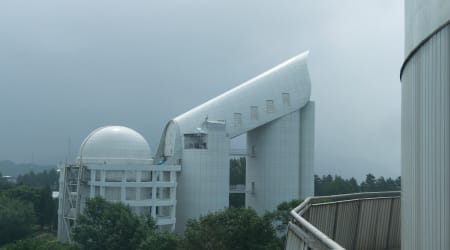
Astronomers at the W. M. Keck Observatory on Maunakea, Hawaii Island, found the dark matter-deficient dwarf galaxy dubbed FCC 224. Previously, the NGC 1052 group was the only other location with galaxies free of dark matter and without any star formation. The latest finding was an ultra-diffuse galaxy on the outskirts of the Fornax Cluster, and it was around 60-65 million light-years away from Earth. This discovery, combined with the previous records, hinted at the possibility that similar galactic formations, void of dark matter, are more than expected in the cosmos.

Two separate studies noted the event of this unique galaxy. The first study analyzed the unique globular star cluster system of FCC 224. It was led by Doctoral Candidate Yimeng Tang of the University of California, Santa Cruz, and published in The Astrophysical Journal. The second study explored the presence of dark matter in the galaxy and the situations that led to its formation. It was led by Doctoral Candidate Maria Luísa Buzzo of Swinburne University, as well as the European Southern Observatory and was published in the journal Astronomy & Astrophysics.

The dark matter content was analyzed with high-resolution spectroscopy from Keck Observatory's Keck Cosmic Web Imager (KCWI). Buzzo led this investigation to compare the dark matter-free dwarf galaxies DF2 and DF4 from previous records to the present finding. It was to confirm if FCC 224 could be grouped with the same class of galaxies present in NGC 1052. Tang’s findings were the groundwork for Buzzo as images from NASA's Hubble Space Telescope indicated that FCC 224 had star clusters that were similar to other dark matter-free galaxies.

"The new high-resolution red arm of KCWI enabled us to measure very precisely the motions within the galaxy, which can be used to trace its dark matter content," Buzzo highlighted, as per Phys Org. "KCWI's high spectral resolution allowed us to precisely measure the motions (velocity dispersion) within FCC 224's stars and globular clusters," Tang added. These measurements concluded that the new galaxy had ‘extremely low velocity dispersion,’ which was staple to a lack of dark matter. Further research is needed to understand the formation of FCC 224.
"For some reason, this galaxy (FCC 224) has an unusual number of luminous clusters and no dark matter, at least within its inner regions. No existing galaxy formation model within our standard cosmological paradigm can currently explain how this galaxy came to be," Buzzo noted. "FCC 224 serves as a crucial data point in our effort to identify and study other dark matter-deficient galaxies. By expanding the sample size, we can refine our understanding of these rare galaxies and the role of dark matter in dwarf galaxy formation," Buzzo concluded.