Hubble Space Telescope unveils striking portrait of a spiral galaxy harboring an active nucleus
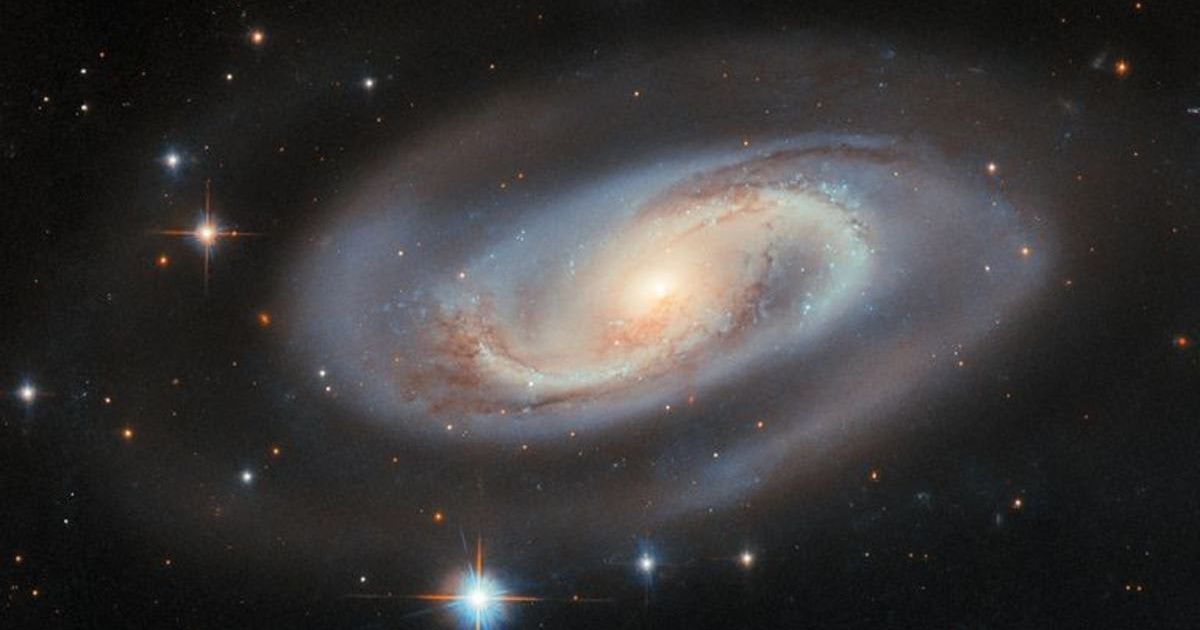
The Hubble Space Telescope has delivered a striking new portrait of the spiral galaxy NGC 4102, revealing a central engine classified as an Active Galactic Nucleus (AGN). Located approximately 56 million light-years away in the constellation Ursa Major, NGC 4102 offers astronomers a nearby laboratory to investigate how these energetic galactic cores influence their host galaxies, according to ESA Hubble.
An AGN signifies a highly luminous core, fueled by a supermassive black hole millions to billions of times the Sun's mass, actively consuming surrounding matter. As this gas spirals inward under immense gravity, it heats up dramatically, emitting intense radiation across the electromagnetic spectrum, from X-rays to radio waves.
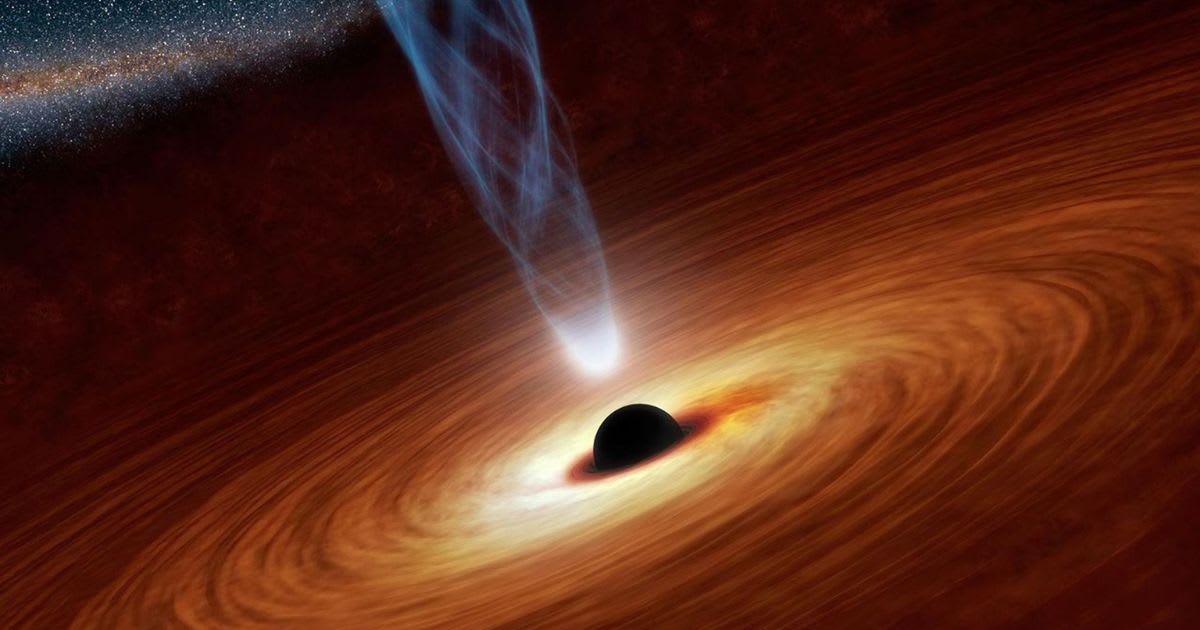
While some AGNs are known for violent outbursts that launch powerful jets of charged particles, NGC 4102 appears to harbor a more subdued core. Astronomers categorize it as a LINER (low-ionization nuclear emission-line region) and Compton-thick, meaning the black hole's emissions are partially obscured by a dense surrounding cloud of gas. This classification suggests the supermassive black hole is lazily accreting material rather than voraciously consuming it. "NGC 4102 likely falls into the latter category," referring to the calmer types of AGNs that "sip gas from their surroundings and glow more faintly," the Hubble astronomers said in the statement.
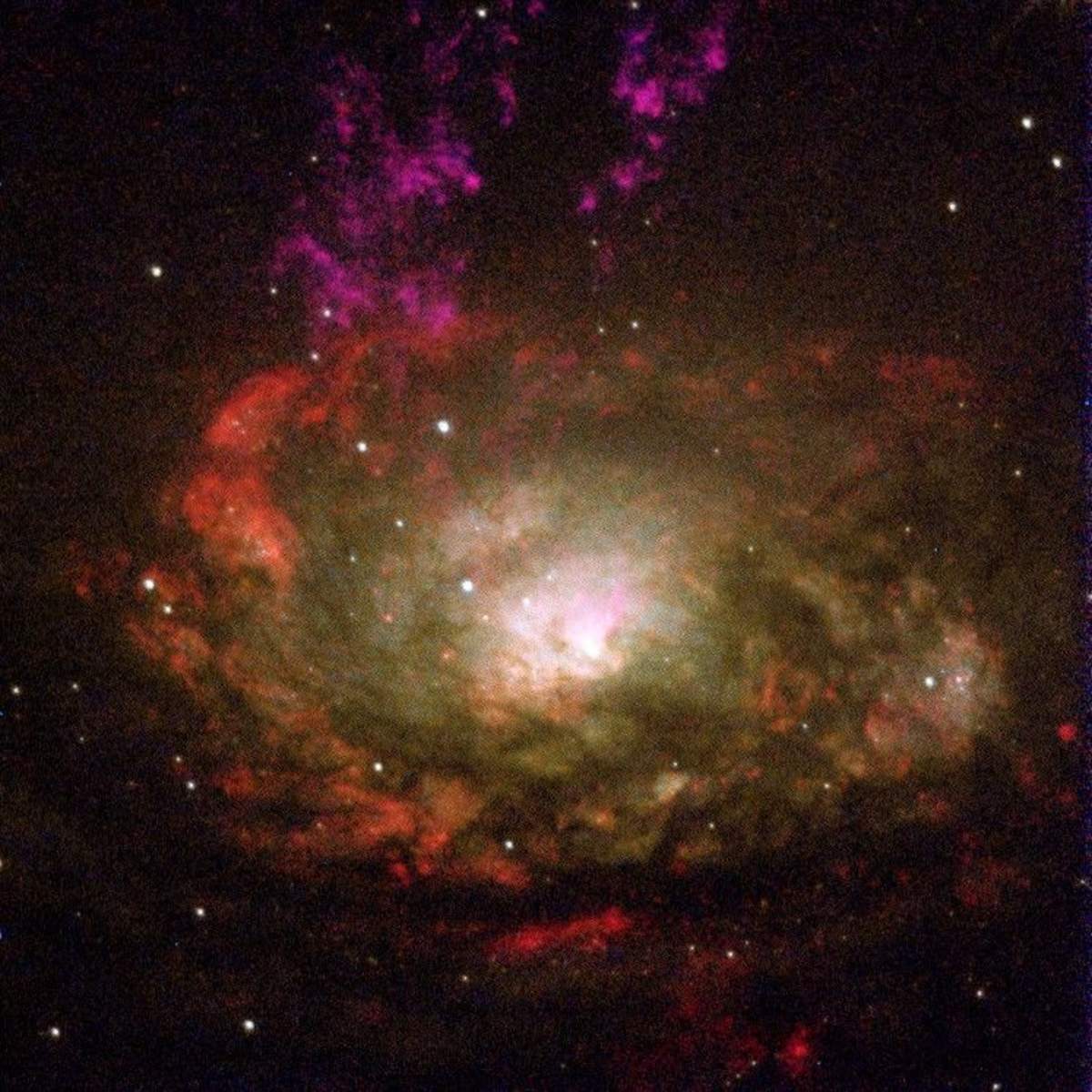
This latest image surpasses a 2014 version by utilizing data from Hubble's superior Wide Field Camera 3, which replaced the older Wide Field Planetary Camera 2. These new observations are part of a dedicated program that will integrate Hubble's visible-light data with X-ray findings from the Chandra X-ray Observatory to precisely map the interaction between the galaxy and its hidden, active center. This galaxy provides an "ideal opportunity to study the ways in which active galactic nuclei interact with their home galaxies," they said.
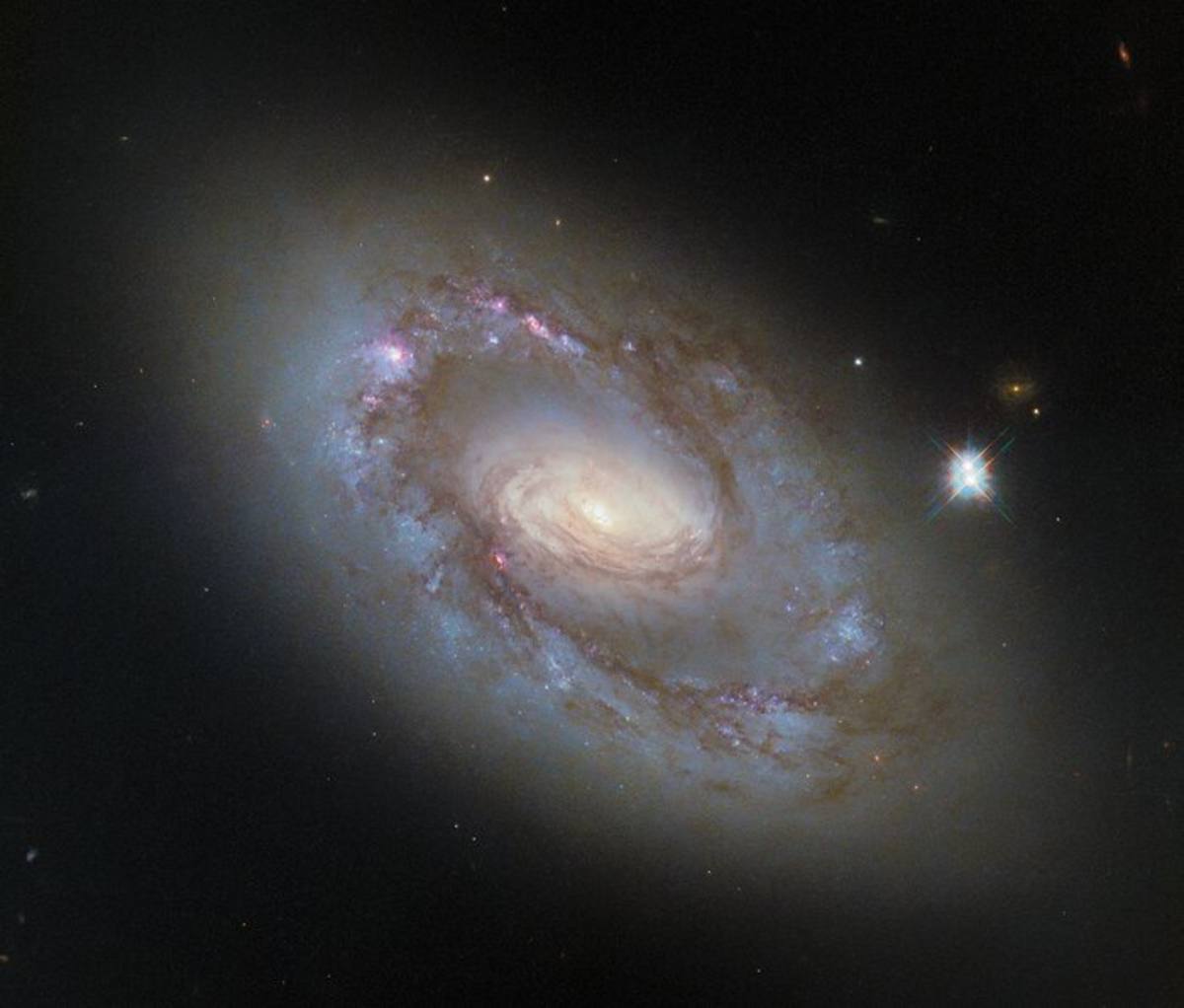
Hubble's recent observational work extends beyond active cores, as evidenced by a detailed August release focusing on NGC 45, a spiral galaxy just 22 million light-years distant. This study aimed to illuminate star formation processes across a broad galactic sample. NGC 45 is of particular interest as a low surface brightness galaxy (LSB), meaning it is faint and exceptionally challenging to detect because its luminosity is often dimmer than the background night sky. Astronomers theorize that these galaxies possess fewer stars relative to their substantial reservoirs of gas and dark matter.
This galaxy is even fainter than the night sky! 🌃
— HUBBLE (@HUBBLE_space) August 14, 2025
NGC 45, which lies 22 million light-years away in the constellation Cetus (The Whale) 🐳⭐ is an example of a low surface brightness galaxy. 1/3 pic.twitter.com/Hl7QnVJXpj
The investigation employed a dual observational strategy. The first phase surveyed 50 galaxies using Hubble's multi-wavelength capabilities, capturing light from the ultraviolet through the near-infrared. A follow-up program specifically targeted the H-alpha wavelength, a signature red emission indicating active stellar birth within nebulae. This dual approach highlighted vibrant pink-red areas across NGC 45, marking sites of intense new star creation. First discovered accidentally in 1986, LSB galaxies are now estimated to constitute a significant fraction, perhaps 30-60%, of all galaxies. Unlocking the secrets of these faint structures is deemed essential for a comprehensive model of galaxy formation and evolution, making instruments like Hubble indispensable for this critical research frontier.
Our ESA/Hubble Picture of the Week features a galaxy with something huge at its heart! 💗
— HUBBLE (@HUBBLE_space) November 3, 2025
The spiral galaxy NGC 4102 is home to an active galactic nucleus (AGN). These are luminous galactic centres powered by supermassive black holes 🕳️ which contain millions to billions of… pic.twitter.com/EQ893Tqsdi