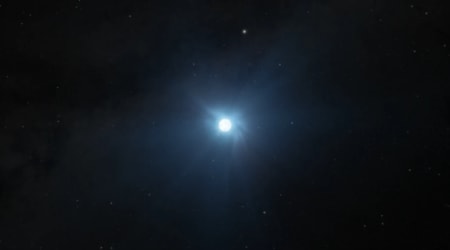
NASA’s Chandra X-ray Telescope finds out why this massive star has been flaring up every 113 days
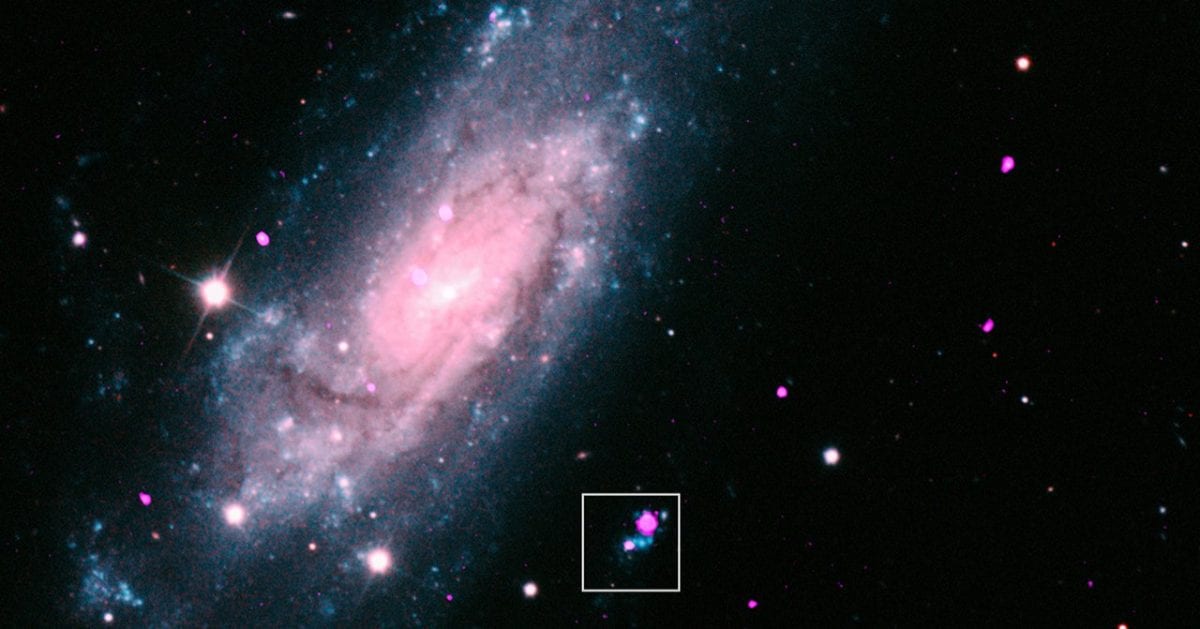
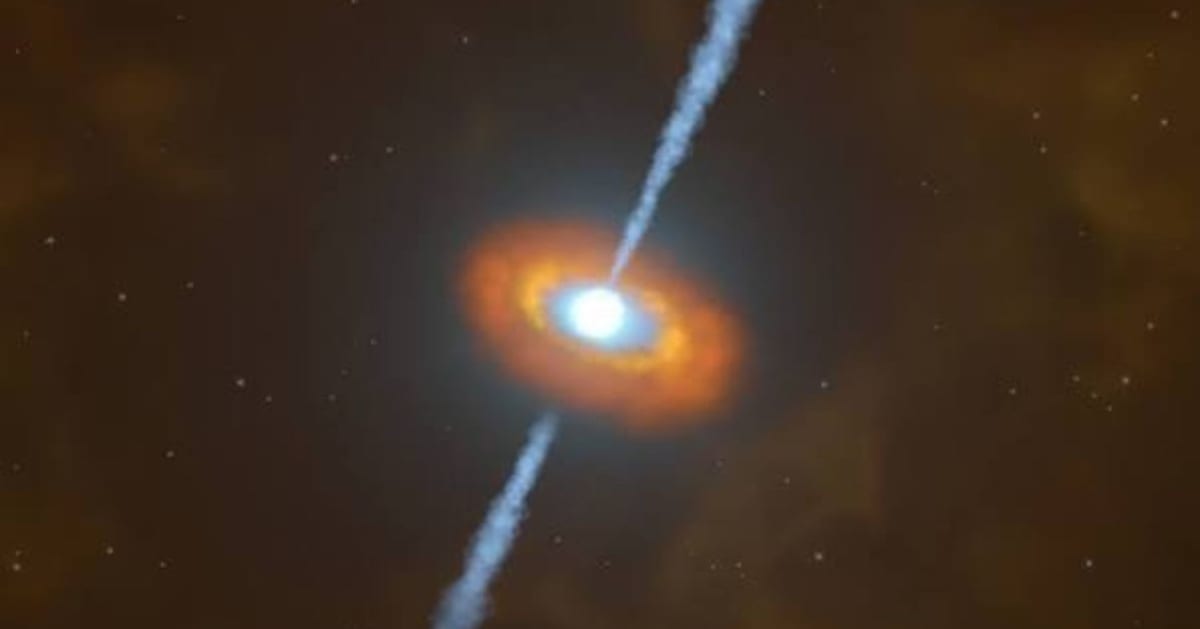
For 15 years, astronomers had been baffled by the behavior of the giant, luminous star—AT 2016blu—which erupts roughly every 113 days. A new study has finally found the probable cause behind the star's mysterious recurring bursts of light using NASA's Chandra X-ray Observatory. The research, published recently in The Astrophysical Journal, found that the star has a hidden companion that constantly extracts material from it every 113 days or so as they orbit one another—this mysterious partner may be a black hole or a neutron star, per the researchers.

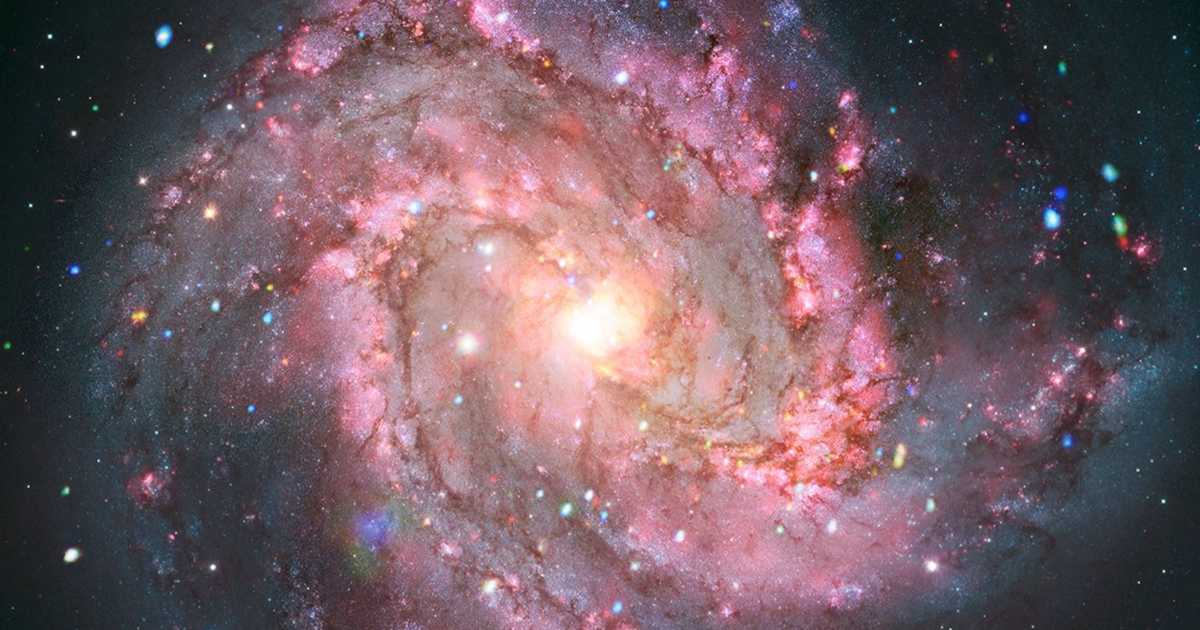
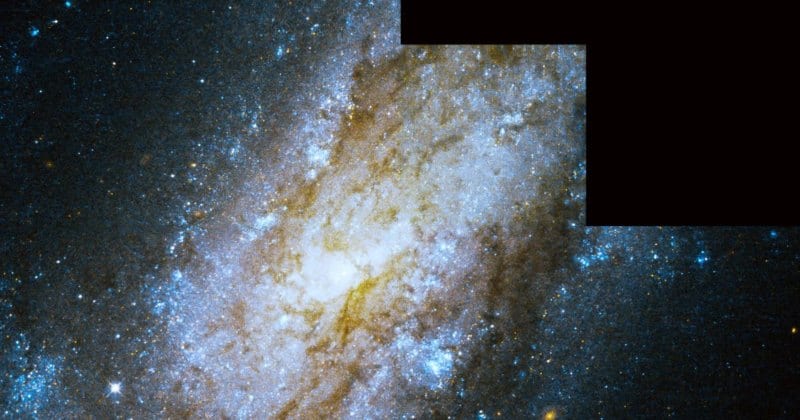
The massive AT 2016blu, having a mass 33 times that of the Sun, is located in the galaxy NGC 4559 (Caldwell 36)—a spiral galaxy located around 30 million light-years from our home planet in the constellation Coma Berenices. AT 2016blu is a kind of luminous blue variable. These are massive, unstable stars, which, unlike our comparatively smaller and stable Sun, become extremely bright and hot before cooling to a degree that they cannot be told apart from other stars. And this, as seen in the case of AT 2016blu, is a recurring process. The brightness changes seen in AT 2016blu occur rapidly and are frequent, with the brightness peaks being so intense that they match supernova explosions—an event marking the end of a star's life cycle. Nevertheless, unlike a typical supernova explosion, where the star collapses and its material is ejected into space, AT 2016blu does not undergo annihilation and is hence referred to as a 'supernova impostor.'
Scientists observed around 27 optical light bursts from the star between 2012 and 2026, occurring roughly every 113 days. To investigate the cause behind this phenomenon, the team decided to observe the star in X-ray during one of its explosions, assuming that the recurring optical flashes were being produced by periodic high-energy X-rays. Initially, the researchers surveyed the star through different optical telescopes, such as the Katzman Automatic Imaging Telescope at Lick Observatory and the Las Cumbres Observatory Global Supernova Project.
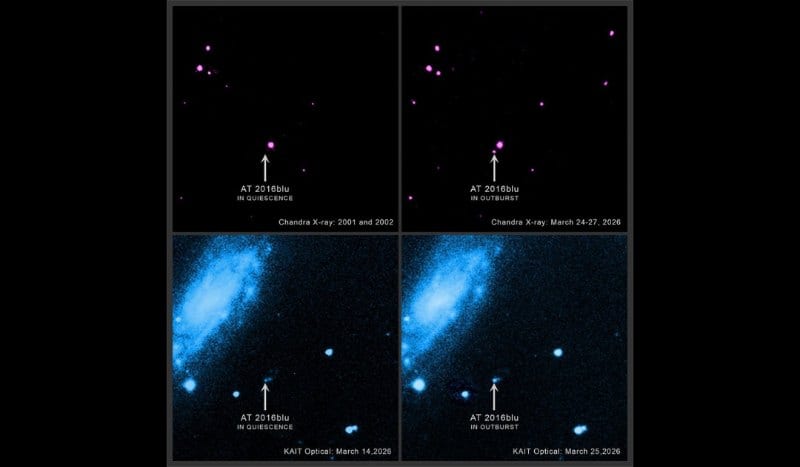
When the star displayed peaks in brightness in early 2026, the team made use of Chandra to observe the event in March 2026, as it happens to be the sole X-ray observatory that possesses the sharpness to separate AT 2016blu from other X-ray sources. “For 15 years, astronomers have been watching this star get really bright and then dim again on a regular basis,” said Mojgan Aghakhanloo of the University of Virginia in Charlottesville, who led this study, in a statement. “Until we were able to get Chandra data at the right time, we couldn’t figure out what was making this happen.”
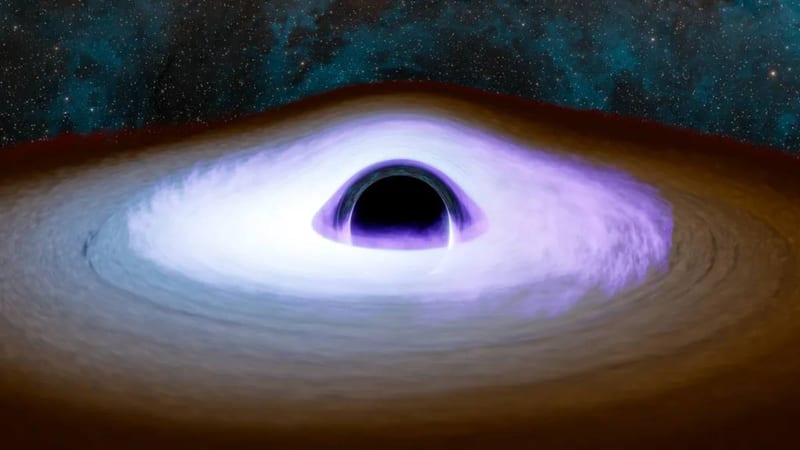
The study results revealed that AT 2016blu was around 100 times brighter in X-ray observations than it was in Chandra's findings from 2001 to 2002, the time before the eruptions started taking place. The researchers concluded that the matter ejected from the star may be falling onto its companion, that is, a neutron star or black hole, as they move in an oval orbit around one another. As both the star and its companion approach each other, the ejected material is taken up by the companion. The star's ejected material moves at speeds close to that of light, getting extremely hot and revealing itself prominently in X-ray images.
A giant star, located about 37 million light-years from Earth, has been mysteriously erupting for at least 15 years. New data from Chandra explains the cause of these huge outbursts. HINT: It might have something to do with a black hole. ⭐More at: https://t.co/ISxBLC0iMY https://t.co/K7EvACiooP
— Chandra Observatory (@chandraxray) November 9, 2026
This research happens to be the first ever X-ray observation of this type of flaring star. Moreover, it's the first among such objects that has a neutron star or a black hole as a companion. The research work can offer scientists a clear picture of the behavior of a star before it undergoes a supernova explosion, also providing an opportunity to comprehend how giant stars and binary systems function.
More on Starlust
NASA's Chandra finds the 'most relaxed' galaxy cluster in the universe had a rather turbulent past
NASA’s Chandra pops the cosmic cork with a stunning view of the Champagne Cluster