James Webb Telescope finds potentially record-breaking black hole from early universe
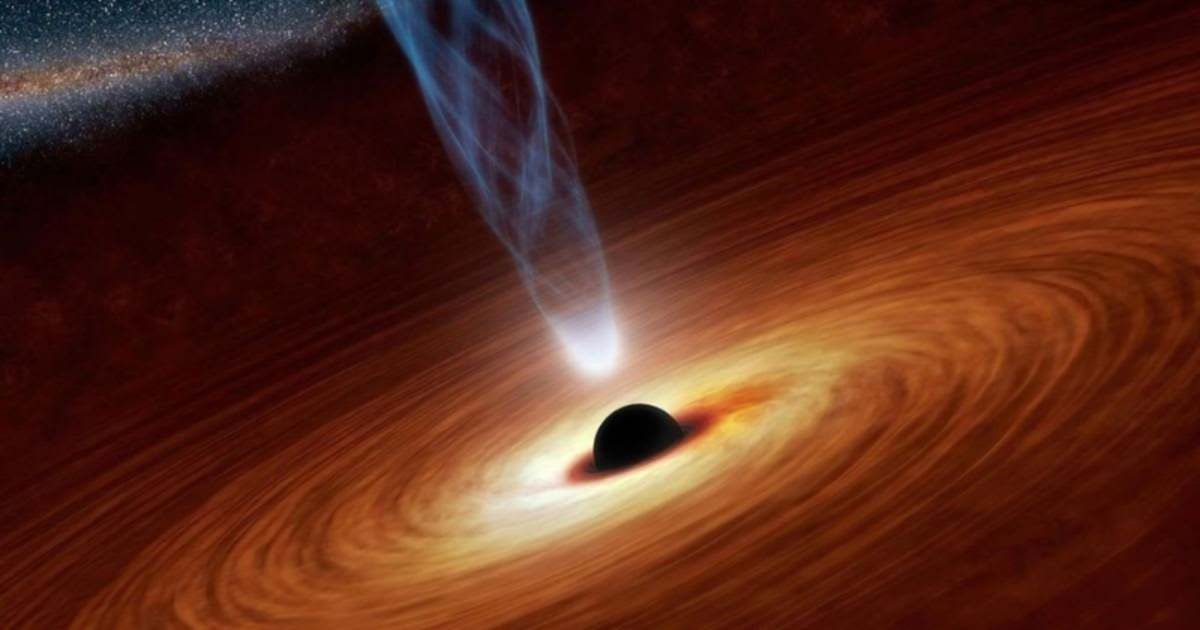
A team of astronomers thinks that they might have just spotted the most distant and oldest supermassive black hole ever seen. This remarkable finding, detailed in research uploaded to the preprint server arXiv on November 4 but not yet peer-reviewed, stems from observations made by the James Webb Space Telescope.
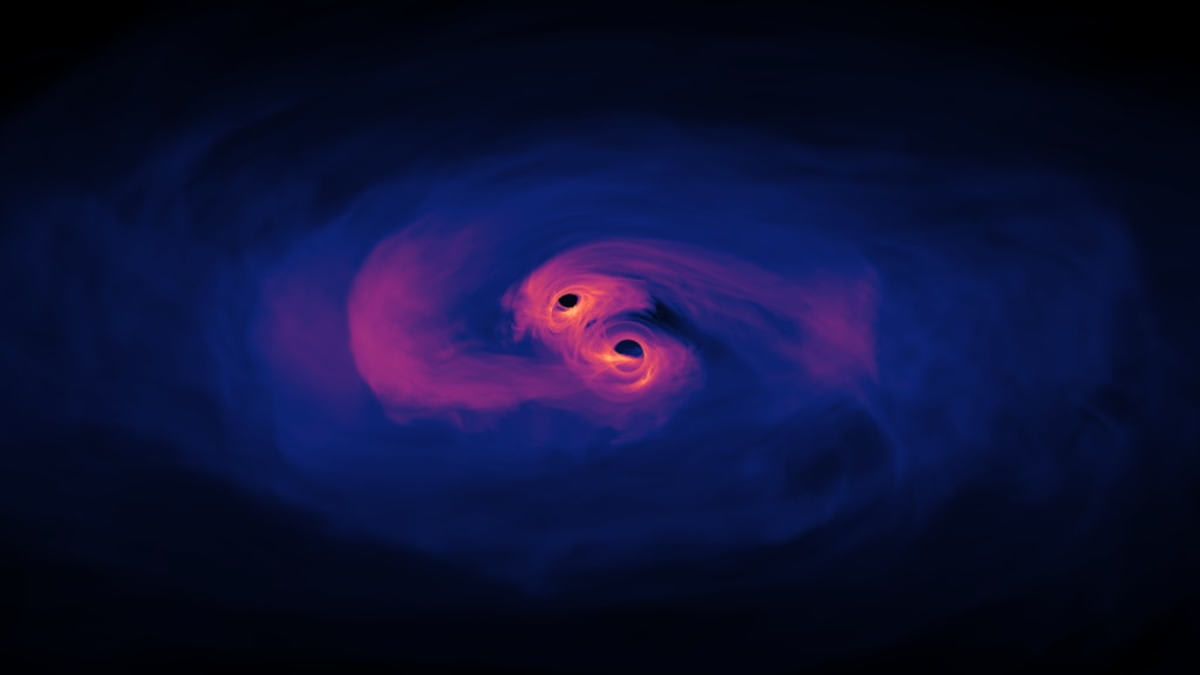
The colossal object is nestled in a galaxy labeled GHZ2 and is so far away that we see it as it existed just 350 million years after the Big Bang. This raises fundamental questions about how such an enormous black hole could have formed so quickly in the early universe, when there was little time for growth. Using JWST's instruments, researchers were able to collect light from GHZ2 that had been stretched into infrared wavelengths by the expanding universe. While numerous distant galaxies have been discovered since 2022, GHZ2 stood out because of its unusual light signature, per Live Science.
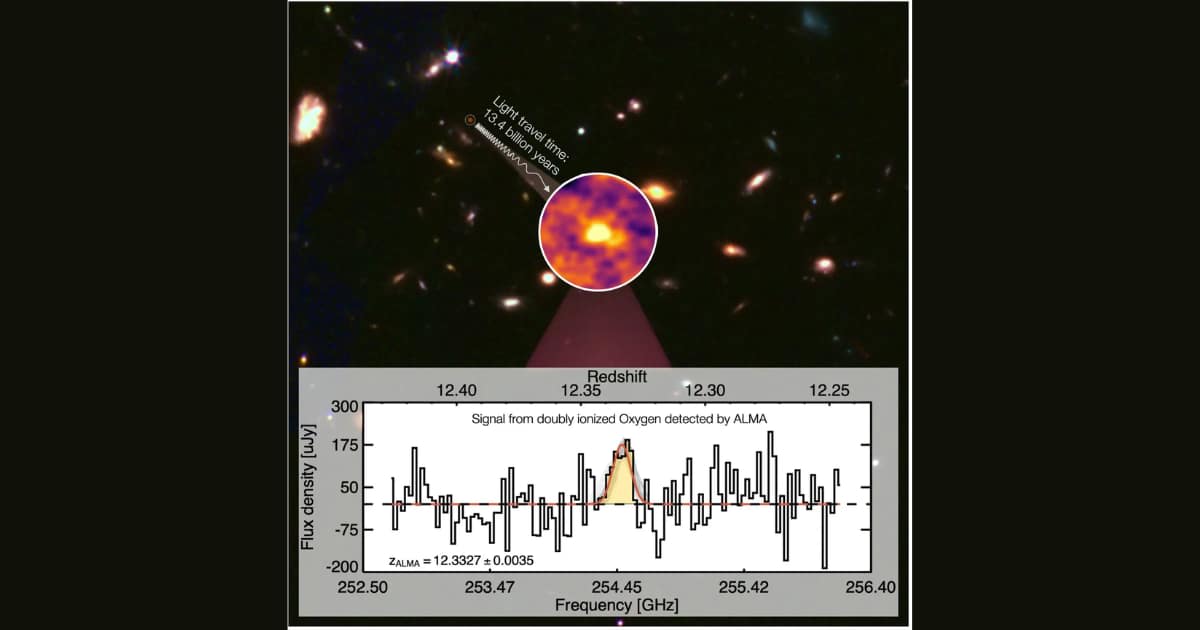
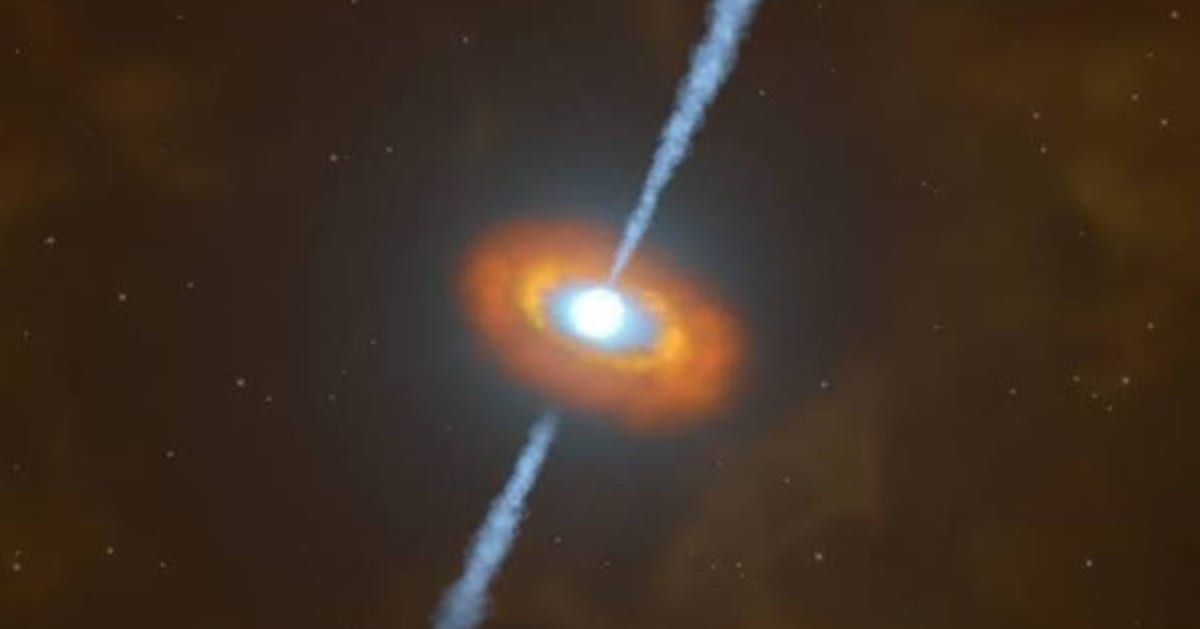
Specifically, the galaxy's spectrum showed incredibly bright "emission lines," bands of light generated when atoms or ions release energy at specific wavelengths. Some of these lines, called high-ionization lines, require an enormous amount of energy to be produced. This degree of energy is often only produced by an Active Galactic Nucleus (AGN), which is powered by a black hole actively pulling matter inward at the center of a galaxy and has a much more energetic radiation present.

A crucial piece of evidence came in the form of the detection of an emission line from triply ionized carbon, basically a carbon atom with three missing electrons. "Removing three electrons requires an extremely intense radiation field, which is very difficult to achieve with stars alone," said Oscar Chavez Ortiz, a University of Texas doctoral candidate and lead author of the study. An AGN naturally generates such high-energy photons. This all strongly hinted that GHZ2 may be hosting a feeding supermassive black hole.
Because GHZ2 is truly a one-of-a-kind system, the team had to develop intricate models to get an insight into how both the stars and the AGN affect the galaxy's light. The analysis showed that, while the visible light could be partly from regular star formation, the robust carbon line uniquely required the feeding black hole. However, the galaxy did not exhibit every hallmark typically associated with an AGN. This speaks to a few possibilities: either this galaxy is powered mostly by stars much larger than the sun, known as supermassive stars; star formation in the galaxy took place far differently than what is currently known; or it is a mix of normal stars and the more exotic, high-energy source of an AGN.
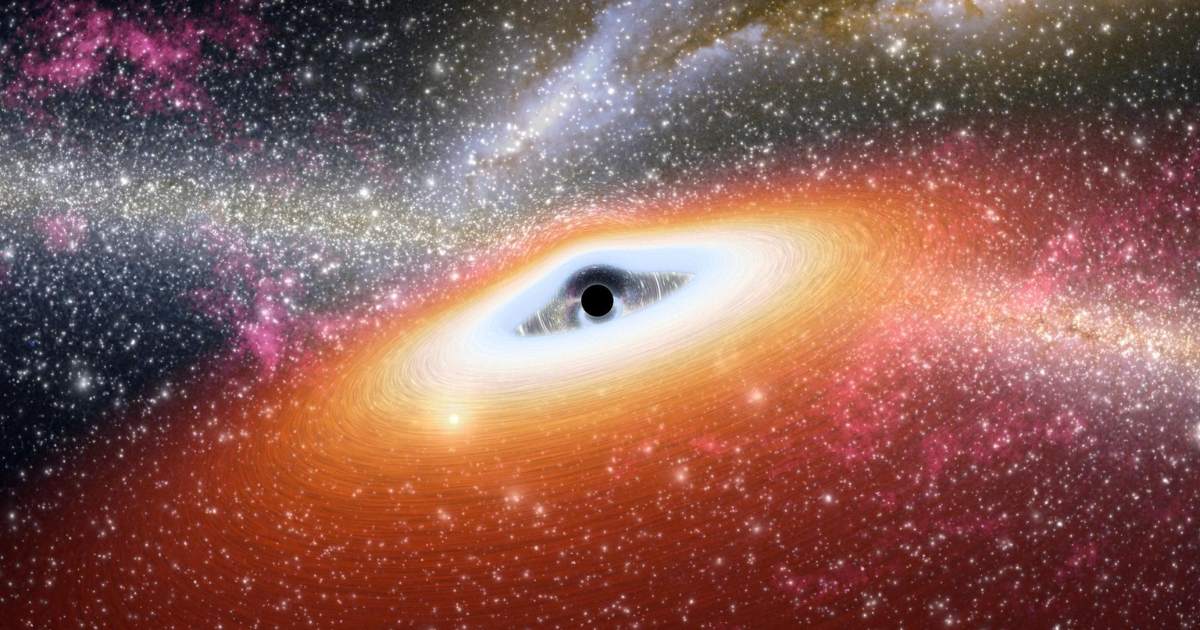
If this discovery is confirmed, GHZ2 would host the most distant supermassive black hole ever found, thus providing a critical environment to test the "light seed" and "heavy seed" models of how these cosmic behemoths began their lives just a few hundred million years after the universe began. The team now plans to carry out more observations using JWST and other instruments to confirm the black hole's activity.
More on Starlust
Hubble Space Telescope unveils striking portrait of a spiral galaxy harboring an active nucleus